
This review contains spoilers for House of the Dragon season 3 episode 4.
One of the most consistently impressive features of George R.R. Martin‘s “A Song of Ice and Fire” canon is that every character within it, no matter how minor, is compelling enough to lead an entire fantasy story of their own.
The example I always like to point to is that of Lord Beric Dondarrion a.k.a. the Lightning Lord in Game of Thrones. Initially introduced as a fringe political figure from one of the Stormlands’ lesser Houses, Beric is given the unenviable task of tracking down and killing the eight-foot-tall, violently insane Gregor “The Mountain That Rides” Clegane. After Gregor inevitably kills Beric, he is accidentally brought back to life by his good friend Thoros of Myr (also a fascinating figure in his own right), who doesn’t realize that his lapsed religion’s arcane funeral rites hold real power. Beric and Thoros establish the Brotherhood Without Banners and protect the smallfolk of the Riverlands all the while Beric keeps dying and being resurrected, each time becoming a lesser version of himself.
While Beric and his unique circumstances could easily fill hundreds of pages of fantasy storytelling, he is a relatively unimportant figure in Martin’s book series and quite far down the call sheet of its TV adaptation. Still, what the saga of Beric, Thoros, and their Brotherhood Without Banners reveals is that there’s no such thing as an inconsequential or uninteresting character in this universe. Every soul is the hero of their own story, patiently waiting for the larger narrative to find them.
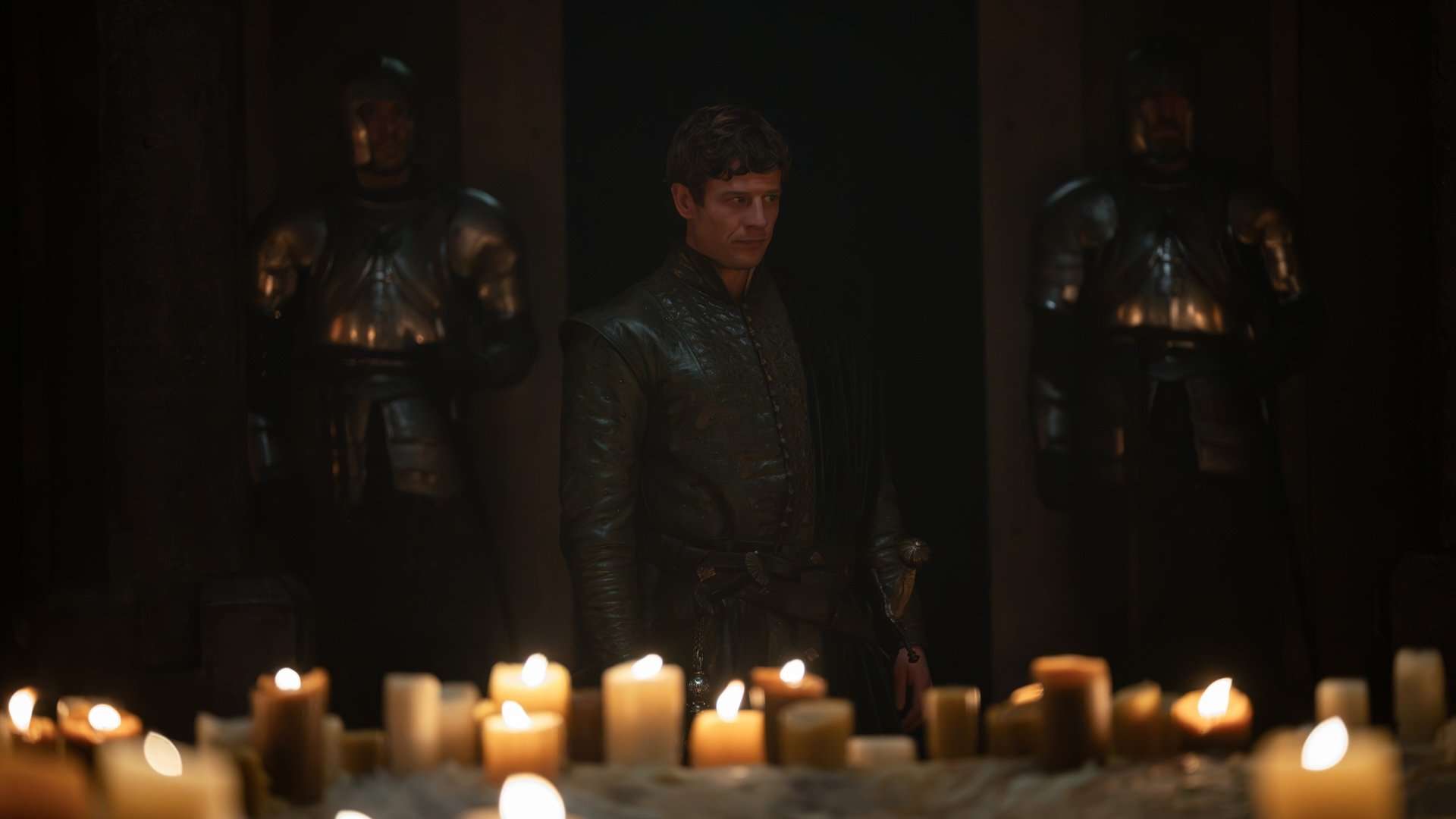
In House of the Dragon season 3 episode 4 that larger narrative finally finds Lord Ormund Hightower (James Norton). Unlike the previous installment, which almost entirely restricted itself to Queen Rhaenyra’s (Emma D’Arcy) point of view, this week’s episode isn’t solely the Lord Ormund Show. There’s plenty else going on here from Larys (Matthew Needham) and Aegon’s (Tom Glynn-Carney) misadventures in the Crownlands, to Daemon’s (Matt Smith) misadventures in the Vale, to Criston (Fabien Frankel) and Gwayne’s (Freddie Fox) misadventures in the Riverlands (a lot of misadventures going on around Westeros right now it turns out). But it’s through Ormund’s eyes that the episode both begins and ends. And in-between those moments, Ormund establishes himself as one of the show’s most dynamic figures yet.
Things begin in the humble Reach hamlet of Tumbleton where the odor-averse Lord of Oldtown is taking a leisurely bath in House Footly’s chambers. When Lady Footly complains of Lord Ormund making himself at home, he stands up, revealing the Hightower between his legs to all and making his priorities clear: “My purpose is to restore the rightful line to the Iron Throne.” It’s not unusual for the powerful folks of Westeros to speak so definitively and with such clarity of purpose. It is, however, a little unusual for them to lie so brazenly when doing so.
For, as the episode’s conclusion reveals, Ormund isn’t concerned with merely restoring the rightful line to the Iron Throne, he’s concerned with restoring one very particular branch of that line to the Iron Throne in the form of his nephew Daeron (Benjamin Evan Ainsworth). Ormund’s ruse involving a lowborn boy with dyed platinum hair wasn’t just to stymie the Blacks’ efforts to consolidate control of the Seven Kingdoms, it was a crucial part of his larger plan to “break the wheel” a la Daenerys Targaryen some 200 years later.
The realm has had plenty of Targaryen kings. It has not yet had a Hightower-Targaryen king. What’s more: it has not had a Hightower-Targaryen king raised by the great Lord Ormund Hightower himself. Our boy is freelancing. As Grand Maester Orwylve’s scouting report to Rhaenyra surmise later “I suppose only that Lord Ormund ruled Oldtown as a kingdom unto itself.” Well, that would certainly explain why Ser Otto’s letters to Oldtown went unanswered… and why we got a split second view of Otto imprisoned among the Hightower host last season.
None of this is – say it with me now – explicit in Martin’s Fire & Blood source material. But like Paddy Considine’s brilliant depiction of King Viserys I, it’s another example of House of the Dragon showrunner Ryan Condal and his team uncovering some captivating character traits in the margins of (fake) history. Why wouldn’t Lord Ormund want his pseudo-son to sit the Iron Throne? Why wouldn’t he see himself as a scholarly raconteur despite frequently demonstrating blinding rage? And why wouldn’t he have an inexplicably sensitive nose? Those are all human traits and Lord Ormund, as brought to life by James Norton, is human.
Also human are the poor inhabitants of Tumbleton trying to go about their days and avoid a civil war that has now found its way to their doorstep. While the show’s decision to place Hugh Hammer’s (Kieran Bew) wife in the line of fire is a bit on the nose and geographically dubious (the town is close enough to King’s Landing but a bit off the beaten Roseroad), getting to see what a military occupation looks like from the ground up is satisfying new ground for this franchise.
Left defenseless without the awe-inspiring power of the Third Amendment, the Tumbletonians are forced to quarter Hightower soldiers in their homes. And, like most other things in Westeros, this leads to sexual violence. Ormund’s response to one of his men’s crimes is telling. Though he haughtily tells Daeron that “when dealing with those beneath you, you must be fair but firm,” Ormund’s solution of gelding one guy does little to solve the larger tensions at play.
The soldiers stay quartered and the smallfolk stay vulnerable, setting the stage for a level of chaos and discontent that Hugh and Ulf the White’s (Tom Bennett) arrival on dragonback will do little to quell. Hugh may ultimately come to have an interesting interpretation of Rhaenyra’s orders to sit back and observe. After all, broad applications of the Queen’s words appear to be in vogue as the City Watch of King’s Landing interpret “please clean up this graffiti” as “indiscriminately kill a bunch of folks standing around the graffiti.”
The nobles’ inability to recognize the people beneath them as people is something of a recurring theme in this episode and the series overall. Nowhere is that more apparent than in Larys Strong and the absent King Aegon II’s journey through the Crownlands. As a lifelong underdog, Larys knows how to deal with others who have the audacity to think him their equal. One day you’re the master of whisperers at court, the next day some filthy transient is charging your travel companion a penny to touch his own dragon. What are you gonna do other than give him the penny and go on your way?
For Aegon, of course, it’s not so simple. The notion that another human being could compel him to do anything he didn’t want to do is as foreign to him as the possibility of flying Sunfyre to the moon. His inability to blend in as part of Ser Criston’s lost garrison at the ruins of Rook’s Rest ends with him kissing a very disgusting boot. Aegon, Second of His Name, is one of Westerosi history’s main characters. But for at least one afternoon he’s a footnote in one lowborn dickhead’s dominion over a very small parcel of land.
That fate of that aforementioned Rook’s Rest dickhead (who I believe is called “Janos,” presumably no relation to the similarly dickish Janos Slynt two centuries later) very well could have been the same of the anonymous sheepherder in the Vale who Daemon torches and frames as Sheepstealer’s rider to keep Rhaenyra from knowing the awful truth about Rhaena (Phoebe Campbell). Yes, it’s time already for this week’s #NettlesWatch, in which we examine how the biggest and most controversial change from Martin’s text is progressing.
For what it’s worth, House of the Dragon‘s gradual transformation of Rhaena into an entirely unrelated character continues to make more logical sense from week to week. HBO’s budget for the show, though surely generous, still couldn’t fully support the Dance of the Dragons’ expansive roster of combatants. Synthesizing Rhaena and Nettles into one plot not only makes sense from a financial perspective, it also adds some more skin in the game for both Daemon and Rhaena’s sister Baela (Bethany Antonia).
While that all may be true, there is still something so…off about Rhaena’s self-exile with Sheepstealer. I don’t want to lay blame at any singular party, least of all actor Phoebe Campbell who is finding some believable desperation within their character. But there’s something about the presence of Rhaena Targaryen that makes House of the Dragon forget how to be a TV show. The staging is boring, the dialogue uninspiring, and even the costuming unbelievable, with Rhaena appearing to sport cave pajamas from the “Tastefully Tattered Robe Emporium” or something. Some of those problems begin to infect the scenes around them with Daemon’s return to King’s Landing and fevered insistence that he found Jace’s killer coming across as slapstick. Though Mysaria’s casual “whose head is that?” cut to Daemon is tremendously funny.
Elsewhere in King’s Landing, Rhaenyra’s reign begins to stabilize a bit after its inauspicious beginnings. She stays true to her word to Alicent, making sure that Otto’s body is sent off to Oldtown and even begins to assemble a new small council, selecting Torrhen Manderly (Dan Fogler) as her new master of coin (a.k.a. scapegoat for the crown’s money issues) and accepting Alyn Velaryon (Abubakar Salim) as Hand of the Queen in his irate father’s stead.
Still, the problems with the Faith of the Seven aren’t going away and the smallfolk are getting restless, as evidenced by the treasonous messages scribbled around the capital. Rhaenyra’s responses to these burgeoning crises – inquiring about House Hightower’s involvement in the church and being rude to Ulf – offer little hope that she’ll ultimately be able to solve them… even if she’s sure she will.
That’s the thing about a fantasy universe full of characters who believe they are heroes of their own story: somebody still has to win.
New episodes of House of the Dragon season 3 premiere Sundays at 9 p.m. ET on HBO and HBO Max, culminating with the finale on August 9.