With Apple TV’s new drama Star City now hitting screens, there are plenty of Easter eggs, references, and storylines designed for fans of For All Mankind.

For All Mankind showrunners Matt Wolpert and Ben Nedivi are back in action for the new series, which stars Anna Maxwell Martin and Rhys Ifans, and imagines what might have happened had the Soviet Union won the space race and never stopped venturing out into the stars.
The creators recently opened up to Radio Times about revisiting storylines from For All Mankind, explaining: “There will be Easter eggs throughout but think the most special thing, one of the other stories I’m really excited about, is Anastasia Belikova.
“In For All Mankind, she’s just a face on a TV screen, people see her in a newspaper, and [now] to get to see what came before and what came after, especially for her, that story is fascinating. Alice just did such a beautiful job bringing her to life.”
So, how exactly are For All Mankind and Star City linked?
How is Star City connected to For All Mankind?
Star City is a spin-off of For All Mankind. It’s not technically a prequel, as it runs somewhat concurrently to season 1 of For All Mankind.
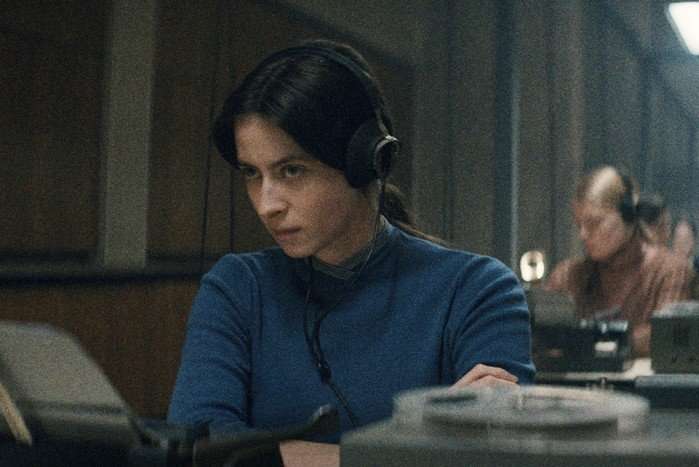
However, it has a different focus. While For All Mankind focuses more on the American side of the space race, Star City delves into the lives of the Soviet cosmonauts, engineers, and intelligence officers at the heart of the space programme.
When is Star City set and will it have time jumps?
Star City is set in the Soviet Union in the 1970s – although the culture of secrecy and surveillance depicted in the show appears to be inspired by earlier periods, such as the 1930s under Stalin.
While For All Mankind is known for its time jumps, with each season being set about 10 years apart, Wolpert and Nedivi have confirmed that Star City will not follow suit.
Nedivi told Radio Times: “We’re hopeful [Star City] can continue, and I think if it does, it’s not the kind of show that will jump decades.
“I think we have enough to stay in the ’70s and not do those time jumps – just so we also don’t have to age our cast like we did in For All Mankind!”
Do characters from For All Mankind appear in Star City?
Yes, this means a couple of For All Mankind characters appear in Star City – although they have been recast, as the versions we see in Star City are much younger.
The most prominent returns are KGB handler Irina Morozova, who was played by Svetlana Efremova in For All Mankind, with Agnes O’Casey taking over for Star City.
Engineer Sergei Nikulov also returns, with Piotr Adamczyk handing the baton over to Josef Davies.

Various characters we’ve seen briefly in For All Mankind are also expanded on in Star City, for instance, Anstasia Belikova, the first woman on the moon, who is played by Alice Englert.
Teasing what we can expect from Irina, O’Casey said she was inspired by Efremova’s performance but was also conscious that the Irina we see in Star City is very different.

“We’re meeting her at a point where she’s completely innocent to the world that she finds herself in,” she told Radio Times.
“We meet her at a point where she thinks that the right thing morally will be the right thing at work. I guess she very quickly realises that that’s not the case!”
Meanwhile, Davies added of Sergei: “I think in this telling of him, we’re coming at the younger side of him, I think he’s got a completely different energy, and he he is about to experience all the things that are moulding him into the version of the Sergei that we see later on.”
Do you need to have seen For All Mankind to enjoy Star City?
No, while there are references and Easter eggs throughout for For All Mankind fans, Star City can also be enjoyed as a standalone drama.
Star City is available to stream on Apple TV now.
Add Star City to your watchlist on the Radio Times: What to Watch app – download now for daily TV recommendations, features and more.
Check out more of our Sci-fi coverage or visit our TV Guide and Streaming Guide to find out what’s on. For more TV recommendations and reviews, listen to The Radio Times Podcast.