As it celebrates its 40th anniversary, Hasitha Fernando explores the story behind Aliens…

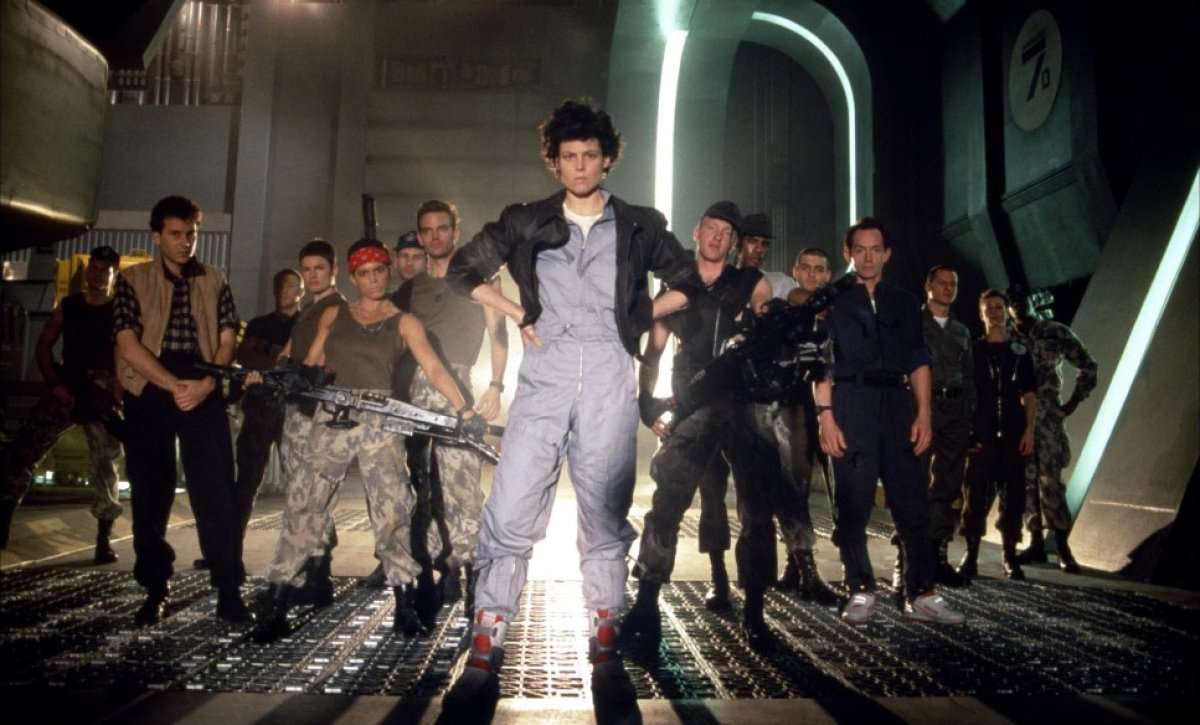
The follow up to Ridley Scott’s classic sci-fi horror Alien, James Cameron’s Aliens is considered one of the greatest sequels ever made. The film is often bunched alongside the likes of Terminator 2: Judgment Day and The Godfather Part II as an example of a sequel that improved on and surpassed the original in every possible way. As the iconic sci-fi actioner hits 40, we take a look at its tumultuous production story and its behind-the-scenes drama.
20th Century Fox believed that Alien’s success was a fluke
At the time of its debut in 1979, Ridley Scott’s sci-fi horror Alien proved to be something of a mixed bag in spite of its commercial success, which invariably led to immediate discussions for a sequel. However, the production company involved with the movie, Brandywine Productions, had a tough time convincing 20th Century Fox to bankroll a sequel because the studio was adamant that Alien lost $2 million in the 11 months that followed its release. The change of studio heads over at 20th Century Fox didn’t help matters either, because studio president Alan Ladd Jr.’s replacement, Norman Levy, believed that a sequel to Alien would be a “disaster” as the Fox execs believed whatever success Alien had during its box-office run was a fluke.
The progress of the sequel was hindered further after Brandywine Productions co-founders sued Fox for non-payment of profits from the production of Alien. This lawsuit was settled by early 1983, with the outcome being Fox agreeing to finance a sequel to Alien but not required to distribute the effort. Around this time, Joe Wizan replaced Levy as the 20th Century Fox’s new studio head, and Wizan was receptive to pursuing a sequel to Alien. Because of this Brandywine Productions’ development executive Larry Wilson began actively searching for a screenwriter to pen the sequel script by mid-1983.
James Cameron was hired based on the strength of his script for The Terminator & the film’s subsequent success

During his search for a potential screenwriter, Wilson came across a script written by one James Cameron for an in-development sci-fi flick titled The Terminator. Impressed by what he read along with Cameron’s previous successful script collaboration with Sly Stallone for Rambo: First Blood Part II, Wilson decided to show The Terminator script to the execs over at Brandywine Productions. After reading the script Wilson showed them, Brandywine immediately commissioned Cameron to write a film treatment for Alien II based on the idea of “Ripley and soldiers”. The 42-page film treatment that Cameron eventually hammered out by November 1983 didn’t appeal to the studio and this led to subsequent discussions to consider selling the IP to Rambo co-creators Mario Kassar and Andrew G. Vajna, but they too declined the offer.
By July 1984, however, the project had a change of fortune with the arrival of Lawrence Gordon who replaced Joe Wizan as Fox’s new studio head. Gordon fast-tracked the film’s development immediately but the studio waited on Cameron until he wrapped up work on The Terminator. But the production of The Terminator was delayed by over nine months because Arnold Schwarzenegger was filming Conan the Destroyer. This gave Cameron enough time to fine-tune his 42-page film treatment and expand it to ninety pages. This version of the treatment was better received by Gordon and the studio, but Cameron also wanted to direct the project. With only the low-budget, indie-horror flick Piranha II: The Spawning to his name Fox was reluctant to accommodate this request. But the overwhelming critical and financial success of The Terminator in late 1984, made the studio rethink their decision and thus Cameron was hired to helm Aliens.
Sigourney Weaver gave her input to revise Ellen Ripley’s character

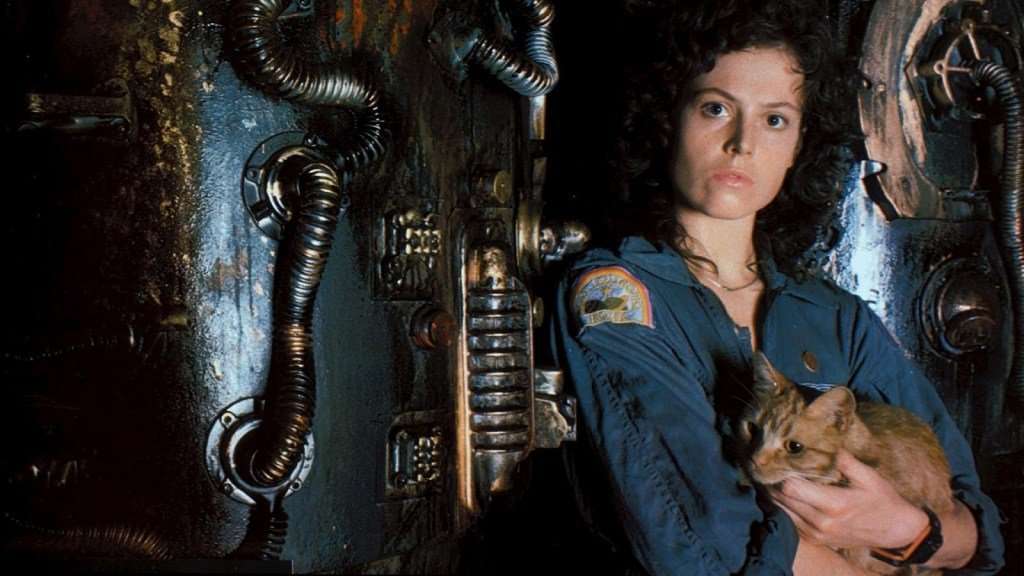
In Cameron’s story and screenplay for the Alien sequel, Ellen Ripley always played an instrumental role in leading the narrative. So, imagine the filmmaker’s shock when he discovered that Sigourney Weaver had not even signed on for or even contacted by the studio to reprise her role from the original. Due to Weaver’s increased salary demands the studio never bothered to reach out to her all this time but Cameron was of the opinion that the sequel can only move forward with Weaver in the lead, as he had written. Ultimately, Arnold Schwarzenegger himself had to step in and through his agent they were able to reach the actress and convince her to come on board and seal the deal. Weaver received a 30-fold salary increase from the first film and received $1 million and a percentage of the box-office profits to play Ellen Ripley in the sequel. As an advocate of gun control in the USA, Weaver was uncomfortable with the amount of gun related violence that was in the story. Cameron understood Weaver’s stance and incorporated that trait into Ellen Ripley’s character, which added an interesting layer to her which was a stark contrast from the trigger-happy gun toting Colonial Marines.
Michael Biehn wasn’t the first choice to play Corporal Dwayne Hicks

Steering ship alongside the strong-willed Ellen Ripley is the tough-as-nails Corporal Hicks of the Colonial Marines corp. Biehn, who had previously collaborated with Cameron on The Terminator, quite enjoyed his experience working with the filmmaker and therefore, campaigned hard to nab Corporal Hicks’ part in the Alien sequel. Unfortunately, by that point Cameron had already cast The Warriors star James Remar in the role. Slightly disappointed with this development, Biehn focused on other potential opportunities but soon he received a phone call by producer Gale Anne Hurd, asking him to join the project as Remar had been arrested for drug possession. Stephen Lang, who later went on to play the main antagonist in Cameron’s box-office juggernaut Avatar in 2009, also auditioned for the role of Hicks.
Lance Henriksen vowed to quit acting if the Alien sequel was unsuccessful

Known for his diverse roles in sci-fi, action and horror film productions over the years, Lance Henriksen vowed to quit his career in acting if the Aliens sequel wasn’t successful. Thankfully, for him and us, Aliens became a massive box-office success and thus we were blessed to see the talented actor dish out more performances in the future. Some of his most notable work include The Terminator, Hard Target, The Quick and the Dead and the television series Millennium. In the film Henriksen plays Bishop, an android aboard the Sulaco, whom Ripley is always suspicious of.
Carrie Henn was chosen as Newt due to her expressive facial features
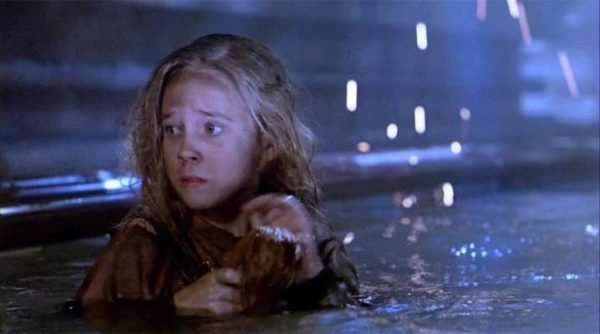
Carrie Henn was a little 10-year-old girl, without any prior acting experience, when she was cast in the role of Rebecca “Newt” Jordan. She was discovered quite by accident when agents spotted her while schooling at Lakenheath, England. Henn’s “great face and expressive eyes” caught Cameron’s immediate attention and as a result she was cast as the wide-eyed Newt. While filming the scene involving the duct, Henn kept deliberately sabotaging the scene, on multiple occasions, as she was having too much of a good time sliding down the vent. Cameron finally persuaded Henn to shoot the scene, by saying that if she completed the shot, she could play on the duct to her heart’s content. Once Henn completed her scene, Cameron kept his side of the bargain.
Bill Paxton thought that his performance in the movie was too over the top

The late Bill Paxton was a versatile character actor whose everyman screen persona led him to being cast in some of the best crowd-pleasers in the 90s, such as Tombstone, Apollo 13 and Twister. Paxton and James Cameron had long been close friends, so when Paxton heard that Cameron had landed the director’s gig for the Alien sequel the actor jokingly told the filmmaker, “I hope you write me a good part in it”. Shortly after, Paxton was called in to audition for the role of Private William Hudson. Paxton revealed in later interviews that he thought his performance in Aliens was too over the top, due to his overt enthusiasm playing the ever-talkative Colonial Marine. But Cameron liked the manic energy Paxton injected Hudson’s character and instantly promoted him to play the story’s much needed comic relief. Paxton turned down the offer to play Zed in Police Academy 2, which eventually went to Bobcat Goldthwait, so that he could join Aliens.
There was intense animosity on set between James Cameron and the British production crew

To say James Cameron had issues working with the predominantly British production crew on the set of Aliens, would be an understatement of colossal proportions. As only a handful of the crew members had seen The Terminator, which incidentally bombed in the UK, they had very little trust on Cameron and how he’d manage the shoot as the film’s director. They even mocked Cameron’s then wife Gale Anne Hurd, that she landed the producer gig because of her association with the filmmaker. The crew viewed both Cameron and Hurd as arrogant and overly demanding while the duo saw the British production crew as lazy blokes, primarily due to their unwillingness to work overtime and because of the unending tea breaks they used to take. The only ally Cameron and Hurd had during the production of Aliens was production designer Peter Lamont, himself a Brit, who Cameron lured back from retirement to design the sets for Titanic in 1997.
Working on the film proved to be a nightmare for composer James Horner
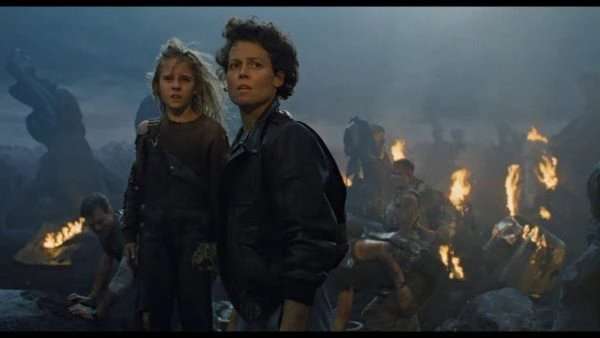
Film composer James Horner had one of the most prolific careers in the 90s with efforts such as Braveheart, Legends of the Fall, Casper and Apollo 13. For Horner, however, producing the score for Aliens proved to be a frustrating experience as he only had a mere 2 weeks to work on the scoring aspect for the movie. This was because the original scoring schedule of 7 weeks was horribly cut short as the film was still being shot when he arrived in London to perform his duties. Horner had no choice but to hang around for 5 weeks until Cameron & co. finished up the shoot. Horner worked around the clock to finish recording the film’s music, even working on the last day of the scoring session. However, the finished score didn’t sit well with the finished film and thus, Cameron had to heavily edit Horner’s score and use music from Jerry Goldsmith’s score for Alien to patch up the deficiencies. Nevertheless, Horner received an Academy Award nomination for his contribution to the film and a deluxe edition of Horner’s original score was released by Varèse Sarabande later on.
Box-office success, Glowing Reviews, Awards Success and the launch of a franchise
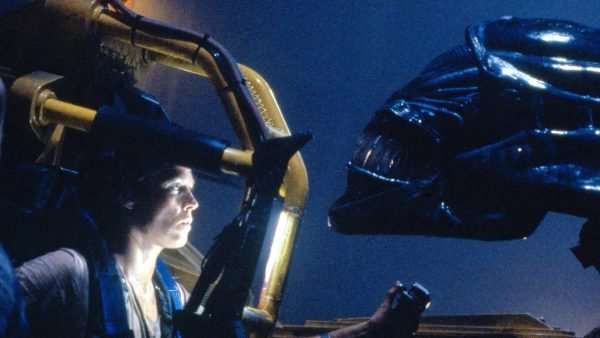
Made on a production budget of $18.5 million Aliens went on to make a more than respectable $183.3 million at the world box-office by the conclusion of its theatrical run, making it the fourth highest-grossing-film of 1986 behind Platoon, Crocodile Dundee and Top Gun. The film received positive reviews at the time of its debut with the Time magazine labelling it as, “The Summer’s Scariest Movie.” In addition to Time magazine’s appraisal many top film critics such as Richard Schiskel and Dave Kehr called it “a rare sequel which surpassed the original”. Come awards season the film nabbed seven Academy Awards nominations winning the Golden nudie for Best Visual Effects and Best Sound Effects Editing. It is worth mentioning here that Sigourney Weaver receiving an Academy Award nomination for her performance was something of a first, considering Aliens was a sci-fi actioner and the Academy had a habit of snubbing genre films.
The resounding success of the film naturally emboldened the studio to launch a franchise, however, Alien 3 and Alien: Resurrection released in 1993 and 1997 respectively weren’t viable hits critically or commercially. The year 2012 saw Ridley Scott inject new life to the dying franchise with Prometheus, which was a prequel story that explored the events preceding Alien. The sequel to Prometheus, Alien: Covenant, released five years later, however, discarded the heady concepts seen in its predecessor for something more conventional. 2024’s Alien: Romulus, brought back the thrills and scares that were missing in the franchise whilst following a narrative that was set between the tragic events of Alien and Aliens. As evidenced by recent developments it’s abundantly obvious there’s still life left in the franchise and new narratives to explore in the future. Let us hope that they’d keep it coming, whilst being mindful of the legacy of the IP and being respectful to the sensibilities of fans and audiences in general.
What are your thoughts on Aliens? Let us know on our socials @FlickeringMyth…
Hasitha Fernando is a part-time medical practitioner and full-time cinephile. Follow him on Twitter via @DoctorCinephile for regular updates on the world of entertainment.