Matthew Shepherd looks back at Ridley Scott’s forgotten star-studded crime thriller The Counselor…
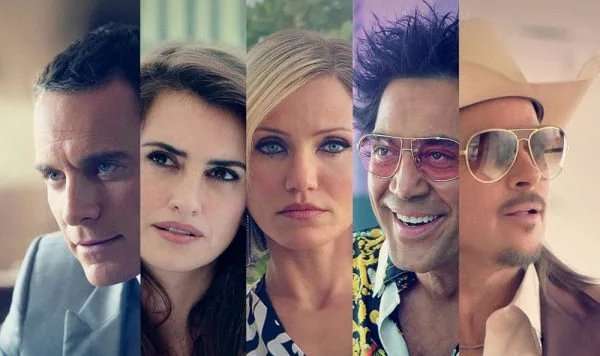
Ridley Scott does not often admit when he thinks he has been wronged. The man who made Alien, Blade Runner, and Gladiator has a strong confidence in his own judgement that borders on geological. So when he told the Toronto Sun, years after the fact, that The Counselor should have been “fucking huge” — that it should have opened to $50 million rather than the $9 million it actually made at the domestic box office — it is worth diving back into and understanding why it landed so poorly.
Scott believed he had made something extraordinary. The marketing department disagreed. The audience, given no real guidance on what they were walking into, sided with the marketing department. And one of the strangest, most formally committed studio films of the 21st century quietly disappeared without a trace.
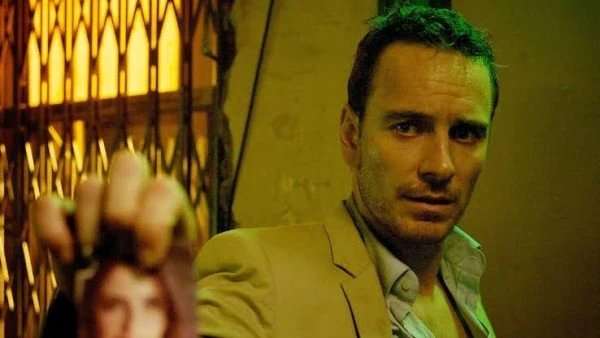
The premise is deliberately, almost aggressively, simple. An unnamed lawyer referred to only as the Counselor, played by Michael Fassbender, decides to supplement his comfortable Texas life by brokering a single drug deal on the Mexican border. His contact in the venture is Westray, a cautious middleman played by Brad Pitt, who warns him plainly and repeatedly that the cartels operate by rules that leave no room for error. The Counselor does not listen. The deal goes wrong. The consequences are absolute.
On paper, it is a slam-dunk noir framework — a man naively steps into a world he doesn’t understand and is destroyed by it. In execution, the film is something much stranger, and considerably more interested in what the destruction means than in showing you how it happens.
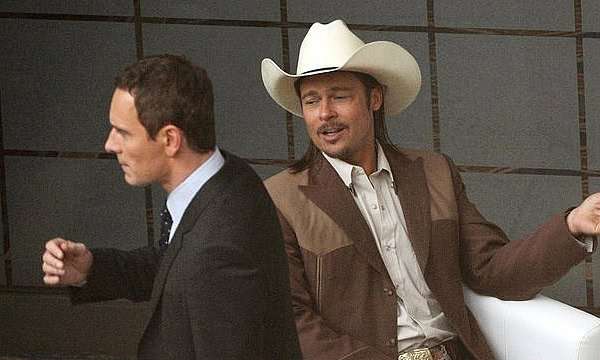
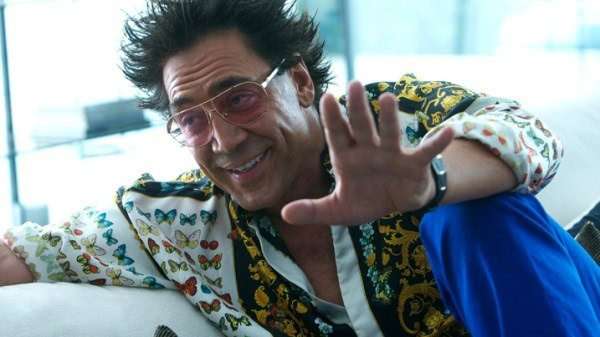
What makes The Counselor’s complete obscurity genuinely baffling is the assembly of talent attached to it. Cormac McCarthy, the author of No Country for Old Men, Blood Meridian, and The Road, wrote the script — his first original screenplay, written directly for the screen rather than adapted from existing work. Ridley Scott, fresh from Prometheus and with Alien and Blade Runner in his back catalogue, directed the film. Around Fassbender, the cast included Penélope Cruz, Cameron Diaz, Javier Bardem, and Brad Pitt, all of whom took reduced fees specifically to be part of a McCarthy script.
Scott later recalled that once the project was assembled, the cast were fighting for their parts. The entire production came together in two weeks. The film was shot at Pinewood Studios and across the Spanish desert locations of Almería and Cádiz, standing in for the El Paso and Juárez border. It was dedicated to Tony Scott, Ridley’s brother, who sadly died during production. Every element assembled suggested a film that would live long in the memory.
The problem, from the marketing department’s perspective, was that The Counselor is not a thriller in any conventional sense. McCarthy’s screenplay is almost entirely dialogue — long, philosophical, digressive exchanges between characters who speak in the register of his novels rather than in the rhythms of cinema. Characters sit across from each other and deliver extended monologues about fate, greed, mortality, and the nature of evil. The plot, such as it is, happens largely offscreen. The violence, when it arrives, is sudden, clinical, and utterly without catharsis. McCarthy was writing a Cormac McCarthy film, not a Ridley Scott thriller. As a result, the tension between those two modes of filmmaking is the most interesting thing about The Counselor, and also the thing that made it impossible to market.
20th Century Fox attempted a conventional campaign — glossy cast photography, a trailer emphasising style and violence — and the result was an audience that arrived at the cinema expecting a slick genre thriller and received something closer to an existential fable. The CinemaScore was a D. Critics were split, some found it a fascinating formal experiment, whereas others saw it as pretentious and incoherent. Mark Kermode placed it second on his ten worst films of 2013. The Hollywood Reporter called it a waste of fine talent. Screen International called it weary tough-guy poetry executed with considerable intelligence. The disagreement was total and irreconcilable, which is almost always the sign of a film that is doing something unexpected rather than something straightforwardly bad.

Scott, years later, was characteristically blunt about what had gone wrong. He told the Toronto Sun that The Counselor should have been enormous, and that the marketing had failed the film entirely. He described McCarthy’s dialogue as the best he had ever been given to work with. The film has since been assessed and reassessed, particularly among hardcore cinephiles, as one of the stranger and most unexpected misfires of a studio productions of its era — a film that used a $25 million budget and a cast that would normally command ten times that to deliver something the mainstream had absolutely no framework for receiving, which was reflected in its non-existent box office.
Have you seen The Counselor? What went wrong for the film? Let us know your thoughts on our social channels @FlickeringMyth…
Matthew Shepherd