Four-part BBC drama Dear England is adapted by James Graham from his acclaimed stage play of the same name, with Joseph Fiennes reprising the role he originated at the National Theatre.
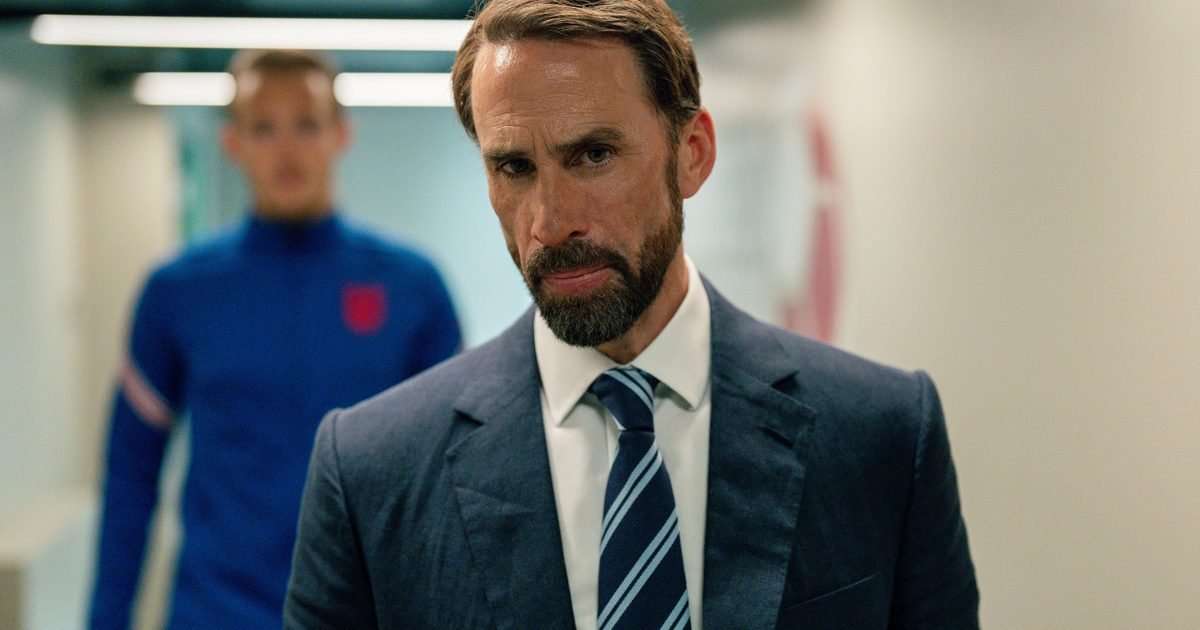
He is, of course, playing Gareth Southgate, with the series looking at the former footballer’s tenure as England manager between 2016 and 2024.
The series also stars Jodie Whittaker as Pippa Grange and Will Antenbring as Harry Kane, both real life figures whose stories are being told. But how closely does the series stick to real events and how much of it is imagined for dramatic effect?
Read on for everything you need to know about the true story behind Dear England.
Is Dear England based on a play?

It is! James Graham’s stage version of this same story, also called Dear England, first debuted at the National Theatre in 2023. It later went on to have a West End run, a National Theatre revival, performances at The Lowry in Salford and a UK tour.
Over the years, the play has been updated to include elements of the story which were yet to play out in 2023, such as Southgate’s departure from the team and the Euro 2024 tournament.
These elements have also been factored into the series Dear England, which goes into even more depth.
How closely does Dear England follow Gareth Southgate’s true story?
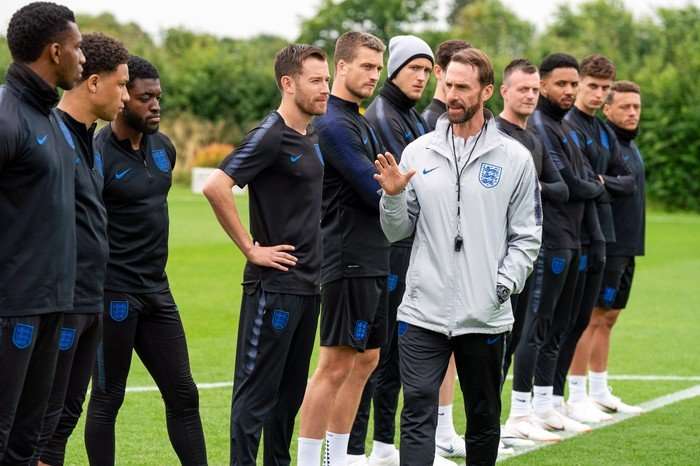
All of the major, public moments which are seen throughout Dear England’s four episodes did happen in real life. The series has not only been adapted by James Graham from his own stage play, but additional research has gone into bringing the TV adaptation right up to date and ensuring authenticity to reality.
Graham said of researching for the series: “We had a fantastic six month period where we were researching and I was meeting players and commentators and people at the top of their game who could help expand on our knowledge, which helped to create new scenes, ideas and perspectives for the TV version.
“And of course, the ‘story’ kept going after the play. The original play ended at the 2022 Qatar World Cup, which was Gareth’s third tournament as manager. He had a fourth tournament left in him, which becomes our fourth episode in the TV series.”
However, as is noted at the start of every episode of Dear England, in on-screen text, the series is ultimately “a fictionalised account of the struggles and successes of England’s football teams”.
The message also says: “It is based on real events and draws on extensive research and interviews. Some characters are based on real people, others are created for dramatic purposes”.
One example of this is Sam Spruell’s character Mike Webster, a coach on the England team. Of course, there are plenty of coaches who have worked for the team over the years, but the specific character of Mike is fictional.
Other moments, such as private conversations, have also been imagined.
Graham said of adapting the stories of real, incredibly well-known people: “In Dear England, we’re dealing with well-known public figures, and it feels like we do know their stories, their behaviours, their mannerisms, their biographies, their family life. You feel a bit presumptuous putting the England captain, Harry Kane, on-screen, or legacy figures like Gary Lineker and Paul Gascoigne.
“We all share an understanding or perception of these people. My rule when I’m writing real life people is that you have a responsibility to try and represent them fairly, and I take that really seriously. I try to get to know them as much as possible – I got to spend time with Gareth during this process, which was a real privilege.”
Want to see this content?
This page contains content provided by Google reCAPTCHA. We ask for your permission before anything is loaded, as Google reCAPTCHA may use cookies and other technologies. To view this content, choose ‘Accept and continue’ to allow Google reCAPTCHA and its required purposes.
He continued: “At some point, they also have to perform the function of a character in a drama. Whether it’s Harry Kane or Othello, they have a role in terms of what they want, their obstacles, their objectives – what do they learn, how do they change, what are their strengths and weaknesses?
“It’s great to have this existing biography, you’re not making them up from scratch, but eventually you have to liberate yourself a little bit and I think an audience understands that and recognises that I wasn’t there in the dressing room at half time when we were losing to Slovakia in Germany 2024.
“Once they leave the pitch, the characters become mine and I’m doing my best to present what I think may have happened and what conversations may have occurred in these private moments.”
Dear England will begin on BBC One and iPlayer at 9pm on Sunday 24 May 2026.
Add Dear England to your watchlist on the Radio Times: What to Watch app – download now for daily TV recommendations, features and more.
Check out more of our Drama coverage or visit our TV Guide and Streaming Guide to find out what’s on. For more TV recommendations and reviews, listen to The Radio Times Podcast.