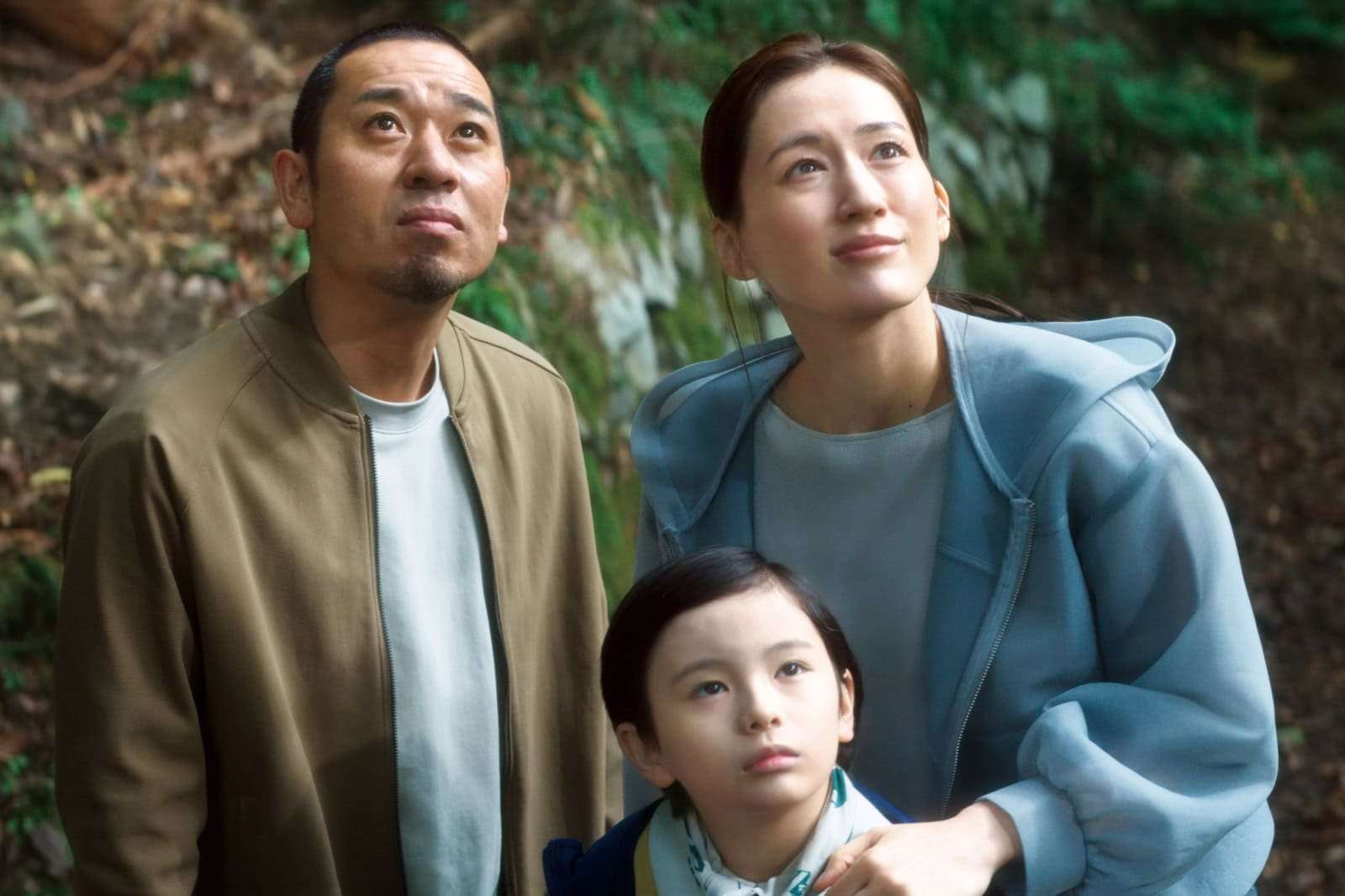
Robert Kojder chats with Sheep in the Box director Hirokazu Kore-eda…
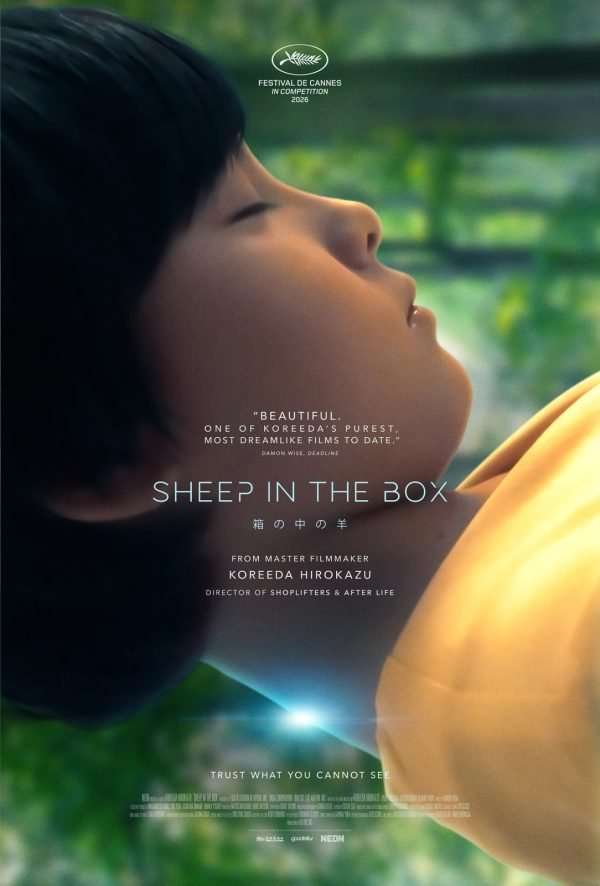
Known for some truly beautiful, emotionally moving (and sometimes devastating) works, filmmaker Hirokazu Kore-eda, who has been on an incredible run with movies such as Shoplifters, Broker, and Monster, finds himself creatively inspired by what tech companies are doing with personal data to bring back the dead in some form. However, as he explains in the interview below, he wasn’t necessarily concerned with making a film about AI or those corporations with Sheep in the Box, but using them as an outlet to tell a story about the dead afterlife, incorporating that into his usual family dynamics. Admittedly, the results are a fascinating film that I admire more than I believe fully works (and perhaps inadvertently makes a plea for human coexistence alongside AI), but it is nonetheless too interesting to fully dismiss.
Given that young Rimu Kuwaki is playing a humanoid here, it seemed like a good opportunity to ask the highly revered Japanese filmmaker about working with children and how this process was similar or different, given the nature of the role and performance. There are also tidbits on how the titular Sheep in the Box passage from The Little Prince came about in the screenplay, injecting humor into an otherwise gloomy story, and the production design of the family home (which felt worth asking about considering the mother plays an architect). It was also simply a joy to ask him what has drawn him to make movies about various types of families over the decades (blood-related and sometimes not).
Answering through a translator, I am deeply appreciative that Hirokazu Koreeda carefully and thoughtfully answers each question, even if it means pausing for a good 20 seconds or so to really think about the question. He is as calm a presence as it is watching one of his movies. Not only is it an enlightening conversation, but it’s also an honor to have one with him. Please enjoy the interview below:
I’ve admired your work for a while now, so I first want to ask a general question about what compels you to make movies about various family dynamics?
To say what motivates me to create family dramas is that I notice there’s a difference between the movies that I’ve made when my parents were alive, the movies that I made once both of my parents passed, and then the movies I make now that I have kids. It’s interesting to me how the idea and image of family change as I progress through life. I can see my perspective shifting from that of a child to a parent. And to have that real-life experience reflected back in my filmmaking is very interesting to me. So I think that’s why I’ve made family dramas in each of the eras of my life in my 30s, 40s, 50s, and now 60s.
Many of your films are very emotional, and this one certainly is, but it’s also under a more philosophical and thought-provoking mode, like you yourself are grappling with advancements in AI technology and what it can do. Is part of making this film a process of sorting out your own thoughts or understanding this technology better for yourself?
It wasn’t a means for me to understand AI. It was actually a means for me to understand the dead. AI and generative AI are a kind of gateway to understanding this through this story and in this film, but I was curious about the dead and how the living keep on living. Death and the deceased don’t typically have a physical shape, but by giving the dead a physical shape, I’m trying to understand how we deal with death and grief.
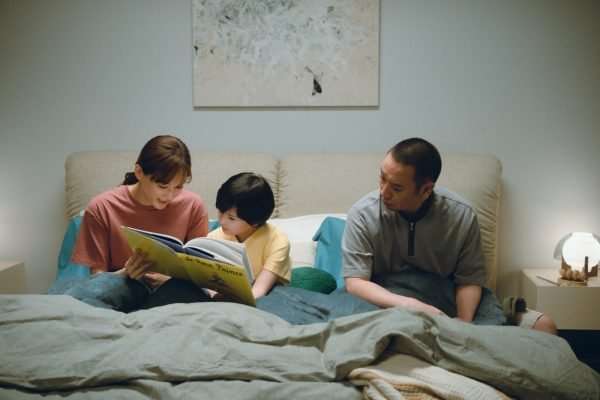
How did The Little Prince get integrated into your screenplay? Did you know from the beginning that it was going to be in the movie?
No, it actually came about in the middle of writing the script. Originally, the film had a different title, but I wanted there to be a situation where, once the child returns alive, the family is trying to relive, or recreate, a kind of daily life they had with their child… I thought it would be nice for the mom to try to read a story to the boy. This was a ritual they had before, when the boy was still alive. When I was thinking about what book they should read together, I thought it would be something to do with the fact that the humanoid couldn’t understand the concept in the story. So I thought I could enter this through the motif of something physical or something that felt imaginary.
Imagination seemed more interesting to me because it’s abstract. Once I had the idea for this phrase that was incorporated into The Little Prince, I went back and reread it. Then I wrote the scene where they buy a snow globe that features The Little Prince, and the scene where the prince is freed from the snow globe. And then I began to see how the story helped to shape a kind of framework for the movie itself. That’s when I went back, retitled the film, and tried to incorporate that story into a more central role in the narrative.
Rimu Kuwaki is terrific here in a role that’s not easy for a child. It’s a very different role from other child actors you have worked with. Can you talk about the similarities and differences to that?
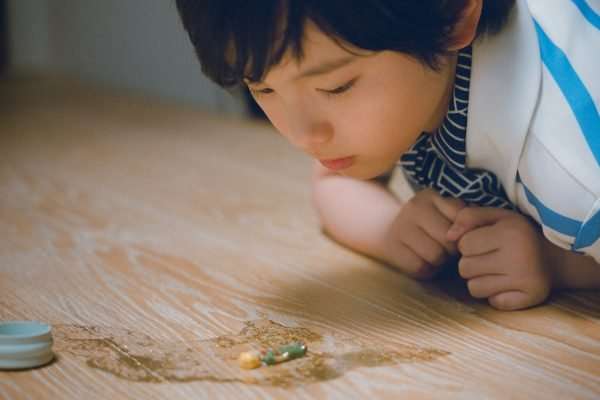
I would say the process of directing Rimu versus other children in my previous films wasn’t so different. This was really about how adults react to what the humanoid says. The child might say something that surprises the adults, makes them scared, or makes them very concerned. So I was very careful to direct those scenes with the adults and the child together. However, I didn’t direct Rimu to act in any kind of way that indicated humanoid. The acting is very much the same as any other child. Of course, there were moments when I asked him to maybe not blink, or to hold his breath, or stand very still. I knew that that would be important. That was something that I asked the kids to do during the audition process, but you would be surprised to learn that it’s very, very hard for young children.
Oh, I believe it. Speaking of the adults reacting to children, there’s a part where the father says “it’s like a Tamagotchi”, and that made me laugh. I know Daigo is a comedian, so can you talk about giving some humor to that role and this serious drama?
As far as the humor goes, I wanted to think about how one might express their discomfort and how the wife and the husband reach a kind of acceptance of the humanoid in different ways and on different timelines. Any of the lines that Daigo says that allow for some kind of laughter are really a reflection of his sensibility as an actor and as a comedian. I wanted there to be a difference in how they express their discomfort, but for Daigo’s reaction to specifically trigger some frustration in the character of Otone [this is the mother played by Haruka Ayase].
You have some beautiful gardens here and some really striking architecture with the family home. Were there any challenges in that production design?
For the production design, I did a lot of research around the actual homes of architects, so the homes that they’ve built for themselves. I chose a home that seemed to fit my idea for the film. The home that you see in the film and its courtyard, even the way that there is a workplace or work environment towards the front and then, as you enter into it, it becomes a private space, and also the hallway that you can walk past without the guards; that was all a part of the house. So we extended the set beyond the hallway for practical reasons to allow us to film freely. I chose a house that helped me imagine the script and write for the environment. So, the fact that the house is near a train line and the general environment really set off the rest of the screenwriting for me.
Thank you for your time.
Thanks!
Robert Kojder