Motor City, 2026.

Directed by Potsy Ponciroli.
Starring Alan Ritchson, Shailene Woodley, Ben Foster, Amar Chadha-Patel, Ben McKenzie, Lionel Boyce, Pablo Schreiber, Rafael Cebrian, Dominic Bogart, Oleg Prudius, Mister Fitzgerald, Elliott Mayer, and Jack White
SYNOPSIS:
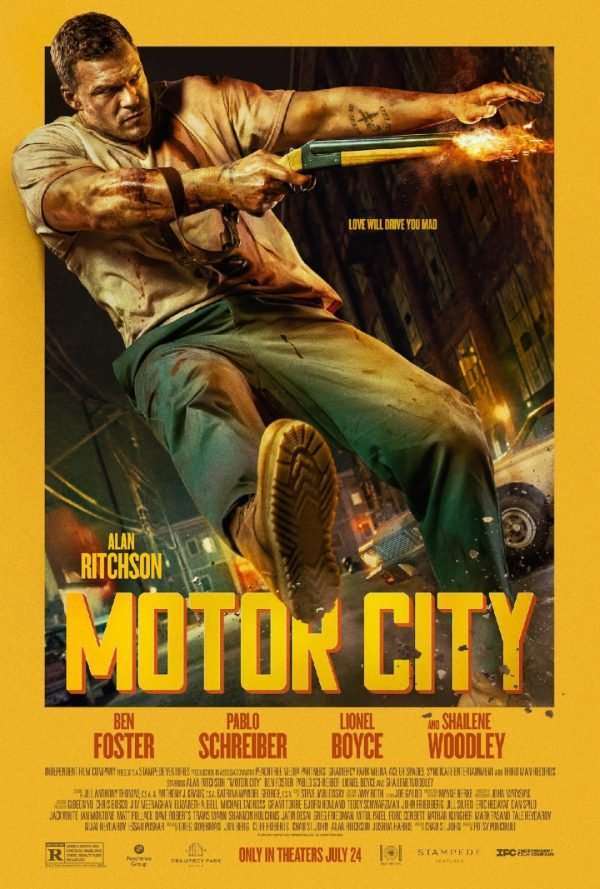
In 1970s Detroit, John Miller falls for a local gangster’s girl and lands in prison for a crime he didn’t commit. With his life ruined, Miller plots revenge against the man who took his girlaway.

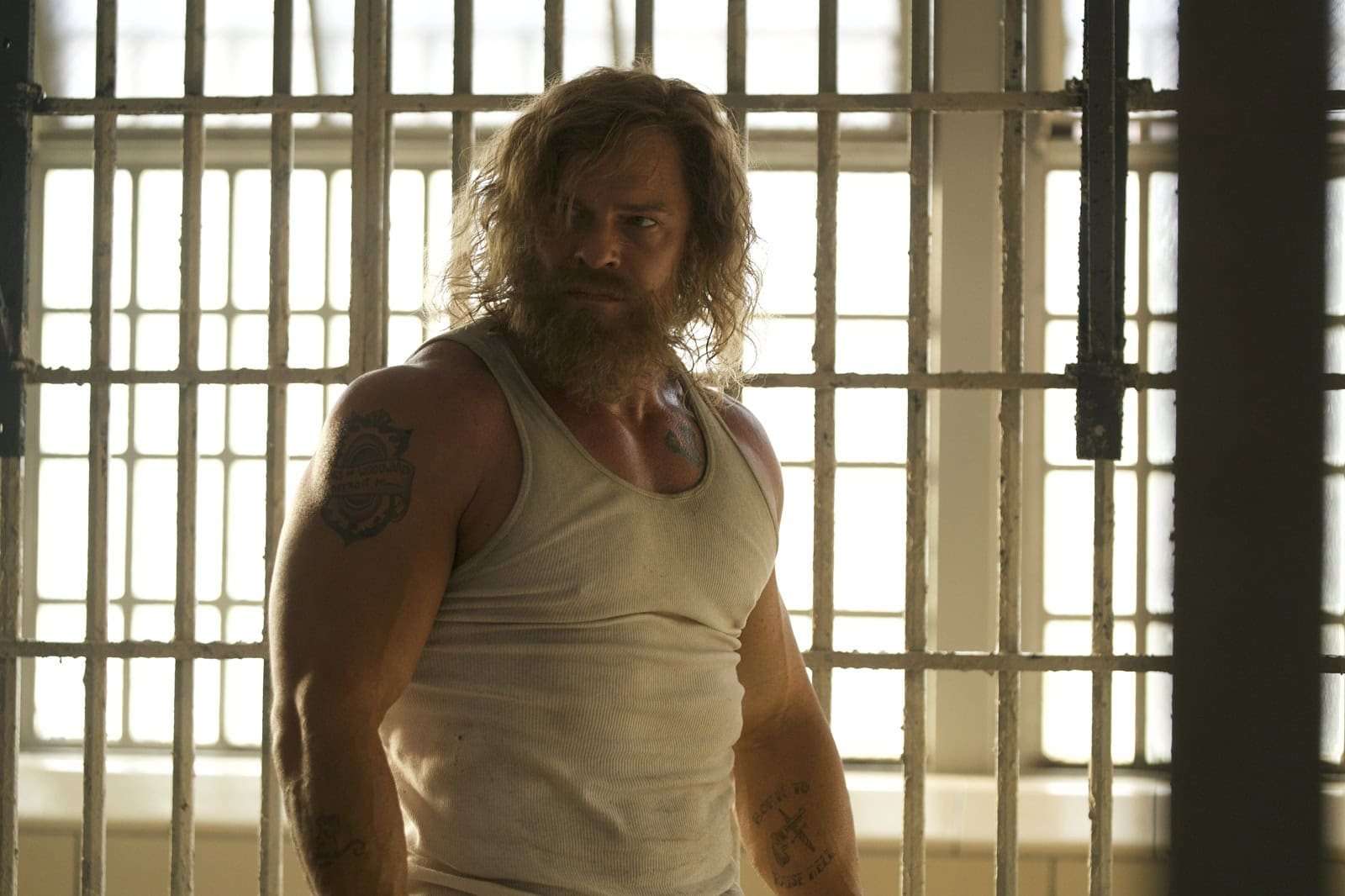
Researching and discovering that director Potsy Ponciroli got his career started helming music videos is hardly a surprise after watching his 1970s urban Detroit-set actioner Motor City, which lets an entire crooked drug bust of Alan Ritchson’s hulking John Miller (he looks like a young Arnold Schwarzenegger at times, especially when walking toward the camera shotgun in hand like a Terminator) play out to nearly the entirety of Fleetwood Mac’s The Chain.
Part of that creative decision comes down to the fact that there are only five lines of dialogue in Chad St John’s script (expertly chosen times as well, knowing when to momentarily break the gimmick for a single word, adding some extra emotional heft to the proceedings through conventional means), although even those who struggle with lip-reading can decipher that John is shouting that he was set up as the music blares (sometimes the songs are blended into the scene, such as on a radio, and other times they are used as pure vessels of lyrical expression relating to the characters). Sure, this isn’t exactly a deep-cut song choice for the era. To be fair, none of them are (everyone from David Bowie to Donna Summer is on the soundtrack, complete with a cameo appearance by modern-day mega rock star Jack White, who has Detroit connections).
Instead, these loud, intentional song choices serve as a compelling argument that licensed music can drive emotion and action through familiar genre storytelling as well as silent-film style body language, brutal physicality, and striking cinematography by John Matysiak (one particular shootout is shrouded in flying explosion sparks while a prison escape is cleanly and violently executed even in darkness). The lack of dialogue is at times less a limitation and more of a reminder that films can still contain rip-roaring intensity and effective characterization by confidently marrying all other aspects of filmmaking.
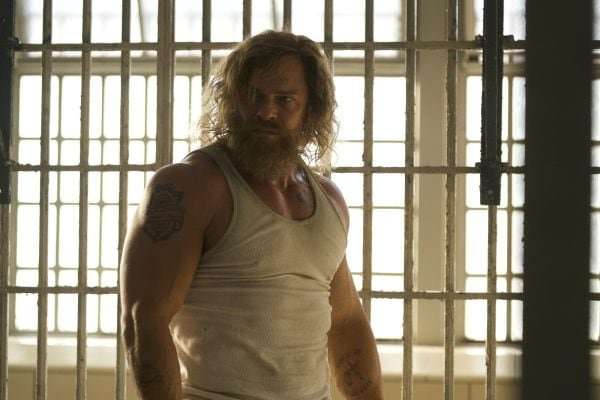
It’s also proof positive that Alan Ritchson is the real deal, capable of much more than busting heads (he still gets to do plenty of that here), spending a surprisingly lengthy amount of the runtime psychologically tortured by local drug-running crime boss Reynolds (Ben Foster once again sleazy and slimy), who had used his crooked law enforcement connections (Pablo Schreiber) to get John locked away and steal his significant other, Sophia (Shailene Woodley) in the process, offering her a glamorous life of riches and excess rather than barely making ends meet working at a diner. There is a scene in prison where John is forced to imagine a painful act of disrespect and taunting, the kind that is daringly acted and more than enough to carry us through wanting Reynolds to get his comeuppance as much as our jacked hero craves that vengeance.
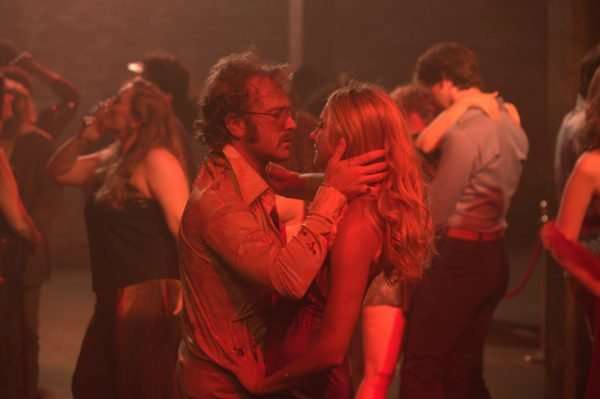
For a film that, from its premise, sounds as if it would be using a dialogue-free approach to pack in as much action as possible, it is also a pleasant subversion that the story stews in John’s suffering while Reynolds shows Sophia a hollow, warped version of love that certainly comes with benefits and seems like the right choice considering she is led to believe that John betrayed her and not only broke his parole, but sold cocaine. Few actors can play a manipulative and menacing love interest as well as Ben Foster, and there is a meaningful, substantial build-up to letting Alan Ritchson loose.
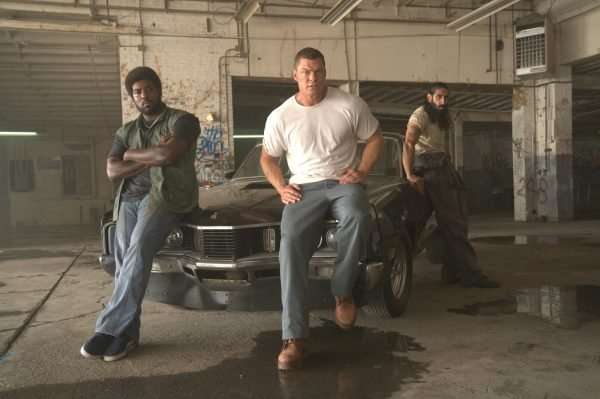
With that said, the narrative is a bit simple and stretched thin across 104 minutes. There comes a point where one also realizes that the film simply believes it’s different for stripping away a key component of modern movies, without doing enough to distinguish the story. This is not to contradict what I said earlier, but something can work while still having noticeable flaws. Inevitably, John is sprung from prison by Vietnam War buddies Youngblood (Lionel Boyce) and Singh (Amar Chadha-Patel), a thrilling sequence that one can’t help but wish had come about 15 minutes earlier, when the cliches start to make the dialogue-free choice feel like a transparent gimmick. There is a balance in accomplishing this approach that is slightly lost around halfway through, only to thankfully not linger as a problem since the action kicks in at full throttle.
It is also worth stressing once again that this is not the action-heavy movie some might expect; the film begins in medias res, presumably because the filmmakers are aware of this and want to give a taste of where the climax is headed. With that said, Potsy Ponciroli delivers on that front, most indisputably and enthusiastically with an elevator brawl that’s so savagely bloody and tightly choreographed it should go down as a career highlight for both the director and Alan Ritchson.
As for the epilogue, it is ambitious albeit ridiculous in execution, but not without thematic merit and an acknowledgment that Sophia has mostly been an object to these men, stoking violence, regardless of how and how much they love her. It’s one last piece of proof that Motor City knows the cliches are there, eschewing dialogue to blow them up into neon-soaked, synth-heavy music-video-adrenalized maximalist displays of emotion and, at times, breathtaking, visceral carnage and apt car chases.
Flickering Myth Rating – Film: ★ ★ ★ / Movie: ★ ★ ★
Robert Kojder