In 2026, it’s almost too easy to dismiss The Big Bang Theory. Chuck Lorre’s sitcom, which followed a group of socially awkward scientists and engineers (and a waitress-turned-aspiring actress) living in Pasadena, feels like a relic of the past. Its use of a laugh track and its mockery of all things “nerd culture” – from cosplay to fluency in Elvish – were just some of the ingredients that rubbed people the wrong way. Since the end of its 12-season run in 2019, there certainly hasn’t been a chorus of voices clamouring for it to return.
But you have to hand it to Lorre and his team… they certainly know how to make a satisfying spin-off.
First came Young Sheldon, which explored the origin story of Jim Parsons’s theoretical physicist during his childhood in Texas. That was followed by George and Mandy’s First Marriage, a spin-off of that spin-off centred on Sheldon’s older brother and his wife.
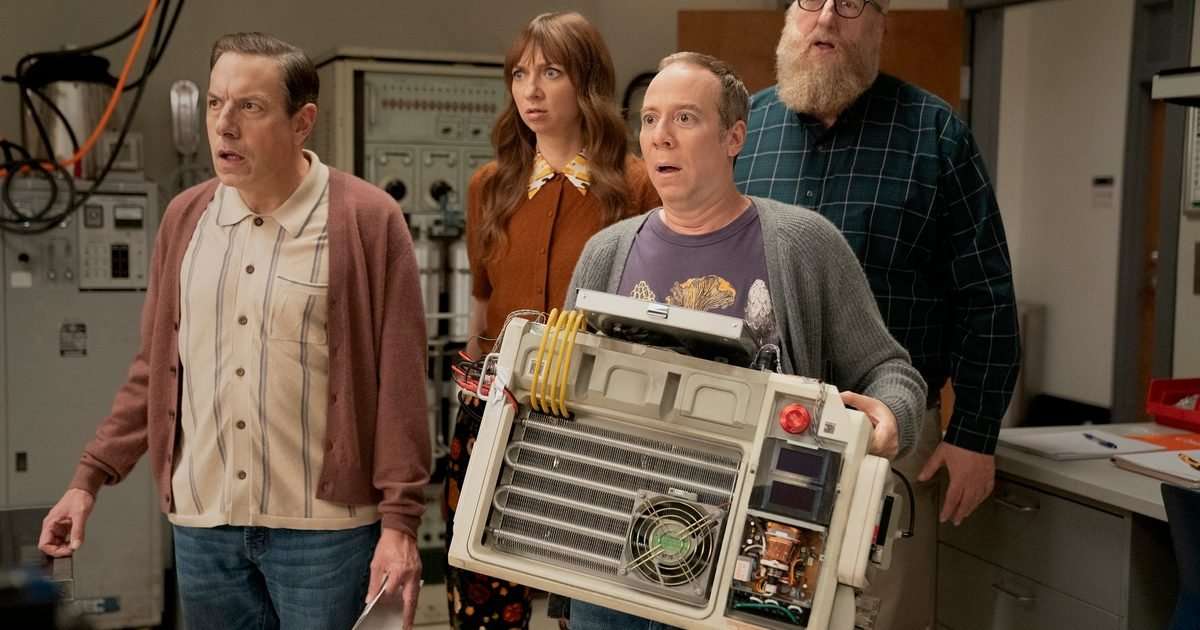
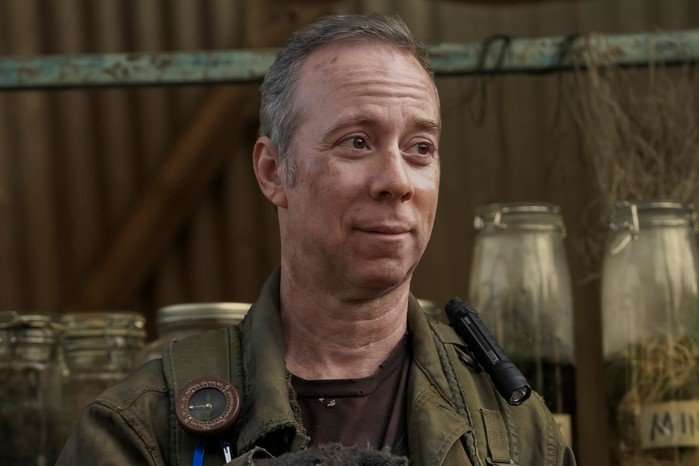
Now we have Stuart Fails to Save the Universe, which picks back up with The Big Bang Theory’s dorky, socially awkward comic book shop owner (played by Kevin Sussman), who could never quite catch a break.
After some timey-wimey mishaps involving one of Sheldon and Leonard’s inventions, Stuart is now dipping in and out of alternate timelines in a bid to save his world from collapse, turning what could have been a straightforward sitcom into a sci-fi multiverse caper.
It’s an undeniably bold move from Lorre, who is famed for the aforementioned laugh track, also deployed in Two and a Half Men and Dharma & Greg. Those shows, like The Big Bang Theory, have their own legacies, both good and bad, but are ultimately comedy time capsules of their era.
Even Lorre himself admitted to People that “most of [his] career has been two people sitting on a couch and talking”, so he wanted a challenge.
Read more:
- The Big Bang Theory spin-off show bosses reveal why some of the episodes are so short
- Big Bang Theory character was almost entirely different – now nerdy character is hero in Stuart Fails to Save the Universe
Enter Stuart, who was a side character at best in The Big Bang Theory. He’d share tales of his dating disasters with Sheldon, Leonard, Raj and Howard while simultaneously flogging them the latest piece of MCU merch. He was, essentially, a vehicle for punchlines.
Now, he’s jumping between timelines alongside fellow Big Bang regulars Bert (Brian Posehn) and Kripke (John Ross Bowie), dealing with an apocalypse in one moment before literally falling through space and time in the next, all in pursuit of a happy ending with girlfriend Denise (Lauren Lapkus).
Some versions of him are, dare we say, actually pretty badass.
Each episode also remixes its opening titles with little notes directly addressing viewers and letting them know the team is in on the joke. It’s a meta touch and just one of many fun details that further signals Lorre’s desire to distinguish this spin-off from the main series – something that has become a common thread across every Big Bang spin-off.
Young Sheldon did away with the laugh track and broader comedy strokes, replacing the ‘Bazingas’ with sibling squabbles, while Sheldon’s insufferable “quirks” (which were laughed off in Big Bang) suddenly became interesting, and often difficult hurdles for a family to navigate. They even cast Big Bang Sheldon’s dismissive tales of his “redneck family” in an interesting new light, addressing certain plot holes and adding further colour to the character we already knew.
George and Mandy’s First Marriage, while reverting to that darned laugh track, shifted its focus to life as new parents, an 11-year age gap and interfering relatives, making it feel less like another Big Bang clone and more like a story of two people against the world.
Without trying to discredit The Big Bang Theory, which has undeniably earned its place in the sitcom zeitgeist, both spin-offs proved massively successful almost in spite of it, rather than because of it. Young Sheldon ran for 141 episodes between 2017 and 2024, while George and Mandy’s First Marriage is still going strong and heading into its third season later this year.
Want to see this content?
This page contains content provided by Google reCAPTCHA. We ask for your permission before anything is loaded, as Google reCAPTCHA may use cookies and other technologies. To view this content, choose ‘Accept and continue’ to allow Google reCAPTCHA and its required purposes.
Stuart Fails to Save the Universe follows the same philosophy, delivering a bold take on what could easily have been another run-of-the-mill sitcom. Every episode feels different, every character is subject to change with the swoosh of the quantum machine, and every scene carries the promise of a fun cameo (which, while my lips are sealed, the series delivers in a way the previous spin-offs never quite managed).
You’ll be kept firmly on your toes throughout, courtesy of genuinely surprising twists and inventive storytelling, all of which injects a level of energy and unpredictability that makes each episode easy to devour.
But beyond that, it’s a prime example of how a familiar franchise can be reinvented without turning off the original fandom.
In the age of the rehash, where prequels, sequels and reboots often do little more than tweak what has come before, Stuart Fails to Save the Universe feels genuinely unique and should be the creative blueprint for spin-offs going forward: tell a complete story, leave just enough room for more, and never rely solely on the virtues of the show that came before.
Stuart Fails to Save the Universe premieres on HBO Max in the UK on Friday 24 July 2026.
Add Stuart Fails to Save the Universe to your watchlist on the Radio Times: What to Watch app – download now for daily TV recommendations, features and more.
Check out more of our Comedy coverage or visit our TV Guide and Streaming Guide to find out what’s on. For more TV recommendations and reviews, listen to The Radio Times Podcast.