Damian McCarthy delivers a thoughtful folk-horror nightmare that asks if our superstitions protect us from evil or if it’s all just “Hokum”.
No time to read? Click the button below to listen to this post.

MORBID MINI: Hokum is a haunted-house story set against the backdrop of old Irish folklore, populated by nightmare rabbits, scorned ghosts, and unreliable narrators, that firmly immerses the audience in its strange, mythology-steeped world.
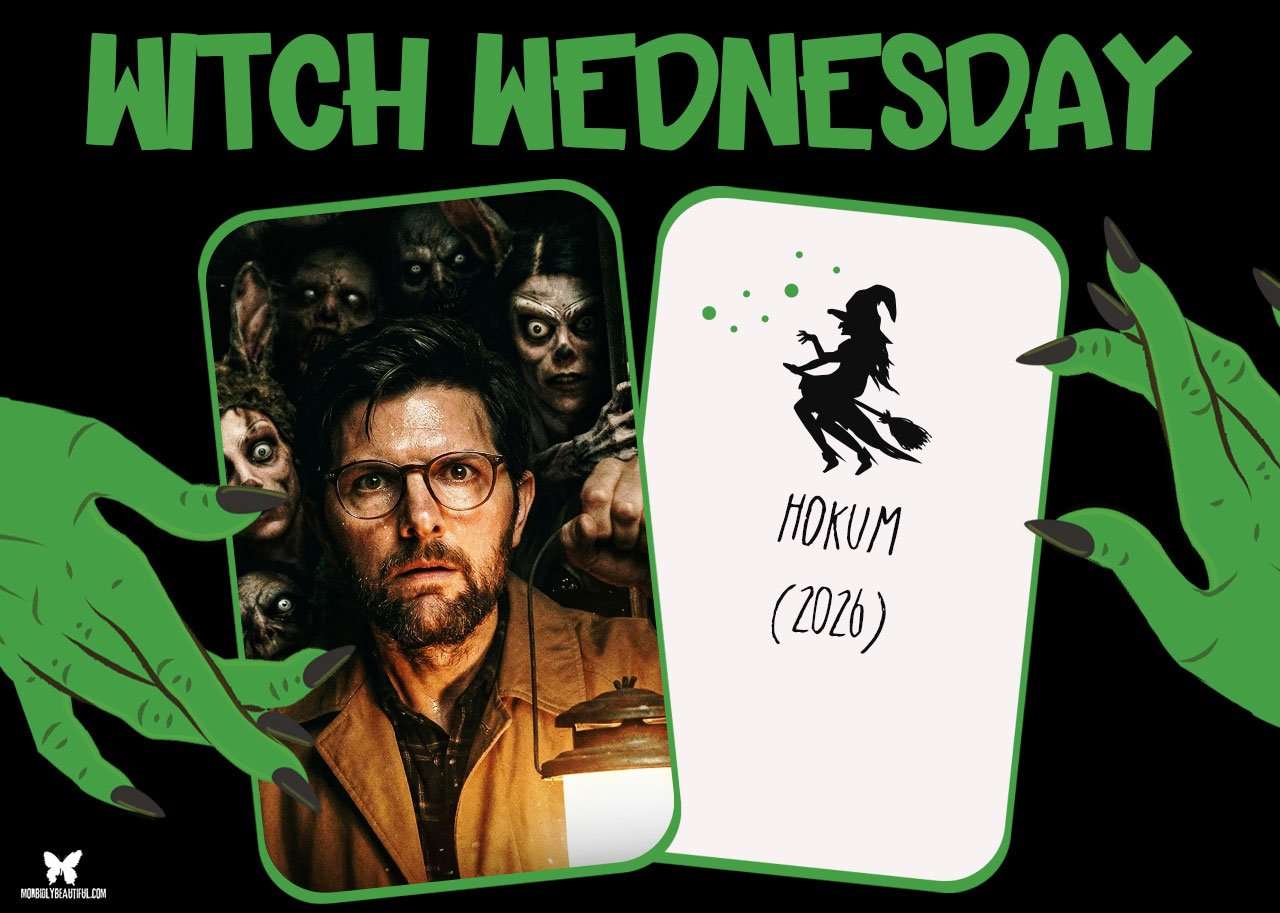
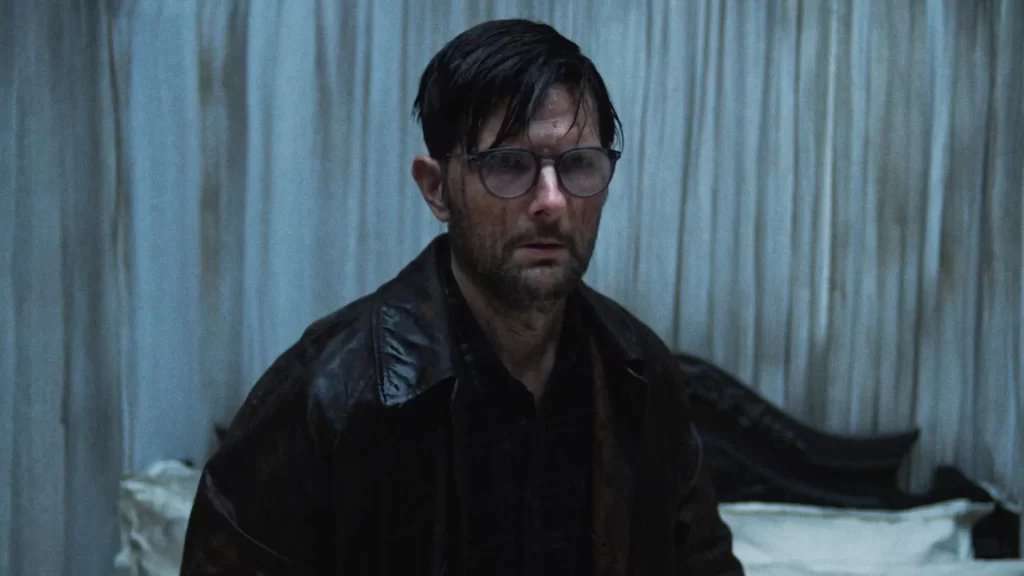
Hokum is the third feature film from Irish Folkloric director Damian McCarthy (Caveat, Oddity)and stars Adam Scott(The Monkey, Severance) as Ohm Bauman, an author who travels to Ireland to scatter his parents’ ashes. It’s a film of juxtaposing images and red herrings.
We open in a desolate, desert landscape, where a man and a young boy have reached the climax of their harrowing journey. Thescreenis floodedwith blinding hues of orange and umber, as serpentine dunes carve landmarks in the sand.
The scene abruptly snaps us to the present, and we observe an author writing the climax of his book, as heavy rain and darkness loom outside his window.
This visual ruse suggests that the audience’s narrator is unreliable, prone to fantasizing. This immediately casts doubt as to whether we can believe what he shows us is tangible.
McCarthy’s folklore-soaked worlds often feel shaped by archetypal figures.
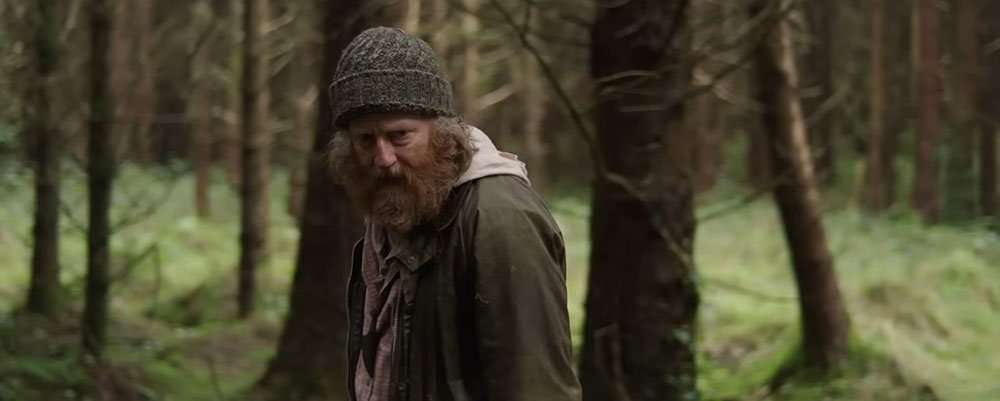
His films are populated by outsiders, warning-givers, wounded skeptics, uncanny doubles, and strange figures who seem to exist at the threshold between ordinary life and nightmare.
In Hokum, that threshold figure is Jerry. Ohm arrives at the isolated Bilberry Woods Hotel to lay his parents’ ashes to rest, only to encounter an eccentric local man living at the edge of polite society. Jerry offers him poitín and a piece of local history that falls somewhere between a drunken ramble, a cautionary tale, and a prophetic warning.
When Ohm first arrives, he walks in on the hotel’s owner, Cob, reciting a harrowing tale to young boys. It’s the story of the Cailleach, also known as the winter hag of Ireland, rumored to dragnaughty children down to the Underworld with her.
This haunting tale of the Cailleach is a perversion of the real myth of the Cailleach (meaning: ‘Veiled One’). She is, indeed, the keeper of the Underworld, but she does not claim the souls of naughty children—the way her Nordic counterpart, Krampus, is rumored to do.
This sets up the underlying theme of Hokum and the threat of twisted narratives.
This is a film about how much we should trust the stories we tell each other and, more importantly, the stories we tell ourselves.
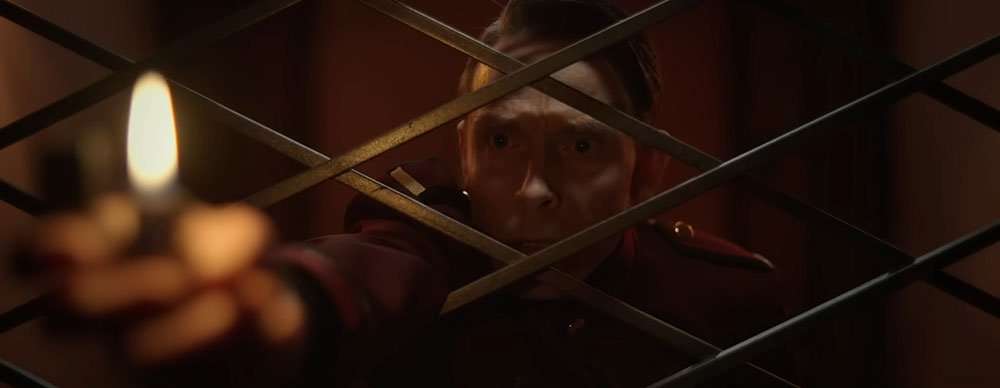
In Hokum, the old landscape clings to cautionary tales of witches designed to scare locals into complacency. They are stories used to weaponize people’s spiritual beliefs and superstitions against them.
Ohm finds himself transported to a liminal place where restless spirits lash out, and the dead are often louder than the living.
The labyrinthine nooks and crannies of the Bilberry Hotel hold horrors. Restless spirits with blacked-out faces and glowing eyes of tapetum lucidum populate subterranean corridors where no light reaches. And the haunting face of the Cailleach peers out from the pit of a hidden well.
But where the real horror lies is a secret door that Hokum dares you to unlock.
McCarthy’s use of haunting visuals and real Irish Folklore results in a hallucinatory experience.
The film is a beautiful slow burn, with a meditative buildup, which focuses on long-buried secrets.
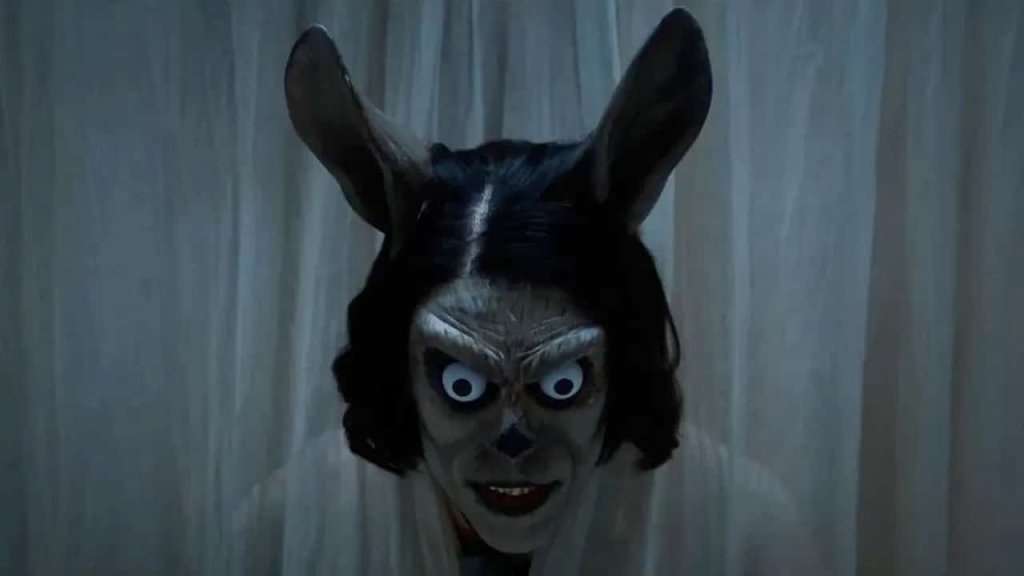
The director’s signature ‘Uncanny Rabbit’ visual—a running theme in his other works (a mechanical, wind-up hare which haunted us in both Caveat and Oddity)—gets an upgrade in Hokum.
It has evolved from a simple wind-up toy to an uncanny rabbit-man, his exaggerated hare ears framing a Minstrelesque face with exposed teeth and bulging eyes.This memorable visual acts as both an effective jump scare and a totem of Ohm’s childhood, appearing during Ohm’s traumatic flashbacks.
The recurring imagery oscillates between ethereal and disturbing. The result is a classical feeling ghost story, populated by unnerving, aesthetic nightmares.
Meanwhile,Scott injects Ohm with the hallmarks of a nihilistic curmudgeon. Yet he also manages to balance his troubled protagonist’s heartbreaking vulnerability and childlike terror.
This effectively traps you alongside him in the subterranean terrors of the Cailleach’s domain.
Ohm symbolizes the disruptive but necessary force in Hokum.
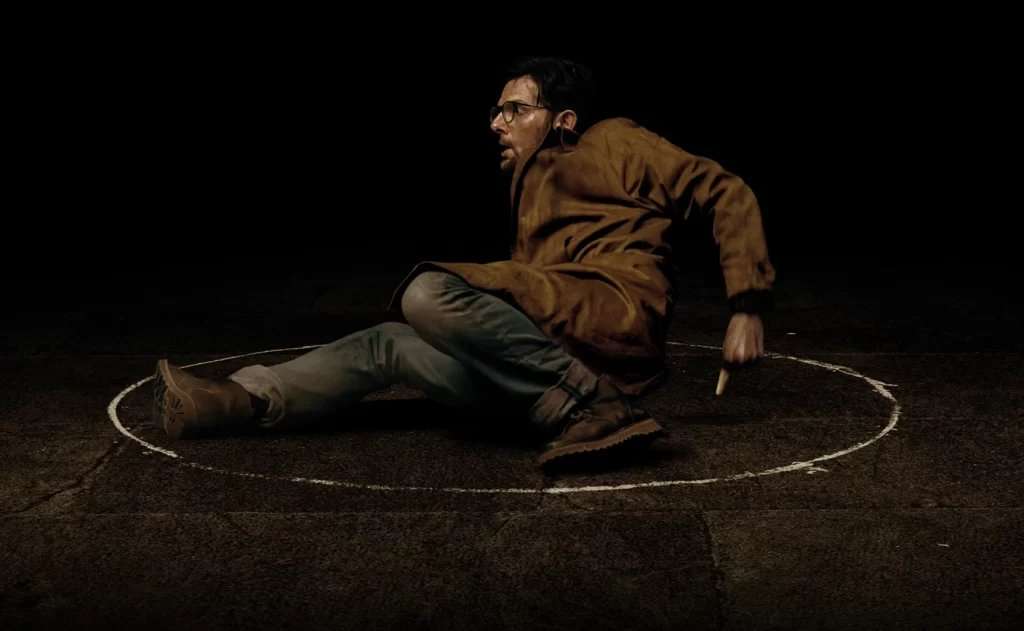
He exists in opposition to archaic beliefs, and his refusal to blend in is what drives the story forward.
Ohm’s presence in Ireland may feel unwanted; however, it is his arrival that triggers a much-needed death and rebirth of the Bilberry Hotel. He inadvertently forces hidden secrets into the light, while granting the dead an autonomous voice from beyond the Veil.
Interestingly, I screened Hokum at my favorite Arthouse cinema on Beltane, marking the midway point between Spring and Summer. In Scotland and Ireland, Beltane holds similar spiritual importance to Samhain. It’s a time when the Veil between the world of the living and of the dead thins.
This is where the Cailleach slumbers, until Samhain arrives.
In Witchcraft and in my strange corner of the world, we view the Cailleach not as a ‘hag’ or as a negative force, but rather as the mother of winter. She cradles us when the cold becomes too bitter and welcomes us back into the earth to slumber alongside her when it is our time to die.
Neither good nor evil, she is simply an essential force of nature. Her presence is needed to allow for death and rebirth, both metaphorically and physically, as the seasons change.
Hokum masterfully balances a sense of suffocating cold with a warm, beating heart.
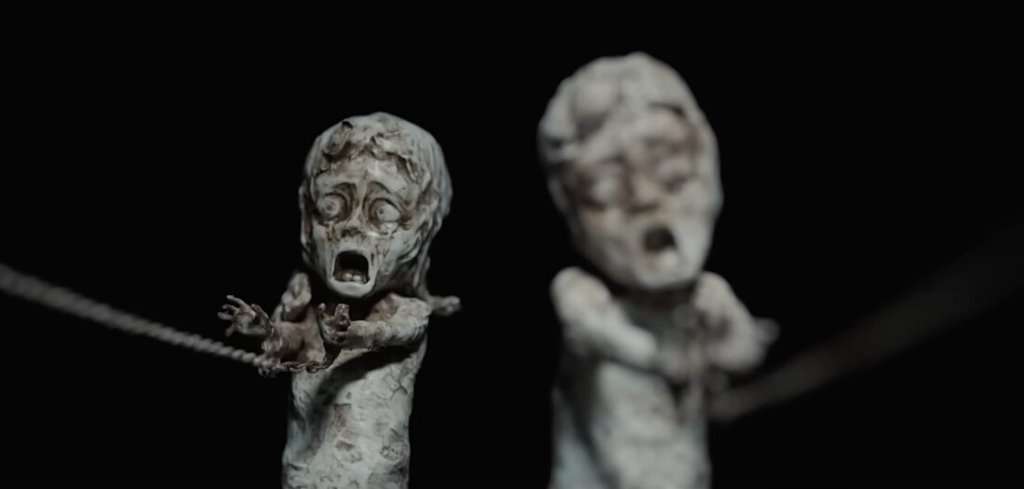
I mentioned it’s a film about stories and what we can and can’t trust. Hokum understands that the lies we tell ourselves are just stories we use to survive the cruelty of the world. They help us work through pain, grief, and unresolved trauma.
Sometimes, those stories are meant to comfort and keep us safe. Other times, they become corrupted and gnarl into nightmares that terrorize us.
Hokum presents a terrifying witch from folkloric legend and asks whether she offers damnation or salvation.
Sometimes there are forces hellbent on pulling us under and dragging us into darkness. And sometimes, the hands grasping at us don’t really want to rip us apart; they seek to protect us like a mother’s embrace.
Ultimately, whether we lose or save our souls is less about what lurks in the darkness and more about our ability to bring the truth into the light.