Prepare to feel hungry, as these 10 delicious films about food are guaranteed to make your mouth water…

Food and film have gone together for a long time. I’m not just talking about an overpriced bucket (or Dune fleshlight) of slightly stale popcorn, or a hotdog that’s been spinning on the plate for 23 years, or pick ‘n’ mix that costs more than your house either. I’m talking about food captured on celluloid (or digital) and films that have a loving focus on food culture and culinary delights.
Ever since the Lumière brothers captured Baby’s Meal in a short, back in 1895, we’ve seen depictions of food consumption, with some more glamorous and visually appealing than others. In the colour era, those depictions of lavish dinner spreads or rustic lunches looked even more vivid. You could almost reach out of the screen and pluck a leg off that golden Turkey.
Okay, you’ve guessed it, I like food. Films about food are almost innumerable now, some focused on capturing the nostalgia of a food, evoking the taste of it, or delving deeper into its cultural significance and importance within family units.Prepare to make a mental shopping list or have your favourite takeaway delivery app loaded and ready because, from noodles to tacos to traditional French dishes, we’re going to run the gamut. Here are ten films about food, guaranteed to make your mouth water…
Ratatouille
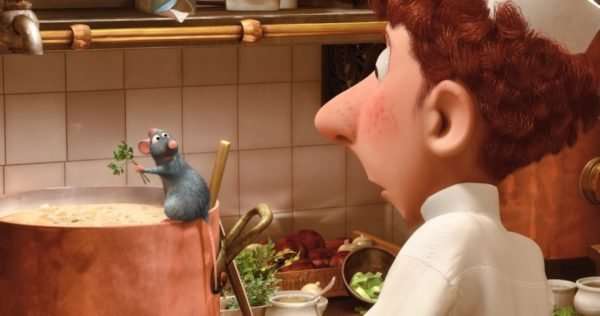
Animated cinema has always been great at capturing food. How many times have you wanted a cartoon or anime dish? Pixar’s animation skills naturally meant that any eventual film about food was bound to make dishes pop deliciously from the screen. Even a Rat chef makes appetizing-looking food in Ratatouille.
Remy the rat wants to be a chef. The only thing standing in his way is that he’s a rat. Which is quite the stumbling block given the relationship between restaurants and rats. Although in reality this kitchen would have been closed down quicker than a shop selling only fact-sourced newspapers, everyone loves Ratatouille. It’s not just a visual culinary delight; it’s an atypically Pixar gold-tier marvel of storytelling. Would I go as far as attempting to conjure the titular dish after watching? Okay, I did. I can’t say I had Anton Ego’s reaction, but of course the point of the sequence, which will have struck a chord with most people, is that dish that just sparks a vivid memory, taste, or sense of nostalgia.
Tampopo
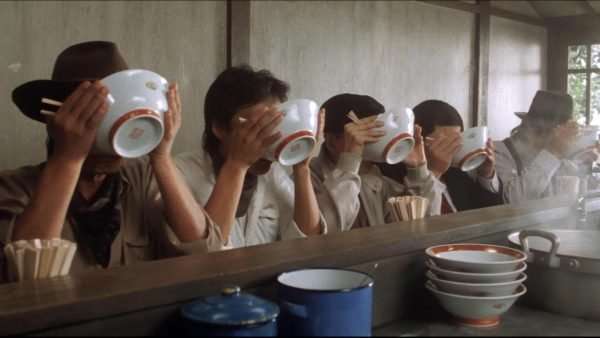
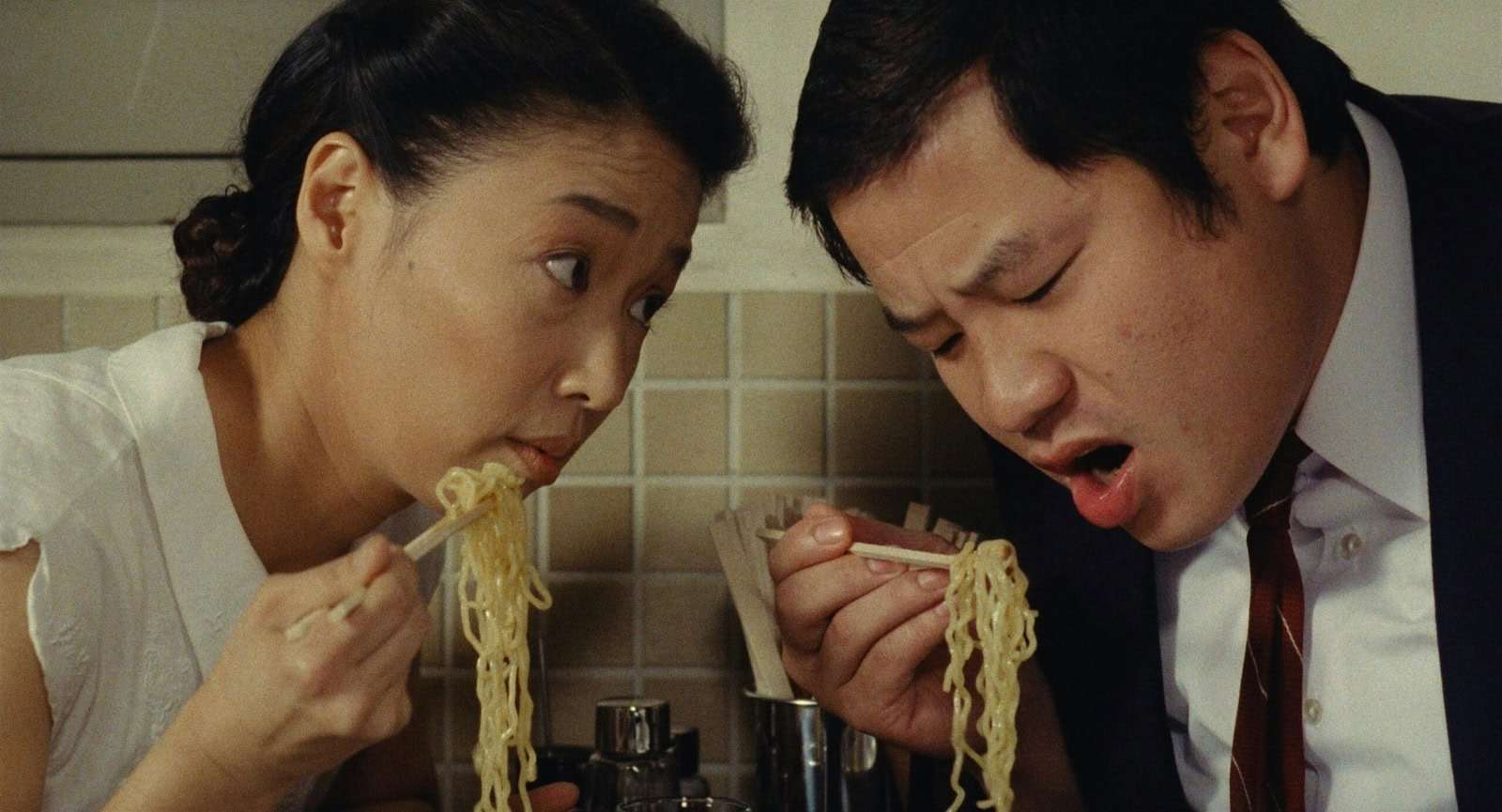
You’ve heard of the phrase Spaghetti Western. Well, how about a Noodle Western? Juzo Itami’s absurd, farcical, hilarious riff on the Western and Samurai pictures is blended into a love letter to food (most specifically, Ramen). Itami, with good humour, pokes fun but also beautifully portrays the cultural significance and importance bestowed upon Ramen, and further, the idiosyncratic approach and recipes unique to every chef or cook who makes it. It’s a serious business but almost comically serious. Itami sprinkles the film with liberal amounts of satire and absurdist comedy about the power of food. You’ll never look at an egg yolk the same after watching this, nor fail to appreciate the magnitude of a mother’s cooking.
The film jumps around its core story with little side dish vignettes with colourful characters and situations, always coming back to Tampopo’s noodle shop as a pair of truckers try to help her struggling business by adding some much-needed oomph to her ramen. Icons such as Koji Yakusho and Ken Watanabe all appear, whilst Tsutomu Yamazaki (as the Stetson-wearing Goro) and Nobuko Miyamoto (as Tampopo) are great.
Chef
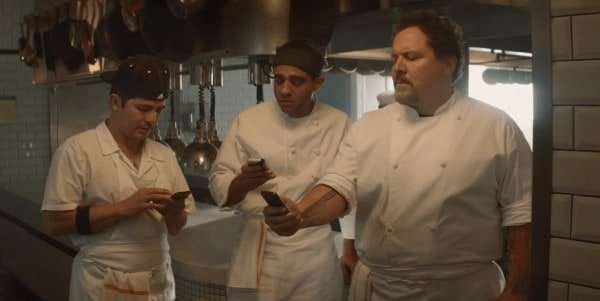
Jon Favreau took a deep love of food and made a brilliant and modest budget film about food service. Unlike many American films which might focus on high-class haute cuisine, Chef is right down to pure, simplistic, comforting flavour. A once esteemed restaurant chef loses his job and decides his midlife crisis is to open a food truck. He reignites a passion for food by trading pomposity for street food culture and simple dishes made well.
By the end of this film, you’ll be scanning your takeaway app for some of the dishes that appear here. Of course, what comes in a grease-laden paper bag in the dead of night won’t be nearly as delicious as what Favreau serves up, but even a shit taco is still great, am I right?
The Taste of Things
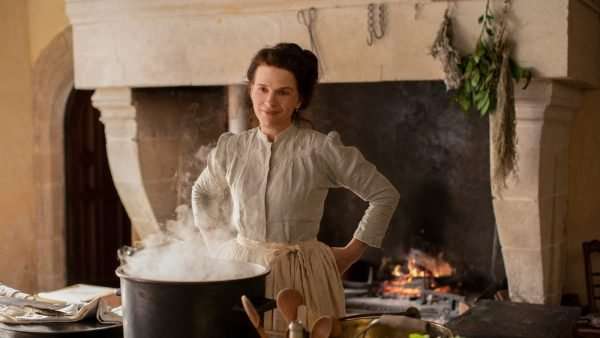
The mere presence of Juliette Binoche makes every cinematic dish something to savour, and The Taste of Things is no different. The combination of a skilled and classical cook (Binoche) and a Gourmet Chef with a long history sees romance but also a unison that helps to find a perfect unison between tradition and modern pomp. Classy, rustic, homely, and majestic dishes. The earthy browns, creams, and greys of the settings and costumes are countered by the vibrant colour of the food, helping them jump from the screen even more.
Tran Anh Hung’s film savours each ingredient, each technique, each final dish with an adoring gaze aided by cinematographer Jonathan Ricquebourg. It’s a mouth-watering film, but importantly, it has warmth that goes beyond boiling stocks and roasting hot ovens. The core relationship is wonderfully portrayed by Binoche and Benoit Magimel, both French cinema royalty.
Harold and Kumar
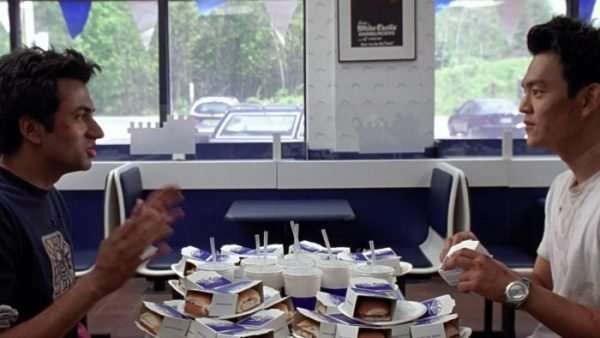
The food in these films doesn’t even have to be all that appetizing to look at to leave you chewing your forearm to quell the pangs. In Harold and Kumar, two stoner friends go on a 90-minute odyssey to get the one, albeit shitty (sorry White Castle) food that they crave. Let’s face it, if you’re drunk or high, chances are only a diabolical foodstuff will do. Many of you will have done the same, even sober. If your journey is longer than 30 minutes to go to one particular food truck, drive-in, or restaurant, buddy, you’re on an odyssey!
By the time Roldy and Kumar have got through their achingly funny journey, you’ll want to fire up your engine and venture out into the night to find your equivalent. Whether that’s White Castle, or that Kebab van in a layby off the A4.
The Trip
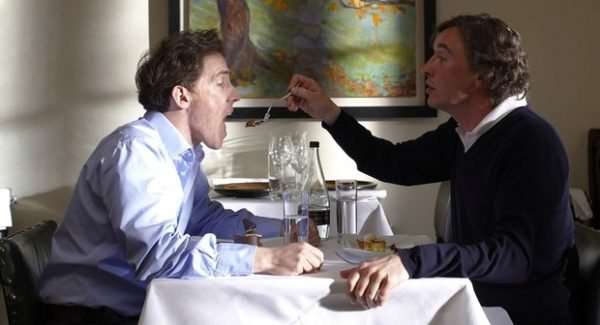
Steve Coogan and Rob Brydon are a dream team as fictionalised versions of themselves, sent on a food journo journey up north to check out a few spots. A backdrop of mild drama in a film front-loaded by the duo’s interplay and jousting impressions. Michael Winterbottom’s 90-minute feature version is great, as was the remoulded, extended version split into TV episodes that followed. As were the follow-ups that added some European glamour and sunshine with trips to Italy, Spain and Greece.
The food is captured with the matter-of-factness and clarity of a culinary program, but there’s a nice, mouth-watering range with upmarket pretension, countered by home-styled comfort and simplicity. It not only inspires one to go on a jaunt with a mate, but to wind through a country road or two and find a half-decent gastro pub (with hopefully, a solid selection on tap) for a spot of lunch.
Spirited Away
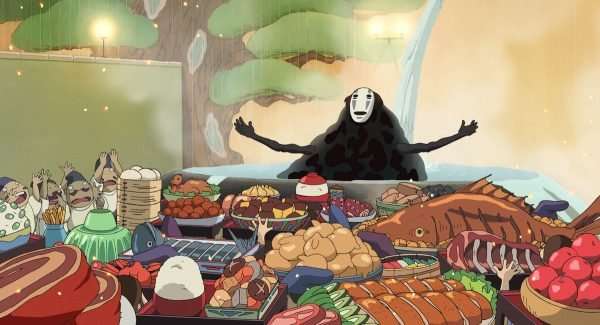
Time to dig into more cartoon food with one of the most visually dazzling and wildly creative animated films ever, Spirited Away. Hayao Miyazaki’s boundlessly imaginative masterpiece sees a young girl lost in a bathhouse where spirits go to indulge in a number of pursuits, not least gorging on a wide array of food.
There’s indulging, and then there’s gluttonous feasting, which might leave you with a stomach ache but is something that always looks so much fun on screen. The bold and striking colours in Spirited Away make even food that might look horrible in reality look kind of appealing. Food aside, it’s a masterpiece bolstered by Joe Hisaishi’s incredible music.
The Hundred-Foot Journey
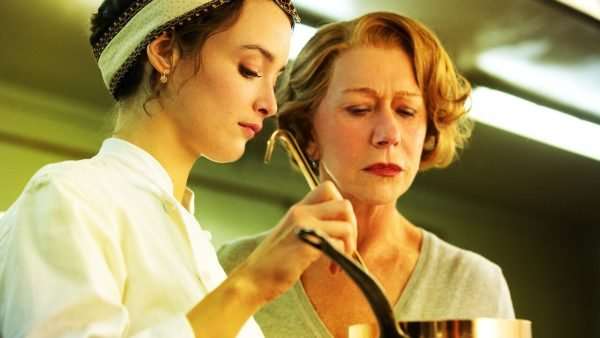
Lasse Hallstrom works from a Steven Knight script (adapted from Richard C. Morais’s book), with Helen Mirren starring opposite the late Om Puri. Those ingredients combine into a pretty tasty dish. An Indian family moves to France and sets up a traditional, hearty (and homely) indian restaurant opposite the esteemed haute cuisine of Madame Mallory’s (Mirren) establishment.
It’s lighthearted, funny and touching. Whilst it’s a light dish that might not entirely fill your tum tum, it’s a delight nonetheless. The clashing cultures mine much of the drama and comedy, but Hallstrom also beautifully depicts the starkly different approaches to cuisine.
Eat Drink Man Woman
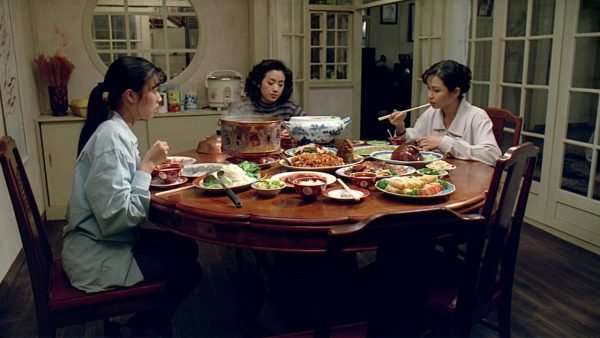
Ang Lee has long since proven himself a master of simmering family drama and unspoken angst. Here he combines that with the ritualistic importance of the family dinner in Chinese culture. A widowed and retired Masterchef continues to pull his family together to sit, eat, and (often reluctantly) talk.
Lee’s film is bittersweet, capturing the family dynamic in a way that is ultimately relatable to most people watching, even if the sight of a grand spread of Chinese food seems to have more to nibble from than a spag bol with a side of garlic bread. As Lee has shown in his eclectic CV, whether capturing nature or the balletic beauty of martial arts or the steamy skin of Tony Leung and Tang Wei, he makes everything he captures look magnificent. The food here will have you raiding the drawers for that dog-eared old Chinese restaurant menu, hoping they still do a cash discount and the prices are still the same as they were in 1997 (they’re not).
Babette’s Feast
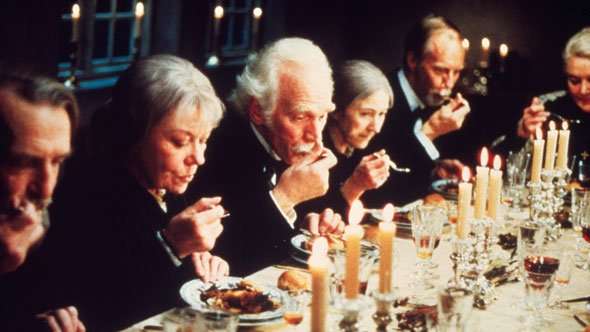
A French refugee brings a little of her national culinary might to conjure up a feast for a pious group of Danish villagers. Gabriel Axel’s film highlights the cultural divides but likewise the ability that food has to unite people across the world.
This gorgeously shot film could be paused at any moment and look like a painting. It’s stunning to behold, with a great ensemble cast, headed by a wonderfully enigmatic performance from Stephane Audran. The climactic feast alone will cause foundation-shaking stomach rumbles.
What’s your favourite film about food that always makes you hungry? Let us know on our social channels @FlickeringMyth…