In the 60 years since England last won a major football tournament, it still seems to think it’s owed another. When results go against it, disappointment can curdle into “we wuz robbed” outrage and violence. When players fail to meet impossible expectations, they are treated appallingly.
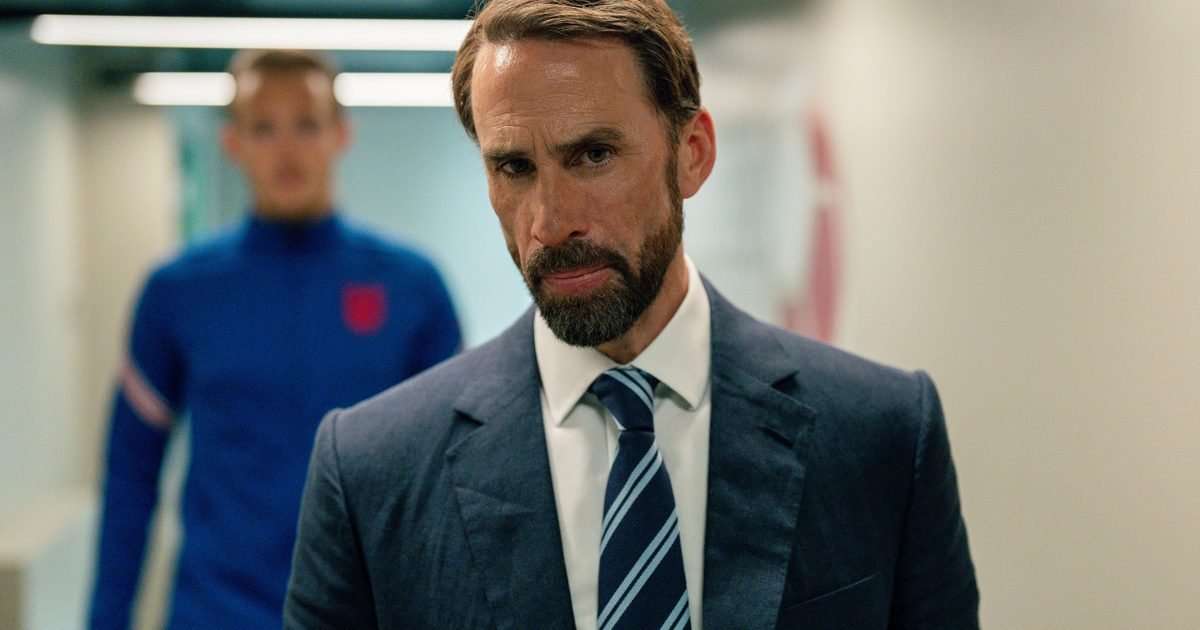
It is this national pathology that James Graham’s magnificent adaptation of his award-winning play Dear England sets out to examine. More than a sports drama and far more than a straightforward account of Gareth Southgate’s tenure as England manager, this four-part BBC series is a state-of-the-nation piece disguised as football entertainment: an exploration of masculinity, identity, shame, redemption and the emotional illiteracy embedded deep within English culture.
The original stage production, which premiered at the National Theatre in 2023, was seen by nearly half a million people. Taking its title from Southgate’s open letter to England, in which he urged a more generous and inclusive understanding of what England could be, it won Graham the Olivier Award for Best New Play in 2024. The television version could easily have felt like a diminished echo of that theatrical success. But approaching the adaptation almost as an entirely new work, Graham described the process to Radio Times as “walking backwards out of the woods that you walked into the first time, leaving everything behind and then finding another way in”. That effort pays off handsomely.

Beginning in the aftermath of England’s humiliating defeat to Iceland at Euro 2016, Dear England charts Southgate’s attempt to transform not simply the team’s performances but its entire culture. Graham smartly frames the story less as a sporting comeback than as a psychological revolution. England’s greatest obstacle was never technical ability; it was fear. Fear of penalties, fear of humiliation, fear of history repeating itself.
Southgate’s response was radical precisely because it rejected the macho certainties traditionally associated with football management. Working alongside sports psychologist Pippa Grange (Jodie Whittaker), the Yoda to his Luke Skywalker, he encouraged players to talk openly about anxiety, embrace vulnerability, keep journals and focus less on winning itself than on process and emotional resilience. In another drama, these ideas might seem faintly absurd or ripe for mockery. Here, we take them seriously because we know that they worked in improving the England team’s performance.
Graham’s diagnosis of England’s footballing dysfunction features in a scene Pippa and Gareth in which he asks her “Why can’t we just win?” and she replies “What England needs to learn isn’t how to win. It’s how to lose.”
At the centre of all this is Joseph Fiennes and his performance as Southgate not as a charismatic firebrand or tactical genius but as thoughtful, introverted and fundamentally decent: a man attempting to lead through empathy in a culture that traditionally mistrusts kindness and confuses aggression with strength. Fiennes captures this beautifully.
The performance is all restraint: anxious smiles, furrowed contemplation and emotions flickering silently behind the eyes. As Graham himself observed, Southgate is not “a Shakespearean warrior raising his sword and leading an army”. Yet what Fiennes achieves is arguably more difficult. He makes decency dramatically compelling.
Ultimately, what makes Dear England so moving is that it argues for a different kind of leadership and, by extension, a different kind of country. In an age dominated by performative aggression, cruelty and swaggering certainty, Southgate emerges as something surprisingly radical: a decent man trying to improve the emotional lives of those around him.
Want to see this content?
This page contains content provided by Google reCAPTCHA. We ask for your permission before anything is loaded, as Google reCAPTCHA may use cookies and other technologies. To view this content, choose ‘Accept and continue’ to allow Google reCAPTCHA and its required purposes.
Dear England continues tonight at 9pm on BBC One and iPlayer.
Add Dear England to your watchlist on the Radio Times: What to Watch app – download now for daily TV recommendations, features and more.
Check out more of our Drama coverage or visit our TV Guide and Streaming Guide to find out what’s on. For more TV recommendations and reviews, listen to The Radio Times Podcast.