This article first appeared in Radio Times magazine.
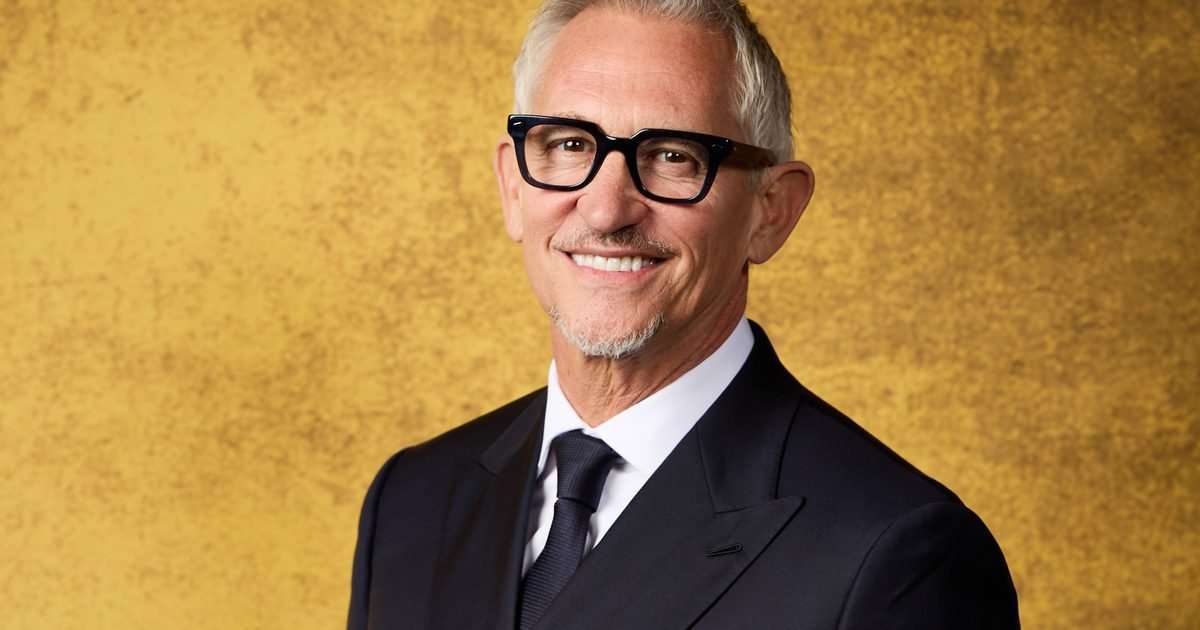
In another universe, Gary Lineker would be packing his suitcase and heading up the motorway from London to Salford, to lead the BBC’s World Cup presenting team. Seamlessly, he would be juggling live match feeds from three countries across four time zones, reporting on the latest full-time scores and bantering with his studio guests.
It’s what he’s done for the previous seven World Cups, and what he’d announced he’d be doing as his final hurrah before taking leave of the Corporation he’d called home for 30 years.
Instead, this month will see him swap Manchester for Manhattan, from where he will broadcast his The Rest Is Football podcast three times a week. In addition he’ll host, along with Alan Shearer and Micah Richards, a separate daily TV show of the same name, every morning of the tournament, to be shown across the world via the Netflix streaming platform.
He sounds undaunted: “I’ve done World Cups, and we did a podcast every day for the Euros. This will just be a bit glossier, so I’ll manage,” he smiles. “There will be lots of prep and long days, but they’re long days watching football so I’m not complaining.”
Such a broadcasting deal is a testament to the success of Lineker’s post-BBC career; as well as hosting The Rest Is Football, he is a co-founder and director of Goalhanger, the company that boasts a string of hit podcasts: The Rest Is… History, Politics and Entertainment as well as William Dalrymple’s Empire.
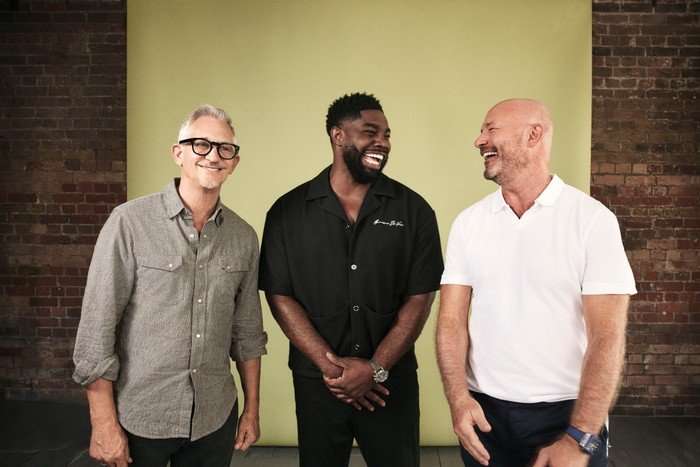
But he bats away the idea he is some kind of media prophet: “It’s really my partners Tony Pastor and Jack Davenport who run the show. Just like my whole life, whether it be football or television, other people do all the hard work and then I get, well, the praise – and sometimes the blame. Tony and Jack are like Peter Beardsley and John Barnes. They create a lot of things for me and I go in and finish them off.” He beams at this extremely tidy football analogy.
He’s equally keen to stress that his World Cup show won’t be in competition with the BBC, that it won’t have the live matches aired by the national broadcasters, that his offering – overlooking Times Square – is a complementary one, albeit with slightly fresher language if the occasion demands.
Lineker drew headlines in 2024, calling an England performance at the Euros “s**t”. He says now: “I didn’t do that deliberately. I hope I won’t have to swear, that it’ll all be very positive, because we really want England to do well and win it. But we can be a bit more honest.”
It’s clear talking to him that he is more than ready for this new chapter. When I ask if he misses the BBC, he sighs. “I think I’d had my time. It was like a wonderful marriage that kind of petered out a bit at the end. I love the BBC, I always will. I have a huge amount of respect for it. It turns out some incredible television and I think we did in sport. But I’m enjoying life without having to tread on eggshells and everything’s going really well. So no, I don’t miss it at all.”
Want to see this content?
This page contains content provided by Google reCAPTCHA. We ask for your permission before anything is loaded, as Google reCAPTCHA may use cookies and other technologies. To view this content, choose ‘Accept and continue’ to allow Google reCAPTCHA and its required purposes.
It’s now just over a year since Lineker signed off from his very last Match of the Day, departing the BBC prematurely after he apologised for inadvertently reposting a message on social media that contained an anti-Semitic trope.
That was in addition to other controversies that had piled up around him in recent years, including that Saturday in March 2023 when he was suspended from Match of the Day for commenting publicly on government policy, and dozens of sports professionals went on strike in support, leading to a first-ever presenter-less highlights show. One year on, what’s been the biggest benefit? He says simply, “Freedom.”
I ask him to expand. “Freedom of speech. It had become quite difficult. It was always fine for anyone outside of news and current affairs to have an opinion on other things in the world and then suddenly it wasn’t.
“They moved the goalposts, changed the guidelines and it became tricky because I’ve always cared about humanitarian issues, I don’t think they’re ever really political ones. Suddenly, they didn’t want you doing this or that, and [my departure] became inevitable because I have to live with myself.”
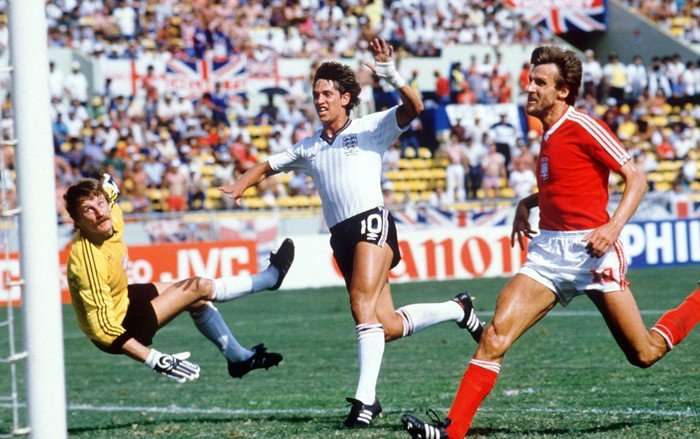
It’s hard to believe, but Gary Lineker has been a household name for 40 years. June 1986 saw his unforgettable hat-trick for England against Poland in the Mexico World Cup otherwise dominated by “Hand of God” headlines. He says today: “It changed my life. Everything was different afterwards.”
I’ve heard Lineker, and other retired footballing greats, lament that nothing in their lives will ever compare with the euphoria of scoring for England, but that feeling seems to have been tempered.
“No, I much prefer this. When you score a big goal in an important game, you don’t know if you’re going to do it again, there’s no guarantee. In my day, one goal every other game would have been an excellent ratio. So that’s a few seconds of absolute joy amid three hours of misery.
“That day in Mexico, it was 43 degrees. It was unbearable, I thought I was going to die in the second half. When the hat-trick came, I was dizzy from heat exhaustion. You’re getting kicked and you’re not getting the ball. But then you get this explosion of absolute joy, relief and exhilaration, for a few seconds, once in two hours.
“Whereas now, we have a bit of fun, we talk football, we’re serious about the game but not about ourselves. And no one’s trying to kick us.”
Want to see this content?
This page contains content provided by YouTube. We ask for your permission before anything is loaded, as YouTube may use cookies and other technologies. To view this content, choose ‘Accept and continue’ to allow YouTube and its required purposes.
Final question then: he doesn’t need the money, he’ll be exhausted, why not sit back and watch with the rest of us?
“I love football, and I want to be part of the World Cup. I’ve either played in or worked at every World Cup since 1986. You said it, it’s been 40 years.”
Well, what else would you do? “Exactly…”
The Rest Is Football is available daily from Wednesday 10 June on Netflix.
The latest issue of Radio Times is out now – subscribe here.
Check out more of our Sport coverage or visit our TV Guide and Streaming Guide to find out what’s on. For more TV recommendations and reviews, listen to The Radio Times Podcast.