This article first appeared in Radio Times magazine.
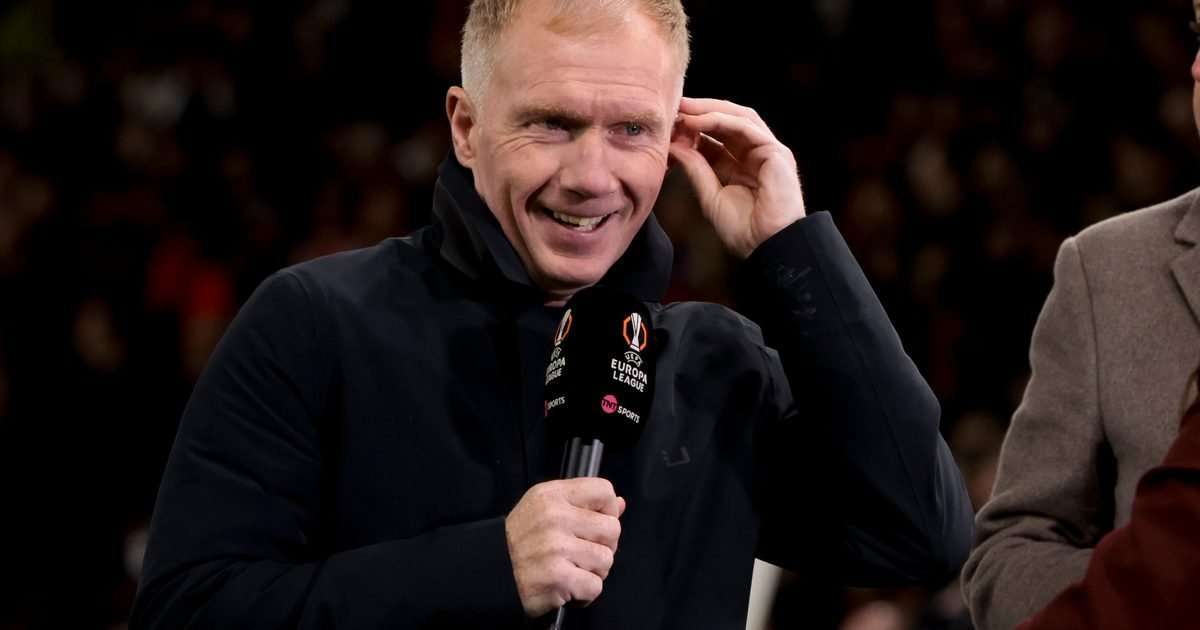
Paul Scholes knows all about England World Cup campaigns. He was 23 in France during the summer of 1998; asthmatic, pale skinned and famously ginger, he overcame 28°C heat in Marseille to score in the 2-0 defeat of Tunisia.
“To be there in front of the England fans was just amazing,” Scholes says of the moment he curled in a shot from the edge of the penalty area. “As a kid, the thought of playing in the World Cup wasn’t even a dream for me. If anyone had asked I would have said, ‘Don’t be stupid. That’ll never happen.’”
Grey-haired now, but still recognisably the man that once dazzled in midfield for Manchester United and England, Scholes is talking to me before recording The Good, the Bad and the Football, his podcast with fellow ex-Manchester United player Nicky Butt and the comedian and actor Paddy McGuinness.
Throughout the 2026 World Cup, there will be two episodes a week as the team follows what – for England and a newly confident Scotland side – looks like a promising opportunity.
France 98 was also promising; before the tournament, England manager Glenn Hoddle said, “Hotels are already booked for England’s appearance in the final.”
The campaign ended some time before that, with defeat to Argentina on penalties after David Beckham, another Manchester United teammate, was sent off. Such was the dismay in England, effigies of Beckham were publicly burned. One was ceremoniously hung outside a south London pub.
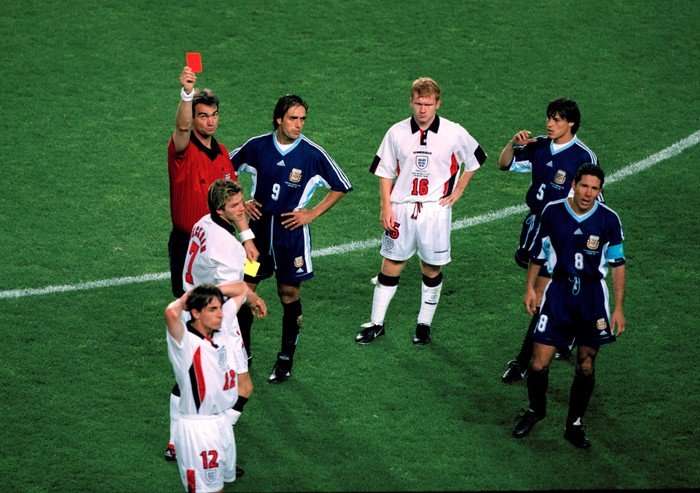
“The crowds were on the streets, but when you’re away you are a bit shielded from it,” says Scholes of the fevered national atmosphere at the time.
“A lot of it was about David, of course, because of what happened [he retaliated after being fouled]. We were teammates, so you made sure he was OK, but there was no special treatment for him. When you’re a footballer, you’re very good at hiding feelings and emotions until you’re no longer on the pitch – that’s when it comes out.”
In retrospect, young men being under such intense scrutiny and keeping their feelings locked away doesn’t seem entirely healthy. “It was just normal,” Scholes says of those different times. “Whether it was healthy or not, that was the life of a footballer back then.”
Add Radio Times as a Preferred Source on Google
Keep up to date on what’s worth watching with your favourite entertainment news from Radio Times – see more of our exclusive news and interviews featured prominently in Top Stories when using Google.

In his career Scholes won, among other things, 11 Premier League titles, three FA Cups and two Champion’s League winners’ medals with manager Alex Ferguson’s Manchester United, but even as the honours piled up around him, he was keeping something else locked away inside.
Scholes’s son Aiden, born in 2004, has severe autism. He is non-verbal and requires regular care. Scholes is separated from his wife Claire, who he met in a pub when they were both 18, but still lives in Manchester and the couple share parenting duties.
“It’s hard,” says Scholes, who gave up television commentary work so he wouldn’t be away from his son. “Sometimes when I look at Aiden, I think, ‘There can’t be anybody else like him.’”
Scholes, who has two other adult children, had said little publicly about Aiden until last year, when he appeared on The Overlap (Stick to Football) podcast and he began to quietly describe the reality of looking after his son. “It just all came out,” he says now. “I never speak about it to anyone, so nobody really knows how difficult it is.”
Want to see this content?
This page contains content provided by YouTube. We ask for your permission before anything is loaded, as YouTube may use cookies and other technologies. To view this content, choose ‘Accept and continue’ to allow YouTube and its required purposes.
It was one of those moments when someone’s innermost feelings connect with a wider public. “I got an unbelievable number of messages afterwards,” he says. “I hadn’t realised so many other people are in the same situation but don’t have anyone to talk to about it. Helping so many people was something I took very seriously, I was emotional.”
Rather than a burden, Scholes talks about parenting Aiden as a responsibility that he is committed to – “Aiden probably takes up 90 per cent of my life.”
Despite this, and his footballing achievements, Scholes admits to being nothing more than, “a typical northern working-class lad”. He’s so unassuming I have to tell him how successful The Good, the Bad and the Football is. So far, 15 million people have viewed the podcast online, and viewed social media clips many millions of times.
“That’s brilliant,” he says, “I just hoped three lads talking about football would come across well, though we do go off on random subjects like biscuits.
“We’re quite dry and might come across as a bit miserable to a lot of people,” he adds, with the flat vowels of a man born in Salford in 1974.
His family moved to an overspill council estate when he was 18 months old. His father Stewart was a gas pipe fitter and amateur footballer. Scholes junior would watch Stewart play at weekends and kick a ball about the pub car park when his parents had a drink afterwards.
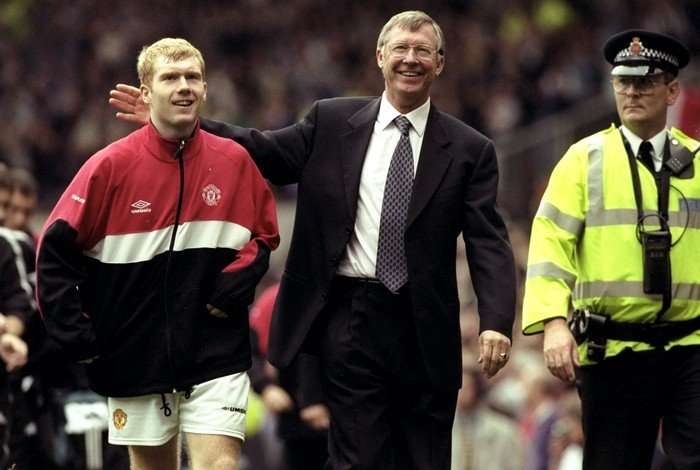
Though he says he wasn’t “athletically blessed”, by the age of 19 Scholes had developed into a brilliant attacking midfielder, something he gives a lot of credit to Ferguson for. “He’s still the boss to me,” he says. When I ask who his dream podcast guest is, he replies, “Sir Alex”.
England’s current manager, Thomas Tuchel, has several midfield options – Scholes highlights Jude Bellingham, Declan Rice and Elliot Anderson – but, arguably, none quite as good as Scholes was at his best. They will have to operate in fearsome heat in North America, just as Scholes did when England lost a 2002 World Cup quarter-final against Brazil in Japan and the temperature reached 30°C.
England have an apparently easy group: Croatia, Ghana and Panama. Scotland have an ominous appointment with Brazil, plus Morocco and Haiti. But Scholes is upbeat about their chances to progress further than some might think.
“This isn’t a Brazil team you would shout about from the rooftops,” he says. “Scotland have a talented group of young players, and their manager Steve Clarke has done a great job. But just being satisfied with getting to the World Cup isn’t enough now, they want to win games.”
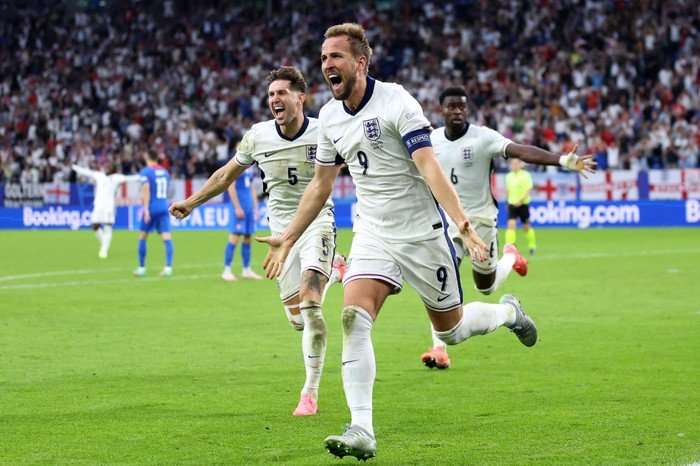
Realistically, England have the better opportunity to win the whole tournament. “I’m hoping for big things,” says Scholes, who was given a glimpse of World Cup glory at that 2002 quarter-final. “I think expectation was high because of the quality of players we had and we definitely didn’t live up to it.” Yet football, like fate, hands out its prizes in surprising ways.
Two days after we talk, when his former teammate David Beckham is declared English football’s first billionaire, Scholes will be in Manchester, looking after his son Aiden. A different kind of winner.
The Good, the Bad and the Football is on YouTube, Spotify and wherever you get your podcasts.
The latest issue of Radio Times is out now – subscribe here.

Check out more of our Sport coverage or visit our TV Guide and Streaming Guide to find out what’s on. For more TV recommendations and reviews, listen to The Radio Times Podcast.