Robert Kojder chats with Her Private Hell director Nicolas Winding Refn and star Charles Melton…
Known for neon-drenched, dreamy cinema that typically oscillates between slow-burn drama and bursts of violence, filmmaker Nicolas Winding Refn (who is actually color blind) had quite the career, including the Pusher trilogy, before hitting the mainstream and significantly boosting Ryan Gosling’s star power with the masterful crime thriller Drive. From there, he has continued to push himself and the limits of his singular stylish, well, style, sometimes reuniting with Ryan Gosling and other times going in a different direction, like with the surreal fashion horror drama The Neon Demon.
That was until he lost that creative spark for movies and veered into television (which, from what I understand, is more accessible than some of his movies and more in line with Drive), only to find himself rejuvenated following a heart failure that left him dead for roughly twenty minutes and brought him back to life. Not only did he start to collaborate with video game director Hideo Kojima on Death Stranding after that (lending his likeness to an offbeat character whose heart fails every fifteen minutes, utilizing a device on a timer to bring him back, which is par for the course weirdness if you have ever played one of his games).
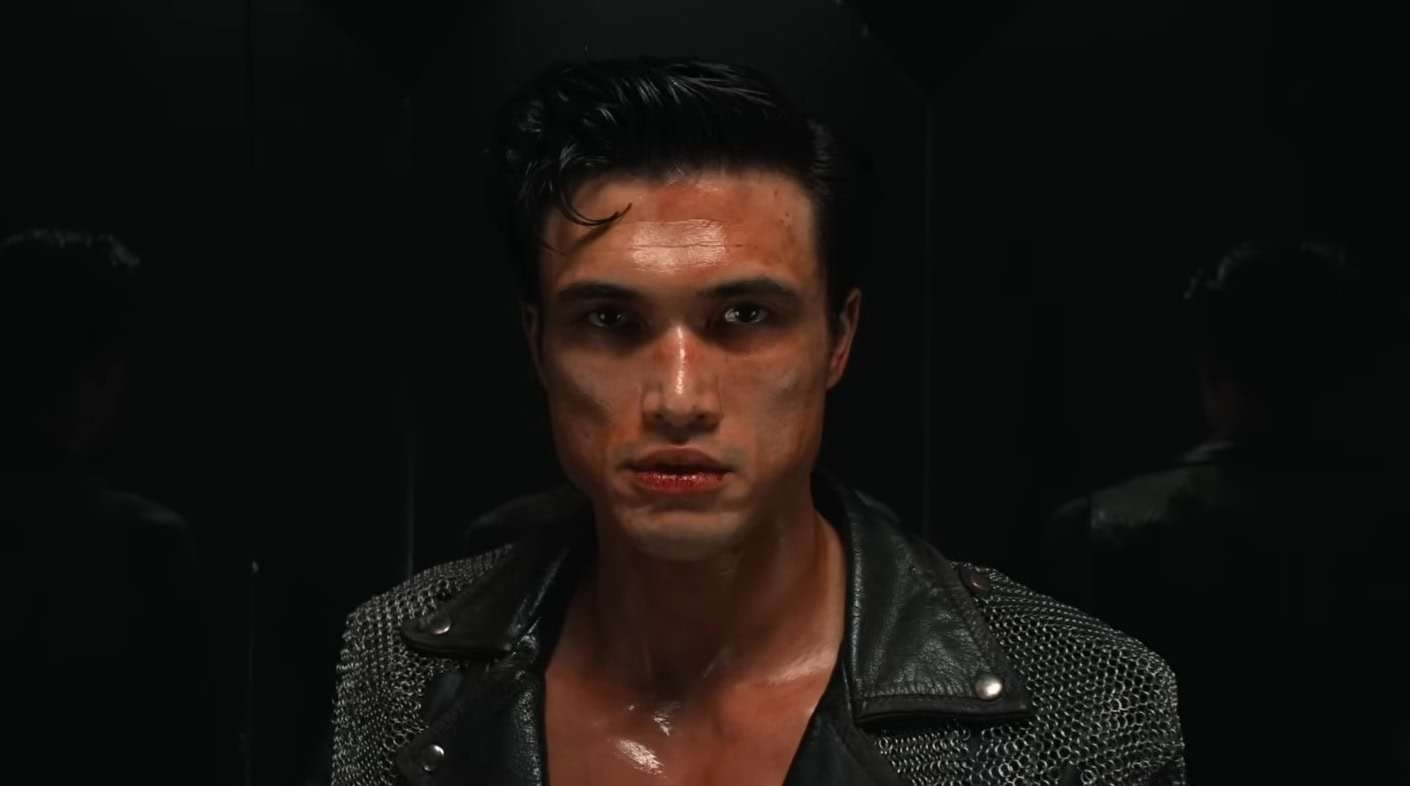
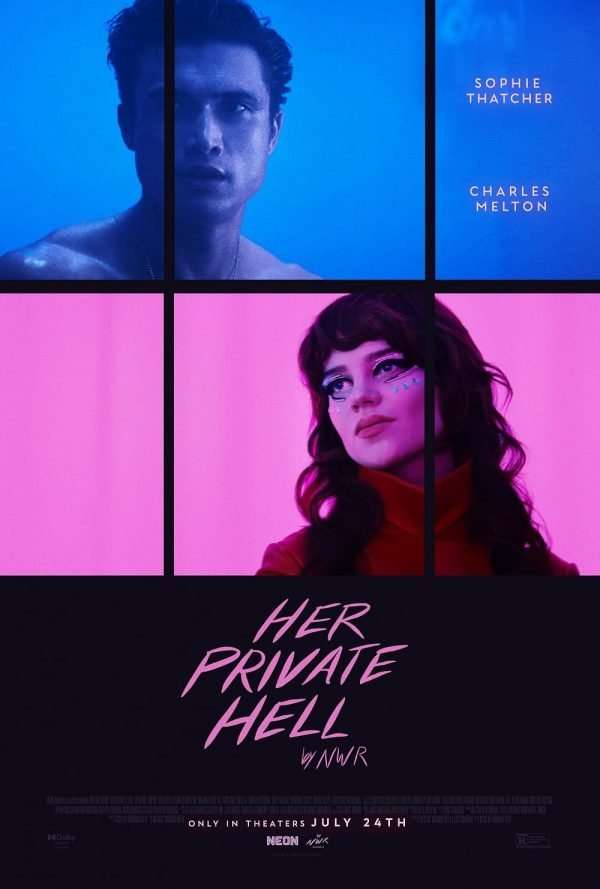
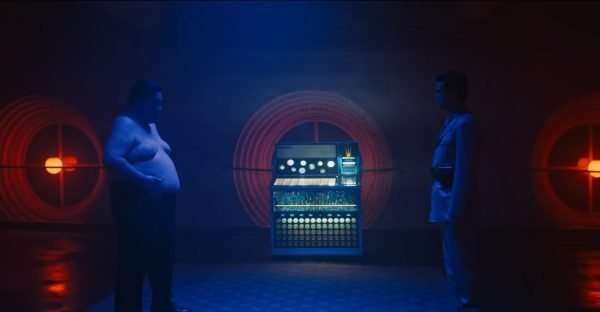
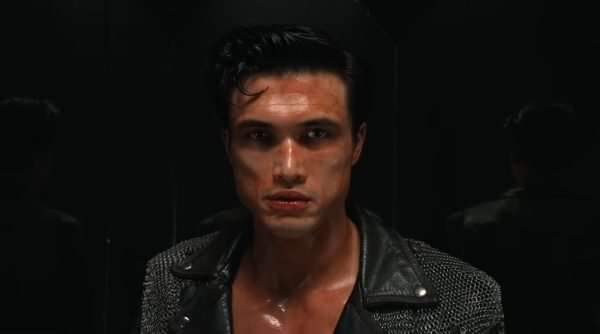
More notably, the scare sparked a renewed passion for filmmaking with Her Private Hell. It’s everything from a campy psychosexual family drama to a serial-killer flick to a tale of vengeance, with a soldier roaming the lower levels of a futuristic metropolis, perhaps doomed, searching for his missing daughter. That character, named Private K, is played by Charles Melton, stepping into what could be considered here as the Ryan Gosling role, coming across as intimidating and brooding while busting heads and stabbing generic henchmen for reasons I will fully admit I’m not even quite sure I understand.
What is for certain is that Charles Melton, with little dialogue, is hypnotic in the role and lights up the proceedings whenever he is on screen. As an admirer of his acting career so far in movies (I have yet to see him in Riverdale), ranging from his breakout turn in the bizarrely tragic, campy, and riveting Todd Haynes film May December to portraying a soldier in Warfare directed by Ray Mendoza and Alex Garland, his catapult to stardom has been exciting to watch.
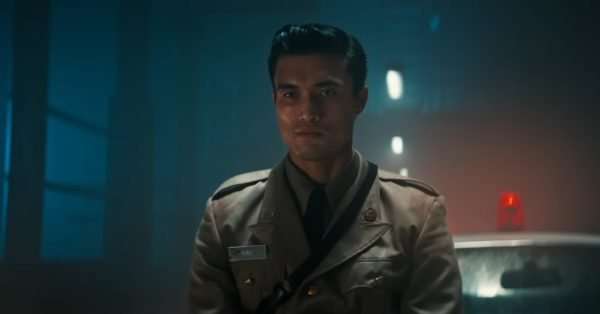
Charles Melton is also far and away the most engaging aspect of this otherwise uneven film, which I strongly suggest people check out anyway, since you never know if you might find yourself on Nicolas Winding Refn’s often esoteric yet fascinating wavelength. Even when I wasn’t compelled by Her Private Hell, it remained hard to look away, with several swings worth respecting. The same applies to all of his works; there is simply something that draws you in, even if it’s not always working as intended.
I was also fortunate to have the opportunity to talk to Nicolas Winding Refn and Charles Melton in a paired slot. Naturally, we talked about the filmmaker’s process for getting actors on his frequency and his return to movies following his heart failure. It also turns out that Charles and Nicolas are a terrific pair to collaborate with, as the former already has his motivation to play Private K convincingly. He truly takes no role for granted and perceives each one as a puzzle piece being added. Of course, I couldn’t leave without asking Nicolas about working with Hideo Kojima, two kindred creative spirits off in their own bizarro world making art that is indisputably their own. Enjoy the interview below:
Nice to meet both of you.
Nicolas Winding Refn and Charles Melton: Nice to meet you.
Before we get started, Nicolas, I have to say I’m grateful you’re still alive after your heart failure.
NWR: Thank you very much.
Following up on that, can you talk about how that experience influenced this particular story?
NWR: I don’t know if it’s so much inspired by the situation that I went through, but it inspired the knowledge that time is very valuable. If you make something, any kind of artistic expression, you have to really love it because it takes a lot of energy out of you and a lot of time. Also, the exchange you have with the audience has to be worth their time. What can you do as a creator other than give them an experience that surpasses good or bad, so that it becomes a three-dimensional interaction where you create, they respond, and then, in real time, whether they like it or not, it’s more about whether they feel something? And if you feel something love or hate, then you have penetrated the mind, and you have now placed yourself within the subconscious. Now you travel with that for the rest of your life.
Charles, your character has emerged from this fog, and he is looking for his missing daughter. Correct me if I’m wrong, but I’m assuming you don’t have a daughter in real life. What do you look to for motivation to convincingly portray that motive?
CM: Oh, what’s actually interesting is that I do have a daughter.
Wow, congratulations!
CM: Thank you! When we first started filming, you know, seeing the father that Nic is to his daughters, I think, in part and form, he is maybe the creative father figure I want to be as well. I remember we were sitting down on set in the atmosphere colored by the beautiful lights of Nic’s world, and I told him that my wife was pregnant and I understood then, but I understand now, what it is to be a father and the extent I would go for my own daughter. There’s a deeper empathy and understanding for Private K and what he does in the film. I know at the end, when Private K sees his daughter for the first time, we had lunch that day, and it was before we filmed that scene. I was FaceTiming with my wife, and she was in Paris, and we were in Copenhagen, and I saw my daughter’s heartbeat for the first time, and then we shot that scene.
That’s a beautiful story. Nicolas, I read that you prefer to shoot in chronological order so that you can see what unfolds from that uncertainty. What was that process like here?
NWR: Well, I think chronology always gives you the ability to change, adapt, or see where things are moving. You can then navigate through it. It also makes it more pure because you are in charge of time. It’s just part of the process. I can only work in order because then I’m excited because I don’t normally know how it’s going to end, or maybe I know how it ends, but I don’t know how to get there. That kind of danger zone, I find very compelling.
You played a soldier in Warfare, and here you’re playing another soldier. Now, these films couldn’t be any different, so can you talk about what you have to unlearn or take with you from that project into this one?
CM: I think everything that I have had the opportunity to do, I’m very grateful for. I feel like everything I’ve chosen to do, or that has chosen me, informs the next thing I do. I knew I was going to work with Nic the moment I found out I would be speaking with him. I knew, and that experience informed, in some way, shape, or form, my becoming a father in that film. Literally, after that film was finished, it’s a very spiritual, connected, cliched art that imitates life, and life imitates art. But yeah, everything that I do, every project that I do, it’s like a part of my soul. It’s like a puzzle piece that is being put together, and the final puzzle piece of my soul won’t come together until the end of my own time, or when Hollywood says “we’re done with you,” is when I’ll be finished.
Nic, can you talk about collaborating with actors and getting them on the same wavelength as you here, especially with Charles?
NWR: Your actors are your most important collaborators because they’re in front of the screen, and then you have your entire team of collaborators behind the screen. What you see is what you get. Casting obviously is half the work, but you also have to spend time with these people for quite some time. You have to be intimate with them and so forth. So you also have to find people you do want to work with because, at least for me, when you’re alive, your product at the end, as we can call it a product, is that space. It’s no longer yours; it’s the audience’s. While you’re making it, that’s when you’re alive. That’s when you get the creative kick. That’s when you are on the dopamine. If you want to get high, you want to get high with people you like, because the other way around is pretty terrible, I have to say.
CM: [Laughing] That’s so good!
NWR: I’ve been very lucky. I’ve worked with some wonderful people through my career.
You’ve also worked with Hideo Kojima! I love your collaboration. He seems like he would be fun to get high with.
NWR: Hideo Kojima and I have a very peculiar relationship because we have never talked since we don’t speak the same language. So we communicate through images and music. It’s very much like a silent movie between us, which is probably why we never argue.
Thank you both for your time. It was nice talking to both of you.
NWR & CM: Thank you very much!
Robert Kojder