| Photo: Courtesy of Visions Du Reel
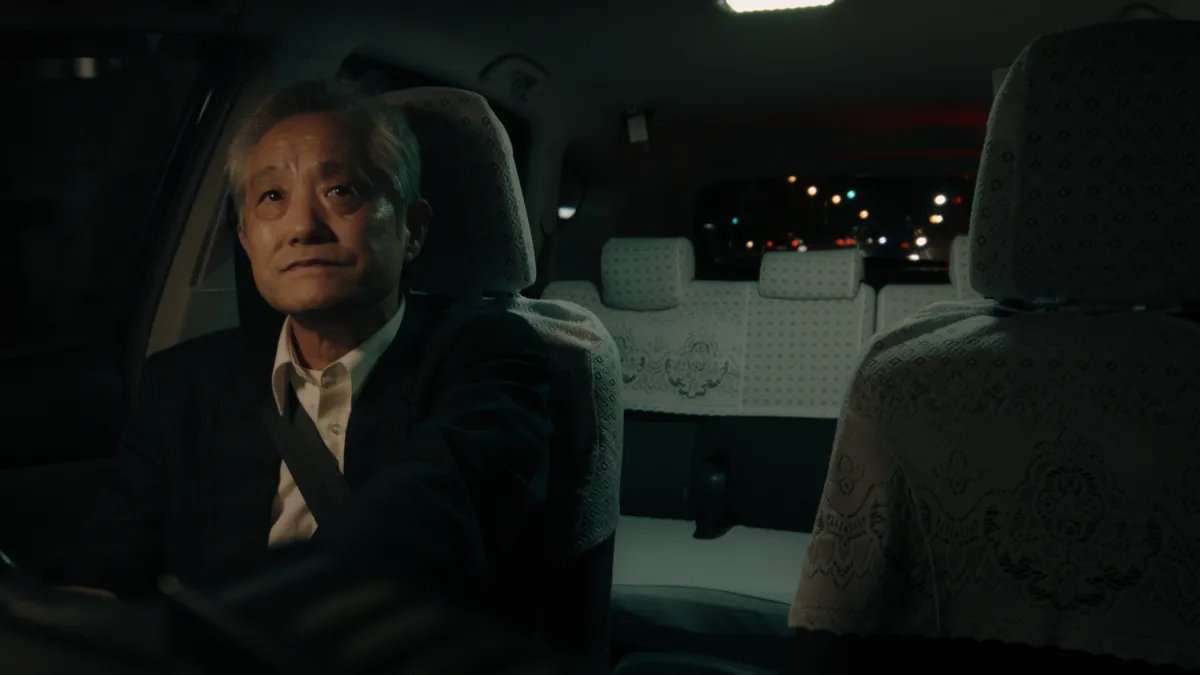
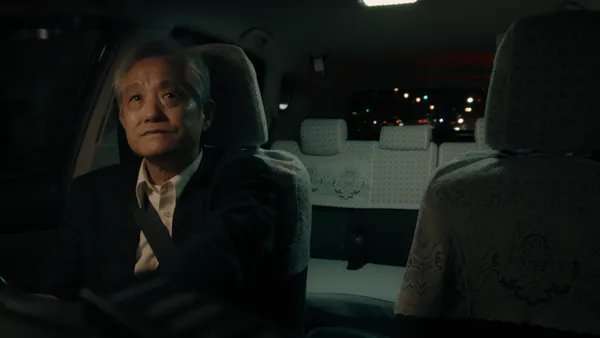
The liminal space of a taxi is the perfect setting for Katharine Round’s latest documentary, its transience reflecting the town we see Toru Konno, Yoshiji Iwasaki, Fumio Goto and Masaaki Koike plying their trade. They work in the Japanese coastal city of Kamaishi, one of many places devastated by the 2011 Tōhoku earthquake and subsequent tsunami. As a result, the whole place feels liminal, with its past destroyed and its future not yet fully taken shape.
Moving on becomes an odd phrase when you’re still in the same place, especially when life is periodically punctuated by evacuation drills and siren testing.

“It’s become a lonely town,” we hear, and Round gives a sense of that as she captures deer making themselves at home almost everywhere. Cameras set up in the taxis capture the cabbies’ conversations as they transport passengers, mostly residents, many of whom reflect on the trauma of the event, but also a “visitor”, journalist Shiori Ito, who documentary fans may recall as the director and protagonist of Black Box Diaries.
The conversations inside the taxis are free-ranging in their reflections on what has happened. Round allows the stories to become a gentle web, moving from recollections of the terrifying day of the tsunami – “it was like a black wall” – to tales of premonition or miraculous escape. Two elements recur in the conversations, ghosts and dreams. While some drivers don’t give the latter much credence, others talk of picking up passengers who weren’t really there.
Ghost Town is chiefly structured around these intimate exchanges, sometimes inconsequential and sometimes more explicitly navigating the trauma of the aftermath and survivors’ guilt. The result feels more poetic than narrative, its disparate stories connecting as a sort of shared elegy to what and whom has been lost. There is a certain amount of repetition in this simplicity but, given the tight running time, it isn’t too much of an issue.
Round also takes an interest in the surroundings to gently support the mood, whether it’s the emboldened deer going about their business or the melancholic sight of an empty phone box ringing in the night. She also takes time to capture the drivers away from their cabs, which adds an additional layer of intimacy with them. While death is a topic of conversation, this is not a bleak film, acting more as a testimony to resilience of human nature that means even decimated communities can find the strength to rebuild than a call to mourning.
Reviewed on: 05 May 2026