Westeros isn’t exactly chill. That’s true in Game of Thrones and absolutely true in House of the Dragon too. But the former was certainly more extreme in some ways, especially when it came to violence against women.

From its very first episode, the only thing more common perhaps than games or thrones was the unsettling instances of sexual assault that quickly became the norm. Game of Thrones rightly drew fire for the way it relied on violence against women to depict the hardships they face, even adding in extra bouts of sexual assault that were nowhere to be seen in the books.
Following backlash to this, especially when it came to Sansa Stark’s (Sophie Turner) rape at the hands of Ramsay Bolton (Iwan Rheon), key creatives working on the prequel realised that there was a chance to move away from the unnecessary degradation of women in House of the Dragon.
Early on, writer and executive producer Sara Hess told Vanity Fair that the new show will “not depict sexual violence” whatsoever, adding: “We handle one instance off-screen, and instead show the aftermath and impact on the victim and the mother of the perpetrator.”
Prior to season 3, House of the Dragon mostly kept its word. Violence and brutality has frequently been perpetrated against female characters, yes, but the focus largely remained on how the patriarchal systems in place subjugate women.
Aside from the marital rape between Viserys Targaryen (Paddy Considine) and (a much younger) Alicent Hightower (Emily Carey) in the pilot, gratuitous examples of sexual assault have been few and far between.
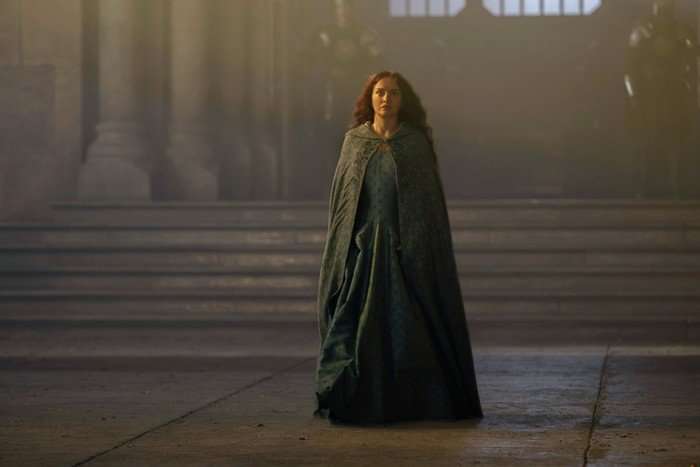
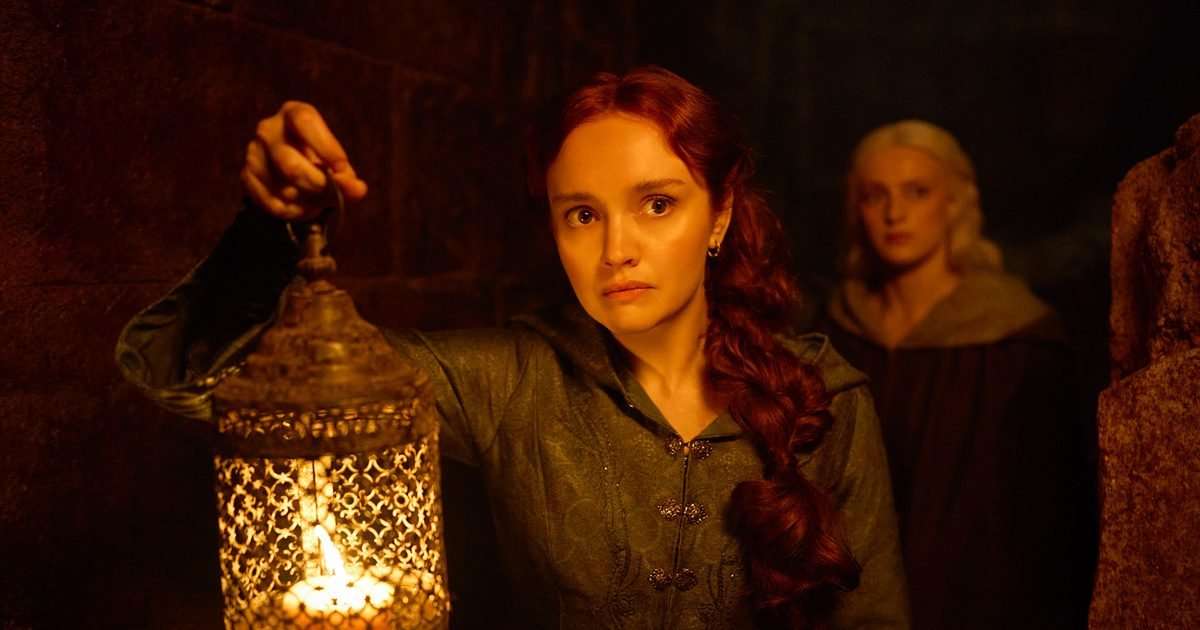
That is, until season 3. A brief implication of sexual violence in the premiere becomes explicit in episode 2 when Alicent once again becomes a target for men who want to do her wrong.
The moment in question occurs after Alicent secretly met with the City Watch, which doesn’t sit well with Lord Jasper “Ironrod” Wylde (Paul Kennedy). But rather than simply confront her, Jasper shows up in Alicent’s room unannounced, and it quickly becomes clear that he has something far darker in mind.
After he’s warned that the penalty for doing this is death, Jasper overpowers Alicent anyway, pinning her to the ground with the intention of assaulting her. Thankfully, Alicent’s screams are heard by Grand Maester Orwyle (Kurt Egyiawan) who quickly stops Jasper and arrests him before he’s able to go through with it.
Watching Jasper’s predatory lust grow more and more apparent is tough to watch, especially seeing him get turned on by Alicent struggling, but what’s even harder to stomach is just how unnecessary this all is.
Even though the assault doesn’t play out as graphically as it might have previously on Game of Thrones, it still betrays the intent to do better that Hess spoke of prior to the release of season 1.
Want to see this content?
This page contains content provided by Google reCAPTCHA. We ask for your permission before anything is loaded, as Google reCAPTCHA may use cookies and other technologies. To view this content, choose ‘Accept and continue’ to allow Google reCAPTCHA and its required purposes.
In fact, none of this was necessary at all. Jasper’s accusation could have easily raised the stakes for Alicent and us alike without resorting to the threat of sexual violence. It’s not like he’s a particularly important character when it comes to the wider story at hand, plus men have stripped Alicent of her power and autonomy many times before. She hardly needed yet another reminder of the lower position she now holds in Westeros.
What’s worse is that this rape attempt is nowhere to be found in the source material. So not only was this unnecessary, it was specifically added just to stir up shock value in ways that are unfortunately reminiscent of the original show at its worst.
That’s not to say sexual assault should be avoided entirely on screen. Downplaying or ignoring its real world impact does a disservice to victims for whom it’s all too real. The issue, however, is when such ugliness is included just for the sake of it without furthering the plot or character development in any shape or form.
Without spoiling too much, similar themes crop up again a few episodes from now, which suggests that an unwelcome pattern might be forming.
This is especially disappointing given how House of the Dragon seemed so intent on undoing the worst elements threaded throughout Game of Thrones. Yet here we are, three seasons in, and it seems that trend is now resurfacing.
For a series that has proven time and time again that it can enrapture viewers without the need for gratuitous shock value, seeing House of the Dragon slip back into lazy writing is disappointing to say the least. No one expects Westeros to be a laugh riot, but what fans do expect and hope for is something better than this.
For support and advice on matters raised in this article, please visit www.rapecrisis.org.uk, call the 24/7 Rape and Sexual Abuse Support Line on 0808 500 2222 or chat to Rape Crisis online 247sexualabusesupport.org.uk.
House of the Dragon season 3 continues on 6 July in the UK. Seasons 1 and 2 are available to stream on HBO Max, Sky and NOW.
Add House of the Dragon to your watchlist on the Radio Times: What to Watch app – download now for daily TV recommendations, features and more.
Check out more of our Fantasy coverage or visit our TV Guide and Streaming Guide to find out what’s on. For more TV recommendations and reviews listen to The Radio Times Podcast.