This article first appeared in Radio Times magazine.

Thirty-three-year-old nurse Geneva “Jean” Ellroy (née Hilliker) gave birth to a son in Los Angeles on 4 March 1948. The Communist coup d’état in Czechoslovakia had taken place one week before, and the multibillion-dollar Marshall Plan aid programme would be enacted less than a month later to stop the same thing happening in Western Europe.
On the morning of 22 June 1958, the body of Geneva was found at King’s Row and Tyler Avenue, El Monte, California. One nylon stocking and one cotton cord ligature had been tightly knotted around her neck. Sixty years later, the life of her only child, Lee Earle “James” Ellroy, can still be defined by his reaction to the confluence of these geopolitical developments and personal events.
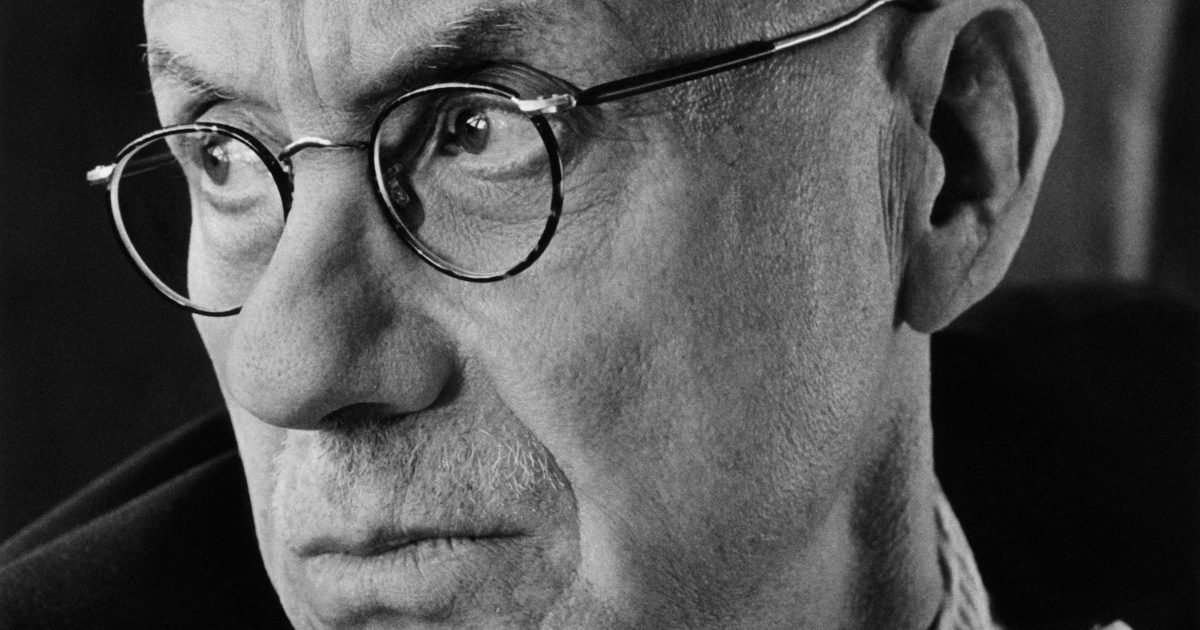
Now, of course, James Ellroy gets to consider his response at length – some would even say “exorcise himself” – across the pages of his bestselling novels. With his canon of work including The LA Quartet (The Black Dahlia, The Big Nowhere, LA Confidential, and White Jazz) and The Underworld USA Trilogy (American Tabloid, The Cold Six Thousand and Blood’s a Rover), he is considered by many to be the greatest living American novelist.
But when asked to provide his own billing over the phone from a hotel room near Boston, he considers himself to be “The King of American crime fiction and the greatest American crime writer ever”.
He is currently on tour to promote his latest book, Red Sheet, so the familiar showboating schtick can be expected. “The book is doing well,” he says, “but, most importantly, the people who have read the book are wild about it. They are wild about the audacity of an anti-communist novel.
“They are wild about the humour of it, they are really taken with the idea that [protagonists] Fred Otash would become a handmaid to the Civil Rights Movement with his friend Tom Bradley there, the ultimate mayor of Los Angeles. People have been nuts for this book in a manner that I have never seen before.”
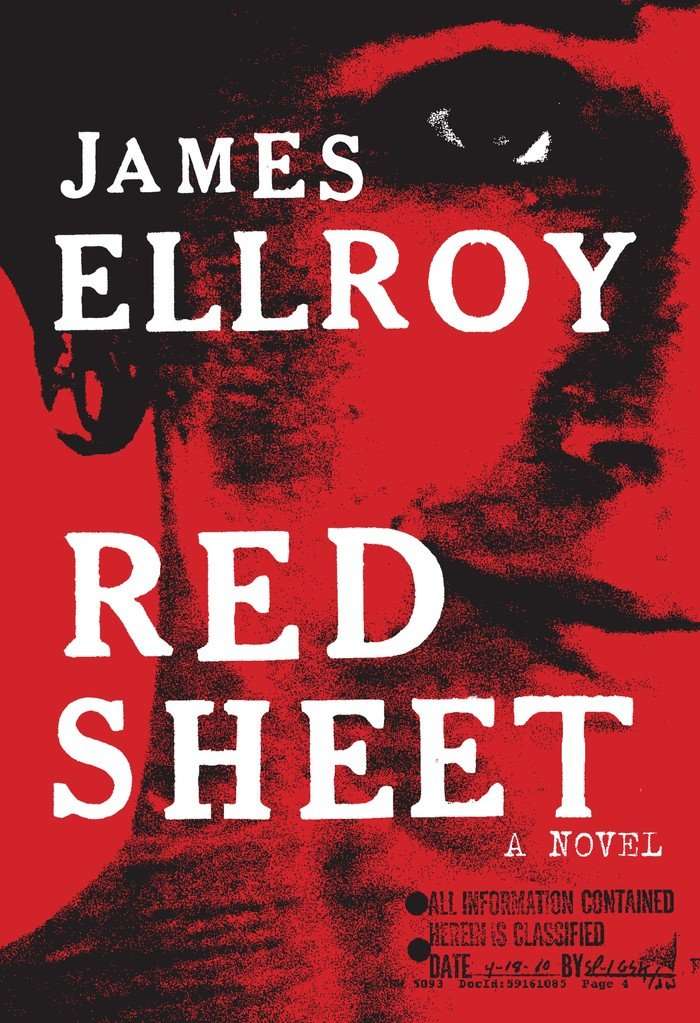
Otash was a Hollywood “fixer”/PI in real life, and Bradley was a former LAPD officer who would become mayor of LA from 1973 to 1993. But, in typical Ellroy style, they exist in a bespoke noirish landscape alongside fictional characters that act as devices (“I have unlimited latitude with fictional lives”) to allow the author to rewrite history and casually and happily slaughter the sacred cows of the American left.
The book is nominally set at the time of the Cuban Missile Crisis in October 1962 but goes back to take in the Lindbergh kidnapping in 1932, the Spanish Civil War, the Second Red Scare (as the Soviet Bloc began to take shape around the time of his birth) and the McCarthy-era witch hunts of the 1950s.
“The big thrill for me is to go back in time,” he explains. “I was 14 years old in 1962 so I get to go back and live there and have the laughs and sleep with [folk singer and Ellroy crush] Judy Henske, and do lots of groovy things that I didn’t do in real life. Fantasy has always been a very important part of my life, and history is my playground.”
Consequently, the young Richard Nixon is revealed to be a tortured but tender soul; elements of the International Brigade are recast as being as evil and twisted as the fascists they were fighting in Spain; and the lionised “Hollywood Ten” screenwriters and directors who fell foul of the House Un-American Activities Committee for not answering questions are derided.
Want to see this content?
This page contains content provided by Google reCAPTCHA. We ask for your permission before anything is loaded, as Google reCAPTCHA may use cookies and other technologies. To view this content, choose ‘Accept and continue’ to allow Google reCAPTCHA and its required purposes.
“Has writing this book given me a kick?” he laughs, repeating the question. “The book is nothing but a kick. It’s funny, it’s outrageous. The [LA] police overstep their bounds, we enjoy it and the good guys win in the end.
“I have a vision of American history. I have a title for the theme, the device, which is ‘The secret human infrastructure of large public events’, so we’ll never know how the actions of the good guys in this book – Fred Otash, [Future LAPD chief] Daryl Gates and the Hat Squad [a quasi-paramilitary anti-Communist unit within the LAPD] – compared with their actions back then, but this is fiction. The one question I never answer is what’s real and what’s not.
“For the length of time that they’re reading the book, rereading the book, or honouring the book, people will believe my version,” he continues. “And believe it to be true.” Like fake news? “Yes, like fake news.”
Your correspondent has been advised that the “King of American crime fiction” will not be answering questions about the current American President or politics, but he explains this away by saying, “Nothing contemporary moves me at all. Not in a positive way or a negative way. I’m a time-traveller and it’s my job to bring history alive again. I am a megalomaniac and love to see my name in print and intend to continue writing books on a very large canvas for the rest of my career.”
Red Sheet by James Ellroy is released on Thursday 16 July and is available to pre-order now.
The latest issue of Radio Times is out on Tuesday – subscribe here.
Check out more of our Books coverage or visit our TV Guide and Streaming Guide to find out what’s on. For more TV recommendations and reviews, listen to The Radio Times Podcast.