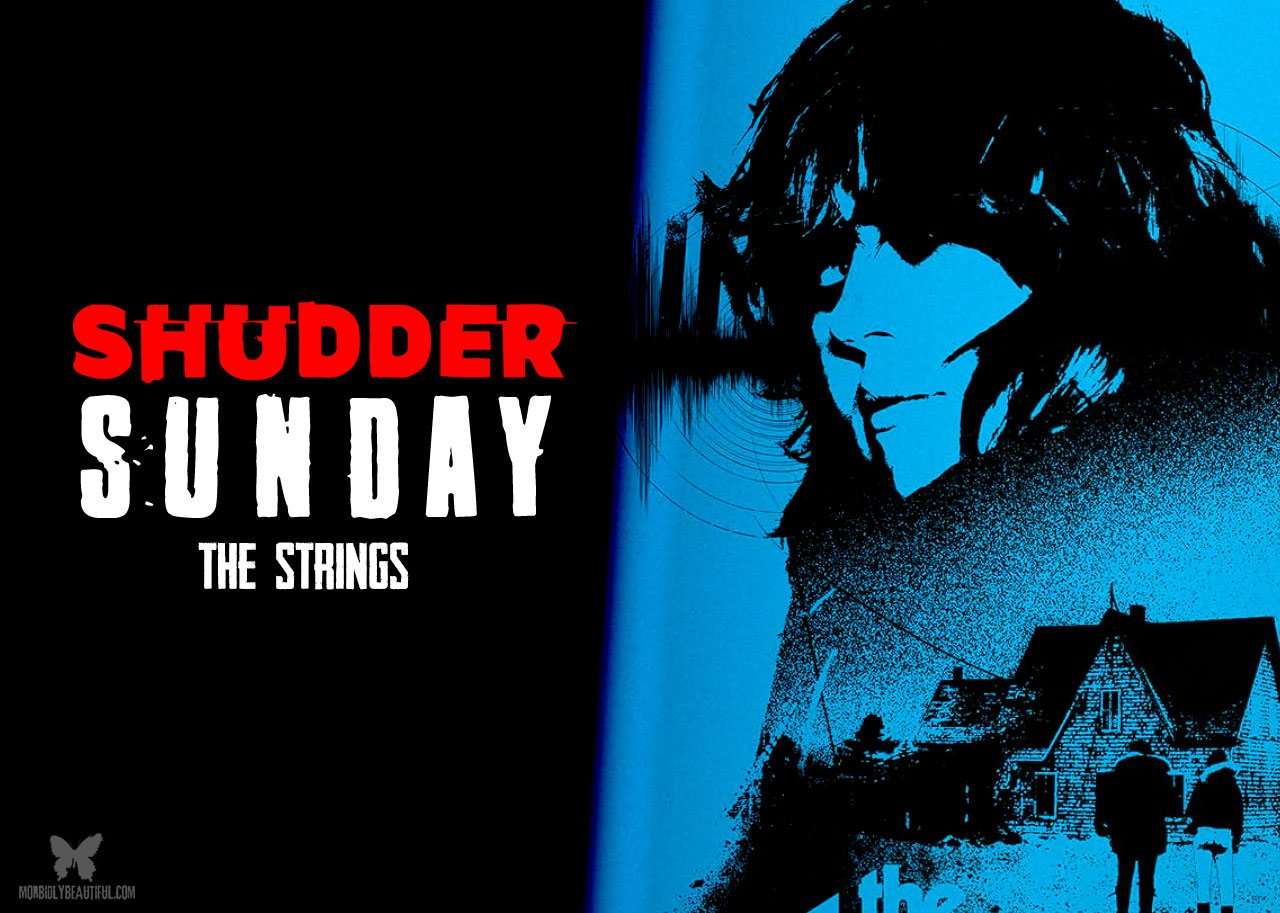
“The Strings” is a haunting arthouse horror film where artistic isolation, queer longing, and cosmic dread become mournful and mesmerizing.
No time to read? Click the button below to listen to this post.

MORBID MINI:For patient viewers, The Strings offers a chilling, poetic descent. Anchored by Teagan Johnston’s vulnerable performance, it’s a stark, wintry nightmare about isolation, music, and the terrifying possibility that reality can be played like an instrument.
Directed by Ryan Glover, who also served as the film’s cinematographer, editor, and producer, The Strings (2020) is an evocative, winter-locked Canadian indie horror film.
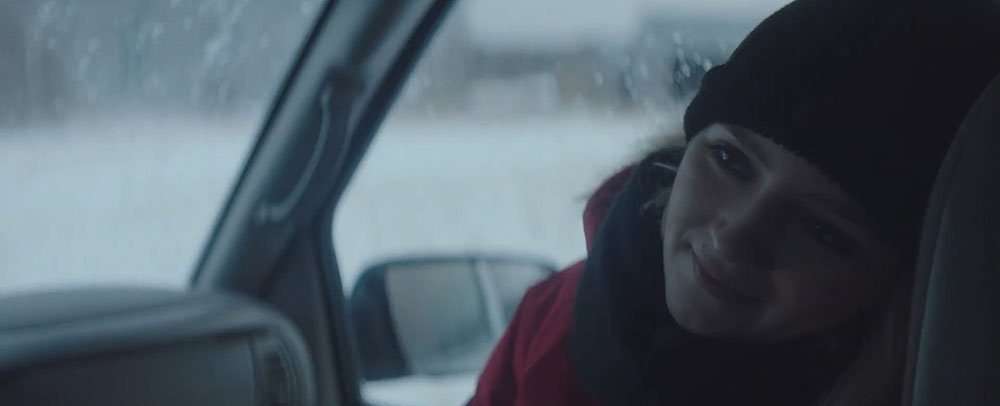
Catherine (Teagan Johnston, the real-life singer-songwriter who performs as Little Coyote) is a vulnerable musician weathering a difficult creative and emotional transition. Having recently broken up with her boyfriend and dissolved their successful rock band, Catherine seeks complete isolation to focus on her experimental, synth-heavy solo material. She decamps to her aunt’s remote coastal cottage on Prince Edward Island in the dead of winter.
Her lonely routine is interrupted when she hires local photographer Grace (Jenna Schaefer) for a promotional shoot.
Sparks fly between the two women, leading to a tentative, warm romance. Their relationship is presented as an authentic, comforting point of light in Catherine’s otherwise bleak, freezing isolation.
However, during their time together, Grace takes Catherine to an abandoned, dilapidated farmhouse with a history of a brutal double murder.
Following the visit, a thick, claustrophobic paranoia settles over the cottage.
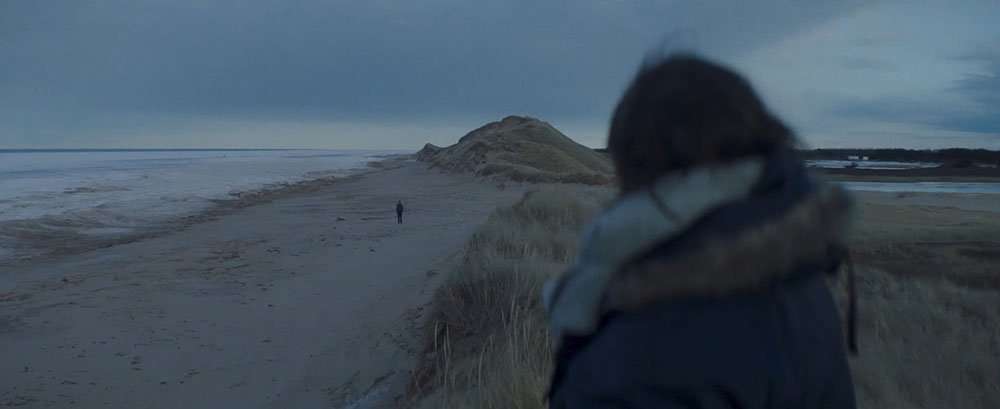
Catherine begins noticing strange anomalies: vibrating wall panels, shifting shadows, and a terrifying, silent male figure lurking on the frozen shoreline and inside the house.
As her nocturnal isolation deepens, her interest in online physics lectures on string theory and parallel dimensions begins to blur into a very real, malicious presence that erodes her grasp of reality.
The Strings is a stark, atmospheric character study on the crushing weight of artistic creation.
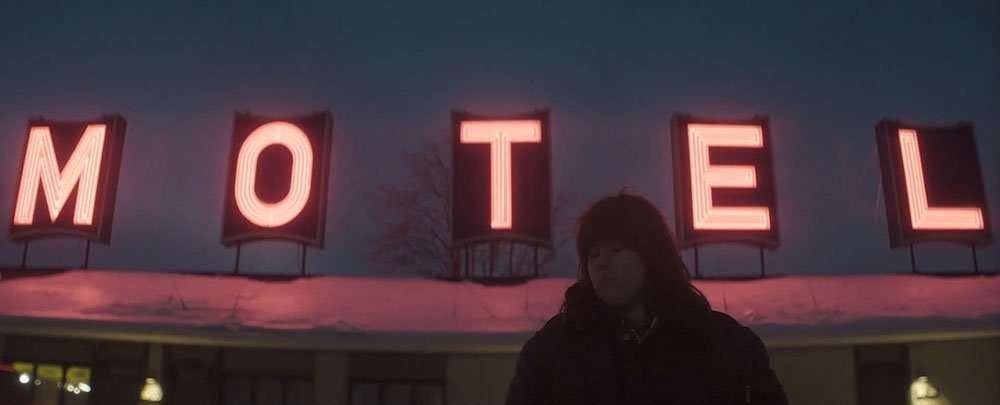
Catherine actively craves isolation, believing that cutting off the outside world will help her unlock her true solo voice. Instead, the vast, empty winter landscape mirrors her own internal vacuum.
The film explores how absolute solitude can create a dangerous mental space. When an artist strips away all external distractions, they are forced to confront the darkest, most hollow parts of their own subconscious.
Rather than relying on traditional biblical or folklore-based hauntings, The Strings strikes a distinct note by flirting heavily with cosmic and mathematical dread.
Catherine’s habit of falling asleep to white-noise lectures on string theory, space-time mechanics, and parallel realities introduces a deeper, more existential thematic layer.
The film positions the haunting not necessarily as a vengeful ghost, but as a terrifying glitch in reality itself.
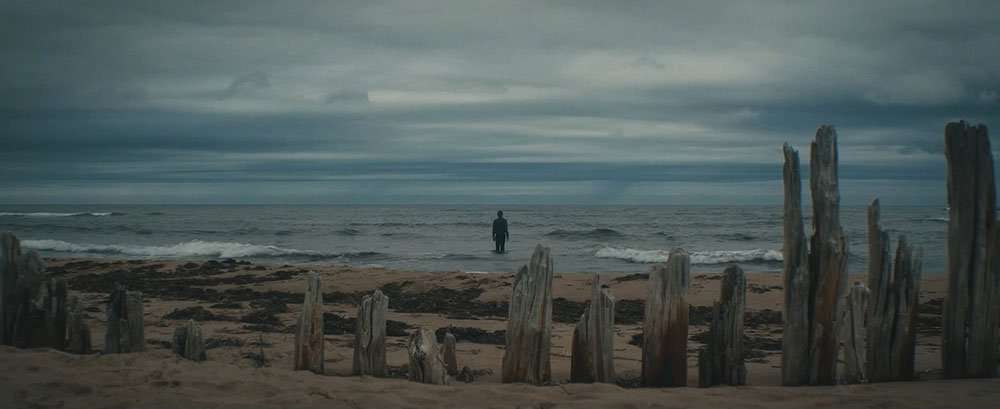
It suggests that Catherine’s creative hyper-focus and extreme isolation may have inadvertently thinned the boundaries between dimensions, allowing an incomprehensible outside presence to pluck her strings like an unseen player.
As a director with a deep background in cinematography, Glover impresses with his striking visual composition. He perfectly captures the absolute loneliness and freezing desolation of Prince Edward Island.
Johnston is the mesmerizing anchor of the film. Her real-life identity as a queer indie musician bleeds directly into her performance.
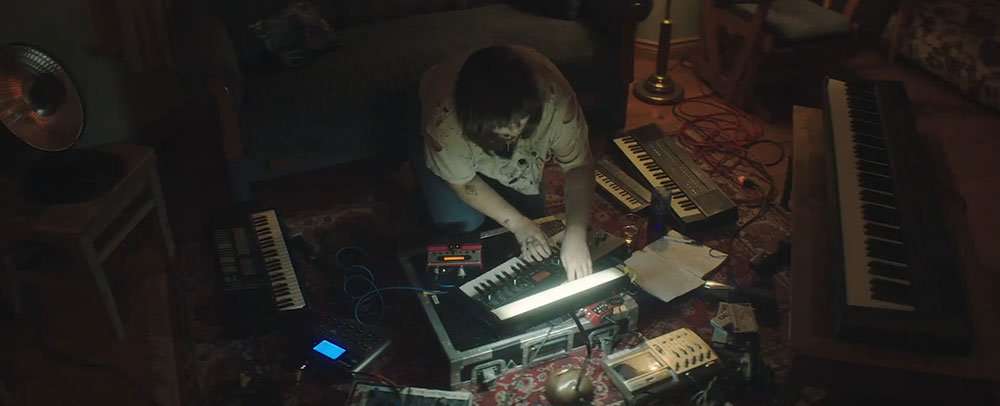
She wrote and recorded the film’s haunting, ambient synth score live on set during production.
As a result, the film’s musical vignettes carry a raw, spellbinding, and emotionally exposed authenticity.
Be forewarned: this film requires patience.
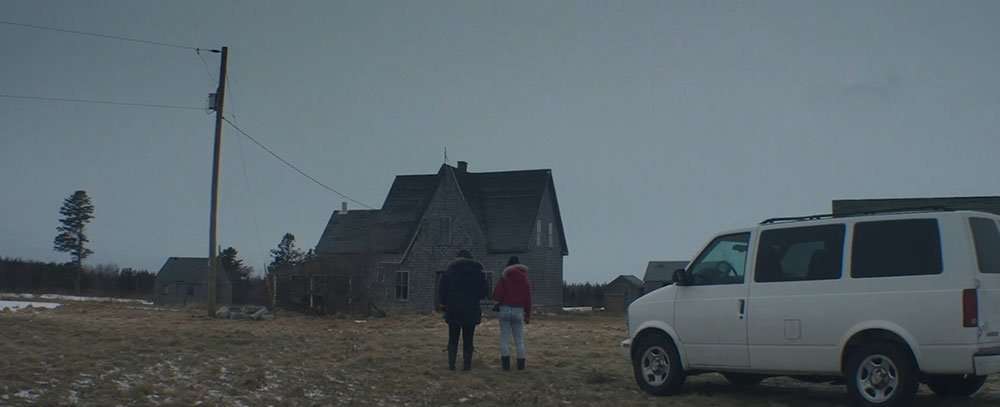
It’s slow, often relentlessly so, and light on plot. The horror is almost entirely absent in the first 40 minutes, and there are large stretches where virtually nothing happens.
When the supernatural elements finally arrive in the second half, they are wonderfully tense and artistically executed.
The ending is more about poetry than precision, and many viewers may be frustrated by its intentional ambiguity.
Ultimately, The Strings is a highly polarizing, fiercely artistic slice of slow-burn independent horror. Watch it if you appreciate films that prioritize mesmerizing mood over fast-paced plots and heavy gore.
Hauntingly beautiful, it strikes the perfect note for arthouse lovers who crave something meditative and mournful that treats loneliness as the ultimate monster.
Overall Rating (Out of 5 Butterflies): 4
Pair it with: Bloodthirsty (2020), another intimate, female-fronted Canadian indie horror film centered on a lone musician isolating herself in a remote, wintry cabin to record a new album, only for her creative process to trigger a terrifying transformation.