This article first appeared in Radio Times magazine.
I grew up in Australia, watching Rolf Harris on the TV. Just like in the UK, where he painted the Queen’s portrait and performed to tens of thousands at Glastonbury Festival, he was a cultural phenomenon, a national treasure.
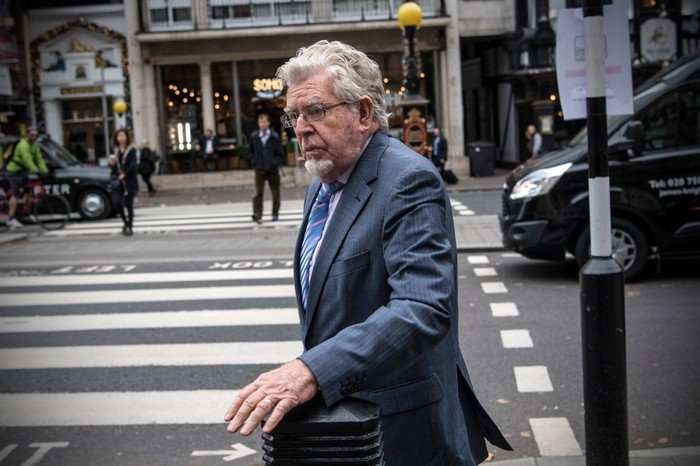
It’s now 12 years since the 84-year-old was jailed for his crimes, ending his career as artist, singer and TV presenter. The Australian-born entertainer was sentenced to nearly six years in jail (he served three) for a series of indecent assaults against women and girls, including a friend of his daughter, who he was found to have groomed and molested from the age of 13.
A decade on from his court case – the most high-profile of Operation Yewtree, the Metropolitan Police-led investigation into historic sex abuse after Jimmy Savile’s crimes came to light – it’s not the end of this story. As Tonya, a victim who waived her right to anonymity in the 2014 trial at Southwark Crown Court, says in our documentary, we may never know just how many people Harris abused and the full scale of his crimes.
In our film, Rolf Harris: Primetime Predator, we speak to key figures including three survivors who talk publicly for the first time about what happened to them. One woman alleges she was assaulted by Harris when she was a teenager on a Mediterranean holiday, another attacked on a TV commercial set and the third, when she was 11, staying at a friend’s house, and whose own parents refused to believe her.
The hardest part of making this film was earning the trust of the survivors. Some had tried to report what happened and found themselves dismissed. Others felt silenced by defamation laws or the cultural reverence for a once-beloved entertainer.
We’ve stayed in contact with those we interviewed and I know that many felt it was cathartic to be heard. Almost all the victims that we interviewed describe the long-term ramifications and the trauma that they carry around forever, following Harris’s sexual assaults.
Tonya was assaulted by Harris when she was 15 and he was 56, while she was on a UK tour with her Australian theatre group. By sharing her story, she found it helped people understand why her life had not gone the way she thought it would.
Australian victims didn’t get a trial. Many Australian survivors felt that they were not fully listened to. There were no consequences locally. Some believe that this was a failure of the Australian justice system.
Three years on from Harris’s death (he died a recluse at his riverside mansion having never shown any remorse for his crimes), this is not just about one man. It’s about what happens when celebrity and power go unchecked, and when institutions that should be protecting people don’t ask questions. In our film, investigative journalist Meirion Jones says that his wife was working at the BBC. Jones alleges that, on her first day, she was warned about Harris.
Want to see this content?
This page contains content provided by YouTube. We ask for your permission before anything is loaded, as YouTube may use cookies and other technologies. To view this content, choose ‘Accept and continue’ to allow YouTube and its required purposes.
Harris’s behaviour was so well known in Australia that in some circles during the height of his fame he was nicknamed “The Octopus”. One of the people we speak to, Nina, says she went to the police in the 80s but the male officers were just not interested, yawning and tapping their pens. Operation Yewtree Detective Inspector Ben Markham describes how Harris was the public face of child protection campaigns while simultaneously actively abusing children.
I hope more survivors feel empowered to come forward and that one day we know the full scale of what happened so that all Harris’s victims have their experience on record, feel heard, acknowledged and listened to, rather than dismissed or diminished. Whether that will happen, I don’t know. But I hope this film goes some way towards telling the entire story.
Rolf Harris: Primetime Predator is available to watch on Prime Video now.
The latest issue of Radio Times is out now – subscribe here.
Check out more of our Documentaries coverage or visit our TV Guide and Streaming Guide to find out what’s on. For more TV recommendations and reviews, listen to The Radio Times Podcast.