
A painting by famous 18th-century Scottish artist Katherine Read has been discovered and authenticated – and is thought to be worth more than £100,000.
The portrait had been in the hands of retired accountant Mary-Louise Wedderburn, who was left the artwork in her uncle’s will and had always believed the piece may have been painted by her distant relative, Read, as was revealed in an episode of the BBC art programme Fake or Fortune tonight (Thursday, 23 July).
Read was one of the most well-known portraitists of her time and specialised in portraying women and children.
The portrait features an Indian woman in a formal pose, wearing a string of pearls, a large emerald pendant, and a nose ring.
The episode of Fake or Fortune sees hosts Fiona Bruce and Philip Mould find authentic Read works to compare to the portrait of the Indian woman, looking through archives, speaking to experts and gathering letters and wills that could shed light on Read’s life in India.
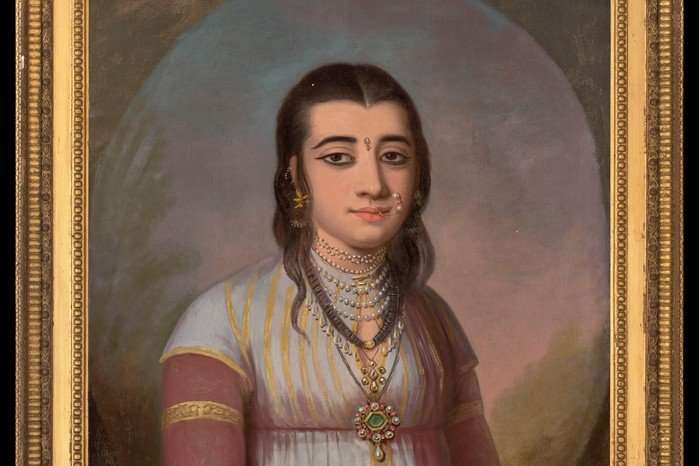
Speaking in the episode, distinguished British art historian and independent expert Charles Greig concludes: “This has been one of the trickiest paintings I’ve ever had to consider. I’ve read your dossier very carefully and it’s incredibly impressive. On the basis of all the evidence put together, I am entirely certain that this painting is by Katherine Read.”
He continues: “The evidence from the dossier that to me was the strongest was the technical analysis done by the Courtauld. The similarity of the portrait of [her niece] Helena Beatson: the pigments, the modelling of the figures, the brushwork, were very conclusive. And more so, it is the first painting of an Indian by a European woman artist that is recorded, and that in itself is extraordinarily important.”
Commenting upon the importance of the sitter, he adds: “One of the most interesting things about this painting is that I’m pretty certain that she [the sitter] is a member of the Nawab’s family in Madras, and that is extremely unusual because most of the other portraits of Indian ladies are a companion, or sometimes a wife, of a European. But I can’t think of another portrait of an Indian lady of this period that is actually part of a royal court rather than a European’s household. That makes it enormously important.”
Want to see this content?
This page contains content provided by Google reCAPTCHA. We ask for your permission before anything is loaded, as Google reCAPTCHA may use cookies and other technologies. To view this content, choose ‘Accept and continue’ to allow Google reCAPTCHA and its required purposes.
Speaking in the episode, owner Mary-Louise says: “It’s wonderful, it’s unbelievable. Thank you so much. It’s just so important to me that it’s by Katherine Read, because of the family connection, but also because of who she was. The more that we find out about Katherine Read, the more I think she was just a wonderful woman, she was just super.”
She adds: “It’s been a fabulous journey, and for Charles to be so categoric about the attribution is fabulous.”
Meanwhile, Mould calls the discovery “a significant baptism in art historical terms”, while Bruce notes: “And for Mary-Lou, she has loved this picture for so long, she so wanted it to be by Katherine Read.”
She continues: “If, as Mary-Lou wants, it can be in an exhibition, in a gallery, where the whole world can see this picture, Mary-Lou will have given this woman not only a voice, but she will be seen. In a sense she will be brought to life and I think that’s just a brilliant result.”
Fake of Fortune? airs on Thursdays at 8pm on BBC One and is available on BBC iPlayer.
Check out more of our Entertainment coverage or visit our TV Guide and Streaming Guide to find out what’s on. For more TV recommendations and reviews, listen to The Radio Times Podcast.