This article first appeared in Radio Times magazine.
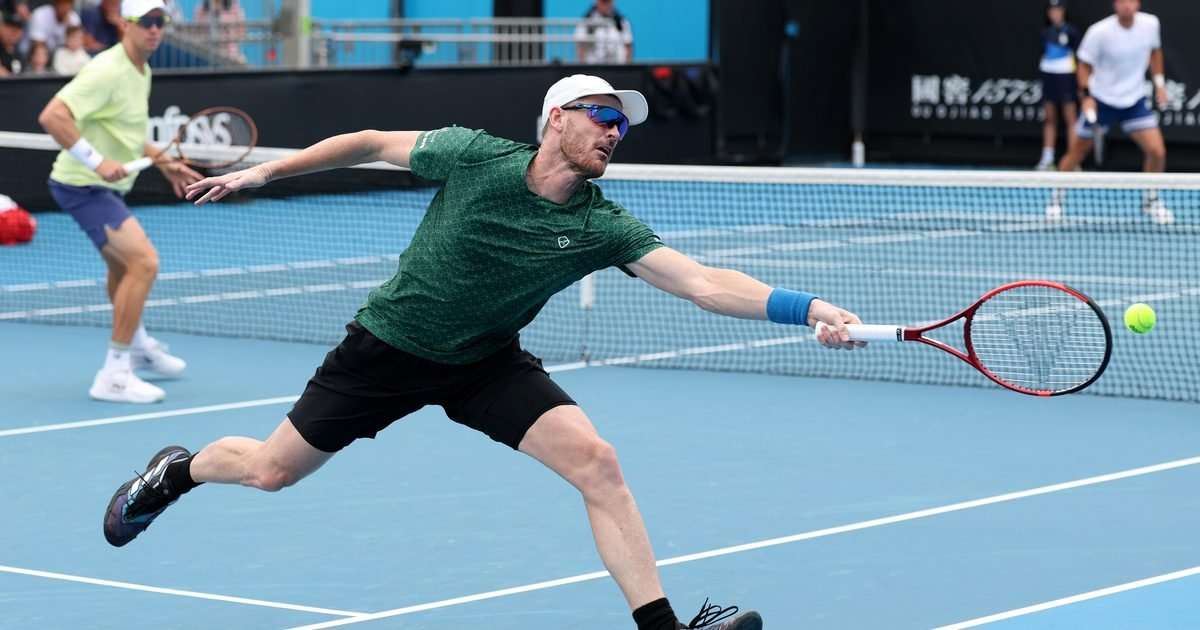
The most successful, able-bodied British tennis player of the past half century has just retired. And no, it’s not Andy Murray, who hung up his racket two years ago. It is, in fact, his brother Jamie, who has won seven major tournaments, in contrast to Andy’s three.
Sure, Andy is by far the better known. Yes, his triumphs came in the more prestigious singles events. And of course, pound for pound he is by far the wealthier (his career earnings from tournaments are just under £50 million, while Jamie’s are just over £5 million). But on the grand slam front Jamie is way ahead.
Not that you’d know it from talking to him. Jamie, the first British doubles player to rise to world number one, is as modest as Moses. So modest that he spends more time talking about the achievements of Andy and his inspirational mother Judy, who coached both boys to glory. And so reserved that it took him a few months to even tell the world that he’d retired.
I ask why he was slow to make an announcement. Well, he says, he didn’t think it was worth it; those who cared would eventually find out. He stopped playing in December 2025 and revealed that he was done in April. “People kept telling me I needed to say something, so I eventually did. And I feel a lot better for it. I got lots of nice messages. I felt better that it was finally out there. Then you can move on and see what’s next in life.”
He sounds emotional. “I wasn’t expecting to get that much attention. It caught me a bit off-guard. Tennis is so relentless with the tour and the scheduling that you don’t really have time to take stock of what you’ve achieved.”
Today, he’s talking on Zoom from his home in Wimbledon. Even though he’s stopped playing, we’ll see plenty of him over the next few weeks. Jamie’s got a gig doing analysis for the BBC, and he has all the right attributes – looks, charm, eloquence and an encyclopaedic knowledge of tennis. Twenty years ago, Judy told me that Jamie was the “more sensitive” boy, “the good-looking one who all my mum friends fawn over”. To be fair, she made it clear she adores both sons.
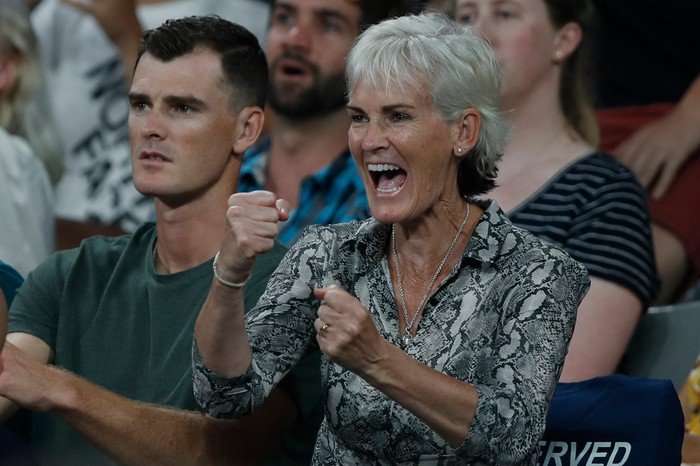
The Murrays grew up in Dunblane, a town near Stirling defined by tragedy after the 1996 massacre at Dunblane Primary School when a gunman killed 16 children and a teacher. Jamie, then 10, and eight-year-old Andy were at the school at the time of the tragedy, with Andy’s class on his way to the school gymnasium, where the shooting took place. Judy has said she hoped her sons’ success helped people to feel something more positive about the town.
In her minibus, she took her boys and other children all over Britain to play tournaments. Meanwhile, their father Willie preferred football and golf. Jamie says his parents, who divorced when he was 10, encouraged the brothers to do what they most loved. It so happened they loved tennis and were great at it.
Jamie has fond memories of travelling in the minibus. “There would be 10 to 15 of us and it was such fun. You’re in a group environment and the winning and losing of it become lost because everyone’s just mucking in and having a good time.” To an extent. There was also a fierce rivalry. The first time Andy beat Jamie, he gloated so much that Jamie smashed his younger brother’s hand so hard with his fist that he’s still got a dent.
As a child, Jamie was an exceptional singles player, and at 12 he left home for tennis school in Cambridge. It was to prove both his peak and his nadir. At 13, he reached a career-high junior world ranking of number two, but returned home eight months later broken. In Andy’s biography Coming of Age, he wrote that Jamie looked “upset and unhappy” and recalled a tearful Judy muttering, “I can’t believe what they’ve done to him.”
It took Jamie years to rebuild his confidence, but he re-emerged as a world-class doubles player. In 2007, at 21, he won the Wimbledon mixed doubles with Jelena Janković, and went on to win six more grand slam doubles tournaments with Bruno Soares, Martina Hingis and Bethanie Mattek-Sands. “I was privileged to play top-level sport for pretty much 20 years,” he says. “I played all the big tournaments, all the biggest courts in the world and I’m grateful to have had that opportunity.” Best of all, he says, he won the Davis Cup alongside Andy. “I had amazing experiences with my brother on the tennis court, which is pretty unique for high-level sport.”
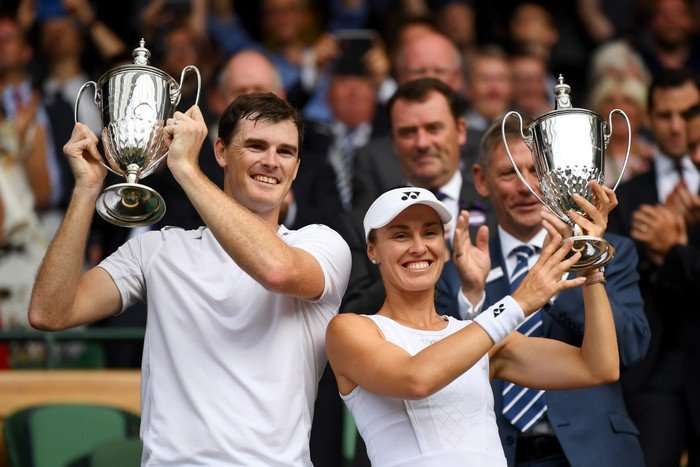
He says none of this is likely to have happened without his mother. “She was one of the best coaches in the world, and it’s not like we had any history of developing tennis players in Scotland.” He grins. “It wasn’t exactly a hotbed of tennis talent! We may not have got into tennis if our mum hadn’t been into it.”
Astonishingly, in 2015 Andy finished the year world number one in the singles rankings with Jamie the first British world number one in the doubles in the modern era. He laughs, almost in disbelief, at the two brothers topping the tennis charts at the same time. “That’s mad, isn’t it?”
Does he tease Andy about having won more majors than him? “Ha! I’ve never said that. I’m not sure he ranks my doubles achievements in the same breath as his singles achievements.” Why does singles have so much more status? After all, it is estimated that 75 to 80 per cent of recreational matches in the US and Europe are doubles, and it is such a thrilling format to watch. “Yes, but unfortunately it doesn’t get marketed well by the LTA [Lawn Tennis Association].
“So many people consume their sport through social media and we have no doubles highlights on any social media platform. [The professional tennis associations provide highlights packages for the likes of TikTok and YouTube]. So how d’you expect people to get excited about it if nobody really has access to it?”
Former sportsmen have told me when they retired they went through a grieving process, as if part of them had died. “Yeah, I think that’s fair. I understand why people would feel like that. My goal this year was just to say yes to everything and get stuck into as many things as I can. I got good advice from Andrew Strauss [former England cricket captain] who said, ‘In your sport, over time, you’re a diminishing asset; new people retire, and you need to get out there now.’ ”
Want to see this content?
This page contains content provided by Google reCAPTCHA. We ask for your permission before anything is loaded, as Google reCAPTCHA may use cookies and other technologies. To view this content, choose ‘Accept and continue’ to allow Google reCAPTCHA and its required purposes.
Has he been offered any reality shows? “No.” He sounds disappointed. What would he fancy doing? “Traitors,” he says instantly. “It’s such a good show. I saw the cast for this latest one and I noticed they didn’t have any athletes.”
And, of course, he still wants to promote tennis. His four-year-old daughter Ava (Jamie and Ava’s mother, the Venezuelan actor Alejandra Gutiérrez divorced last year) has already started playing. “It’s ultimately up to her how seriously she takes it. But I want to teach her the basics because tennis is an amazing sport and it’s given so much to me and my brother.”
Jamie had hoped that one legacy left by the brothers would be improved tennis facilities in Scotland. Has that happened? “No, which is a disappointment, especially for my mum. If you did a road trip you wouldn’t see any difference to what things were like 15 to 20 years ago. It’s a shame because Andy created such interest in the sport and inspired a lot of kids to get into tennis, and the powers that be just weren’t there to capitalise on it. Whether that’s through more facilities, more covered courts, it just didn’t happen.”
He sounds so disappointed? “Yes, of course because there’ll never be a better opportunity to grow the sport in our country. Never. You’ve missed your biggest opportunity when you had the number one player in the world from Scotland winning multiple Wimbledon titles and Olympic gold medals. That was the chance to really invest in the sport and capitalise on that. And it just didn’t happen.”
He’s so generous about others, I say, but not so good at bigging himself up. He smiles bashfully. “I guess not. I just find it difficult to talk about myself.” Has Andy, who is now coaching British number one Jack Draper, given him advice on retirement? “No, not really, but I think we’re in different situations financially! What we can and can’t do in retirement.”
You sense some of the old rivalry is still there. In the short term, Jamie says he doesn’t fancy coaching because he’d have to be away so much of the year, and Ava is still so young. “You don’t get that time back with your kids, do you?” For now, he’s hoping to expand his portfolio closer to home. So, Traitors casting team, he is open to offers. “Hopefully you’ll see a lot more of me because I need to work a lot more than Andy.”
Wimbledon begins on Monday 28 June on BBC TV and iPlayer.
The latest issue of Radio Times is out now – subscribe here.
Check out more of our Sport coverage or visit our TV Guide and Streaming Guide to find out what’s on. For more TV recommendations and reviews, listen to The Radio Times Podcast.