As the film celebrates its 45th anniversary, Hasitha Fernando dives into the story behind Raiders of the Lost Ark…
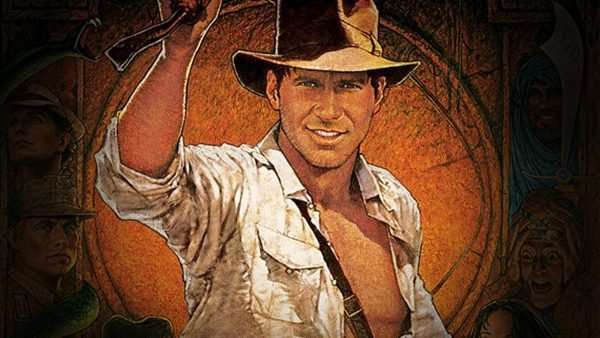
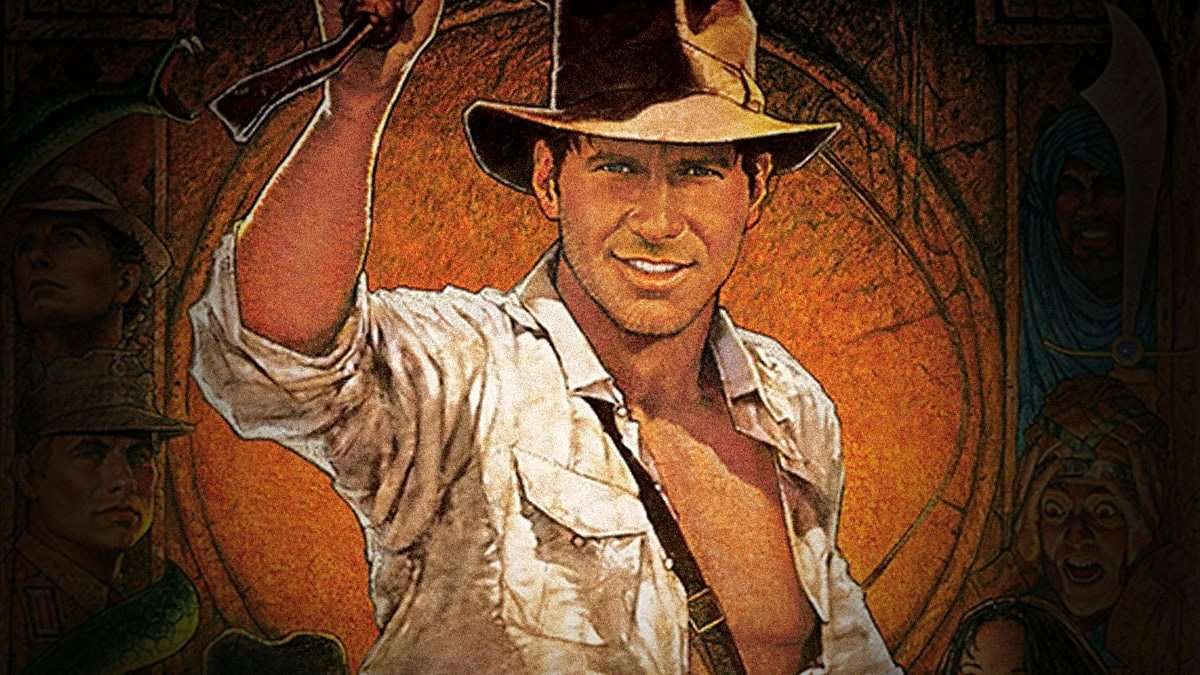
Raiders of the Lost Ark is the perfect “popcorn” flick, featuring a rugged adventurer in the form of Harrison Ford, non-stop action mayhem, exotic locations and an engrossing narrative. The movie is the quintessential action-adventure, which has been oft copied and never duplicated. As the film celebrates its 45th anniversary, we look back at what went on behind-the-scenes during the making of the classic…
The idea for Indiana Jones was conceived many years before production began
Shortly after finishing his work on the comedy drama American Graffiti, George Lucas conceived the idea that would eventually become Indiana Jones. This idea took shape after Lucas saw an old movie poster which depicted the story’s hero leaping from his horse towards a truck which instantly reminded him of the early 20th century serials he used to enjoy in his youth such as Buck Rogers, Spy Smasher and Don Winslow of the Navy. The idea in question was a B-movie, heavily influenced by the above and headlined by an adventurous archaeologist cum university academic named after his Alaskan Malamute dog. Lucas decided to have a chat with his close friend Philip Kaufman regarding the idea that was brewing inside his head and the two hammered out a barebones of a premise for two weeks. Lucas envisioned his lead character as a philanderer and a nightclub patron but Kaufman was against the notion and wanted to have the Ark of the Covenant as the narrative’s central objective. Kaufman was impressed by the ideas espoused by imminent hematologist Raphael Issac’s on the physics of biblical miracles and wanted to include those ideas in the story through the Ark of the Covenant. In addition, the Ark would also serve as an object of interest to the primary antagonists of the narrative – the Nazis.
Initially Lucas wanted Kaufman to direct the effort but he was dead set on helming The Outlaw Josey Wales. So, Lucas put the idea on hold and went to work on the production of Star Wars: A New Hope, a space opera influenced by the likes of Flash Gordon. In May 1977, shortly before the debut of Star Wars, Lucas went vacationing in Hawaii with his family since he feared the bad reviews and box-office failure his movie might receive. Steven Spielberg was also invited to this getaway and it was at Mauna Kea Beach Hotel that Lucas pitched his idea to his Spielberg, which was then tentatively titled “The Adventures of Indiana Smith”. The young filmmaker was initially interested in directing a James Bond film, at the time, but Lucas’s proposition appealed to him and he agreed to the direct the effort a few weeks later.
Lawrence Kasdan was new to the industry when he got hired to write the script
Lawrence Kasdan was an up-and-coming talent, new to the film industry when he was discovered by Steven Spielberg. The screenplay for the 1993 romantic thriller The Bodyguard was penned by Kasdan back in 1975, and the script gained the young screenwriter access to the studio system. While The Bodyguard screenplay was doing its rounds around Tinseltown, Kasdan wrote Continental Divide, which was a homage of sorts to the Spencer Tracey/Katherine Hepburn type comedies of yore. Spielberg, who at the time was busy with the postproduction of Close Encounters of the Third Kind, came across this screenplay and immediately persuaded Universal to buy the script with a view of executive producing it through his own company – Amblin Entertainment. Spielberg passed on the screenplay to Lucas eventually, as the duo were looking for a talented writer to hammer out the screenplay for “The Adventures of Indiana Smith”, and Lucas was impressed by what he read and hired Kasdan immediately.
Developing the perfect story proved to be quite a time consuming affair
After Kasdan was hired, he, Lucas and Spielberg commenced lengthy brainstorming sessions, working over nine hours a day on three to five days a week, spit-balling different ideas which they got on a tape recorder. By the end of those sessions, they ended up with a massive 100-page transcript which Kasdan then transformed into a functioning script over the course of six months. Most of the ideas shared by Spielberg and Lucas were essentially action setpieces, like the iconic boulder trap in the beginning, which had to be strung together in to a coherent narrative. Spielberg always hated the surname that Lucas had picked for the character, since he thought it’d remind audiences of the Steve McQueen’s Nevada Smith, from the Western film of the same name. The three then decided that the surname should be changed from “Smith” to “Jones” basing the lead character on tough guy actors like Clint Eastwood and Toshiro Mifune. But the trio also wanted their hero to be relatable to audiences so making him fallible and imperfect was also important.
A relatively unknown actor was sought for the role of Indiana Jones
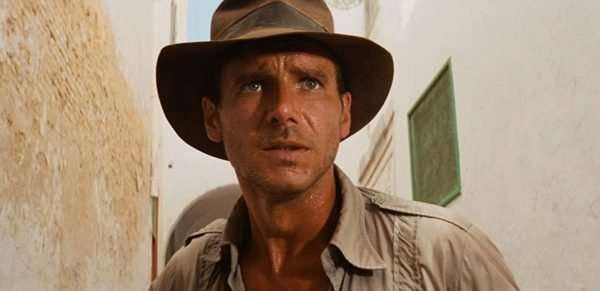
To even imagine anyone else other than Harrison Ford in the iconic role of Indiana Jones is unthinkable. But back at the very outset of production, when Spielberg and Lucas were looking to cast the role, they were looking for a relatively unknown actor to play Indy. The film’s casting director Mike Fenton felt that Jeff Bridges was a perfect fit for the role, while Lucas’ wife Marcia Lucas, who often worked closely with productions, thought that Magnum P. I.’s Tom Selleck was the ideal candidate. Unfortunately, Selleck was contractually obligated to film the television series and had to decline. Spielberg, on the other hand, was of the opinion that Harrison Ford was the perfect man for the job but Lucas was unsure if the actor would be willing to commit to a trilogy of movies. Luckily for us, Ford thought that it was an intriguing concept and signed on to play the globe-trotting archaeologist cum part-time adventure seeker. The actor renegotiated the terms of his contract by securing a seven-figure salary and a percentage of the film’s gross profits. Ford underwent a rigorous exercise regime to get in shape and mastered the use of a bullwhip with the help of stunt coordinator Glenn Randall. Other actors that were considered for the role include Bill Murray, Steve Martin, Nick Nolte, Sam Elliot, Chevy Chase, Jack Nicholson and David Hasselhoff.
Karen Allen wasn’t the first choice to play Marion Ravenwood
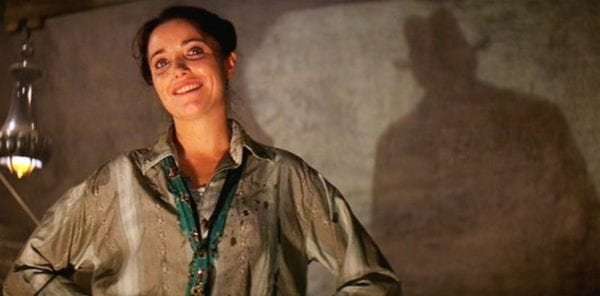
Like Harrison Ford is to Indiana Jones, it’s hard to imagine anyone else playing the tough-as-nails persona that is Marion Ravenwood. But surprisingly, Spielberg and Lucas considered other actresses for the role before settling on Karen Allen. The actress made her feature film debut with the 1978 comedy film National Lampoon’s Animal House, which was followed by a supporting role in Woody Allen’s rom-com Manhattan and a co-lead role in Philip Kaufman’s coming-of-age drama The Wanderers, the following year. However, Allen’s breakthrough role came when she portrayed Marion Ravenwood in Raiders of the Lost Ark, opposite Harrison Ford in 1981. Prior to Allen’s casting in said role, Spielberg and Lucas considered or offered the role to several other talented performers including Sean Young, Debra Winger and Barbara Hershey.
Paul Freeman’s piercing eyes led to his casting in the film’s villainous role
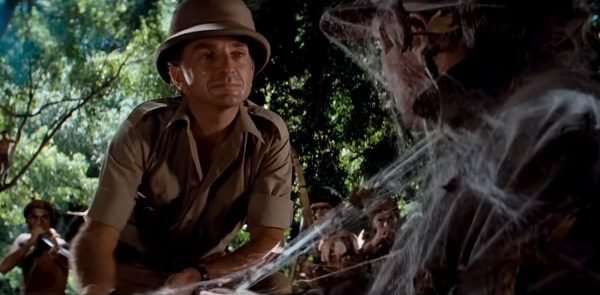
Paul Freeman started his career in teaching and advertising before shifting to theater and the small screen. He appeared in productions of Hamlet and Midsummer Night’s Dream with the Royal Shakespeare Company and made his television debut in a TV serial on William Shakespeare in 1978. His first feature film appearance was in 1980 when he appeared in The Long Good Friday, starring opposite Bob Hoskins and Helen Mirren. Freeman caught Steven Spielberg’s attention when he saw the actor’s compelling performance in the television docudrama Death of a Princess. Spielberg was also drawn to Freeman’s piercing blue eyes and thought the performer would make a great arch-rival and intellectual foil to Harrison Ford’s Indiana Jones. Others who were considered for the role were singer Jacques Dutronc and Giancarlo Gianini.
That unforgettable supporting cast was truly something else
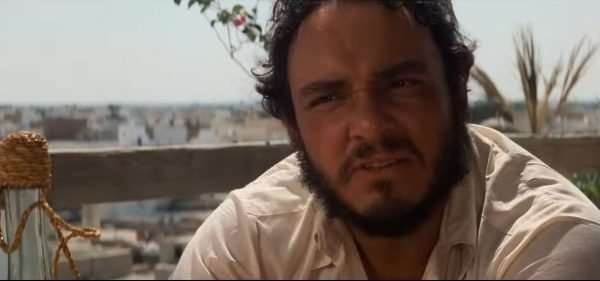
Sallah was originally envisioned as a skinny Egyptian who was around 5ft tall, meant to resemble Gunga Din from the 1939 RKO Radio Pictures adventure flick of the same name. Danny DeVito was the actor who was originally eyed to embody the memorable role, but due to the commitments he had on the television sitcom Taxi and the higher salary his agent demanded, DeVito was replaced by Welsh actor John Rhys-Davies. And soon, the skinny Egyptian the script described became a heavy-set, bearded Egyptian excavator that we all know and love. Rhys-Davies was cast in the role based on the work he did on the historical drama mini-series Shōgun. SS Agent Arnold Ernst Toht, the secondary antagonist of the movie, was played by British actor Ronald Lacey and who was chosen for the role by Spielberg since he resembled Peter Lorre, a performer famous for his villainous roles.
Indiana Jones’ look was based on Humphrey Bogart’s character from The Treasure of the Sierra Madre
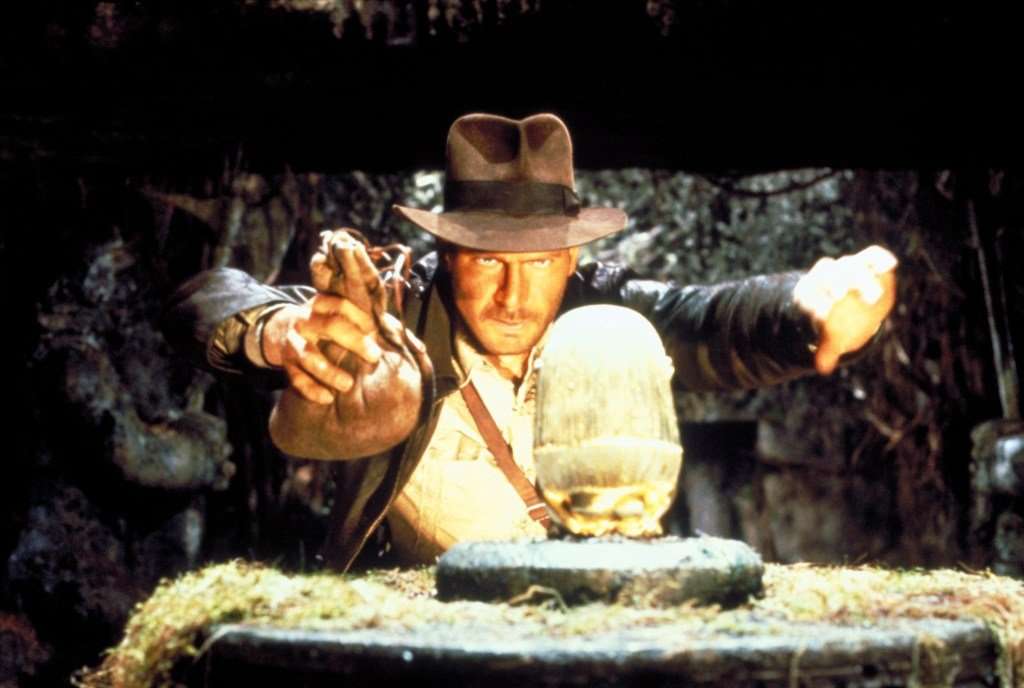
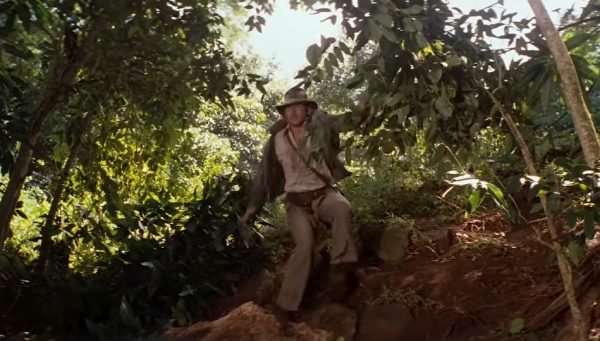
Heavily influenced by classic adventure serials of yore it comes as no surprise that the iconic look of Indy was also based on a classic 1948 neo-western called The Treasure of the Sierra Madre. The film follows the tale of a group of downtrodden men as they hunt for gold in Mexico. Indy’s leather jacket and khaki pants practically plays homage to the outfit worn by Bogart’s character Fred C. Dobbs in the movie. Costume Designed Deborah Nadoolman Landis “artificially aged” Indy’s iconic fedora hat using Fuller’s Earth and mineral oil and even crushed the item beneath the bed to achieve a weather beaten, worn-out aesthetic.
Filming in Tunisia was one of the most grueling experiences for the cast & crew
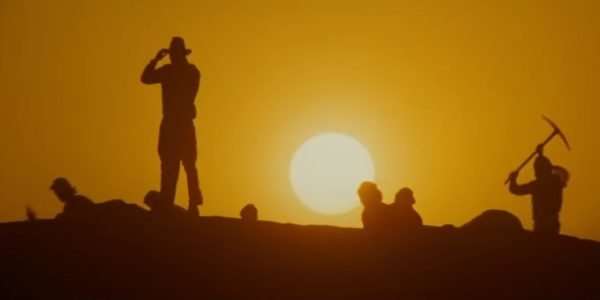
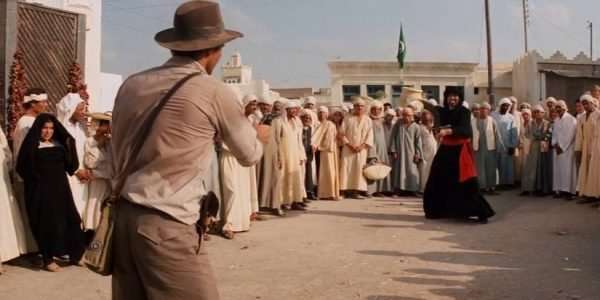
In the movie most of the story transpires in Egypt but these scenes weren’t actually shot there. They were shot in Tunisia. The temperature during the shoot was over 130 °F (54 °C), and this proved to be one of the worst experiences Spielberg had had in his career thus far. Many of the crew members fell ill with amoebic dysentery from the local food they consumed and Spielberg was one of the lucky ones who was spared because he bought a lot of cans of Spaghetti-O’s from back home. Lucas also severely suffered during the Tunisia shoot, getting severe sunburns and facial swelling. Since Raiders of the Lost Ark was a period piece, the crew had to sometimes hide or get rid of contemporary items such as TV antennas for scenes, and during the filming of one such sequence the over 300 odd TV antennas that belonged to an entire neighborhood had to be removed, which sadly cost a whole day of filming. The now iconic scene where Indiana Jones shoots an enthusiastic swordsman was improvised on the spot, as Harrison Ford had fallen seriously ill from a bad case of dysentery. So, instead of performing the stunt where he uses the whip to disarm his opponent, Ford suggested to “shooting the sucker” instead and Spielberg was more than amenable to the actor’s idea.
A great deal of action set pieces in the movie were done using practical effects
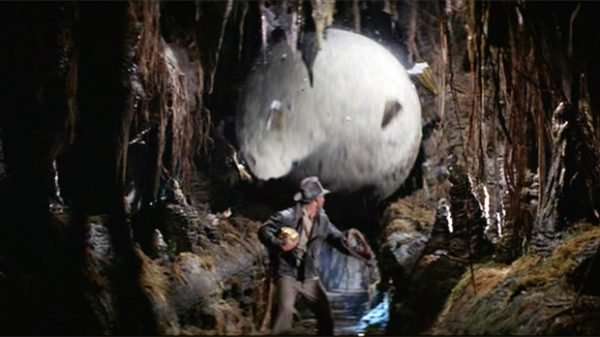
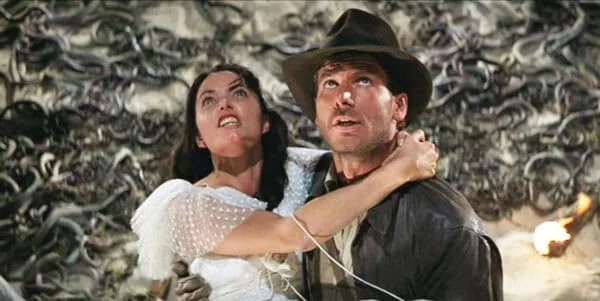
During the shoot Spielberg preferred practical effects over digital artistry as he could check on the raw footage in real time. The Peruvian temple scenes, at the very beginning of the film, was built on a massive life-size set and the giant boulder trap, which gives Indy a lot of trouble, was constructed of fiberglass, plastic and wood and weighed close to 300 lb. (140 kg). Ford performed all the stunts pertaining to that sequence without a stunt double. The Well of Souls sequence proved to be a challenging one to shoot due to the involvement of hundreds of snakes. Most were non-venomous snakes – such as pythons or grass snakes – while a few Cobras were also used positioned behind plexiglass for the safety of the cast and crew. The epic truck chase was shot by the film’s second unit headed by director Michael D. Moore who has worked on such efforts as Butch Cassidy and the Sundance Kid and The Man Who Would Be King, previously. The successful collaboration on Raiders of the Lost Ark convinced Spielberg to hire the guy for the sequels as well.
John Williams crafted a film score that will forever be etched in the minds of moviegoers
To say maestro John Williams created a film score for the ages with Raiders of the Lost Ark, would an understatement of monumental proportions. Along with the music Williams composed for the Star Wars franchise, the composer’s contributions for the Indiana Jones films would rank as some of his finest works in his seven-decade career. Williams crafted two distinct themes for the intrepid adventurer but ended up combining them into a single cohesive piece since Spielberg loved them both. That theme became known as “The Raiders March”, which is one the most recognizable themes in film history. Williams also composed distinct musical themes or leitmotifs for the narrative’s major elements – such as Marion Ravenwood, The Ark of the Covenant and the villains – to give each of them their own musical identity.
Box-Office success, Critical Acclaim, Awards Glory and an enduring Legacy
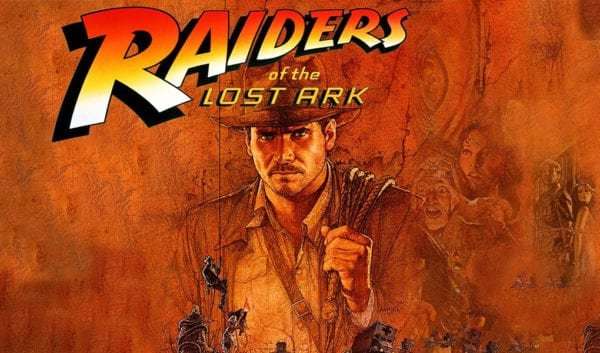
Made on a production budget of $20 million, Raiders of the Lost Ark went on to make a whopping $354 million at the worldwide box-office and becoming the number one movie globally ahead of Superman II and For Your Eyes Only. Due to its unending popularity the effort was re-released on multiple occasions over the next few years raising its worldwide theatrical gross to $389.9 million. The film received critical acclaim at the time it debuted with The National Board of Review’s Vincent Canby labelling the film as an “instant classic” and listing it among the best 10 movies of 1981. Roger Ebert and Richard Schickel also showered praise on the movie with the former calling it a “return to form for Spielberg”. Raiders of the Lost Ark was also blessed with multiple awards nominations and numerous wins come awards season with the effort receiving 9 Academy Award nominations and taking home 5 Golden Nudies for Best Art Direction, Best Film Editing, Best Sound, Best Sound Editing and Best Visual Effects. Sadly, the film lost out to Vangelis’ Chariots of Fire for Best Original Score that year. The movie received 7 nominations at the BAFTAs winning one and also received a Grammy Award for John Williams’ unforgettable score.
45 years following its release, Raiders of the Lost Ark is considered one of the greatest action flicks to have been ever created as well as being a pop culture phenomenon. Even Steven Spielberg considers the film his favorite of the series as he didn’t want to change anything about it. The success of the movie propelled Harrison Ford into superstardom overnight and made Lawrence Kasdan one of the most in-demand writers in Hollywood. The movie also renewed interest in the field of archaeology undoubtedly inspired by the globe-trotting adventurer’s numerous hijinks. The undying popularity of the IP led to the creation of four sequels, with later outings receiving some degree of criticism for their dip in quality and showcasing an aging Harrison Ford. Lucas even developed a short-lived but thoroughly enjoyable TV show that centered around Indy titled The Young Indiana Jones Chronicles, which aired on ABC from 1992 to 1996. Numerous video games, comic book and novels have also been released during the past four-decades detailing the further adventures of Indy and his friends. To summarize, there is little doubt that Raiders of the Lost Ark, is one of most influential movies of all time because of the indelible impact it had on generations of filmmakers and moviegoers alike. The movie brilliantly showcased Steven Spielberg’s talents as a wunderkind filmmaker and effortlessly capitalized on Harrison Ford’s knack as a leading actor. And coupled with a captivating narrative, John Williams’ magical score and a host of pitch-perfect supporting performances Raiders of the Lost Ark can best be described as a touchstone of modern cinema.
What are your thoughts on Raiders of the Lost Ark? Let us know on our socials@FlickeringMyth…
Hasitha Fernando is a part-time medical practitioner and full-time cinephile. Follow him on Twitter via @DoctorCinephile for regular updates on the world of entertainment.