Hasitha Fernando on the story behind The Omen as it turns 50…
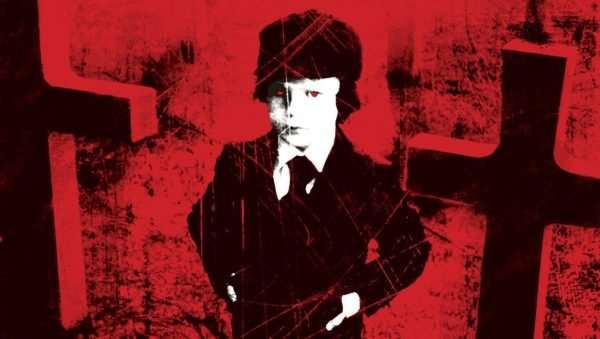
Religious horror is a subgenre that is not meant for weak minded viewers. From the get-go you are drawn into an unholy world of profanity and darkness that challenges your very beliefs. Over the years different filmmakers have given us many unforgettable religious horror films and in this pantheon of unholiness, which features the likes of The Exorcist and Rosemary’s Baby), there also exists The Omen. As the horror classic celebrates its 50th anniversary, we look back at the making of the movie and the behind-the-scenes drama that ensued during production…
Davis Seltzer wrote the script because he badly needed the money
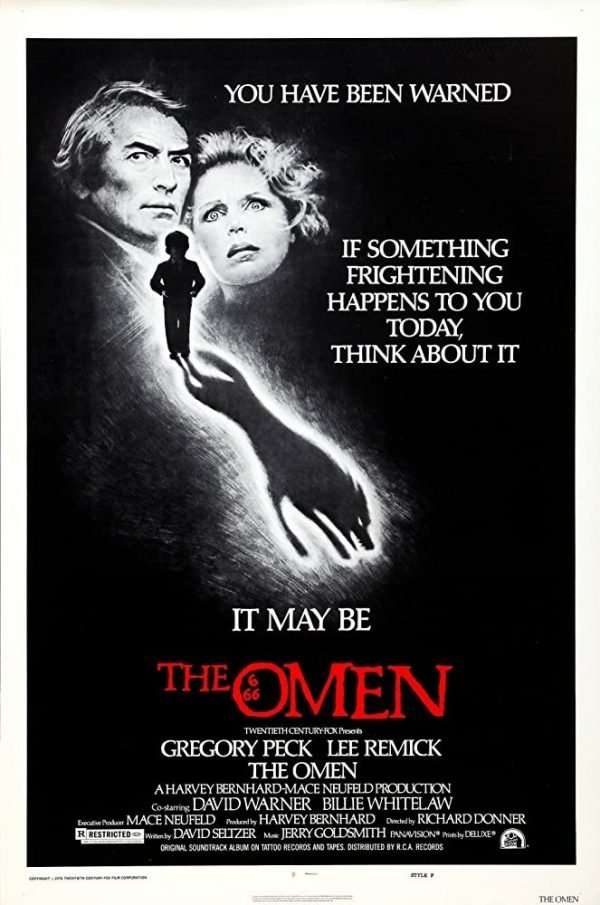
American film producer Harvey Bernhard had the idea to produce a feature film about the Antichrist after having a stimulating discussion about the Holy Bible with his close confidante Bob Munger. After being generally enthused about the idea put forth by Munger, Bernhard immediately contacted screenwriter David Seltzer to hammer out a screenplay to flesh out the concept and craft a cohesive narrative. Seltzer had previously written scripts for multiple genre films including an uncredited rewrite of Willy Wonka & the Chocolate Factory but wasn’t too keen on working on this project when he received the call. Nevertheless, the writer consented to do the needful since he badly needed the money at the time and had this to say about the film during an interview, “I did it strictly for the money. I was flat broke. I do find it horrifying how many people believe all this silliness”. Seltzer also revealed that he chose the London setting because he fancied a trip to England at the time. The screenwriting process, however, took a longer period than Seltzer previously envisioned taking up to one year. Seltzer’s novelization for the movie was written at the same time the screenplay was, with some minor changes to film’s narrative, and hit stores two weeks prior to The Omen’s release.
The Omen became Richard Donner’s first critical & commercially successful film
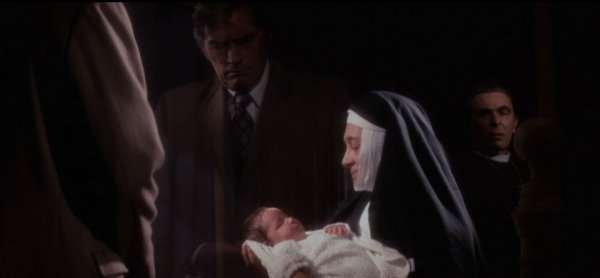
Richard Donner was a filmmaker who became legendary for his ability to craft excellent Hollywood blockbusters. Starting his career in the small screen directing episodes for television shows such as The Fugitive, The Twilight Zone and The Man from U.N.C.L.E., his feature film debut was a low-budget aviation drama called X-15 which received decent reviews by film critics. But it was The Omen which shot his career to the literal stratosphere and eventually led to efforts such as the landmark superhero flick Superman, the coming-of-age adventure The Goonies and the Lethal Weapon series. When intrepid producer Alan Ladd Jr. came on board as producer for The Omen and put the project on turnaround, after languishing in development, he suggested Donner helm the production. Donner was initially a little paranoid due to the subject matter of the film but he overcame his fears and soldiered on, delivering one of the most unforgettable horror films of all time.
Richard Donner & David Seltzer disagreed on the changes to the screenplay
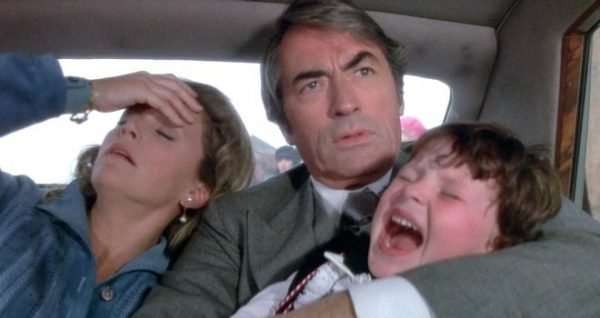
Once Richard Donner came on board, the filmmaker suggested certain changes to David Seltzer’s screenplay. Donner requested that all overt hints of the supernatural – which include witches’ covens or devilish entities – be removed from the story, in order to make it more ambiguous and let the audience decided whether Damien was the Antichrist incarnate or whether the string of horribly violent deaths that transpire in the film were all a series of unfortunate accidents. Seltzer strongly disagreed with Donner on this matter, rejecting the ambiguity the director favored and fortunate for Seltzer producer Harvey Bernhard also shared his opinion. Because of this Donner had to go with the version that was originally intended by the screenwriter. Regardless, it’s safe to say Donner and his team more than delivered with the final product as evidenced by the reaction of critics and audiences to it.
Gregory Peck took a massive pay cut to appear in the movie
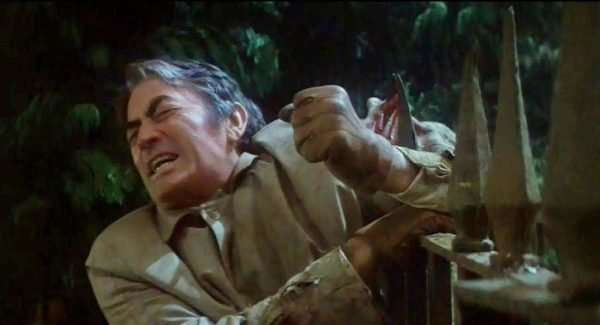
To say Gregory Peck was one of the biggest Hollywood actors of yesteryear would be an understatement. Famous for playing virtuous, morally upright heroes in the efforts he was involved in, Peck’s Academy Award winning performance as Atticus Finch in 1962’s To Kill a Mockingbird will always be remembered as his most memorable. Other notable career highlights include Spellbound, The Guns of Navarone, Cape Fear and A Roman Holiday. Peck was essentially in retirement when he got to know of the project through his agent, who was acquainted with Harvey Bernhard. After reading the Seltzer’s script Peck agreed to play Ambassador Robert Thorn, since he supported the idea that the film would be a psychological thriller, as opposed to being an outright horror flick. Peck’s unexpected decision to join the project gave further value to the production resulting in a smooth casting process for the other cast members.
One of the major factors that led to Peck to play a father tortured by guilt was the loss of his son Jonathan to suicide in 1975. Multiple biographies of the veteran actor detail that he took a massive cut in his salary to ensure the movie would get made. In return, the producers ensured he’d received 10% of the movie’s box-office gross. This proved to be a blessing in disguise for Peck, as The Omen became a bonafide hit grossing more than $60 million in the U.S alone, which in turn made the effort the actor’s highest-paying of his career. Other actors who were in contention for the role were Oliver Reed, William Holden, Charlton Heston, Charles Bronson, Dick Van Dyke and Roy Schedier.
Over 500 child actors auditioned for the role of Damien Thorn
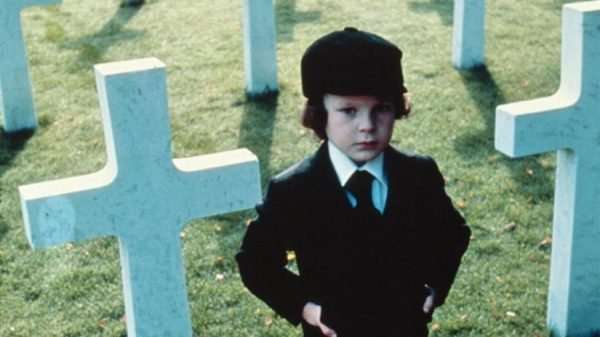
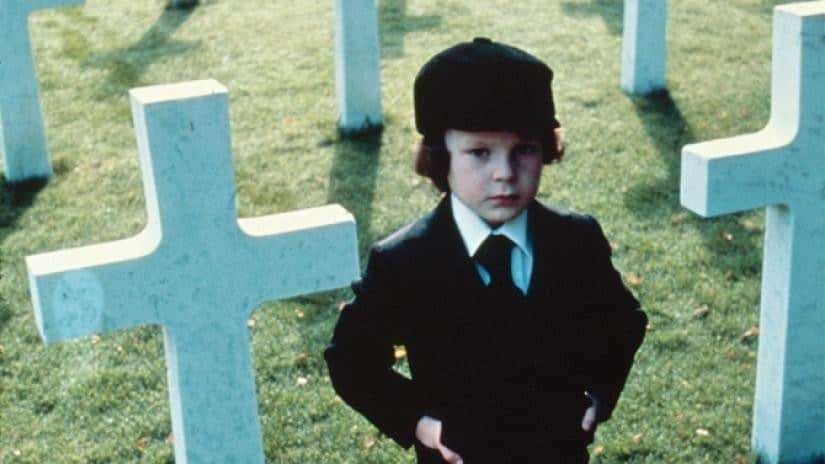
After 13-year-old Linda Blair’s unforgettable performance as the possessed Regan McNeil in 1973’s The Exorcist, 4-year-old Harvey Stephens followed suit by scaring a generation of audiences with his creepy turn as the Antichrist incarnate Damien Thorn. The young actor won the part over 500 other hopefuls who attended the movie’s auditions for the iconic role. Stephens was chosen by Donner, largely based on how they enacted the scene where Damien attacked Katherine Thorn during the church wedding scene. But instead of having someone else be at the receiving end, Richard Donner stood in as Katherine Thorn to assess which child acted the most unhinged. And the winner was Stephens who screamed and clawed at the director’s face and even kicked him in the groin during the audition. Donner was more than impressed by Stephens’ performance and requested the kid’s natural blonde curly hair be straightened and dyed jet-black to better suit the role. He even had the young actor wear colored contact lenses for the film to make him look…creepier.
Jerry Goldsmith’s score was truly an unforgettable aspect of the film
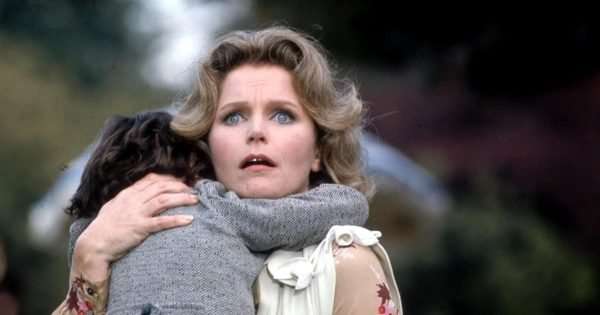
The late Jerry Goldsmith was a composer whose illustrious career in film and the small-screen spanned over five decades and over two hundred odd productions. For his unforgettable contributions he had been nominated for eighteen Academy Awards, nine Golden Globe Awards, six Grammy Awards and five Prime Time Emmy Awards over the years. Some of his most notable works include Planet of the Apes, Rambo, Star Trek, Alien, Patton, Chinatown, Gremlins, Total Recall, Basic Instinct, Air Force One, The 13th Warrior and The Mummy. Being fully aware of the impact a good score would bring to their project, director Richard Donner and producer Harvey Bernstein decided to ask for some extra money from the studio to hire Goldsmith during the movie’s post-production period. Convinced that they were onto something 20th Century Fox gave them an additional $25,000 to see their task realized. To say Goldsmith more than rose to the challenge would be an understatement of monumental proportions, because the terrifying score went on to win the Academy Award for Best Original Score while the creepy “Ave Satani” song received a nomination for Best Original Song. To this day “Ave Satani” remains the only Best Original Song nominee to come from a horror movie, and the only nominee to be written and sung entirely in Latin.
Billie Whitelaw’s performance was so good that the producers didn’t want to remove any part of it
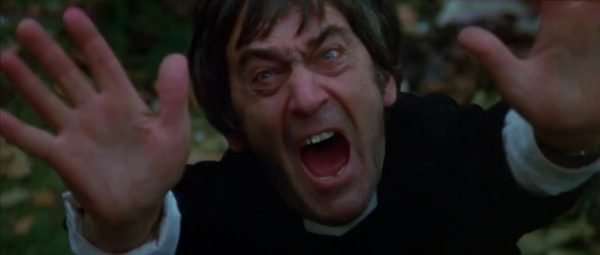
While the rest of the film’s narrative opted to keep things ambiguous until the climax, Mrs. Baylock was something of an outlier, since the enigmatic babysitter was quite obviously pure evil. This somewhat irked Richard Donner and the producers, who wanted to keep the audience guessing till the very end, but they were also too fond of actress Billie Whitelaw’s brilliantly OTT performance that they decided to keep the demonic nanny role in the film instead of removing it. Prior to The Omen, Whitelaw’s work was primarily confined to theater works until she made the switch to feature film, garnering the performer two BAFTA awards for Best Actress in a Supporting Role for the comedy drama Charlie Bubbles and the psychological thriller Twisted Nerve, in consecutive years. However, it was with her unforgettably chilling performance turn as Mrs. Baylock that the talented actress gained international acclaim and wider recognition.
An apparent curse plagued the production of the horror flick
Yes, you read that correctly. Numerous sources document that the production of the horror flick may have been plagued by a sinister curse during the course of its production…and even its postproduction. During one instance lightning struck two separate planes in which lead star Gregory Peck and screenwriter David Seltzer were travelling in and even producer Harvey Bernhard nearly missed being struck by lightning while in Rome. Shortly after, the hotel where Richard Donner was staying, during the production period, was bombed by the IRA. In another instance, Peck cancelled a flight he’d chartered to Israel at the last moment, and this very flight crashed killing all on board.
Principal members of the crew also survived a direct collision car crash on day one of production. During postproduction, special effects artist John Richardson, who was working the war epic A Bridge Too Far at the time, got involved in a head-on car collision in Netherlands which resulted in the death of his girlfriend/assistant Liz Moore. Her tragic demise, due to beheading, eerily echoed the photographer character Keith Jennings’ death in the movie. Similar to The Exorcist, released three years before, the PR team of The Omen also seized on the opportunity and drummed up interest on the film by embellishing and associating the aforementioned accidents with a “sinister curse” that had swirled around the movie.
The movie originally had a different title before it was renamed
To even imagine The Omen initially having a different title is unthinkable right now, but that’s what really happened during the production process of the film. The original title of the movie, at the very beginning of the shoot, was “The Anti-Christ” but the studio heads opted to go with something less obvious and went with “The Birthmark”. However, even that name didn’t last that long as you will soon find out. The title change happened when the movie was being shot on location in some maternity wards in Italy and the patients started complaining and protesting when crew members hung up signs that read “Filming the Birthmark”. Since the mention of birthmarks in maternity wards was considered bad luck in the local culture the crew started temporarily changing the signs to “Filming the Omen”. For some reason the new title change stuck and remained unchanged until the conclusion of production.
Box-office success, awards wins, retrospective appreciations & the launch of a franchise
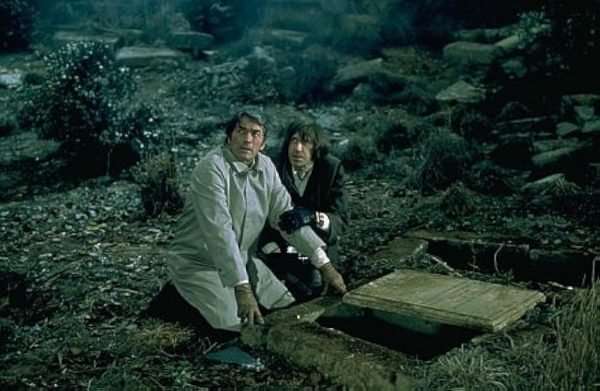
Made on a budget of $2.8 million the movie went on to rake in an astounding $60.9 million at the worldwide box-office by the conclusion of its theatrical run. Its marketing campaign was inspired by Steven Spielberg’s Jaws, released the year prior, replete with two weeks of sneak previews, a novelization penned by David Seltzer and the inclusion of the infamous “666” functioning as the centerpiece of said marketing campaign. The movie went on to become the sixth highest-grossing movie of 1976 in the United States.
At the time of its debut the effort received a mixed response from film critics with most finding fault with the script’s deficiencies and the overall outlandishness nature of the story. However, retrospective reviews of the film have embraced it as a horror classic with review aggregator site Rotten Tomatoes boasting an approval rating of 85% based on 53 reviews and an average rating of 7.2/10. The site’s consensus reads: “The Omen eschews an excess of gore in favor of ramping up the suspense—and creates an enduring, dread-soaked horror classic along the way”.
Whatever the script related deficiencies the effort may have had, the movie performed fairly well during awards season by winning the Academy Award for Best Original Score and being nominated for Best Original Song for Jerry Goldsmith. In addition, Billie Whitelaw received a nomination for Best Supporting Actress at the following year’s BAFTAs and young actor Harvey Stephens received a nomination for Best Acting Debut – Male at the Golden Globe Awards. The commercial success of the original obviously meant that a sequel would be an inevitability and the movie received, not just one, but three sequels between 1978 and 1991. However, neither of the sequels achieved the same level of fame or commercial success as the original. The 2006 remake headlined by Liev Schreiber and Julia Stiles also failed to impress film critics despite being a moderate hit with audiences.
Hope for the franchise was rekindled with the release of the prequel film The First Omen in 2024, which received positive reviews and a decent-ish box-office return. Successful small-screen adaptations of the IP have proven to be an unsuccessful venture, however. As of writing, the future of The Omen franchise is unclear, with the only positive development being the recent prequel movie, but if the moderate success of that flick is any indication it means that this 50-year-old franchise still has some life left.
What are your thoughts on The Omen? Let us know on our socials @FlickeringMyth, and if you haven’t already, be sure to take a look at our own religious horror offering The Baby in the Basket…
Hasitha Fernando is a part-time medical practitioner and full-time cinephile. Follow him on Twitter via @DoctorCinephile for regular updates on the world of entertainment.