*Warning: This article discusses murder and sexual assault, which some readers may find distressing.*

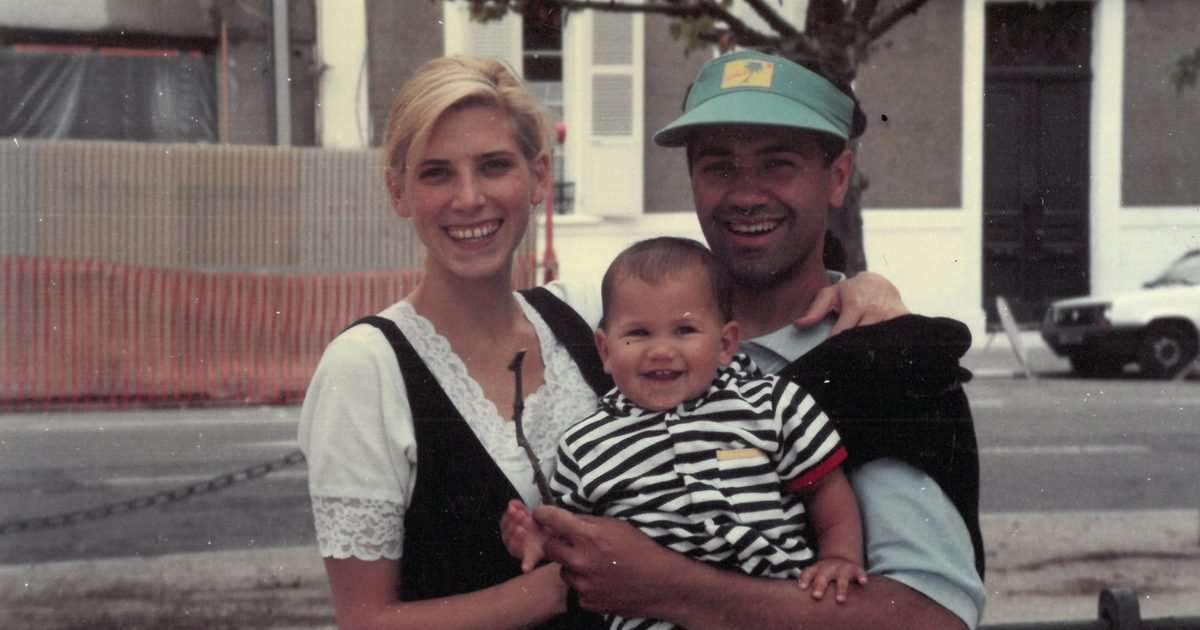
Across three episodes, Netflix’s The Witness depicts how the 1992 murder of Rachel Nickell shocked a nation but also, how it completely changed the lives of her partner André Hanscombe and son Alex.
The only witness to his mother’s killing, Alex was the subject of unparalleled public fascination, with the press becoming increasingly invasive and forcing André to make the decision to move abroad to protect his child.
As well as giving us insight into the pair’s often fraught father-son relationship in the years after Nickell’s death, the factual drama also underlines the many police failings at the heart of the investigation. Ultimately, an innocent man was persecuted while Nickell’s true killer went undetected for years, going on to kill another mother, Samantha Bisset, and her four-year-old daughter, Jazmine.
Being released in tandem with The Witness is the documentary film, The Murder of Rachel Nickell, which digs further into the case itself. But who killed Rachel Nickell and eventually, Samantha and Jazmine? Read on for the true story behind Netflix’s The Witness.
The Witness true story: How was Rachel Nickell’s killer eventually caught?

Rachel Nickell was murdered in broad daylight on Wimbledon Common on 15 July 1992, with the only witness to the crime being her then two-year-old son Alex.
Alex remained unharmed physically but because he could provide details about the attacker, Alex became a key part of the police investigation into Nickell’s murder. Being interviewed multiple times to ascertain details about the attacker, we see in The Murder of Rachel Nickell that Alex was reluctant to speak about the attack and was clearly traumatised by what he saw.
Alex eventually remembered that the attacker was a younger white man wearing a white shirt over blue trousers with brown shoes. As André explains in the documentary, the most significant piece of information was actually that the killer was wearing a belt over his white shirt, “almost like a butcher’s apron”. It turned out that the description matched up with one from a woman in the area who had allegedly seen the same man carrying a bag towards the murder scene 10 minutes prior to the murder.
The police had identified their suspect but hadn’t managed to find him, eventually enlisting criminal psychologist Paul Britton as an advisor on the case. Soon, those descriptions of the killer were publicised on Crimewatch in a bid to capture him. After the episode aired, there were plenty of calls to the hotline with a few of them saying that the artist’s impression looked like a man named Colin Stagg.
The callers underlined that Stagg seemed to fit the psychological profile and Stagg had also previously admitted to being on the Common at the same time that Nickell’s body was discovered. Stagg was eventually picked out of an identification parade by the same woman who saw a man walking towards the Common before the murder.
On a search of Stagg’s home, police found zodiac signs on the floor and survivalist equipment which, to them, indicated that he “wasn’t a normal member of the public”. However, with the lack of forensic evidence, there wasn’t enough to arrest Stagg for Nickell’s murder and he was released.
The police then received a call from a woman who had exchanged letters with Stagg in a lonely heart’s club and said that they were strange, eventually sending the letters to the police. That set off the controversial honeytrap operation that Stagg was at the centre of, with a female undercover officer trying to get Stagg to write about depraved sexual fantasies. Stagg did write back to the officer, with the police eventually arresting him as a murder suspect 13 months after Nickell’s killing.
However, in November 1993 (16 months after Nickell’s murder), the killing of Samantha Bisset and her four-year-old daughter Jazmine in their South London home rocked London once more. While investigating the case, officers once again enlisted the help of Britton. After discussing the possibility of the Bisset and Nickell murders being committed by the same perpetrator, officers stated that the team investigating Nickell’s murder disagreed because they were insistent that Stagg was the culprit and would have been locked up when the Bissets were killed.
Detective Superintendent Mickey Banks pushed for the fingerprints at the Bisset crime scene to be tested again as they all returned with every print being eliminated. Testing Samantha’s prints again, it was actually found that there were several other prints present and they were found to be from a man named Robert Napper.
Napper lived locally in Plumstead and had actually spent two months in custody previously, hence why his fingerprints were on file. Napper was eventually arrested for the Bisset murders and it became clear in his interviews that he had mental health struggles, often talking in the third person. On a search of his bedsit, police found multiple knives locked in a toolbox, a book on strangulation and a London A-Z map with various drawings on – which included a circle around an area close to Wimbledon Common.
Stagg was taken to trial for the murder of Nickell but walked free after a judge threw out the case on the basis of the honeytrap operation being a form of entrapment and thus, being inadmissible.
Ten years later, the Nickell case had become a cold case and the police had asked forensic scientist Dr Angela Gallop to help in identifying Nickell’s attacker. Developing a new technique (which took two years) to analyse the DNA that sat alongside Nickell’s in the samples, Gallop and her team eventually found that the DNA profile they got wasn’t a match to Stagg.
Running it through the DNA database did however bring up one match – and it was Napper, who was then residing in Broadmoor Hospital for the murders of Samantha and Jazmine Bisset.
What were Robert Napper’s other crimes?
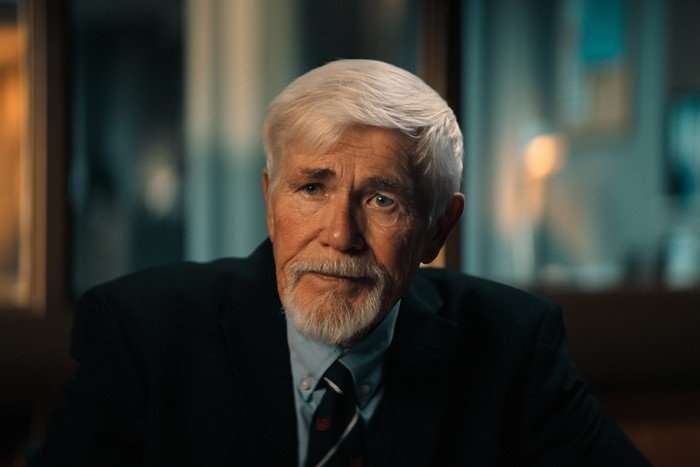
In December 2008 once André had returned to the UK for Napper’s trial, he explains that a police officer showed him a dossier of evidence that showed that Napper’s murder of Nickell was preventable.
As outlined in the documentary, three years before Rachel, Samantha and Jazmine’s murders, there was a known serial rapist attacking women (who were sometimes walking with their children) on the Green Chain Walk in South-East London. DNA had identified one suspect and after a poster had been put up with an artist’s impression of the attacker, two women had contacted police to say that it looked like Napper.
Two detectives then went to visit Napper and he agreed to give blood voluntarily but never turned up to the police station. When police returned to his address, they’d found he’d packed his bags and left. Because Napper was taller than descriptions given by the Green Chain Walk rape victims, senior officers decided to discount him as a suspect altogether, meaning he was left to reoffend and ultimately, kill Rachel, Samantha and Jazmine.
That wasn’t the only police failing though as André explains that in September or October 1989, Napper’s mother had reported to police that her son had confessed to raping a woman on Plumstead Common. However, the police didn’t follow that up at all.
Where is Robert Napper now?
Napper was eventually found guilty of Nickell’s murder after confessing and pleading guilty in court in 2008.
He had been diagnosed with schizophrenia and Asperger syndrome, eventually being convicted of manslaughter on the grounds of diminished responsibility and was told that he would be held in Broadmoor high-security hospital indefinitely.
“You are on any view a very dangerous man,” Mr Justice Griffiths Williams said.
The judge went on: “You stabbed her a total of 49 times and you even stabbed her when she was dead. All the while Alex was there. The marks of injury upon his face proved that at some time you almost certainly in my judgement dragged him away from his mother.
“Now, 16 years or so later, in early adulthood, Alex knows the man who killed his mother has been brought, albeit belatedly, to justice. It may be that he can now close a long drawn out chapter in his life.”
What actions did André and Alex take against the Metropolitan Police?
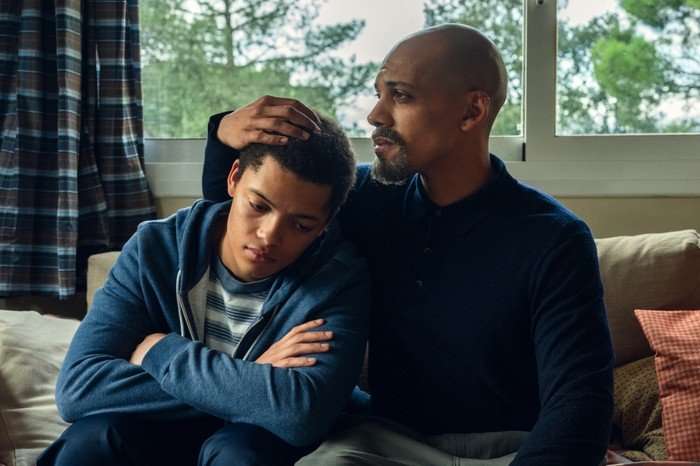
As outlined at the end of The Witness, André is rightfully incensed by the dossier of information he’s passed, which reveals that Rachel, Samantha and Jazmine could’ve still been alive if the police had acted when Napper was first put on their radar.
Using that leaked dossier, the father and son did indeed make a formal complaint against the Metropolitan Police which led to a damning report by the Independent Police Complaints Commission (IPCC).
Rachel Cerfontyne, the IPCC Commissioner at the time, said: “It is clear that throughout the investigations into the Green Chain rapes and Rachel Nickell’s death there was a catalogue of bad decisions and errors made by the Metropolitan Police.
“The police failed to sufficiently investigate after Napper’s mother called police to report that he had confessed to her that he had raped a woman and, inconceivably, they eliminated Napper from inquiries into the Green Chain rapes because he was over 6ft tall.
“Without these errors, Robert Napper could have been off the streets before he killed Rachel Nickell and the Bissets, and before numerous women suffered violent sexual attacks at his hands.”
Cerfontyne had concluded that the mistakes made by the force were “dreadful” but said that no police officer faced formal disciplinary action because aside from one senior detective who had died, the others had since retired.
As the final title card at the end of The Witness also reads: “André and Alex live in Spain and remain united in their belief in the power of faith, hope and love. They are closer than ever.”
For information and support, please visit The Survivors Trust or Rape Crisis.
Want to see this content?
This page contains content provided by Google reCAPTCHA. We ask for your permission before anything is loaded, as Google reCAPTCHA may use cookies and other technologies. To view this content, choose ‘Accept and continue’ to allow Google reCAPTCHA and its required purposes.
The Witness and The Murder of Rachel Nickell are available to stream on Netflix.
Check out more of our Drama coverage or visit our TV Guide and Streaming Guide to find out what’s on. For more TV recommendations and reviews, listen to The Radio Times Podcast.