
This article contains massive Disclosure Day spoilers.
It’s a single word with profound implications. On a night where the world feels like it is on the eve of WWIII, and the media breathlessly follows reports of geopolitical turmoil coming out of the Korean peninsula, all of the petty problems of humanity seem suddenly mooted by a sequence that is pure Spielbergian magic.
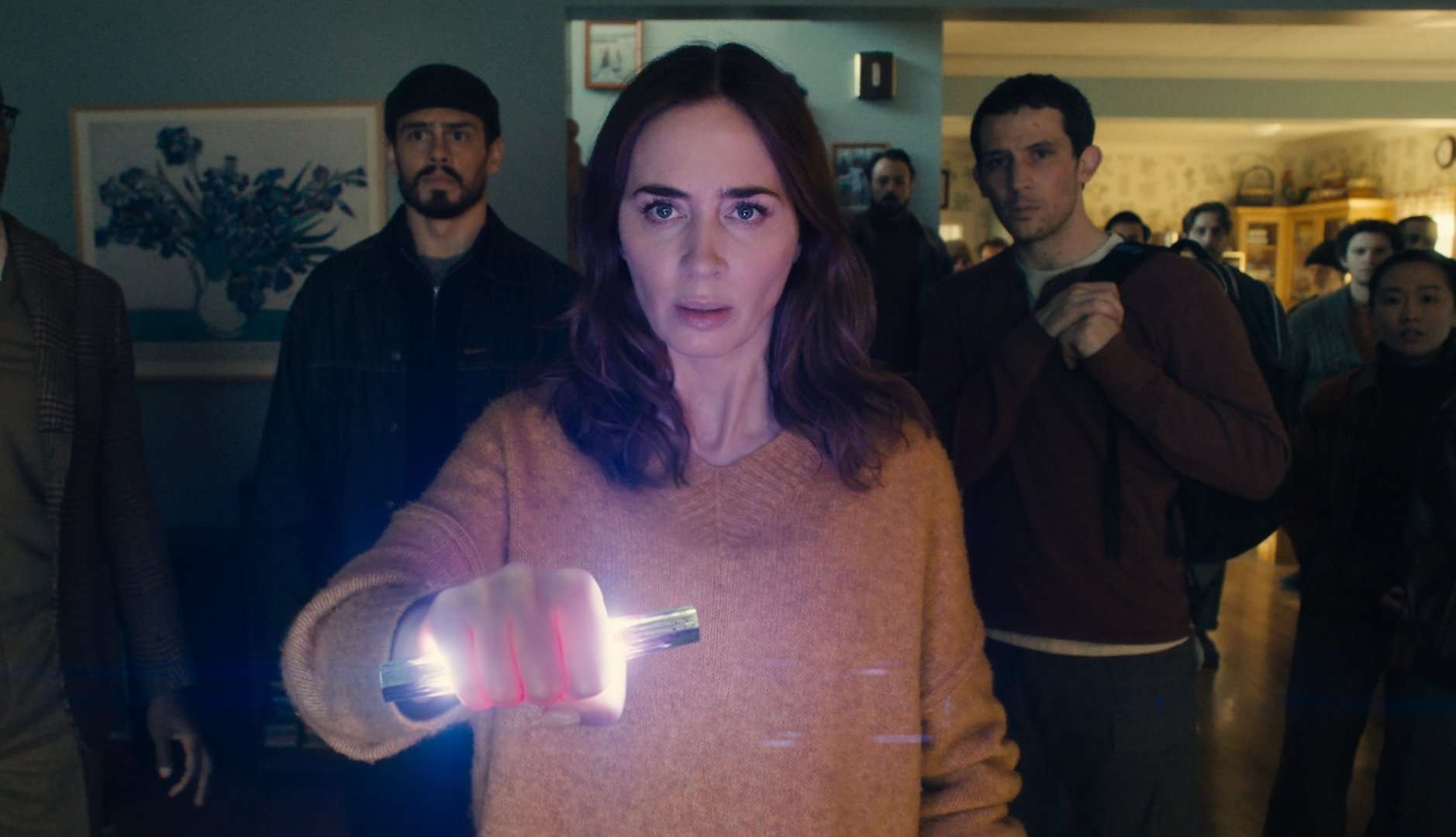
Driven by—or possessed—by her connection to extraterrestrials that dates back to a childhood abduction, Emily Blunt’s Margaret Fairchild is able to commandeer her local new station in Kansas City, and soon enough the entire planet, and reveal we are not alone: not in this universe, nor in our shared ability to be awed, as indicated by a cornucopia of Steven Spielberg’s patented “gaze up in wonder” shots. Around the globe, families and friends, neighbors and strangers, stop in their tracks to greet the news on their screens in stunned silence. Yet unlike so much of the real-world’s daily news, the ending of Disclosure Days offers glad, if enigmatic, tidings.
The aliens are here. They have always been here, and in the movie’s final moments, a gray, tortured, and aged extraterrestrial is wheeled into the newsroom by a team of true-believers led by Hugo Wakefield (Colman Domingo). Suddenly, it’s clear how Hugo knew all along about Margaret and Daniel (Josh O’Connor), two adults who were both taken at a young age to be test subjects, or perhaps ambassadors, for what comes next: worldwide first contact.
The details are deliberately vague, but the implications are vast as Blunt translates the beleaguered gray’s first televised comment to the world: “Listen.”
This stunning finale to Disclosure Day is the first scene that Steven Spielberg wrote when he dreamed up the story for the film. However, the final line was an invention of his longtime screenwriter and collaborator, David Koepp, who we spoke with at length about the ending of the movie.
“[The last line is] in my very first draft,” says Koepp. “As I typed and was reaching the end, I knew she was going to face the camera. So I wanted her to say something and I wrote the first word of the line because I thought it represents quite a bit. She’s saying ‘listen,’ because the space boy just told me a bunch of interesting stuff, and she’s saying ‘listen to one another,’ which is the heart of the message.”
Koepp also adds the word has a lot of meaning throughout fiction and human history: “It just so happens to be the first word of one of my favorite books, Slaughterhouse-Five,” notes the screenwriter. “It’s also the first word of numerous Hebrew prayers. So I wrote ‘listen,’ and then I just typed a period, because I think when you have one word that says everything you want to say, you should stop talking.”
This sequence was, again, always the ending, dating back to the 40-plus page script treatment that Spielberg first emailed to Koepp while asking for notes. The rest of the movie was in essence reverse-engineered to reach this point. According to the writer, there was never any doubt it would end at the very moment the world saw a living extraterrestrial with their own eyes.
“We always wanted to stop that night in the control room or in a studio, in part because the movie is called Disclosure Day,” Koepp explains. “In the beginning, we’re told that this information is super important, and it needs to get out, and at the end of the movie, the information gets out. That is your story. If you continued, you could never stop. If the movie was called ‘Disclosure Day and the Subsequent Week,’ then you know you got a lot of explaining to do. But our story was accomplished and it was time to end it.”
The final line is designed to leave the audience wanting and wondering. If you’re interpreting or projecting what comes next after the credits roll, you’re continually involved with the film, which is a win for Koepp and Spielberg.
But it’s more than just the final seconds of Disclosure Day that leaves the mind racing. There’s also the technology and the implications of its effect. In a movie rife with Christian imagery and teases that the aliens in the film have been visiting Earth since the dawn of history, it seems even open to interpretation how much the extraterrestrial influence is responsible for the religious variety. There are especially notes of Christlike empathy and persecution when Blunt’s Margaret, first “awakened” to her otherworldly knowledge, is able to get strangers and even antagonists to repent, at last seeing the redeeming qualities of their fellow man. Eventually, this culminates in the deeply cynical and misanthropic Noah Scanlon (Colin Firth) seeing the light. Elsewhere in the movie, Margaret is chilled when one believer makes the sign of the cross after witnessing what could be called one of Margaret’s miracles.
For his part, however, Koepp remains coy on whether the film is suggesting Christ or other religious figures throughout history might have an alien connection in the film’s universe.
“I do think there are references and I do think that there are visitations that occurred for thousands of years throughout human history, and there are references if you choose to interpret it that way in the Bible and other historical works,” Koepp cryptically allows. “But my reading of it is not that human events on Earth were affected, or that they built the Pyramids.”
Still, he ultimately concedes, “I think you can’t talk about outer space and possible extraterrestrial life without talking about God. They just go hand-in-hand because they question our place in the universe.”
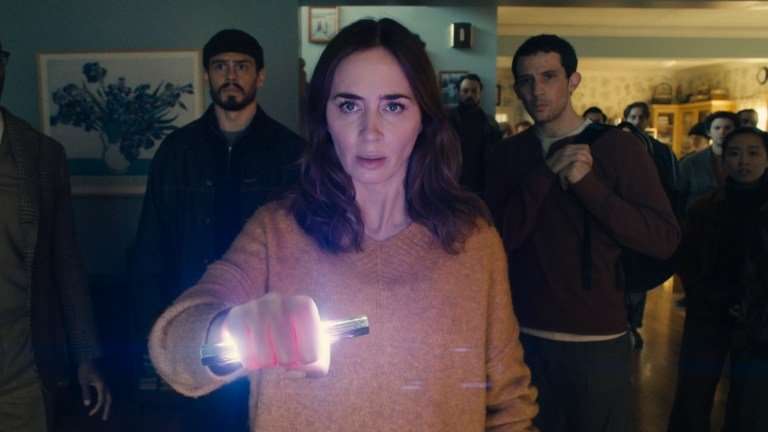
There are a lot of ideas in Disclosure Day, a movie its director and writer hope acts as a “unifying theory” for every close encounter and alien abduction story you’ve ever heard. In this film, it’s true. All of it. But it’s the filmmakers’ job to confirm this reality, not to necessarily explain it. This extends all the way down to the bizarre alien contraption that one character compares to a “magic wand” in the film, and which everyone else simply calls the Device. By design, its powers are inexplicable, including to the screenwriter.
“If it had even one more power, it would be too much,” says Koepp. “It becomes the magic wand. So the humans in the film don’t understand how it works, and we’re comfortable that we also don’t understand how it works, except for these two things that it seems able to do.”
It’s a mystery, not necessarily based on any actual alleged UAP sighting or close encounter, but on the filmmakers’ own desire to “make a fun movie.” Still, if that fun leaves you pondering what comes next, either between our relationships with each other or the little green men out there, then it’s done its job of living past Disclosure Day.
Disclosure Day is in theaters now.