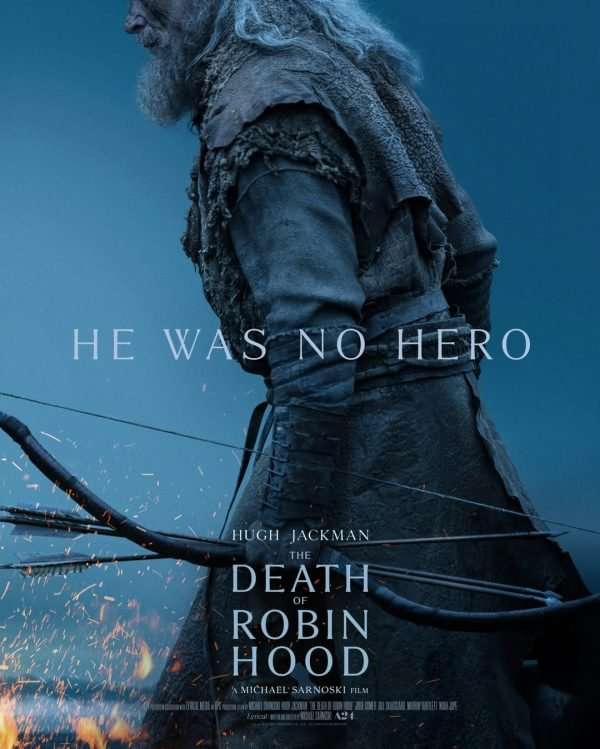
The Death of Robin Hood, 2026.

Written and Directed by Michael Sarnoski.
Starring Hugh Jackman, Jodie Comer, Bill Skarsgård, Murray Bartlett, Noah Jupe, Jade Croot, Faith Delaney, Tabitha Smyth, Beau Thompson, Alfie Lawless, and Asher de Silva.
SYNOPSIS:
Grappling with his past after a life of crime and murder, Robin Hood finds himself gravely injured after a battle he thought would be his last. In the hands of a mysterious woman, he is offered a chance at salvation.
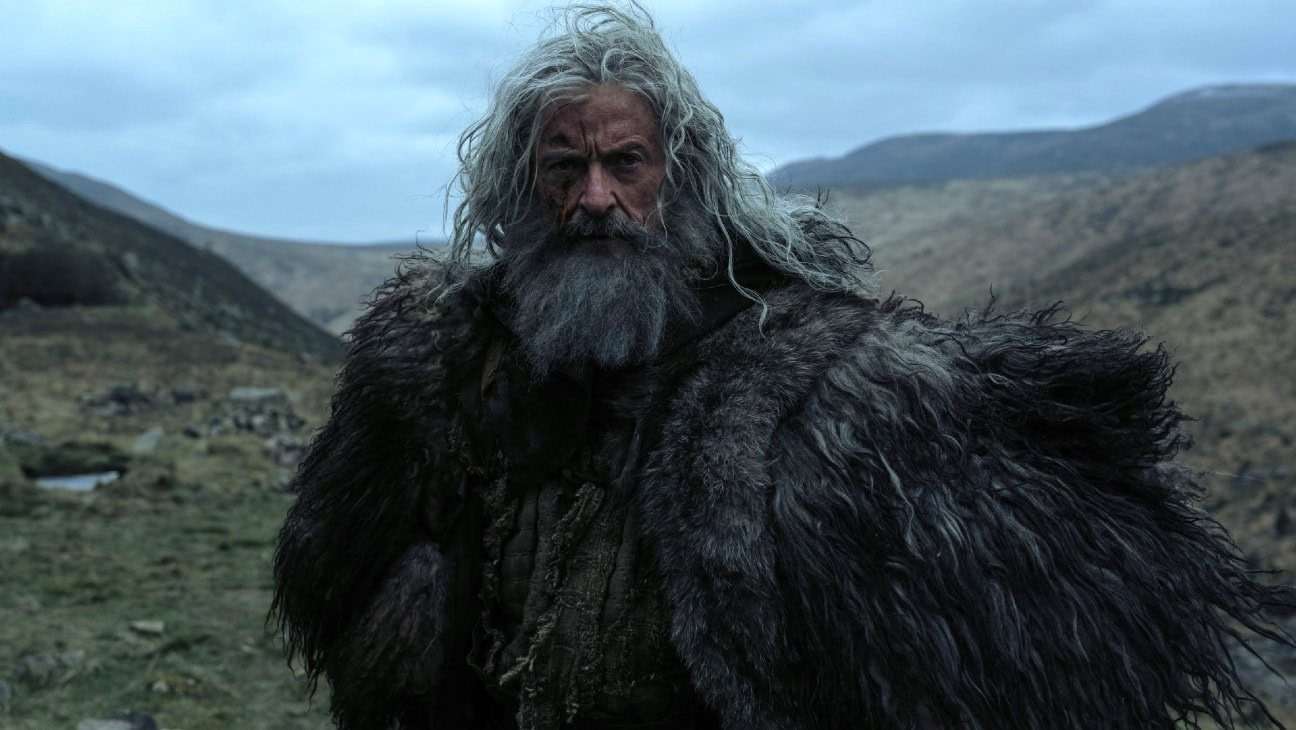
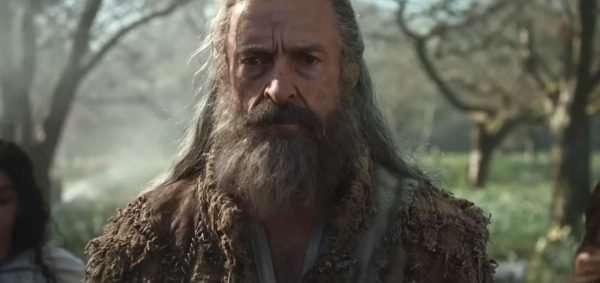
There is a nobility attributed to the Robin Hood mythology (which has extended to family-friendly animated takes and mature interpretations) in that the outlaw’s thieving and killing were done to steal from the rich and give to the poor, balancing the scales so to speak. In writer/director Michael Sarnoski’s wrestle with that legacy, titled The Death of Robin Hood, the filmmaker presents an aged, weathered, unkempt, and disheveled but still alert and physically capable Robin (Hugh Jackman, who can play such older and broken down characters with both anger and nuance in his sleep at this point), that apparently never had heroic or even morally sound intentions. Rather, he was a maniac with bloodlust who enjoyed the killing and crippling of corrupt kings and empires, only concerned with eking out a life in the woods for himself and his apprentice, Little John (Bill Skarsgård). Whatever good came from his actions was inadvertent.
Fittingly, the first third of The Death of Robin Hood is shockingly violent, driving home what might be the grittiest take on the character. One of many consequences of decades-long slaughter is that one’s enemies become generational, as the film opens with a vengeful woman attempting to get the drop on Robin and murder him. Suffice to say, she quickly meets a graphic demise, suggesting that he is still numb to killing and doesn’t have much of an inclination to change or let his guard down. At times, this opening stretch makes him come across as Kratos from God of War, but if he were, well, Robin Hood.
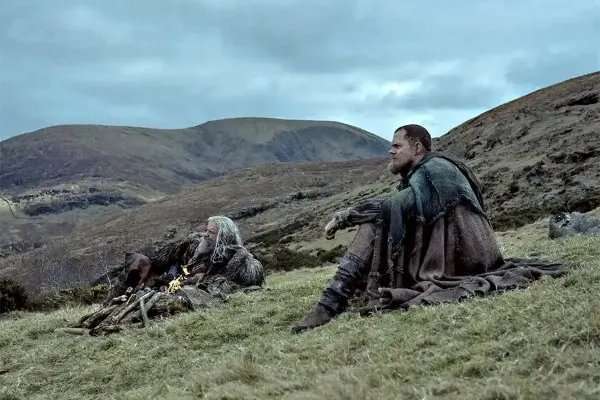
As for Little John, he has a wife and daughter (both apparently named Margaret, because that’s not confusing at all during key bits of the story), but finds himself caught up in a dangerous situation with enemies intent on harming his family. He would like to settle down on this farm and begin anew, although that might not be possible. Robin certainly doesn’t believe he has a shot at a second life. From there, the violence only escalates into mass death as Robin tries to give Little John that out from a life of being bandits. Without giving away who lives and dies, it is safe to say that a gravely wounded Robin is brought to a priory run by Sister Brigid (Jodie Comer), who nurses him back on his feet, although still visibly injured with struggles maneuvering around.
It also needs to be said that this is where the more recognizable directorial stamp of Michael Sarnoski (the incredible Pig starring Nicolas Cage) shows up, with The Death of Robin Hood transitioning into a quiet and reflexive film about loose ends, second chances, balance in the universe, whether it’s possible to attain inner and outer peace after a lifetime of killing, and just what the hell is up with this depiction of Robin Hood. People tell stories in a more traditional belief regarding rumors that he was a thief on behalf of the poor, but he vehemently shuts that down whenever he is confronted with them. Similarly, there are others who only know him as a murderous madman on a rampage his whole life. The latter seems to be the more accepted characterization in this world, which means Robin begins going by the name Randall in an effort to protect himself without bringing any trouble to the priory.
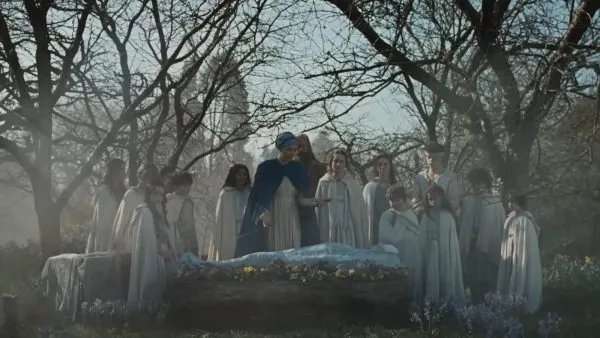
Regardless of whether or not Little John is alive or dead (I won’t spoil), Little Margaret (Faith Delaney) also ends up in the priory, needing to be looked over. Also showing up is a one-eyed young man (Noah Jupe), seeking revenge for events earlier in the narrative. Meanwhile, there is also a leper (Murray Bartlett) lecturing Robin about the nearby fruit and how to take care of the priory, which theoretically could become his permanent job away from all the violence and every manner in which he is connected to it. The characters here could be the only remaining thread tying him to chaos, or perhaps his act isn’t fooling anyone and there are those here who are aware of his real identity. Then again, perhaps the question that really matters is whether this will lead to violence in the priory, or if it will all be only a calm before a storm that never comes.
Shot on film with striking photography (by Pat Scola) and serene locales with natural lighting, not to mention convincing costumes and a distinct look for Robin Hood (he almost looks like Geralt from The Witcher games), there is no denying that this is a handsomely mounted, well-crafted film. Every once in a while, the medieval score (by Jim Ghedi) will also break into a catchy folkloric song that fits and further warps the viewer into the 13th-century time period. One gets the sense that after going Hollywood and succeeding with A Quiet Place: Day One, Michael Sarnoski was itching to take his cache into a “one for me” project that evidently is “what if Robin Hood was actually self-serving and no hero, and had to grapple with the legendary stories and outsider perception alongside his mortality”. Throw a young girl in there to protect and train for good measure.
All of this is interesting on the surface, but The Death of Robin Hood is sluggish even for this filmmaker, moderately elevated by a strong ensemble not given much to do but reflect and talk about balance, forgiveness, confronting and owning up to consequences, how to put an end to generations of violence, and, of course, mythology vs truth. The entire supporting cast is underdeveloped and mostly there to serve Robin’s character study. If there is anything that will stick in the mind beyond Hugh Jackman’s outstandingly layered work, it’s just how savagely violent that first act is. Aside from that outlier stretch, this is the type of deliberately paced material Michael Sarnoski has proven he can pull off, mostly doing so again (the ending beats are familiar yet still emotional), even if it fails to reach deep profundity.
Flickering Myth Rating – Film: ★ ★ ★ / Movie: ★ ★ ★
Robert Kojder