“Compliance” is an ambitious, unsettling conspiracy thriller that weaponizes modern paranoia for maximum discomfort.

No time to read? Click the button below to listen to this post.

MORBID MINI: Compliance may be messy, but it gets under your skin in all the right ways, transforming surveillance, conspiracy, and online manipulation into something genuinely unnerving. It feels like falling down a digital rabbit hole into a world of media distortion, moral compromise, and creeping modern dread.
2012’s Compliance, directed by Craig Zobel, is one of my favorite psychological thrillers based on a true story—a harrowing film that interrogates how easily people are manipulated and how willing they are to blindly obey authority.
Made on an estimated $100,000 budget, partially crowdfunded, 2026’s Compliance from writer-director Kyle Mangione-Smith is a different animal altogether. But it excels in many of the same ways, particularly in its quest to make the viewer as entirely uncomfortable as possible.
Both concern how our fears and desires can be exploited. In Zobel’s film, the goal is to debase and humiliate for the sheer thrill of it; committing evil just because you can. That’s pretty damn chilling.
Mangione-Smith focuses on the far more common, but equally insidious, motive: power and control. What makes his dark vision so harrowing is how close to home it feels and how much it reveals about the dark underbelly of our constantly-surveilled and media-manipulated lives.

Thanks to social media, the world is bigger and more accessible than ever before. At no time in history have we been this informed, had this much access to disparate ideas and dialogue. That should be empowering. Instead, it’s overwhelming.
We are slaves to the algorithm that mercilessly targets us, sells to us, and tells us what and how to think. We’re sheep being led to slaughter under the guise of news and entertainment. We instinctively know we’re being misled. Most of us realize we are merely pawns on a chessboard. We live in a constant state of fear and uncertainty.
Give people a target for that fear, and it’s you who controls the board.
It’s a real modern horror story, and Compliance plays it for maximum discomfort.

On the eve of a landmark deal, a major tech startup, UVisit, faces a PR crisis. A young woman staying at one of their vacation rentals, Sarah (Lindsey Normington), suffers a sexual assault. Former social worker turned corporate PR cleaner, Sam (Megan Wilcox), is tasked with making the whole ugly mess go away.
Armed with a buttload of cash, enough to make just about anyone stay quiet, Sam is surprised to discover that Sarah wants no part of the company’s million-dollar payout attached to a nondisclosure agreement. She won’t be bought, and she balks at Sam’s feigned concern for her well-being.
Sarah’s ability to immediately see through the BS rattles Sam, given the morally shaky ground she stands on since accepting an ethically questionable but lucrative job.
To make matters worse, Sam’s faux liberal tyrant of a boss, Harry (Charlie Wood), is furious at Sam’s inability to seal the deal. He demands to put a man on the job because… men know how to get the job done.
Desperate to keep her job and prove she’s capable, Sam dives into the details of the case that become murkier and more sinister the deeper she digs. She crosses paths with a shadowy organization hell-bent on exposing UVisit and other powerful political players at the heart of a corruption scheme. They want Sam’s help in a dangerous operation.
But is she in it for the greater good or personal vindication?
With the beating heart of a conspiracy thriller and the skin of a post-internet found footage film, Conspiracy taps into our modern existential fears about being monitored, controlled, influenced, and engineered.
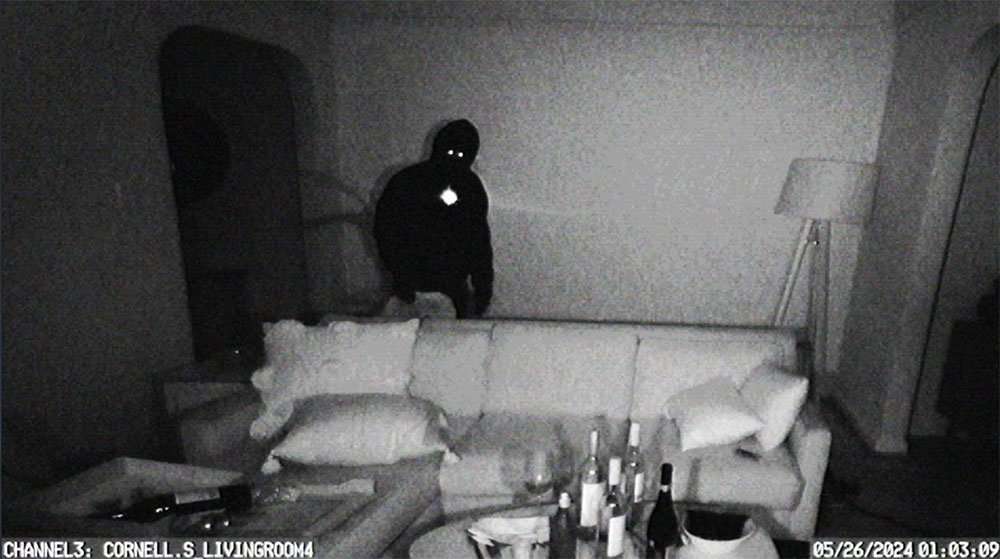
It’s intentionally all over the place visually, using a myriad of different cameras that organically exist within each scene—from phone cameras to dash cams to home and public surveillance cameras to screen life footage.
Like many found-footage films, it’s often ugly to look at, as aesthetics are sacrificed at the altar of authenticity.
To its credit, however, that authenticity really works, and I never found myself questioning the found-footage logic or feeling it was merely a cheap device to stretch the budget. It remained purposeful and effective throughout.
Mangione-Smith has stated he wants the film to feel like scrolling a shady website, looking at fragments of real footage never meant for public consumption. It should feel dangerous and dirty. To that end, he definitely succeeds.
Compliance feels like a descent into the dark web, leaving you deeply unsettled. It succeeds by making you feel complicit in the voyeurism.
Where the film really shines is in its staggering attention to detail and realism related to its screen life aspects.

I watched this as a digital review copy on my laptop, and it was disorienting and disconcerting how often the line between the film and my personal screen blurred.
It doesn’t all work, and I found the ideas to be far more intriguing than the actual narrative. While the first half had me hooked with a compelling setup, it tended to unravel as more and more plot was layered on.
A rapid-fire montage of scenes at the end felt like sensory overload, though I appreciated the potent intent behind it.
With that said, it’s wildly effective at causing unease and making you think. In today’s socio-political, 24/7 content hellscape, the film’s themes are painfully resonant and appropriately horrifying.
Compliance is an imperfect but genuinely interesting and boundary-pushing film that left me rattled.
Overall Rating (Out of 5 Butterflies): 3