Jack Gayer on Gymkata, and why you need to see it…

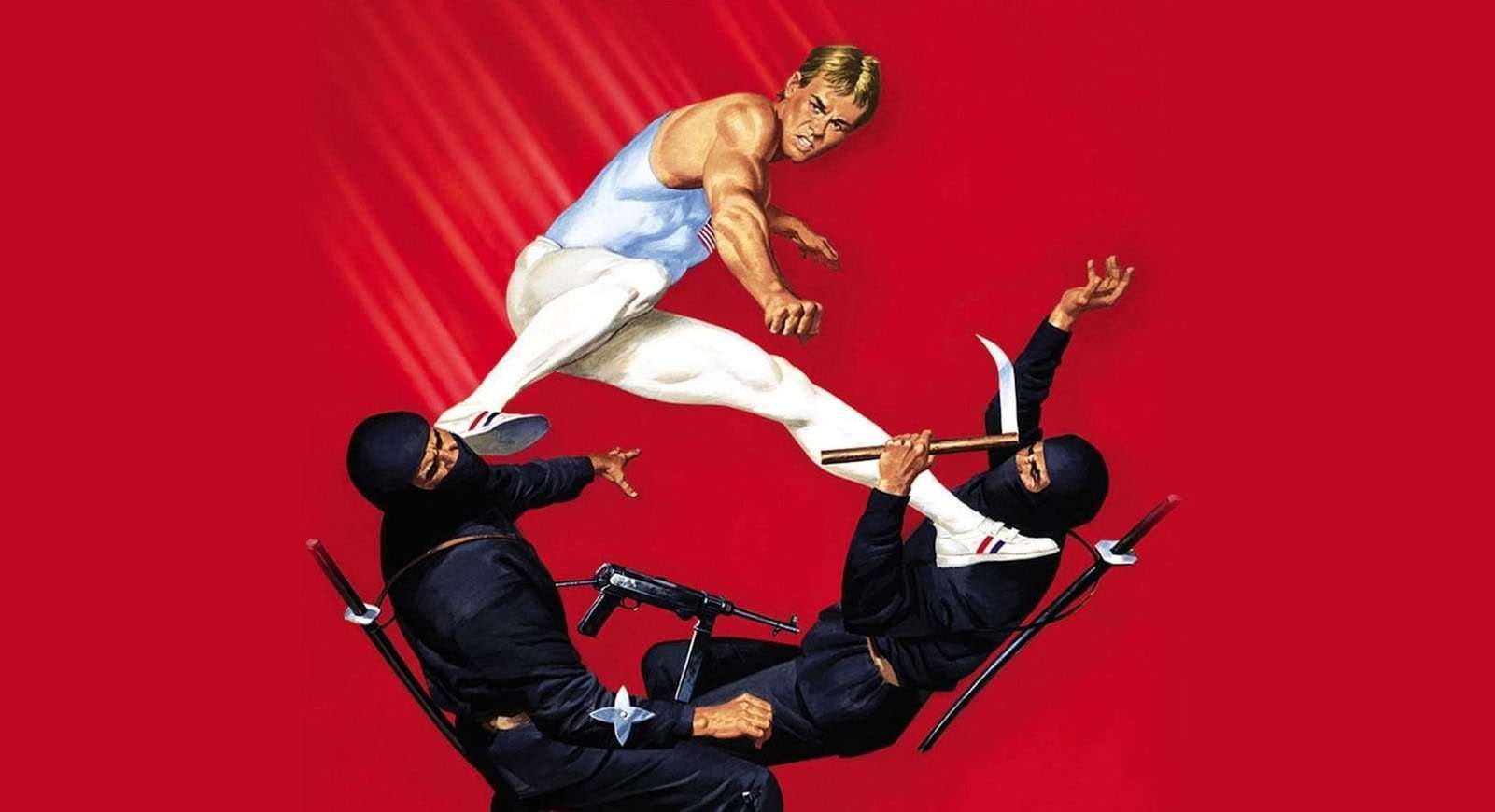
“Unintentionally hilarious” is not a label one strives for. But there’s certainly some magic when it happens. “Did I really see that?” you often wonder. Gymkata (1985) is full of such moments. Laughs are to be had, entirely at the film’s expense. Little about the movie makes sense, from the casting to the plot. Unexpectedly, it also has some late redemption when the film goes from a goofy spy film to a surreal horror one. And like many such misfires, the details surrounding it are often more interesting than the film itself.
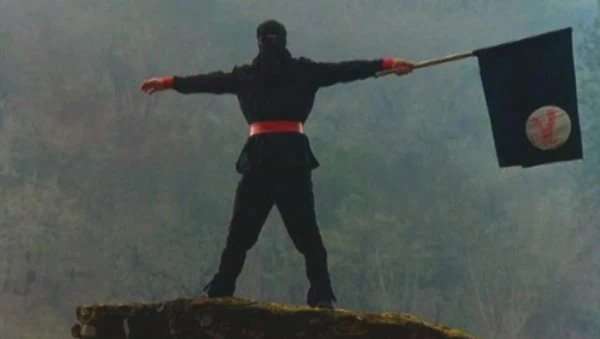
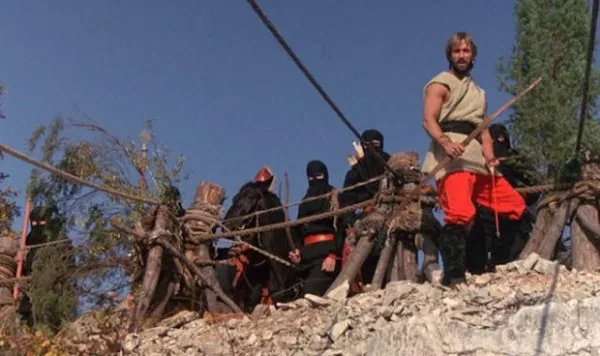
Gymkata’s opening is alternatively dramatic and painfully dull. Tense string music. A static shot of parallel bars. A shot that lasts for almost a minute and a half before something happens. More tense music. A man starts swinging on the bars. Intercut: shots of horses galloping at full tilt. The man practices on bars. Close-ups of horses. Men on horseback chasing someone in Peter Pan green sweats. The pursued man starts crossing a rope bridge by hand. Ninjas on the bluff and below hold black flags. One of the pursuing men, hair perfectly coiffed, arm muscles striated, draws a bow and arrow. Hey, this feels like a fun little action movie with some bizarre editing. Then perfect hair opens his mouth, and “dialogue” comes out: “And you believe the fool,” delivered with all the emotion of a doctor reading test results.
We shift back to the less interesting part: the guy on parallel bars. It’s our hero, Jonathan Cabot (Kurt Thomas), an Olympic athlete so accomplished in real life he has several gymnastic moves named after him. Mercifully,Gymkata was one of his few acting roles.
Next, Jonathan is in a house with some guy, an intelligence operative; we surmise. We’re thrust into a conversation where the screenwriter seems to have taken Mamet’s advice of “get in late, leave early” a little too seriously.
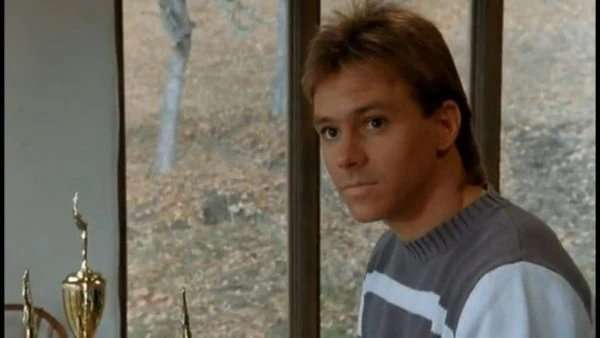
Apropos of nothing, Jonathan says, “I remember all the hours Dad and I spent out there.” Huh? What on Earth is our main character talking about? Well, that’s enough context; time to get into the story. Jonathan is being recruited. Recruited before we get a chance to know even the most rudimentary details about him, like his name, where he is, and what bet did he lose to get a haircut like that?
It’s like the screenwriter half-studied the Hero’s Journey framework by Christopher Vogler, forgot the first step, and mashed together step 2 (call to adventure) and step 4 (meeting with the mentor). Outright skipping step 3 (the refusal of the call).
Paley (Edward Michael Bell), the government operative, gives Jonathan the vaguest indication of what the plan is: “For the next two months you’re going to toughen your mind and your body” and “It’s going to make your Olympic training look like finger painting.” At the end of this non-explanation, Jonathan is asked, “Any questions?” He has none. He is startlingly incurious, readily agreeing to do… something. He apparently didn’t have any other obligations.
No problem, once he’s agreed to do whatever it is he agreed to do (and after an unexplained costume change for Jonathan), the mentor figure Paley—for the record, we don’t know either of the characters’ names yet—starts explaining what Jonathan just agreed to do.
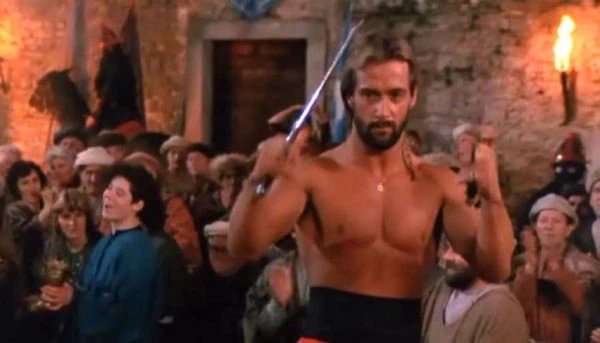
Now, it’s time for the film to start laying some exposition on us, including some info on the villain we saw earlier (the buff guy with gorgeous hair). According to Paley, this is “Zamir” (Richard Norton), who intends to overthrow the fictional country of Parmistan and sell it to “the other side.” Zamir is also a “Viper,” a designation Paley says, like Jonathan, or the audience, should know what the hell it means. Nobody does. And it’s never explained, so it just hangs in the air like yet another loose end. But at least Paley elaborates that Jonathan’s welfare is “of no interest” to Zamir. File that under “no shit,” huh?
Parimistan is on the brink of a coup, so Jonathan’s objective must be to stop this, right? Wrong. Paley explicitly says the only reason they’re interested in Parmistan is a satellite monitoring station inside the country that could track all the other satellites in the world. This station could be an “early warning system in case of attack.” So fuck the citizens who are about to have their country destabilized, I guess? Why does this little nation have such a powerful satellite station? Unclear.
Which brings us to the plot. Paley says anyone who enters Parmistan must “play The Game.” Fortunately for Jonathan, that game isn’t something complex like tic-tac-toe or Hungry Hungry Hippos, as Jonathan seems ill-equipped to play anything that isn’t meant for ages six and under. Unfortunately, “The Game” won’t be explained to the audience for some time.
At least the prizes are mentioned. Spoils of The Game include keeping your life and “one request.” For someone whose life isn’t currently in danger, the first prize isn’t exactly a trip to Bermuda. As far as prizes go, they leave something to be desired.
Once again, the pathologically incurious Jonathan doesn’t ask the obvious question, “What is The Game, exactly?”Explanations of the ins and outs of The Game can wait, because now Paley introduces their advantage over the other countries competing in The Game. Enter the princess of Parmistan, Princess Rubali (Tetchie Agbayani). Side note: notice how Paley changes the pronunciation of Parmistan from only a couple of minutes ago, adding an extra vowel to the word so it sounds like “Parmeestan.” It will never again be pronounced like this in the movie.
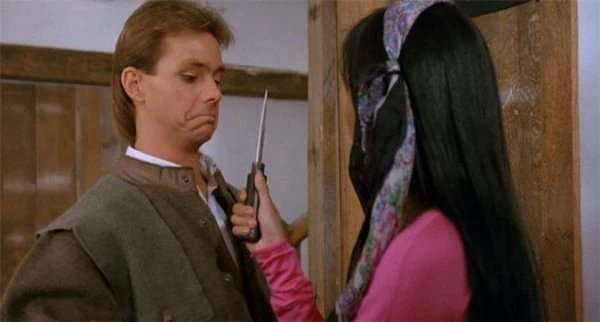
What is also interesting is that Rubali is an expert in The Game but remains silent throughout the first 16 minutes of the movie. Her first move is to bind Jonathan’s hands before punching him dead in the balls. Paley explains the significance of this assault in relation to The Game: you can’t trust anyone. Wait, if Paley has to explain Rubali’s lessons, what good is she? Why her training of Jonathan, or their flirtation, couldn’t have included spoken words is one of many questions without an answer in this film.
The Game, when it’s finally explained over 30 minutes into the film, is revealed as an elaborate obstacle course.
Rubali and Jonathan will become love interests in this movie, and how could Rubali not fall for Jonathan? Upon meeting the princess, Jonathan makes a face like he just sharted but is trying, unsuccessfully, to keep it under wraps. There was greater sexual chemistry between Cameron Diaz and the Ferrari she banged in The Counselor (2013).
While many films would let a relationship build after establishing chemistry, not Gymkata. Less than 15 minutes into the runtime, Jonathan and Rubali are making out after not having spoken once. They only had one other interaction after Rubali beat the shit out of him, where Jonathan disarmed her (incorrectly, too).
Apparently, Jonathan’s clumsy flirting—doing flips and a painful impression of Rubali—won the princess over. This relationship taking off makes about as much sense as two of the conjoined Human Centipedes falling for each other. It would certainly be more fun picturing their domestic bliss: “What do you want for dinner, baby?” “Whatever you feel like!” That is, if one of their mouths wasn’t already occupied.
After Jonathan completes his vigorous training lasting all of a couple of months—even though a foreigner hasn’t won in 900 years, this seems to have been sufficient training—Paley explains more of the mission to him. Jonathan, however, is too busy making goo-goo eyes at Rubali to take in the plan. This is especially troublesome for someone of Jonathan’s brain wattage, who really should have the plan described to him using a great many pictures and as few words as possible.
Apparently, the movie thinks we’re as dumb as Jonathan is—it finds the need to clarify what port city we’re looking at in the next scene (“Karabal, on the Caspian Sea”), despite this information having just been conveyed to us less than a minute ago.
In “Karabal,” Jonathan links up with a local fixer, Mackle (Zlatko Pokupec), who tells him Zamir knows “every move they’re making.” Jonathan responds, “Not for long cuz… I’ll kill him.” The line neither makes sense nor is it the least bit convincing. But more entertaining than Jonathan’s affectless tough-guy act is that his scene partner may have forgotten his next line. A budget so low they couldn’t afford multiple takes will do that to a production.
When it’s revealed Mackle betrayed them (a twist that takes about 10 minutes of runtime to transpire and be revealed), Jonathan’s reaction is underwhelming. To put it mildly. This betrayal also doesn’t make Jonathan look any brighter, as Rubali’s first lesson to him was meant to convey, “Don’t trust anyone.”
This goofy Cold War-esque karate tale takes a real turn about 30 minutes into the movie, right after Jonathan gets his ass handed to him by a bunch of ninjas (no thanks to Rubali, a well-trained martial artist). Jonathan is woken up by a woman who only has a handful of blackened and missing teeth. She can’t speak—“She has no tongue,” Zamir explains. Yeah, it’s about to get a whole lot weirder. It’s something else how weakly Jonathan protests the mute woman stroking his head before resigning himself to it. If the blackened/missing teeth didn’t set the picture, easy on the eyes she is not.
What the late Richard Norton (Zamir) lacks in acting prowess, he makes up for in screen presence. Too bad he wasn’t an Olympic gymnast, because he would have made a much better Jonathan, but he’s a pretty damn good villain.
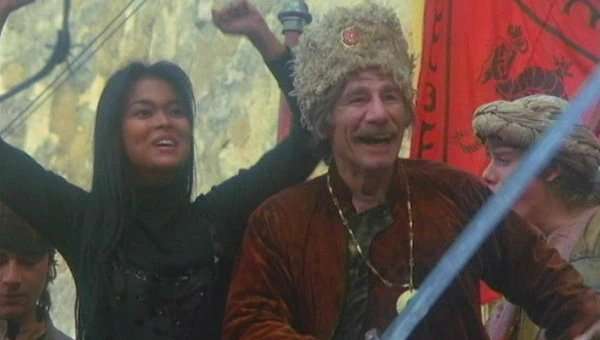
Another great part of this scene’s introduction to Parmistan is when Zamir turns to answer a question before it’s even asked. You could weakly explain this as prescient behavior on Zamir’s part, but it’s more likely just bad acting.
Later, Jonathan will task this mute woman with passing a message to Rubali: he needs the princess to meet him outside. How does he expect a mute woman to tell the princess anything? Uh… great question, and one the filmmakers didn’t stop to ask. It’s not like she has a pen and a pad of paper handy. Could Jonathan have picked a worse messenger?
It’s not terribly surprising the film has glimmers of something much better; the director, the late Robert Clouse, directed Enter the Dragon (1973).
One of these glimmers is a little over two-thirds into the film when Jonathan enters the “village of crazies.” We’ve entered the bad-trip stage of the film, where shit gets really strange. The streets are largely empty, save the mist and a lone goat. A man cackles out a window. A peasant sharpens a blade against a staircase and regards Jonathan’s appearance with disinterest. Jonathan is attacked by a man, and after Jonathan fights him off, the man howls to himself before inexplicably cutting off one of his hands. A dog licks at the blood.
Other surreal aspects include another contestant of The Game found impaled against a door. A doll is revealed to be a very pale-faced man. Some dude wearing a robe that exposes his ass.
Quickly, this asinine spy-thriller/action-adventure/romance becomes a fairly unsettling horror film. From a man doing handstands on stairs—for no discernible plot reasons—to a man getting eaten by pigs. Yeah, the film’s tone has gone lopsided. In fact, this last part of the film improves the overall picture significantly. What we’re seeing is genuinely disturbing. We even get something like emotion out of Jonathan.
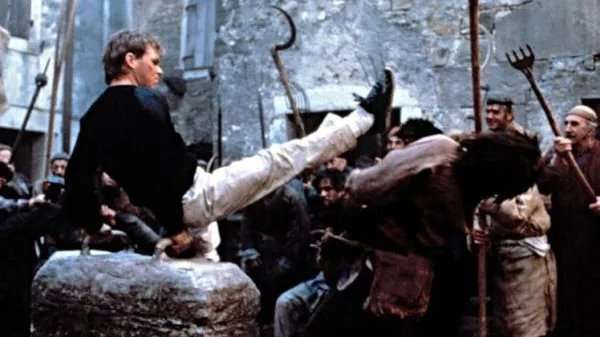
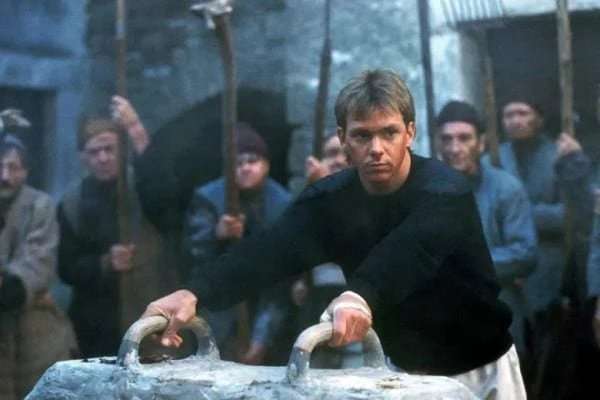
Fortunately for this gymnast-turned-martial artist, as the townsfolk from the village of crazies descend on him, there’s a pommel horse located in town. Why is it located here? For no reason other than the late Kurt Thomas was a gymnast. Thomas would admit in an interview with the Bristol Bad Film Club that they tried the fight without a pommel horse, but it hurt his wrists too much. Moreover, he would claim that the “crazies” in this nightmarish scene “were actually crazy people from a local insane asylum in Yugoslavia. We provided them with alcohol and a buffet for their time!”
There are so many great pieces of unintentional comedy in Gymkata, like when Jonathan accidentally (but unapologetically) kicks the shit out of a poor innocent bystander and tells him, “You’ll be fine,” with all the compassion he can muster (little to none). Dude just got busted straight in the chops; will he be fine? Maybe. And thank God there was a rod located conveniently in that one alleyway for Jonathan to use as a gymnastic tool.
Another insane bit of humor is when an extra gets absolutely rocked by a horse for real. This happens at the beginning of The Game when a horse knocks this poor sonofabitch over, and only one person on horseback breaks character to see if he’s okay. Seeing as it’s his horse that hit this guy, it’s only fair he finds out if the fallen man has a concussion.
Then there’s the comical scream one guy makes as he plummets off the rope bridge, and we see what’s clearly a dummy hit the rocks below. This is not the last time we hear a comical scream as a dummy falls down this very ravine.
Jonathan whining to the ninja/flag bearer, “They broke the rules; kill them!” is pretty funny for how pathetic it makes him seem. Our hero. It was certainly a strong choice to have a cartoonishly loud “booing!” sound when Jonathan discovers that one of his handlers has been killed in Karabal.
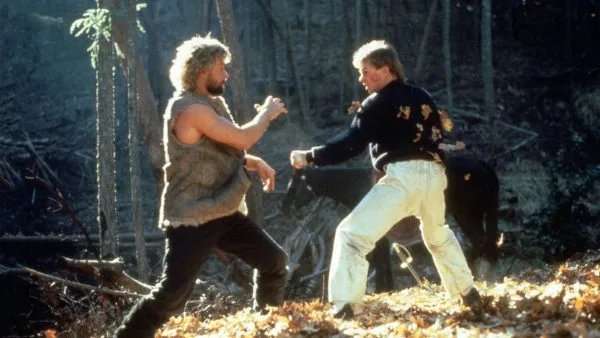
Speaking of sound effects, if you listen closely, right before Jonathan’s confrontation with Thorg (Bob Schott), the sound of Jonathan’s footsteps exceeds his actual movement. That is, we still hear the sound effects of Jonathan’s feet moving in the leaves, even when he isn’t moving.
Watch closely for how wildly uncomfortable Zamir and Jonathan look riding horses. However, according to IMDb, Richard Norton (Zamir) trained with “professional equestrians for over 45 minutes” for his role. Time well spent.
When the film isn’t providing inadvertent laughter, it’s giving the audience mystery upon mystery.
Some other lingering questions for this film:
Why did Buck Kartalian, who played the leader of Parmistan, not even attempt an accent? He’s the leader of a foreign country, and he sounds distinctly American.
Is it ever explained what “Gymkata” is? No. But it doesn’t take an Albus Einstein to figure out it’s a slapdash portmanteau of “gymnastics” and “karate.” Sort of. In an interview with Bulletproof Action, Richard Norton (Zamir), on being asked if he wanted to do Gymkata, said, “What on earth does Gymkata even mean?” Not a promising start for the film’s marketing.
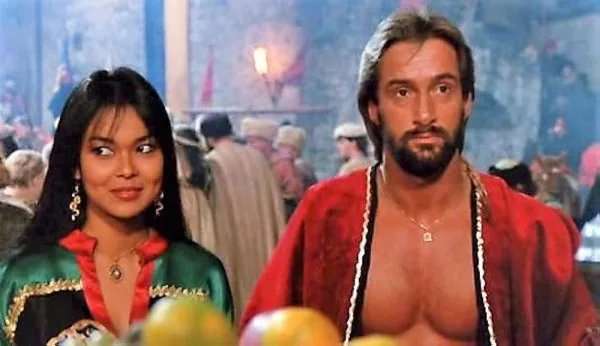
Who is the other mentor in the training montage? And why the hell does he have a hawk perched on his arm? What purpose do the scenes in Karabal serve when they don’t lead to anything and are resolved rather quickly? There are, of course, many other questions one could ask about this dubiously made film.
The main cast of Gymkata are stories unto themselves. From the protagonist to the love interest to the villain, the actors behind these roles have led far from dull lives.
First, a word on Kurt Thomas. One can only imagine the poor director’s feelings as Thomas turned in flat performance after flat performance. Like Gal Gadot on Ambien. To call his acting “bad” is unfair; he’s not even trying to act. His mouth moves, words come out; he’s clearly conscious, but Jigsaw gave a more believable performance when he spent most of Saw (2004) pretending to be a corpse.
Despite Thomas’s lackluster performance, he didn’t feel above taking some shots at the director. In the interview with the Bristol Bad Film Club, Thomas would say director Robert Clouse “seemed to be a bit past his prime.” Thomas would also explain that much of the excessive gymnastics in the film were a result of the producers asking what he could do “physically” and incorporating that into the film. Perhaps they should have asked him what he could do emotionally.
How did Thomas secure his role? The producer Fred Weintraub caught Thomas in a commercial and had a brainwave: put this man in a movie. Not dissimilar to Space Jam (1996), another film headlined by an athlete with a very limited acting range. The difference is that Michael Jordan has charisma to spare. Balls of yarn have more personality than Kurt Thomas in Gymkata. Thomas would earn a Razzie nomination for the film.
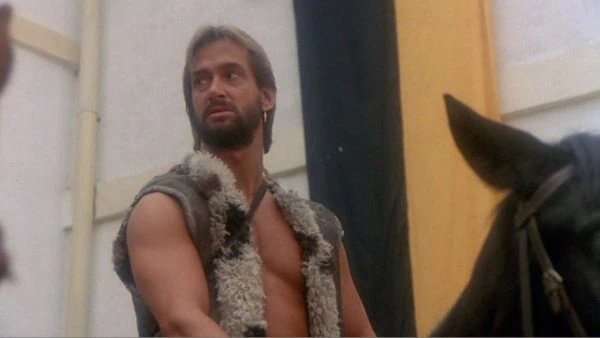
Jonathan Cabot’s father, who reappears at the end of the movie (only to unceremoniously die shortly after), is listed as Colonel Cabot in the credits. He is played by Eric Lawson, who famously starred in ads for Marlboro cigarettes as the “Marlboro Man.” Lawson would eventually die from chronic lung disease. He would also star in an anti-smoking commercial (despite the fact that he was still smoking at the time). He would be one of three former actors/models who starred in Marlboro advertisements and would die from smoking-related illnesses.
Richard Norton, who played Zamir, pulled double duty as the stunt/fight coordinator for Gymkata. He would also serve as a fight choreographer/coordinator throughout his career, notably for both Suicide Squad films (2016 and 2021), Mad Max: Fury Road (2015), and Furiosa: A Mad Max Saga (2024); he also starred in the Mad Max films as “The Prime Imperator.” Best man at his wedding? Chuck Norris.
Prior to being an actor/stuntman/fight coordinator, Norton was a bodyguard for such luminaries as The Rolling Stones, ABBA, Fleetwood Mac, and John Belushi. In the interview for Bulletproof Action, Norton would low-key dog Kurt Thomas, describing Hong Kong film crews as tough SOBs but gymnasts “not so much.” In the same interview, he talks about working on Equalizer 2000 (1987) in the Philippines when a truck was almost blown up by a grenade launcher, courtesy of the NPA (New People’s Army). The frank and good-natured Norton would admit to KungfuMovie Guide, “To me, acting is a way to fund more time in the dojo.” Moreover, dazzling audiences with his acting abilities was never one of his goals.
Tetchie Agbayani, who plays Rubali, has maybe the most IMDb credits among the cast. Early in her career, she says she was offered a major role in Rambo First Blood: Part II (1985) but didn’t want to shoot in the jungles of Mexico. She also didn’t find Stallone as tall as she thought he’d be. Besides acting and posing for Playboy, she was also a psychology professor in the Philippines.
If you watched the credits at all, you may have noticed Gymkata is based on the novel The Terrible Game by Dan Tyler Moore. The man led a life worthy of his own movie. Moore’s father was Theodore Roosevelt’s military aide, who, after being challenged by the man nearly 20 years his senior, punched the president so soundly in the face that Roosevelt lost vision in one eye.
Moore Jr. would lead a distinguished life of his own, at one point being employed as chief of counterintelligence in Cairo, stopping an assassination attempt on the king of Greece, and later running an import-export business with none other than Eliot Ness. Moore would also play occasional wingman to Ness, a famous lawman, prohibition enforcer, and prodigious drinker.
The Hollywood Reporter has described Gymkata as a “dark comedy,” which is true and not true at the same time. Yes, it’s dark and funny, but it was never intended as the latter. The film occupies a space for exceptionally bad yet perversely enjoyable films. Humor is often an unintended byproduct of sincere intentions in these flicks.
It may seem cruel or petty to rag on a first-time actor, but when you remember the number of people who would kill for a lead role in a film, you remember the responsibility they carry. It doesn’t help when you know they were just handed a role, too.
So, having said that, one of the simplest ways this film could have been drastically improved was by casting someone else in the lead role. However, this would take away much of what makes Gymkata so exceptional (exceptionally bad, but still). Yes, it’s been relentlessly ridiculed, but there’s a love behind such ribbing. Despite the many things you can say about this film, “boring” isn’t one of them.
Have you seen Gymkata? Let us know your thoughts on our socials @FlickeringMyth…
Jack Gayer