There have been Star Wars movies made since the 1990s. There was even a Star Wars movie released (barely) in the ’90s, the decade of Clinton and dot.com, beanie babies and Swingers. However, 1999’s The Phantom Menace, like every Star Wars movie produced by George Lucas (or those who would seek to imitate his aesthetic) tended to reach toward a more classical cinematic style and vocabulary. The original Star Wars evoked the vistas of John Ford and the compositions of Akira Kurosawa, while the Prequel Trilogy maintained that mid-20th century influence, even while going all-in on CGI and digital photography by the time Attack of the Clones rolled around.
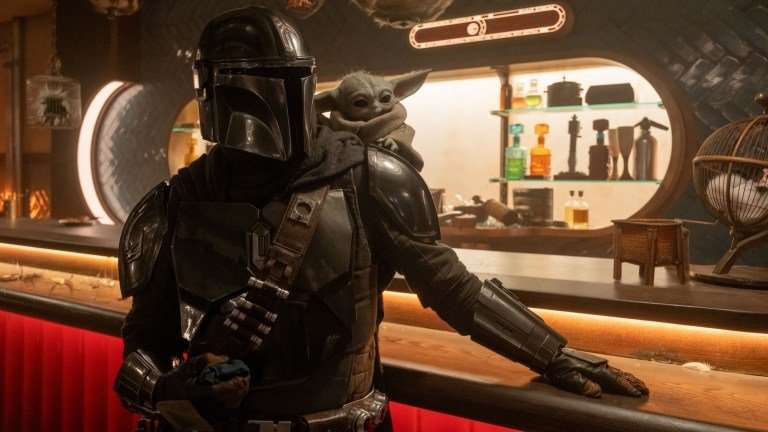
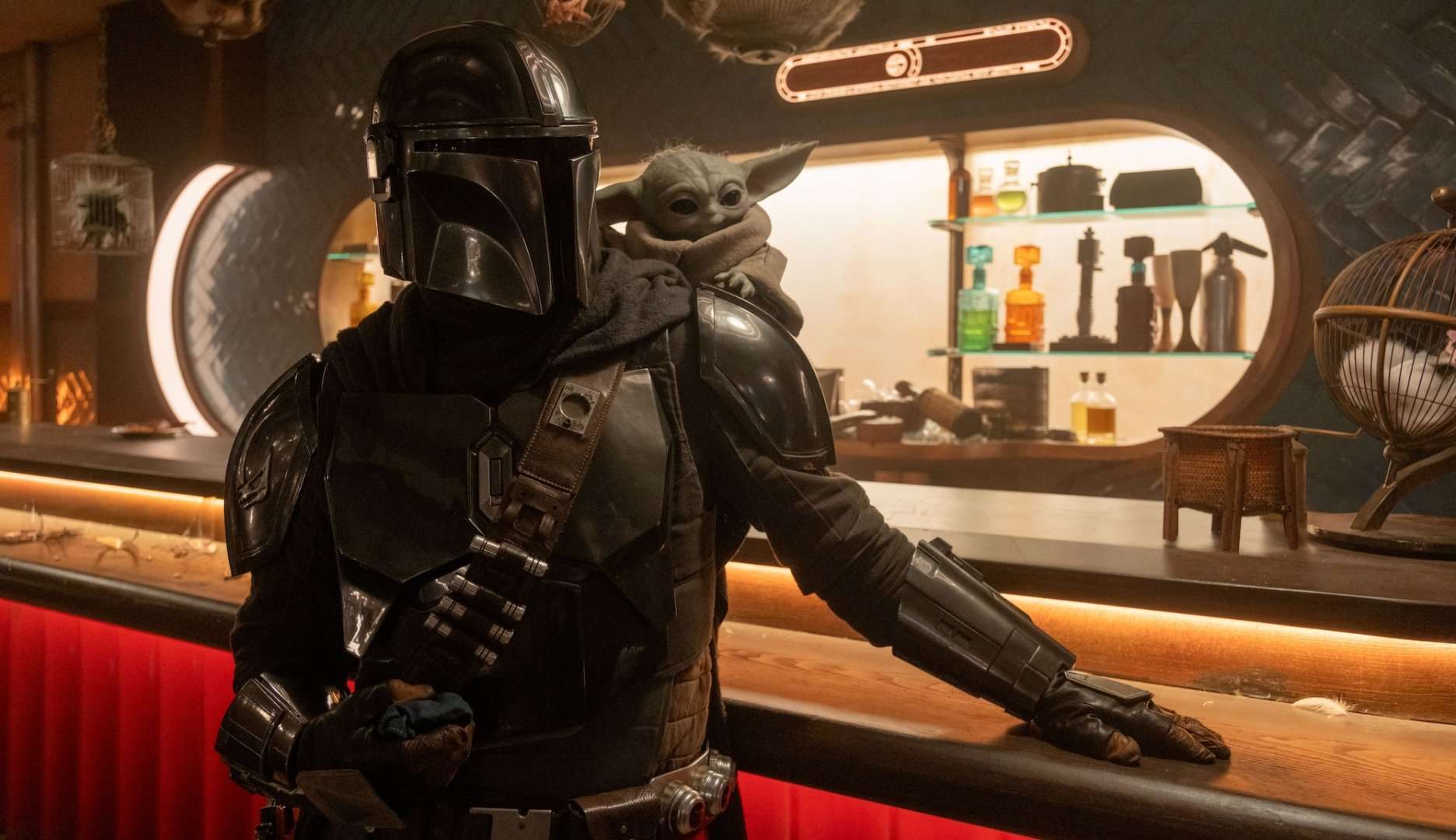
Hence the mild jolt in the opening moments of Jon Favreau’s The Mandalorian and Grogu, which just had sneak peek screenings around the country at select IMAX venues for fans. During these beginnings, it’s clear a filmmaker who came up in the Gen-X era, and indeed both wrote and starred in Swingers, is pulling from a different vernacular. Instead of the iconic Star Wars crawl, complete with triumphant John Williams music that echoed the 1940s serials of Lucas’ youth, viewers on the night of May the Fourth were treated to a title card that sums up a historical moment of upheaval and trouble after the fall of the Empire in Return of the Jedi (1983). It’s a trick made popular in historical dramas of a different era like Gladiator (2000) and Braveheart (1995), as well as a sneaky way to get viewers who might not have watched all three seasons of The Mandalorian on Disney+ up to speed.
It also signals a vibe shift in the first 26 minutes of footage screened, which is our most extensive look yet at the first Star Wars movie in seven years, exceeding even the 17 minutes that were shown at CinemaCon last month in Las Vegas.
The most spectacular element of the IMAX footage we screened includes a snowbound fight between AT-ATs and a smaller refined AT-ST that the Mandalorian (Pedro Pascal) and his stuffed animal-sized sidekick commandeer. In the severe vertical expanse of IMAX, this sequence genuinely gives a sense of scale and vertico as Din Djarin stares up at his frigid, mechanical beast. The sequence is also fun for a slightly more casual Star Wars fan like myself, who enjoys the world but has always wondered what happened to those spiffy Snowtrooper uniforms after the cape-bedecked baddies left Hoth in Empire Strikes Back? It appears, they are just shuffled off to the next frozen rock, perpetually getting the short end of the Imperial stick.
Yet while evoking Empire—arguably the best Star Wars movie—the tone of Mandalorian and Grogu is more lighthearted and anachronistic. The sequence, in fact, begins between a meeting of Imperial leftovers who scheme ineptly about restoring the Empire to its once and future glory. In this context, the Mandalorian is not quite the gunslinger or the Western bounty hunter. He is, rather, the ultimate action movie fantasy; the unstoppable hero who enters the narrative like a myth; an urban legend; a boogeyman for bad hombres.
In a sequence that I’m convinced draws on the opening of Léon: The Professional (1994) and likely Desperado (1995)—the latter of which is also directed by Star Wars/Mando veteran Robert Rodriguez—the Mandalorian appears like an unstoppable wraith to completely decimate the last dregs of the Empire.
It’s a table-setter sequence which reveals a blunter approach to that galaxy far, far away. As the Mandalorian’s Razor Crest drifts into a friendly Republic port, it’s bathed in a perfect sunset, more reminiscent of Top Gun and its many ‘90s imitators, not least of which includes every Michael Bay movie. Meanwhile the legacy of Blade Runner is felt when Mando and Grogu are sent into the film’s real inciting incident by Sigourney Weaver: they must discover what happened to the kidnapped Rotta the Hutt, the descendant of evil Jabba—but who at least physically does not take after the gangster.
Resembling less shiny, clean Coruscant in the Prequel Trilogy and more the soiled rancor of Los Angeles in Blade Runner—and therefore many of its own ‘90s descendants like Dark City and The Crow—the city Mando lands in wallows in nu-noir chic squalor. It also features an easter egg only the parents (or grandparents) will appreciate: Martin Scorsese as the voice of an alien who absolutely, positively does not want to be a rat. The reluctant snitch is of course par for any movie playing with crime cinema seasonings, but to have the Martin Scorsese, maestro of some of the greatest crime films of all time, including Goodfellas (1990), Casino (1995), and The Departed (2006), voice a CG alien who doesn’t want to go the way of Billy Costigan, or for that matter Henry Hill, is a nice touch.
It also presages the longest look anyone has had yet of Rotta the Hutt in the ring. As we learn, he’s less coerced Gladiator than golden god rock star in his element. We see the surprisingly buff slug slime his way through one opponent after another. And the best thing you can say about the footage? By the time it’s over, I forgot that we weren’t getting the whole movie and wanted to see what happened next when Mando and wee little Baby Yoda entered the ring to ask for the space slug’s autograph.
The Mandalorian and Grogu opens only in theaters on May 22.