In the very first scene of The Mandalorian, a silent stranger follows a homing beacon into some remote saloon. He goes straight to the bar, ignoring the chattering and boasting of the toughs around him. Finally, the stranger reaches a breaking point, dispatching the heretofore intimidating customers with relative ease before revealing the purpose of his visit. He’s come for a sniveling blue guy and to collect the bounty on the criminal’s head. When the blue guy tries to barter his way out of it, the stranger speaks his first lines. “I can bring you in warm,” he declares, pulling back his cloak to reveal a blaster, “Or I can bring you in cold.”
The scene comes directly from a spaghetti Western, one of many nods to Sergio Leone films in the episode. For most viewers watching that first episode in November of 2019, however, The Mandalorian felt like pure Star Wars, a sci-fi spin on pulp tropes. But by the end of season 2, The Mandalorian had abandoned those first principles, turning from the very thing that made Star Wars special and embracing everything that has made Star Wars such a mess.
A Long Time Ago
When Star Wars hit theaters in 1977, it contained only the barest promise of the massive franchise it has become today. Obviously, George Lucas knew it could become more than just a sci-fi flick, as demonstrated by his savvy handling of merchandising rights. Yet, the impressive thing about Star Wars isn’t how it predicted the future; rather, it’s how it synthesized the past.
The first film remixed elements from pop culture’s past, combining classical mythology with movies about samurai, gunslingers, and fighter pilots. Lucas puts his love of adventure serials front and center, as evident by the wipe transitions, the opening title crawl (written by Brian De Palma), and John Williams‘ score.
One need not have read Joseph Campbell’s The Hero With a Thousand Faces to understand why this approach worked. Star Wars distilled primal elements of pop culture and put them in a package that felt shiny and new, even if the rusty spaceships of this world were not. The film took well-worn archetypes and placed them in a different context, one that could excite young viewers with the promise of a new adventure while letting older viewers relive their favorite moments.
Nothing demonstrates this principle better than the trench run at the climax of the first film, perhaps the most enduring part of the movie. On the surface level, the scene shows how Luke Skywalker finally learns to trust the Force, which allows him to exploit a design flaw in the mighty Death Star, winning the battle for the rebels. However, one need not look much deeper to find obvious antecedents, including the war movies Dam Busters (1955)and 633 Squadron (1964), both of which Lucas screened for his special effects team, and a student recalling his wise master, as in Akira Kurosawa films.
Star Wars became a hit not because of its vast mythology, but because it made the familiar feel fresh.
The Fall of Star Wars
Just a month before The Mandalorian debuted on 2019, Star Wars once again tried to repackage the familiar—in the worst possible way. By the end of The Rise of Skywalker, new hero Rey had defeated Emperor Palpatine, somehow returned, and has gone to Tatooine to pay homage to her predecessor, Luke. When a wanderer asks for her name, Rey answers. Unsatisfied, the wanderer demands more detail, to which Rey responds, “Rey Skywalker.”
Of course, Rey says this because the film wants to establish her as the next in a line of heroes that extends from Anikan through Luke and now her. Within the world of the film, however, the answer makes no sense. At best, the Tatooine citizens know “Skywalker” as that family of moisture farmers who got turned into charred skeletons. At worst, they respond to “Skywalker” the same way we respond to surnames “Hitler” or “Mussolini,” inextricable from the horrible things done by one member of the family. Most likely, the name Skywalker means nothing at all to Rey’s interlocutor.
The conversation exists because the name Skywalker means something to fans, which implies that Rise of Skywalker is doing what Star Wars did, revisiting and reframing something from the past. But where Star Wars cast a wide net and found more diversity, Rise of Skywalker only looked at itself, just at Star Wars. As a result, it felt worse than a copy of a copy; it felt like an ouroboros of pop culture, a Star Wars story interested in only being about Star Wars.
Having The Mandalorian run on Disney+ while Rise of Skywalker played in theaters only hurt the movie. It seemed like the era of Star Wars movies had come to an end, making way for Star Wars television to become the norm. And then season 2 happened.
The Clone Wars Strikes Back
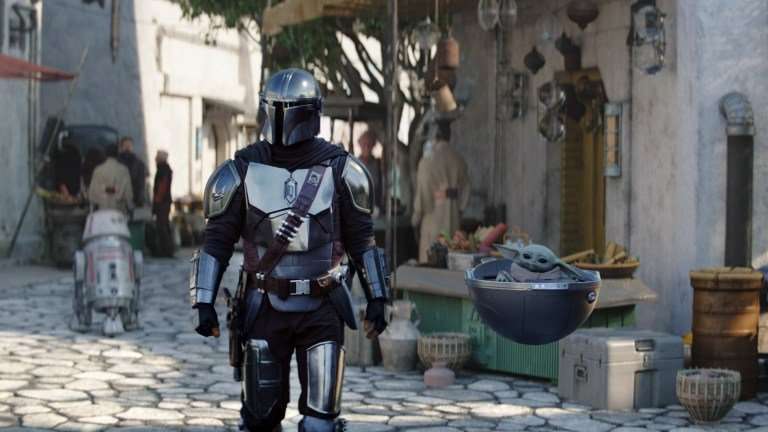
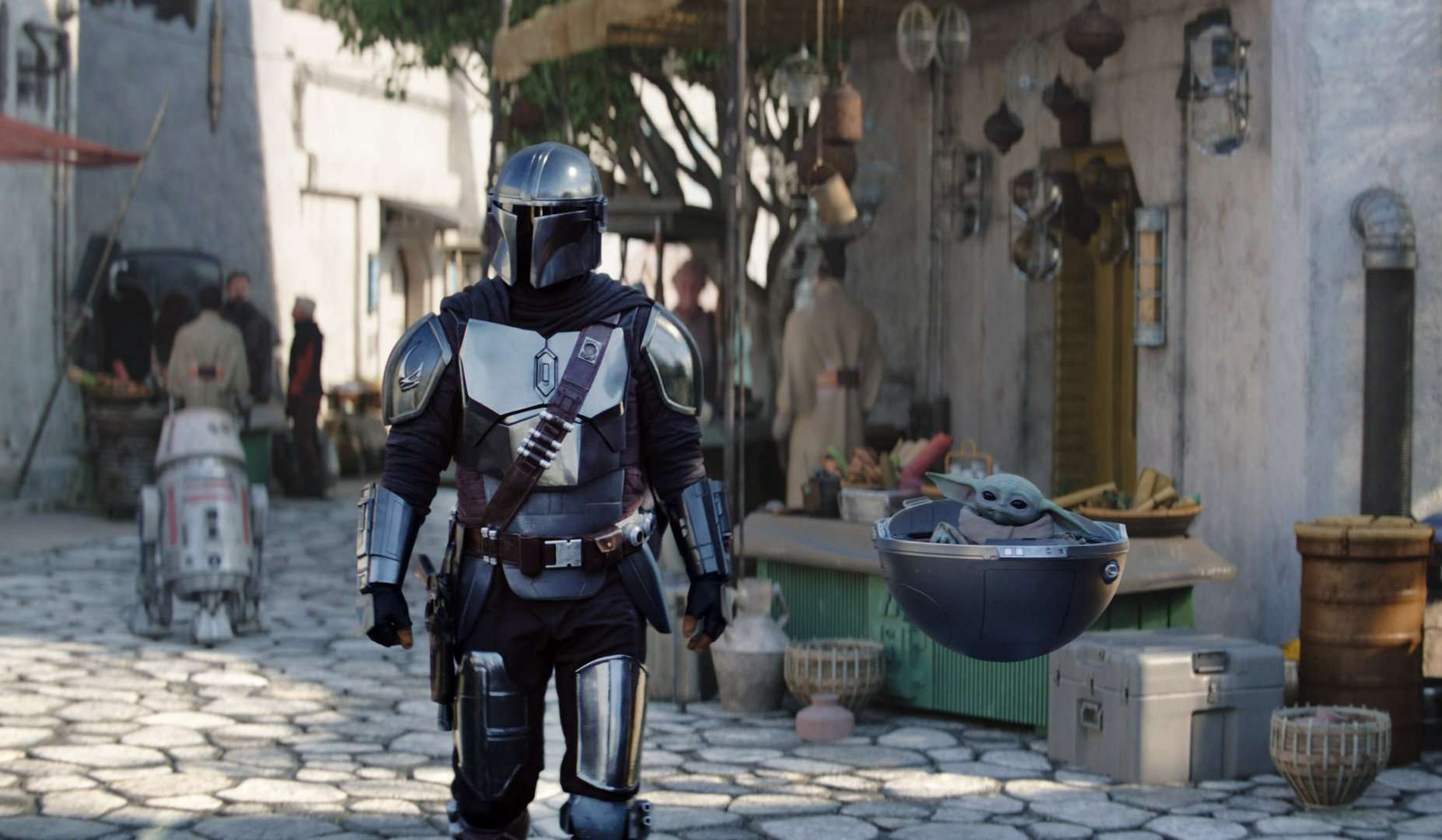
The first season of The Mandalorian had a simple premise, one borrowed from another classic pop culture trope, that of Lone Wolf and Cub. The Mandalorian (Pedro Pascal) decided to betray his code as a bounty hunter and go on the run with the Child (aka Baby Yoda, aka Grogu). The decision put Mando at odds with his client (Werner Herzog) and with Moff Gideon (Giancarlo Esposito), and forced him to join forces with friends such as Cara Dune (Gina Carano) and enemies like IG-11 (Taika Waititi). Certainly, the story had elements of Star Wars lore, including the Ugnaught Kuiil and everything around the Mandalorian’s armor. But the salient parts were deeper, including riffs on spaghetti Westerns, right down to Ludwig Göransson’s score, indebted to the work of Ennio Morricone.
At the end of the season 2 premiere, Boba Fett appears in a cameo, once again played by Temuera Morrison. Two episodes later, Bo-Katan (Katee Sackhoff) arrives and Mando meets Ahsoka, now grown and played by Rosario Dawson. These characters will repeat throughout the season, building to a finale that involves Luke Skywalker and ends with Boba Fett killing Bib Fortuna and setting up his own show, the reviled Book of Boba Fett.
By the time the third season unfolds, The Mandalorian isn’t about that guy who entered the saloon in episode one. It’s about Bo-Katan and all the business she left unfinished at the end of The Clone Wars. Mando and Grogu are still around, but the show is more interested in the search for the Darksaber and the plots of Grand Admiral Thrawn. These concepts certainly excited those who loved The Clone Wars and want to know how the storylines wrap up. But they lack the mythic power of the cowboy, samurai, and fighter pilot tropes that gave birth to Star Wars.
For a moment, it seemed like The Mandalorian was going to bring Star Wars back to first principles. It would take simple concepts from genre entertainment and put them in a cool sci-fi world. Instead, it reinforced the franchise’s worst tendencies, limiting its scope with narrow references, providing trivia instead of development of its characters, and only telling stories about more Star Wars.
The Mandalorian started out as something incredible, but this? This isn’t the way.
The Mandalorian and Grogu arrives in theaters on May 22, 2026.