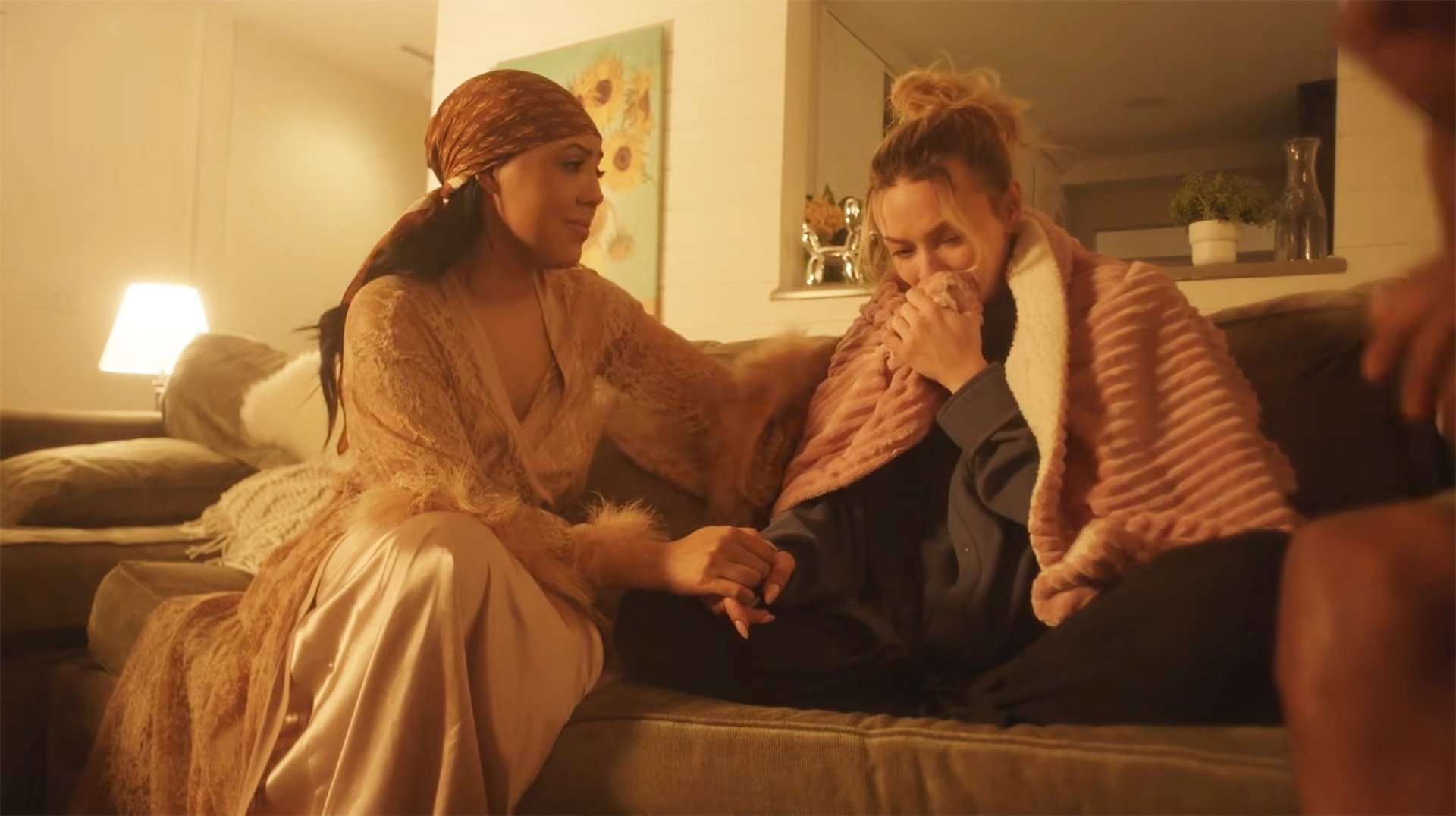
**Warning: contains full spoilers for the final episode of Tip Toe, available to stream now on Channel 4 and airing on TV on Tuesday 9 June.**
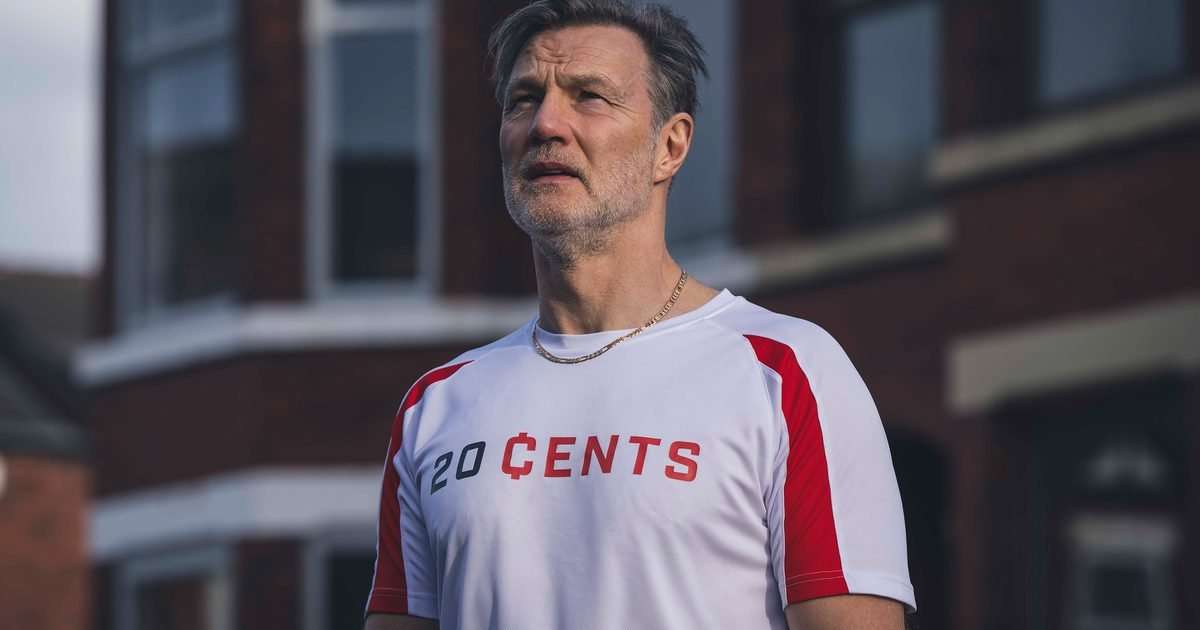
The final episode of Tip Toe is now available on Channel 4, with viewers likely to be shaken by the disturbing events that unfold.
Russell T Davies’s latest LGBTQ+ drama explores the deteriorating relationship between single gay man Leo (Alan Cumming) and his neighbour, heterosexual husband and father Clive (David Morrissey), over the course of one fateful week.
Despite living only a door away from one another for more than a decade, the two have never previously been more than acquaintances, but a growing sense of mistrust detonates catastrophically after a series of contentious encounters.
As a flash forward at the start of the first episode revealed, the events culminate in a nightmarish act of violence, but it isn’t until the fifth and final episode that we learn exactly how it came to be.
Radio Times spoke to Tip Toe stars Cumming and Morrissey about the troubling episode of television, to gain their thoughts on the realism of the scenario depicted, the contributory causes – and crucially, how such scenes could be avoided in real life.
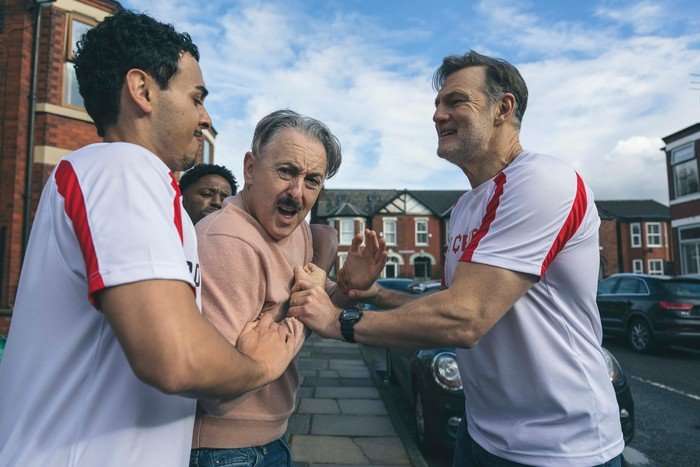
Tip Toe ends with a nightmarish finale, which sees the grim flash-forward from the previous episodes come to fruition, as we learn how Leo (Alan Cumming) is hanged from a lamppost outside his home.
The big question that many will have after these distressing scenes is: could it really happen in Britain today? For the stars of the show, the answer is clear.
“It completely could happen,” said Cumming, in a spoiler-filled interview with Radio Times. “This is a wake-up call. I don’t think it’s at all fantastical. I don’t think it’s at all in the future… this is happening right now.”
While there is a “theatrical” element to its presentation in Tip Toe, co-star Morrissey points out that “mob violence is very much happening now”, with the UK-wide riots of summer 2024 being a frightening example.
Another true-to-life element, in Cumming’s view, is the shared “confidence of thinking ‘we’ll get away with this’, or ‘we are entitled to do this'” among the perpetrators. A stronger example needs to come from the top, he added.
“This is about forcing people to reckon with where we are… and hopefully start to change that,” said Cumming. “And it has to come from our leaders, they need to speak out more, and say, ‘No, this is wrong, this is disgusting, we’re not going to countenance it’.”
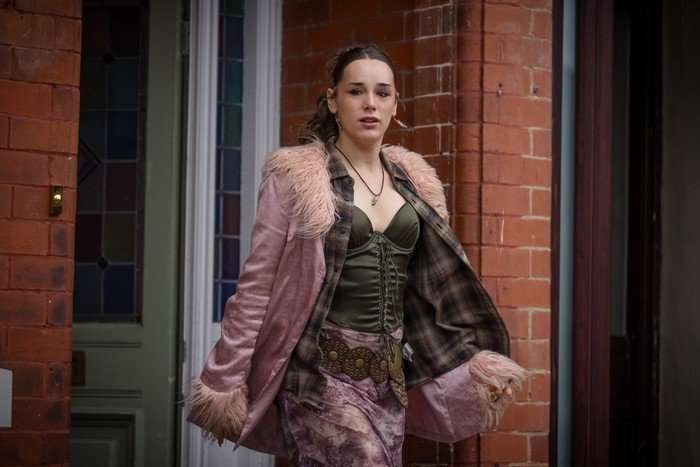
The disastrous events unfold after an exciting night for George (Jackson Connor), in which Zee (Iz Hesketh) takes him on a whistle-stop tour through Manchester’s LGBTQ+ nightlife, culminating in her choosing a new name: Flo.
Although well-intended, the excessive drinking involved, as well as the repeated sharing of a photo showing George with a glamorous makeover, put the closeted 16-year-old in a perilous situation.
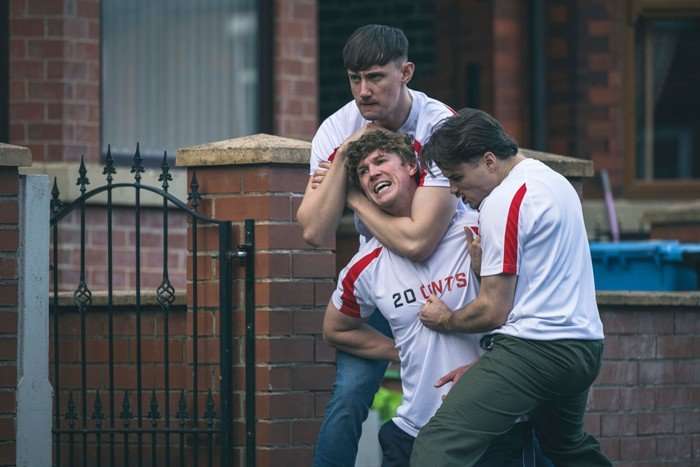
The following day, his brother’s friends come over for a football viewing party, which quickly descends into drunken agitation, with George finding himself the target of an aggressive, bigoted guest named Roddy (George Miller).
“They goad each other and shame each other and ridicule each other,” explains Morrissey. “There’s this thing that’s happening between them all, where a momentum starts to build. And Leo comes into that momentum.”
The intervention follows Flo’s attempt to remove George from what she views as a dangerous scenario, but he tells her to go away as he’s managed to maintain a fragile control over the scene by deflecting cruel remarks back at Roddy.
Underestimating the volatility at play, Leo attempts to perform a welfare check, but within minutes tempers flare as a series of images and videos are streamed to the TV that leave Clive scrambling to save face.
Want to see this content?
This page contains content provided by Google reCAPTCHA. We ask for your permission before anything is loaded, as Google reCAPTCHA may use cookies and other technologies. To view this content, choose ‘Accept and continue’ to allow Google reCAPTCHA and its required purposes.
From glimpses of his youngest son’s night out to the exposure of his eldest son’s online sex work, Clive is disturbed by how little he knows his own children, but the final straw comes when his own assistance to an attacked drag queen is weaponised against him.
The group sees his caring, empathetic gesture as a sign of weakness, with Roddy even suggesting that he’s having an affair with the drag queen, which spurs Clive to take extreme action in a malignant attempt to reassert his masculinity and authority.
It is at this point that Clive and his guests string up Leo outside his own home, with the outnumbered and overwhelmed George, Saul, Flo and Steph (Elizabeth Berrington) all but powerless to stop the violence.
It’s a hideous outcome that leaves you feeling cold, hollowed out, and desperately searching for what could have prevented things from escalating to such an unbearable extent.
Cumming and Morrissey don’t claim to have all the answers, but communication and empathy must play a role in any measures to correct our current course, characterised by vitriol and hate.
“Free speech is a very interesting thing, but it doesn’t mean to say you can call me a b*****d all the time,” said Morrissey. “You’ve got to be able to [engage] the empathetic gene inside you, that thing of, ‘What’s it like to be that person?’
“Let’s have a little bit of kindness around that, and a little bit of empathy around that. I think [Leo and Clive] could be friends in another world. They could disagree about many things, but they could also be human about it, and have a connection about it.”
He continued: “That’s what’s been lost, I think, and that’s what’s been amplified by social media, is the idea that it’s alright to be horrible, both verbally and physically, to other people who you feel are the targets of your anger.”
Indeed, while Tip Toe focuses its analysis on a personal level, the structural role of social media as an isolating, radicalising force is certainly present in the background, with Clive’s own “algorithm” implied to be littered with troubling content.
Cumming explains: “The further down the rabbit hole of some issue you get, you’re only going to be fed more things to amplify what you already suspect.”
Bursting the online bubbles that many of us inhabit will involve reaching out and staying in touch with those who have different perspectives (albeit, without putting oneself in harm’s way as Leo inadvertently does in this finale).
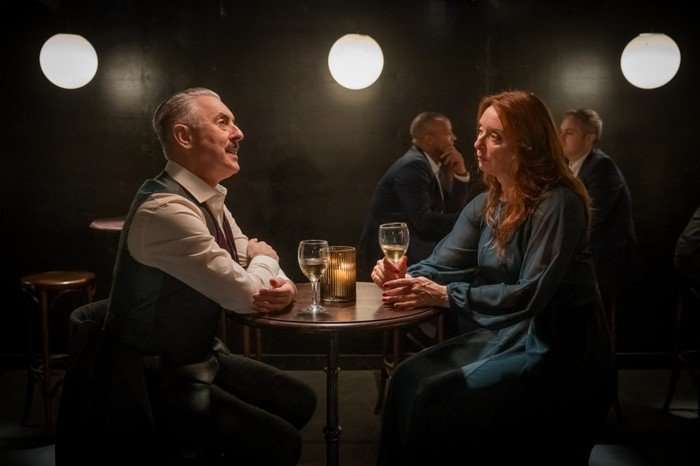
A more hopeful example of such a relationship in Tip Toe is between Leo and Steph, who are close friends despite strongly held differences in opinion.
Steph makes known her view that the LGBTQ+ community can push things too far at times, with a particular scepticism over the fight for trans rights and calls for more progressive gender identity policy.
Their friendship manages to weather debates (arguments, even) about their differing opinions, in a dynamic that might not always be comfortable, but may well be necessary to reach consensus – and prevent a fracturing of our society.
Cumming openly states that he receives the “most hatred” online “from women who feel that my support for trans people is anti-women”, and laments that he’s “rarely” in situations where he can “actually engage” with someone of that view.
“I wish I could engage with more TERFs [trans-exclusionary radical feminists],” he concludes, suggesting an optimism that more real-world and genuinely good faith conversations could help disarm the so-called ‘culture war’.
“It’s really important to keep having those relationships, and to try [to reach understanding],” continued Cumming. “I think it’d be really fascinating for people who watch this… to maybe start talking about why we need to not be so intransigent about our opinions.”
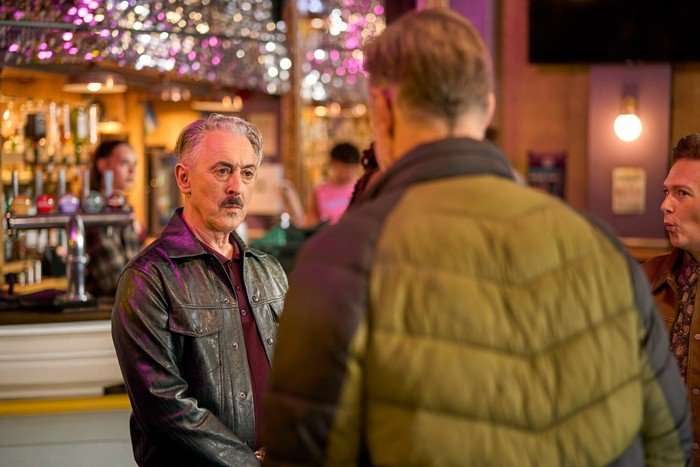
In a different timeline, Clive and Leo could have had a dynamic closer to that of Leo and Steph; perhaps not best friends, but able to disagree in a manner that isn’t so volatile and dangerous.
“There’s an argument to say that Clive is at his most vulnerable and most articulate when he’s in the company of Leo,” said Morrissey, referring in part to a fraught yet candid late-night discussion between their characters.
“And that’s really interesting for me, the fact that the best conversations he has; the most illuminating; the most forensic about life happen with, effectively, the person who’s the object of his anger.”
He concludes that a “very isolated person” is “very dangerous”, as it often leads to the internet and their own imagination filling in any gaps in their understanding; a fate that Clive succumbs to, despite the appeals of his own longtime neighbour.
In the closing moments of Tip Toe, the men complicit in Leo’s murder flee the scene, besides Clive himself, who remains in a state of shock over what he has done.
A series of text cards reveal what happens next, from criminal convictions for Clive and his accomplices to the future of the Goss family.
Marie moves away with her sons, with Saul managing to build a new life in Scotland, while George’s promising life is reduced to one of drug abuse and petty crime.
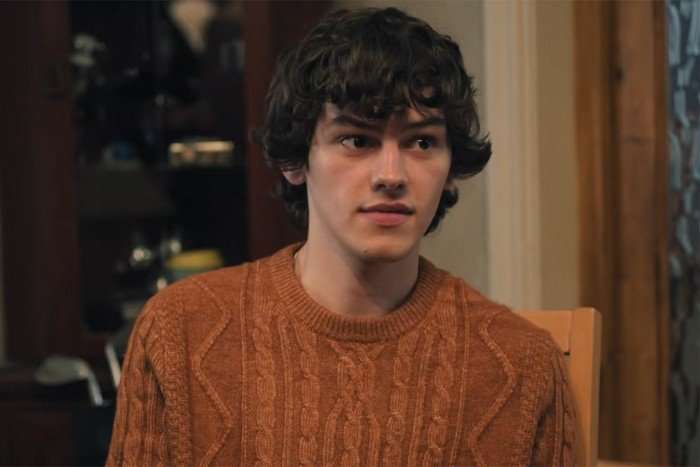
Tragically, Leo is disgraced in media coverage of his own murder, with the mainstream press incorrectly describing him as a convicted paedophile.
Some viewers may remember that Russell T Davies had originally envisioned It’s A Sin having a sixth instalment flashing forward into the future, which begs the question of whether these developments were ever an episode of their own.
Apparently, the answer is no. Davies had written the individual fates of each character as a paragraph at the end of the episode 5 script, which was then adapted into the bluntly written concluding statements by director Peter Hoar.
“They just went, ‘OK, that works’,” recalled Morrissey. “I do think it does give you [the impression of] a life, particularly around George… here’s this boy, it’s really difficult for him, it’s really complicated for him, and it ruins his life.
“You see that on the card. That is really the stuff we carry, and that’s very important for us to know going forward.”
Cumming added: “The whole point is something really horrible happens, a seismic shift in the narrative, but then look at the detritus that it leaves. But that’s it, we’re done now… that’s the point to end it.”
The actor proceeds to acknowledge the “little coda” that Tip Toe leaves us with, in the form of a flashback conversation shared between Leo and Steph, where “even he sees his own demise coming”.
Tip Toe is available to stream on Channel 4.
Add Tip Toe to your watchlist on the Radio Times: What to Watch app – download now for daily TV recommendations, features and more.
Check out more of our Drama coverage or visit our TV Guide and Streaming Guide to find out what’s on. For more TV recommendations and reviews, listen to The Radio Times Podcast.