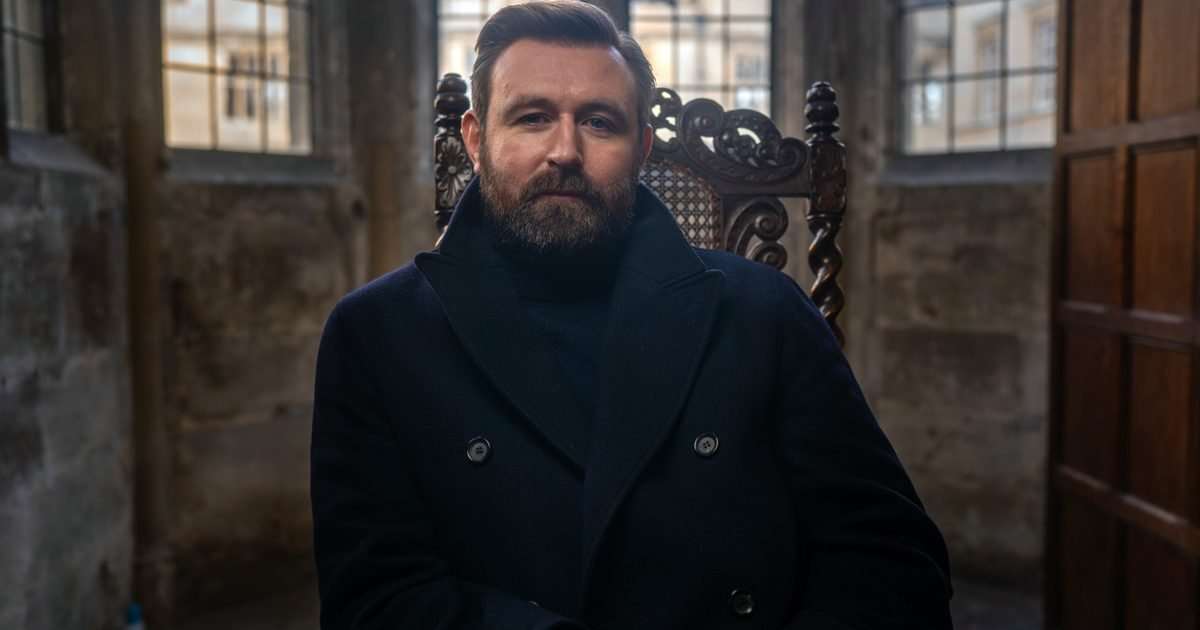
Belfast-born historian Gareth Russell returns to the reign and relationships of King James in a brand new documentary – though the title of the one-off special might confuse some.
The monarch – who was King of Scotland from 1567 to 1625 and King of England and Ireland from 1603 to 1625 – was often referred to as Queen James, a slur used against the sexuality of King James VI / I, who was said to have a series of highly influential relationships with male ‘favourites’.
In the hour-long film, Russell draws on his research from his book Queen James: A New History About the Life and Loves of Britain’s First King, James Stuart, and examines the “intense and passionate same-sex relationships King James formed”, as well as offering a closer look at his relationship with Robert Carr that concluded in a scandalous murder trial.
But just how much of it was true? And could King James really be considered as one of the first openly queer monarchs? Radio Times sat down with Gareth Russell and dived further into the life and legacy of the king and his influence today.
How did you first come to research this point in history?
“I worked on a book called The Palace, which was about Hampton Court, and very briefly the premise was a different chapter was a different room, different person, a different decade moving through the palace’s history.
“And James spent a lot of time at Hampton Court, as did his wife Anne of Denmark, and so three of the chapters about incidents that happened when they lived there. So I did a lot of reading about James and Anne for those three chapters and I thought, ‘This is so fascinating’ but it’s not relevant to the Hampton Court part of the story, and I could feel very strongly in my gut that there was a lot more gaps that hadn’t been filled in.
“So when it came to decide what the next book should be, I couldn’t get James out of my head and that story, so it really was an accidental trail that led from Hampton Court and then looking into James and seeing, yes there are gaps but I think there will be a way to fill them.
“There are just letters that haven’t been used, angles that haven’t been explored, so it was accident and greed. Greed for a good story and an accident from the previous book I think is what led me to James.”
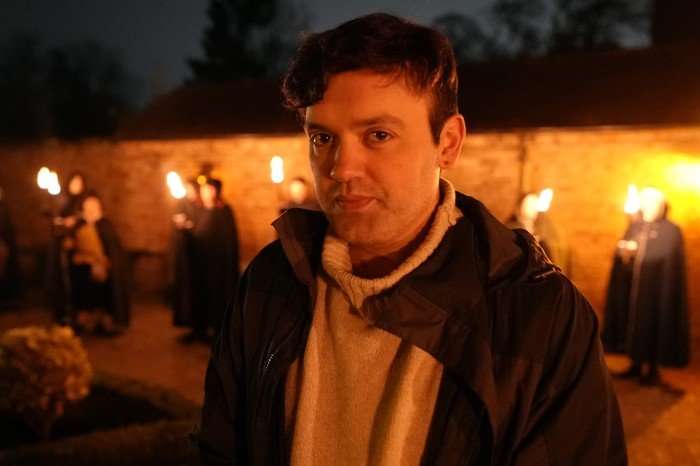
What do most people know King James for?
“Most people know him as the son of Mary, Queen of Scots, or the man in England who came after Elizabeth. People who know a little bit more well will often know that there were rumours that he was involved with men.
“The two other things that he’s most famous for are commissioning the King James translation of the Bible in 1604 and also a lot of people will consider him to have been the greatest royal champion of witch hunts. So it’s Bibles and witches are the two things he is most famous for.”
So many people know him for so many different reasons. Through your research, what would you say is the real story behind this monarch?
“He’s very vividly technicolour in his personality and his interests, and he defies easy categorisation, which is one of the reasons why I loved writing about him, and I think people enjoy reading about him.
“So, to me, he was an extremely intelligent man, a real intellectual who took joy in books for their own sake. There’s a legend about him being quite physically sickly, and that’s really only true at the end. He loved sport, he was an avid footballer and horse rider, and he was a very, very complex, damaged man.
“He endured a lot of violence in his childhood, he was kidnapped when he was 16 by people he thought were friends, and I think he’s someone who was broken before he was fully formed in a way, and he wants to love, and does fall in love very passionately, and it’s all-consuming.
“But there’s also paranoia and extravagance and pettiness and a very prickly personality, and so he’s this fabulous mess of contradictions, and that’s one of the reasons why he was just excellent company for two and a half years.”
Want to see this content?
This page contains content provided by Instagram. We ask for your permission before anything is loaded, as Instagram may use cookies and other technologies. To view this content, choose ‘Accept and continue’ to allow Instagram and its required purposes.
I find that his story has been sanitised over centuries, either when taught in schools or in general conversation. Why do you think certain elements of his life have been overlooked?
“I think maybe two centuries after he died, the idea that he had had male lovers was sort of almost universally accepted, but particularly by the 18th century, he was seen as a bad king. He was seen as someone who had either been a disappointing epilogue to Elizabeth in England or had been the prologue to the civil war that destroyed his son in the next generation…
“Others, I think, assumed that the charges of homosexuality about James’s private life had just been part of the same smear campaign that had been going on for years about him not being competent. And then as we move into the 20th century, because these letters have been published, they become the gold standard of like primary sources that you go to, and there was a suspicion throughout the 20th century that any attempt to focus too much on someone’s private life, if they had been a political leader, meant it wasn’t serious history.
“So you have defenders of James saying either that the sources aren’t there to prove it one way or the other, or some of them claiming he must have been asexual because there’s no way that this could be possible, so I think it was sanitised initially to defend him by people who wanted him to be taken seriously as a king, and by scholars who wanted him to be taken seriously as a king, and then you’re fighting against a century and a half of the belief that in order to take James seriously, you don’t touch on the homosexuality and the mistaken belief that there’s not firm evidence one way or the other, when in fact there very clearly is.”
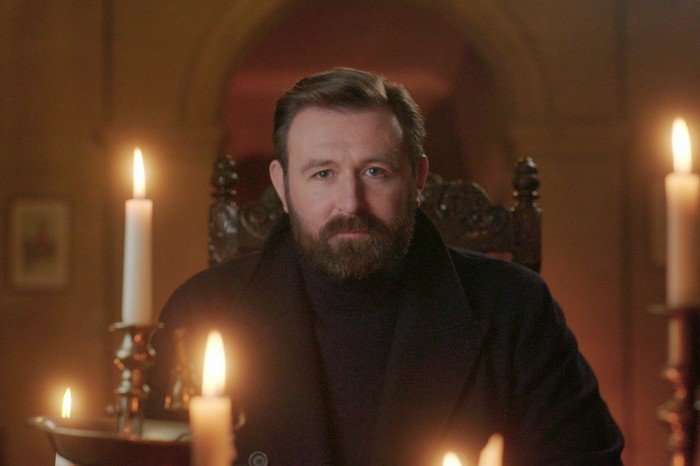
Throughout his reign, politics and romance were completely intertwined. What can be learned about James through his relationships?
“Particularly in the later stages of his life, when the documentary picks up, the politics and the personal are completely intertwined, and also he’s a very secure monarch by this stage. I think he will always struggle fully to know if the men he’s fallen in love with have fallen in love with him because he’s James Stewart or because he’s the king, and there’s a great deal of insecurity there that’s timeless.
“The other thing I would take from it is maybe slightly more uplifting which is that James was able to leave the paper trail he did about his private life because of the socially privileged position he had, and that’s not in question, but it does vividly and quite movingly remind us of the millions of men and women over the centuries who fell in love in the way that James did and weren’t able to leave the paper trail that he did for a variety of reasons, but he reminds us of all of these untold love stories that have littered the centuries, and that often love will find a way to make its presence felt. So in that sense, I think it’s a quite uplifting and very moving story.”
When researching this, were the letters the only form of evidence that offered insight into his life?
“The letters were immensely helpful. The erotic ones were interesting because they proved a point, but actually the really intensely romantic and sentimental ones were probably the most revealing of just how passionately he fell in love…
“One of the other really interesting types of sources was architecture, what’s left of where he lived. Going up to Stirling Castle where he spent his childhood was extraordinary because it gave you such a visual idea of both of the splendour that he lived in, but also the very conscious security and isolation, like where Stirling is to keep him safe as a child. And the idea that it was almost like a compound to keep him safe.
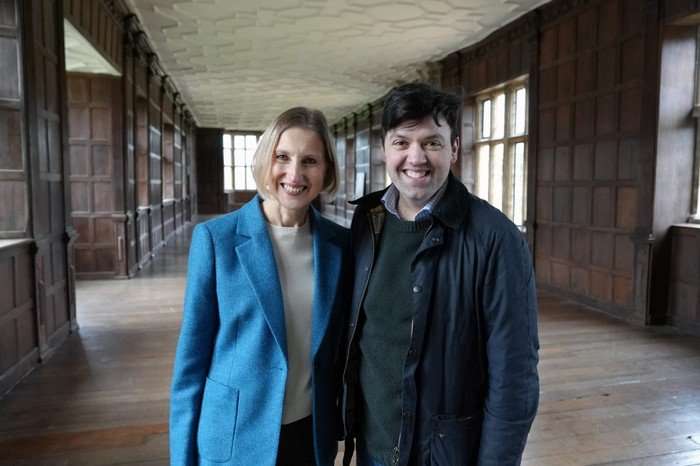
“And then seeing places like the physical layout of some of the rooms at Hampton Court and at Apethorpe Palace, where we filmed as well, where you could see where they put his lover’s room and James’s, and how they linked them with secret passageways, and they bricked up windows so people wouldn’t see the candles moving at night between the two rooms. So the physical layout of where he lived was an immensely useful final source, and also it gives you a bit more of a vivid image than the just the letters.”
Could James be considered one of the first openly queer monarchs?
“I think a very honourable mention to Edward the Second, who was king in the early 14th century, and I think he was very clearly in love with the Earl of Cornwall, who was tragically murdered, so I think Edward the Second is probably the one who could hold a candle to James, but simply I think because the passage of time from the 14th century there are almost no letters left from Edward the Second. So we know about how much he loved Lord Cornwall, from the accounts of others.
“But in terms of a queer monarch who left his own words and a really rich, undeniable body of evidence, I think the first has to be James. Because a lot of James’s enemies preserved these letters we have such a rich body not just of someone who we know was in love in a way but someone who we know was all the kinds of love that there can be: romantic, sexual infatuation. So he’s the first monarch to show all the richness of being queer. I think, for me, it’s James.”
Queen James: Passion, Plots and Power in the Court of Britain’s First King airs on Thursday 18 June at 9pm on BBC Two and is available now on iPlayer.
Check out more of our Documentaries coverage or visit our TV Guide and Streaming Guide to find out what’s on. For more TV recommendations and reviews, listen to The Radio Times Podcast.