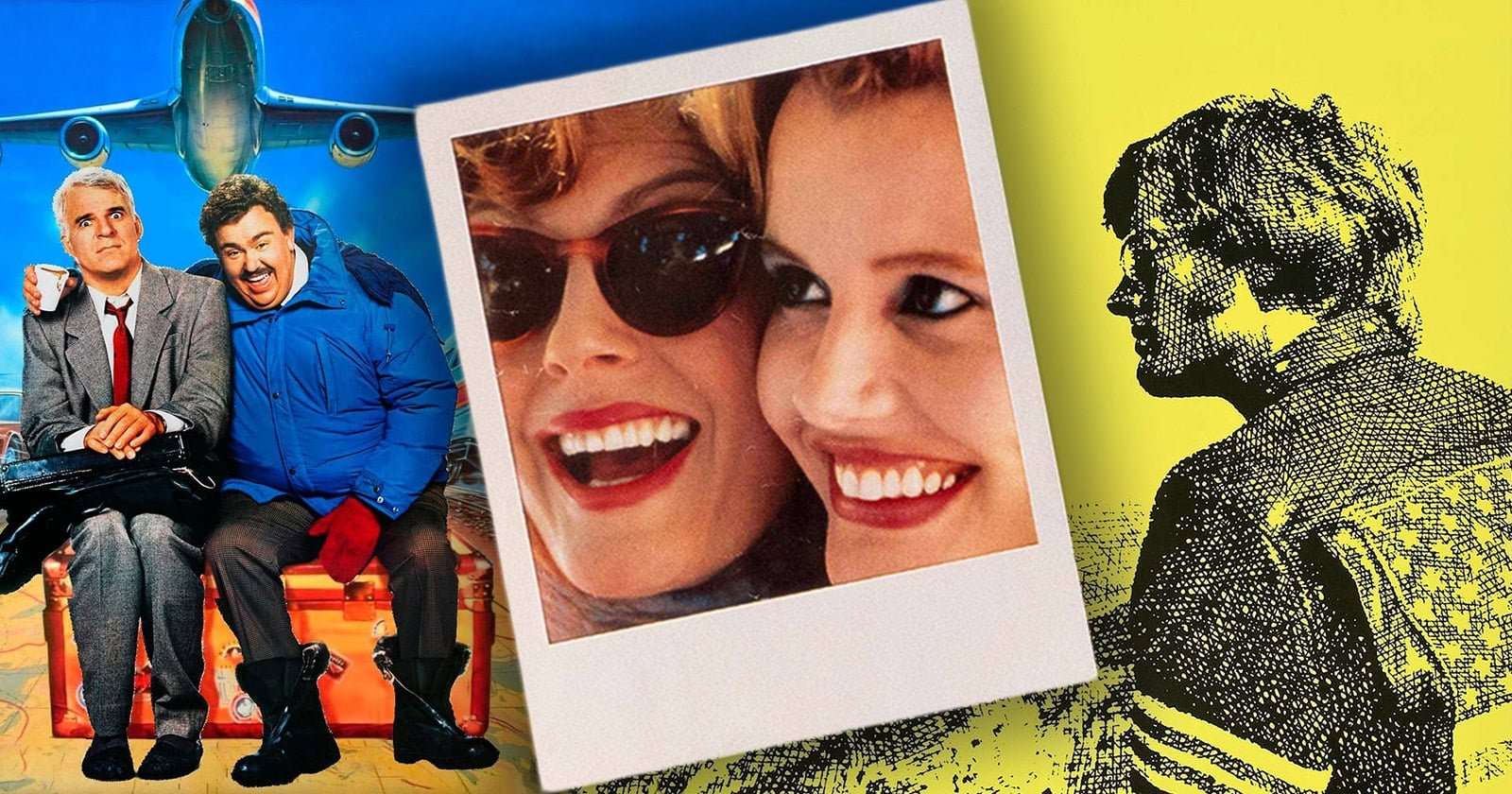
Embark on a journey with these twelve essential road trip movies…

In the world of movies, going on a road trip isn’t just about reaching the destination, but also serves as a reflection of how a journey, no matter near or far, shapes a person through experience, truth, and relationships. Movies about road trips have been making their way to the big screen for as long as the black-and-white era, offering us various themes from self-discovery to seeking human connection, and longing for freedom. That being said, we have curated twelve essential road trip movies that are worth exploring…
Little Miss Sunshine (2006)
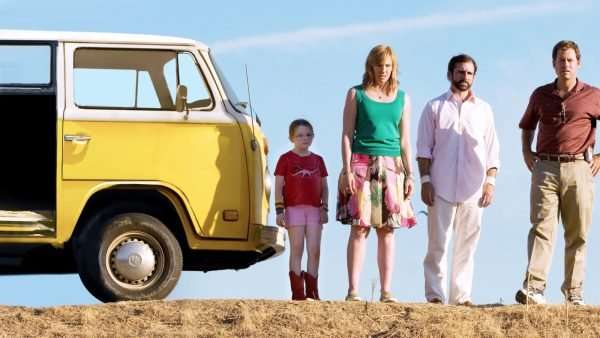
Jonathan Dayton and Valerie Faris, the directing duo who got their start making music videos for the likes of R.E.M., The Smashing Pumpkins, and Red Hot Chili Peppers, explore what it’s like living in a dysfunctional family in Little Miss Sunshine. The title itself refers to the beauty pageant held in Redondo Beach, California, and the story follows 7-year-old Olive (a charming Abigail Breslin) from Albuquerque, who learns she’s qualified. This begins the long journey for the Hoover family in their yellow Volkswagen van, since they can’t afford to fly there.
The 800-mile road trip gradually becomes an exploration of how a family like the Hoovers endures one another through forced, messy bonding. The family members’ clashing personalities may have been quirky but relatable, introducing us to characters like Toni Collette’s frustrated mom Sheryl, and Paul Dano’s emotionally disconnected eldest son Dwayne, who took a vow of silence until he achieves his dream of becoming a fighter pilot. Kudos to Dayton and Faris for bringing out the best in their ensemble cast, while successfully blending humor and heart without coming across as cloying, just honest-to-goodness dramedy that sticks with you even after the end credits roll. Little Miss Sunshine went on to win two Oscars, including Best Supporting Actor for Alan Arkin, who plays the foul-mouthed but supportive grandpa, and a well-deserved Best Original Screenplay.
Sideways (2004)
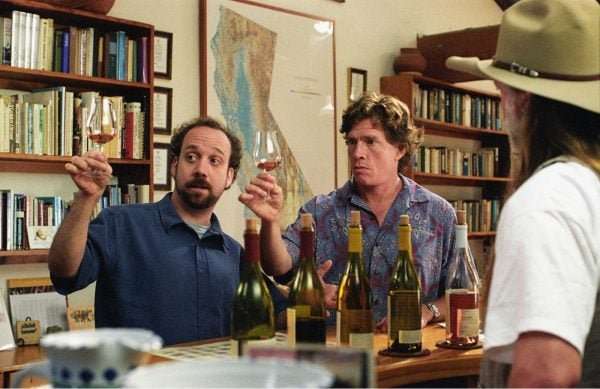
Based on Rex Pickett’s 2004 novel of the same name, director and co-writer Alexander Payne uses Miles (Paul Giamatti) and Jack’s (Thomas Haden Church) week-long road trip to California’s Santa Barbara County wine country as a journey of emotional and personal transformation. Beyond their supposedly fun time together, from wine tasting to enjoying good food and playing golf, Payne also explores Miles’ depression and trauma coming from his painful divorce, which he is still having a tough time moving on from. His emotionally insecure character contrasts well with Jack’s playful and outgoing personality, although the latter is about to get married after the week ends.
Their friendship feels real and understanding, while Payne balances his grounded approach with broadly comedic set pieces without overwhelming them, namely a scene where Jack makes a mistake sleeping with one of the women. The movie also subtly uses wine, specifically Miles’ love for Pinot Noir, as a metaphor of how he reflects the grape’s thin-skinned and delicate nature with his own fragility. One of the best movies from Payne, Sideways went on to win an Oscar for Best Adapted Screenplay, but unfortunately lost the Best Picture and Best Director awards to the more popular Clint Eastwood’s Million Dollar Baby.
Planes, Trains and Automobiles (1987)
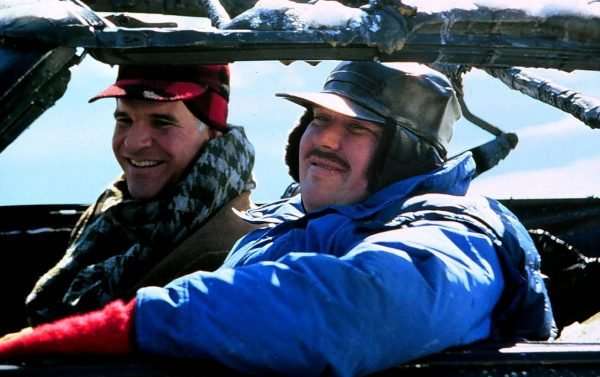
This late ‘80s road trip comedy classic marks John Hughes’ significant transition from teen dramedies to adult themes, focusing on the relatable frustrations of relying on public transportation in America to get home during a festive season. And in this case, it’s a Thanksgiving nightmare as Steve Martin’s marketing executive Neal Page is attempting to make it home from New York to Chicago. This sets a series of chaotic rush-hour tension and struggle from one bad luck after another, allowing Hughes to draw genuine laughs through the absurdities that Neal is forced to endure throughout his journey (one of which involves him throwing tantrums at a car rental agent over his dissatisfaction with the service).
Making things worse is the introduction of John Candy’s shower-curtain ring salesman, Del Griffith, whose lovable but obnoxious personality contrasts well with Neal’s uptight character. Their odd-couple dynamic showcases these two comedians at their best. Beyond the comedy vibes, Hughes manages to slip in a heartfelt drama about human connection and embracing imperfections in life, even when things don’t go one’s way.
Thelma & Louise (1991)
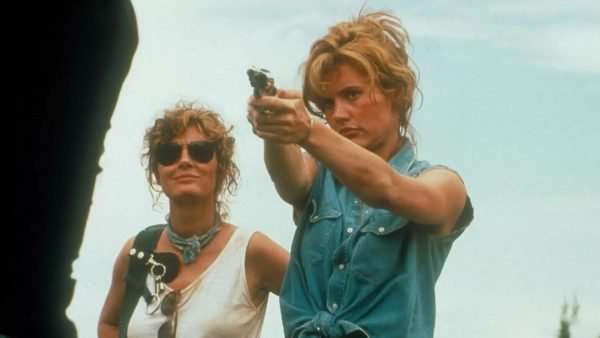
Ridley Scott delves into a feminist spin on a road trip movie with a buddy comedy angle seen from Geena Davis’s meek housewife Thelma and Susan Sarandon’s spunky waitress Louise. Their journey begins with the two hitting the road in a 1966 Thunderbird for a supposedly fun weekend trip together. But unfortunately, things turn sideways when they end up becoming fugitives after Louise kills a rapist. This leads to the story’s turning point, where Thelma and Louise’s initial personality dynamic shifted, while highlighting how a single event can change everything.
Both Davis and Sarandon deliver among their best performances of their careers, while Scott not only reinforces his direction through his expressive visual style in portraying the American Southwest landscape, but also keeps it balanced between his exploration of female empowerment and intimate character-driven drama, before he culminates in a famous ending that gives a significantly symbolic perspective of what it means to be free.
The Straight Story (1999)
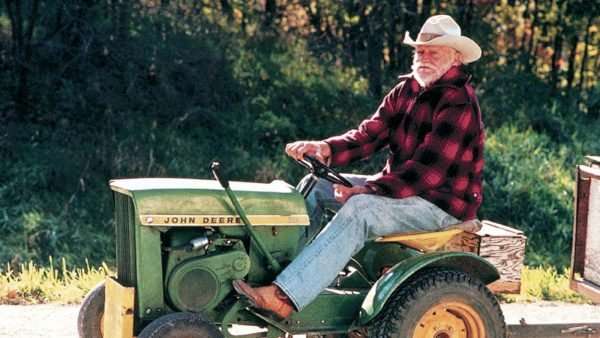
Stripping off the signature dream logic and surrealistic imagery that defines David Lynch’s work, The Straight Story marks the auteur’s radical departure in favor of a surprisingly G-rated drama that combines the road-trip movie tropes. But Lynch is far from selling out his artistic integrity here, as he subtly turns The Straight Story into a genuinely heartfelt journey of a 73-year-old man (Richard Farnsworth, whose lead performance as the stubbornly persistent Alvin Straight earned him an acting Oscar nomination) traveling a whopping 240 miles from Iowa to Wisconsin.
Not by a car, truck, motorcycle, or any form of public transportation, but rather an unlikely lawnmower to see his estranged brother (Harry Dean Stanton), who suffers a stroke. Lynch eschews big emotional moments and opts for a meditative approach in exploring the passage of time, aging and mortality, and the basic human connection. He even deliberately takes it slow to reflect Alvin’s unusual mode of transportation, while still managing to keep his movie engrossing with the introduction of several characters that the protagonist comes across throughout his journey.
Y Tu Mamá También (2001)
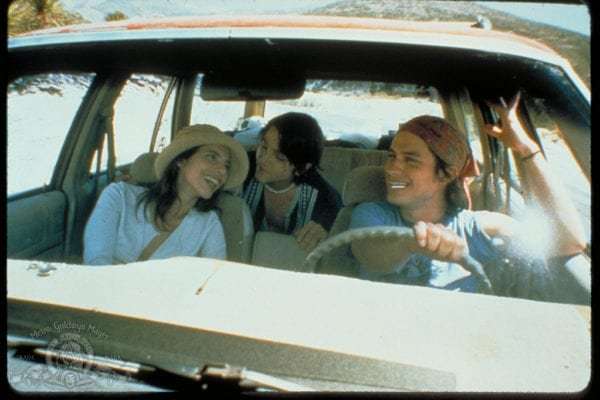
Before Alfonso Cuarón found Hollywood success directing Harry Potter and the Prisoner of Azkaban and Gravity, the acclaimed Mexican auteur’s breakthrough first arrived in the form of a coming-of-age comedy, Y Tu Mamá También. Set in 1999, Cuarón combines the growing-up angle seen from the perspective of two best friends – Julio (Gael García Bernal) and Tenoch (Diego Luna) – as they are on a journey with Luisa (Maribel Verdú), who is the wife of Tenoch’s cousin, to a so-called secluded beach called Boca del Cielo.
By using the familiar road-trip conventions, Cuarón, who also co-wrote the screenplay with his brother Carlos, dives into Julio and Tenoch’s journey of self-discovery through sexual awakenings, the cost of freedom, and the ultimate test of their friendship. The movie doesn’t back down when it comes to depicting the brutally honest realities of going through adulthood. It’s messy and even explicit, particularly Cuarón’s unvarnished way of handling sexual intimacy and desire without succumbing to a gratuitous manner. Y Tu Mamá También became a hit not only in Mexico but also worldwide, grossing over $33 million on a $5 million budget. The movie also earned an Oscar nomination for Best Original Screenplay, even though it lost to Pedro Almodóvar for Talk to Her.
It Happened One Night (1934)
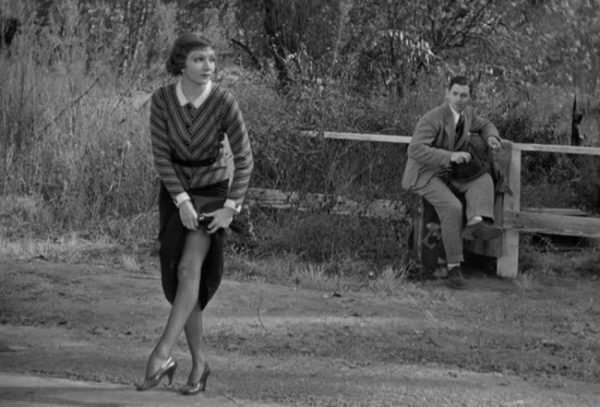
A classic road trip movie, Frank Capra’s It Happened One Night incorporates the odd-couple dynamic of Clark Gable’s cynical and condescending unemployed reporter Peter Warne and Claudette Colbert’s spoiled, wealthy heiress Ellie Andrews. Their love-hate relationship, coupled with will-they-or-will-they-not-end-up-together, is the centerpiece of the movie, underlining their forced journey together as strangers on the road, beginning with a bus ride. Gable and Colbert play off each other well, while their contrasting personalities make their on-screen chemistry both fun and engrossing to watch even today.
The highlight of the movie, of course, is best remembered for its hitchhiking scene. It begins with the overly confident Peter showing Ellie how to flag down a passing car using his thumbing method, only to keep failing. It wasn’t until Ellie insisted on giving it a try and all it takes for a car to stop immediately is exposing her leg. It Happened One Night made Oscar history at the time, after it became the first film to sweep the big five awards, including Best Picture, Best Director, Best Actor, Best Actress, and Best Screenplay.
The Blues Brothers (1980)
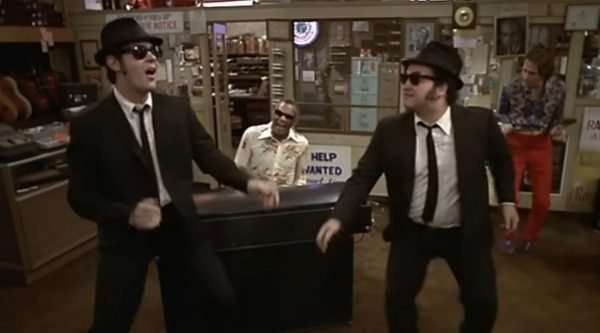
The story in The Blues Brothers is simple: “Joliet” Jake Blues (John Belushi), recently released from prison, and his brother Elwood (Dan Aykroyd) embark on a journey to reunite their R&B band. A mission of God, to be exact, as the sunglasses-wearing brothers in matching black-and-white suits are planning a performance to raise $5,000 to pay the property tax bill on their old Catholic home, where they grew up. John Landis, who also co-wrote the screenplay with Aykroyd, mixes road-movie tropes with deadpan humor, musical interludes (with James Brown, Aretha Franklin, and Ray Charles making cameo appearances), and action-comedy.
For the latter, Landis goes all out in not one but two notable car chases, beginning with the pursuit through the crowded mall. Then, there’s the climactic chase involving hundreds of police cars as the brothers attempt to outrun them across 106 miles to Chicago to reach the City Hall building. The final chase itself earned a then-record-breaking distinction for the most cars wrecked, totaling 103 of them. The Blues Brothers also benefited from the memorable on-screen comedic pairing of Belushi and Aykroyd, where the former’s rebellious energy contrasted well with the latter’s calm and composed demeanor. A big hit in 1980, it took Landis and Aykroyd eighteen years to return for the sequel in Blues Brothers 2000.
A Real Pain (2024)
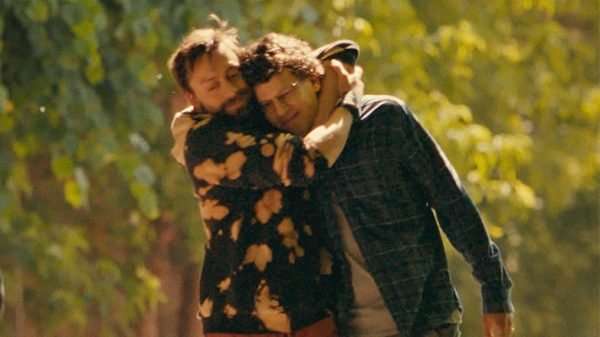
Jesse Eisenberg pulls multiple duties both off-screen (directing and writing) and on-screen as David Kaplan, who goes on a Jewish heritage tour with his freewheeling cousin Benji (Kieran Culkin) through Poland. Their journey also includes visiting their beloved, late grandmother’s home, but what should have been a meaningful trip for honoring her memory turns into an emotional catharsis.
Clocking in at just 90 minutes, Eisenberg uses the memory and history, with the latter particularly referring to the Holocaust suffering, to mirror the complicated present-day dynamic between David and Benji. Their vastly different personalities often lead to them disagreeing with each other, especially given David’s more reserved characteristics against Benji’s open-minded but heavily volatile behavior. Eisenberg may have been primarily known as an actor, but he proves to be equally versatile behind the camera, showcasing his subtle direction in exploring grief, relationships, and trauma with heart and humor. A Real Pain went on to win Kieran Culkin an Oscar for Best Supporting Actor, whose temperamental role steals most of the show here.
Pee-wee’s Big Adventure (1985)
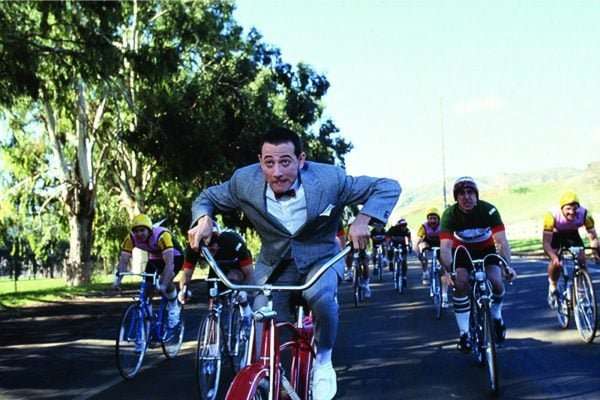
Years before Tim Burton gave us Beetlejuice and Batman, he had already established his surrealistic filmmaking style in his assured feature-length debut. The story is deceptively simple but nothing short of imagination: A well-dressed Pee-wee Herman (Paul Reubens, reprising his iconic man-child comic character from The Pee-wee Herman Show) goes shopping when he realizes his otherwise heavily chained bicycle has been stolen. Given how much he loves his bicycle, this sets his desperate journey to locate his belongings at all costs.
Using the familiar road-trip movie structure as a jumping-off point, the subsequent journey sees Pee-wee encountering various situations and meeting quirky characters (Judd Omen’s escaped convict Mickey and Alice Nunn’s creepy truck driver come to mind). This allows Burton to play around with the genre and make it uniquely his own, namely the shockingly funny moment between Pee-wee and Nunn’s Large Marge that blends funhouse-like fright with a comedic edge.
Let’s not forget the climactic extended chase scene through the Warner Bros. lot, highlighting Burton’s wildly offbeat direction as we see Pee-wee being pursued by security guards across several film sets, two of which include appearances of Santa Claus and Godzilla. Pee-wee’s Big Adventure was a big hit at the box office, raking in over $40 million on a $7 million budget. Two more movies followed, including 1988’s Big Top Pee-wee and 2016’s Pee-wee’s Big Holiday.
Five Easy Pieces (1970)
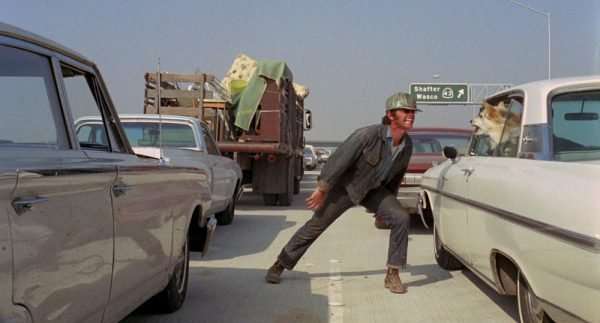
Bob Rafelson’s second feature, Five Easy Pieces, establishes the director’s low-key approach in eschewing the romanticization of the road-movie conventions in favor of an internalized journey of his protagonist. And that person in question is Robert “Bobby” Eroica Dupea (Jack Nicholson, in one of his best performances), formerly a piano prodigy coming from a privileged family background, only to throw it all away and live a life working at an oil field. Despite having a girlfriend (Karen Black’s Rayette), who loves him, and a friend named Elton (Billy “Green” Bush), his life remains empty.
Rafelson takes his time delving into Nicholson’s disillusioned character from the volatile personality to a conflicted man stuck between the working-class and upper-class worlds. When Bobby learns about his father’s severe illness, he decides to take a trip back to his family home. The subsequent journey features the best scene in the movie, where Bobby insists on having a side order of wheat toast at a roadside diner, but the waitress refuses to fulfill his request, simply because it’s not on the menu. What follows is his passive-aggressive frustration and “hold the chicken” sarcasm before he explodes in anger, highlighting the bottled-up tension that the rebellious Bobby has to put up with the conformity.
Easy Rider (1969)
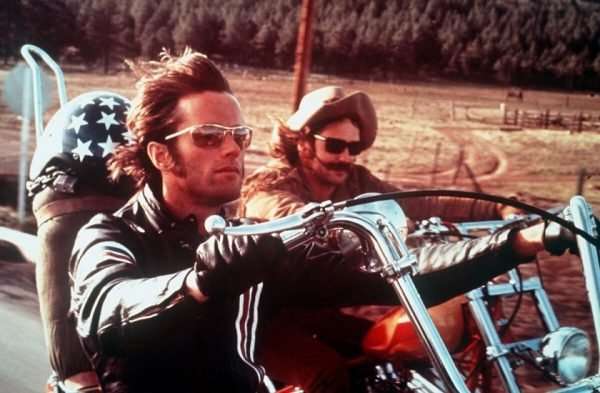
Dennis Hopper’s feature-length directorial debut marked a significant milestone at the time, ushering in the New Hollywood era by blending road movie with a then-topical counterculture of the ‘60s and 70s. Beneath the seemingly simple story about two bikers (Peter Fonda’s Wyatt and Hopper’s Billy) travelling from L.A. to New Orleans for Mardi Gras, their freewheeling journey reflects the search for freedom within the societal rigidity of mainstream America. And yet, they suffer from hostility as they pass through the American South, as locals see them as a threat, underlining the generational conflict between the conservative traditionalists and outsiders like Wyatt and Billy.
As a director, Hopper made use of the movie’s limited budget to film it in a loose, improvisational style, from ad-libbing the dialogue to embracing on-location guerrilla filmmaking. This gives the movie a sense of raw, lived-in aesthetic over the usual polished Hollywood shooting style. Easy Rider is also notable for then-young Jack Nicholson in his breakout performance as George Hanson, an alcoholic lawyer whom the two bikers pick up later in the movie.
What are your favourite road trip movies? Let us know on our social channels @FlickeringMyth…
Casey Chong