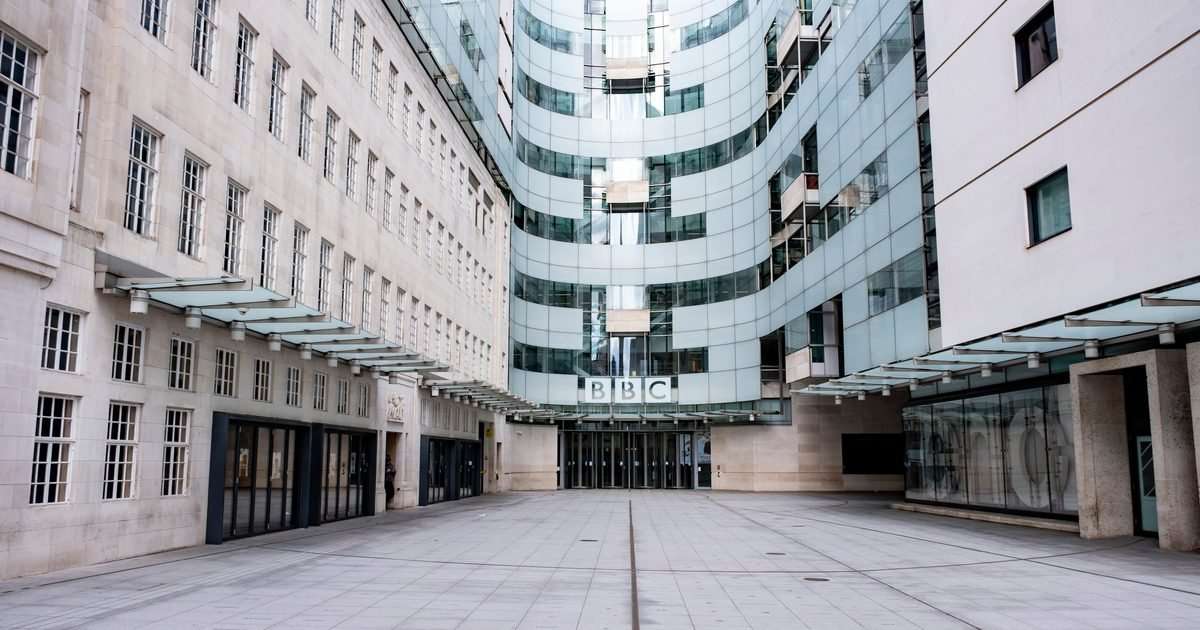
We need to talk about the BBC. A digital revolution is rapidly transforming the television and radio landscape, and out of this flux new challenges constantly emerge. Earlier this year the UK’s official ratings body, Barb, revealed that YouTube had overtaken the Corporation in audience reach for the first time. That’s momentous news if the BBC wishes to remain a national broadcaster that caters to all of Britain.
Moreover, it must do so in a country where political opinion is deeply polarised. Each passing week sees a new row about impartiality, threatening the BBC’s long-standing reputation as a trusted voice at the heart of the national conversation.
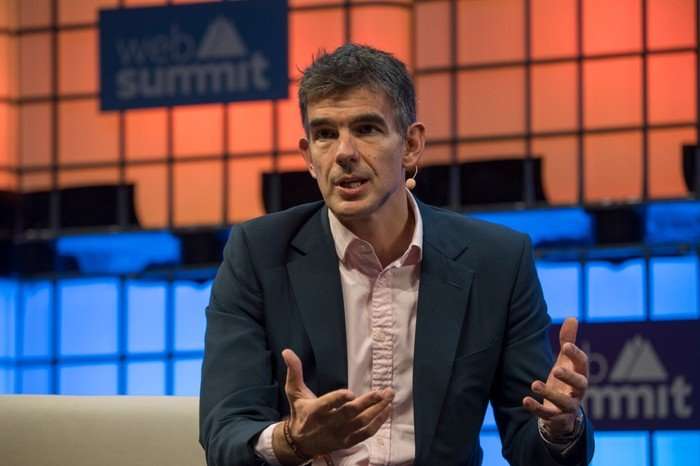
On top of all that, the licence fee is under threat. A new Charter that settles future funding is being negotiated with the Department for Culture, Media and Sport and is due to be delivered by the Government next year. The fee that has funded the BBC for more than a century is increasingly seen as outmoded in an age of subscription TV. And it certainly struggles to cover the costs of the BBC – consequently, the Corporation is currently looking to make £500 million of savings over the next two years in order to make ends meet. When he began work last month, the new director-general, Matt Brittin, had barely put his feet under his desk before announcing that the BBC faced “tough choices”.
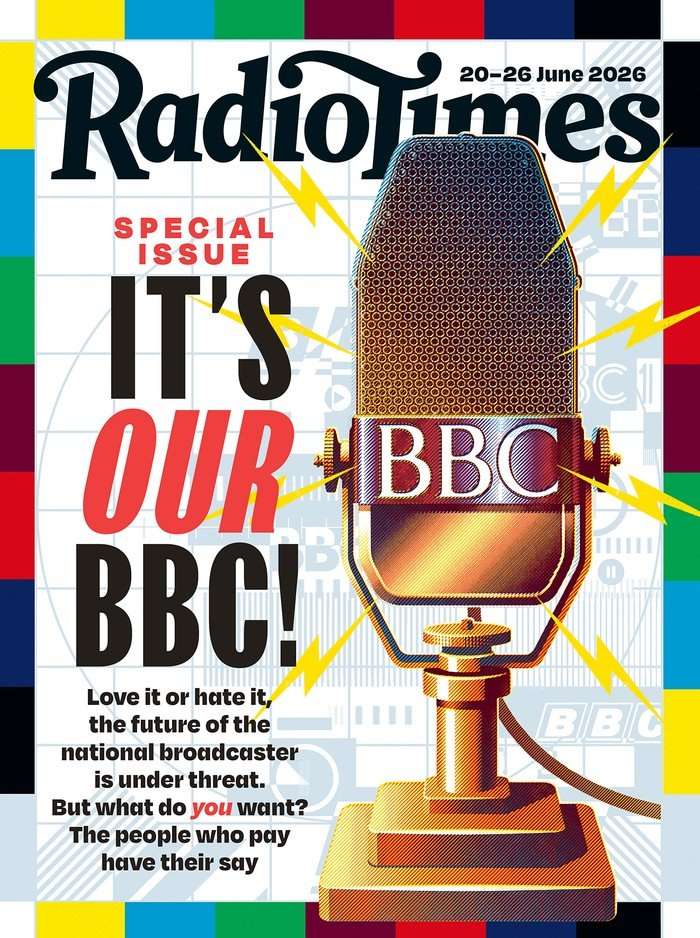
But what should those choices be? Barely a day goes by without someone somewhere offering their views on the BBC. But what about the viewers and listeners? People like you? When did you last have your say?
When Tim Davie resigned last year after the row about Panorama’s editing of a Donald Trump speech, Radio Times ran an appeal for your views. We asked how you felt about the BBC. Did it have a future in the digital age? How should it be paid for? What did you love about it – and what wouldn’t you miss? And to tell us plainly whether you trusted it any more.
Hundreds of people wrote in and what emerged was an extraordinary picture of the relationship between the BBC and its viewers and listeners. In this cache of correspondence there is love, passion, irritation, principles, a confidence that the BBC is part of our British life from morning until night. It’s hard to see this level of involvement, need, pride, fury and, indeed, trust in any other relationship within our society – apart from the NHS, obviously.
For decades the BBC enjoyed a rather cosy characterisation as “Auntie”. To many that description may feel out of date. But it remains remarkably appropriate in one way. The picture Radio Times readers paint suggests the BBC is like that relative we all know, the one who entertains and informs us, who can be relied on to be there when we need them, who might embarrass and possibly bore us on occasion, but above all else is part of the family – and whose demise we would mourn enormously.
The online version of this article features a small selection of reader letters – for the full collection, pick up the latest issue of Radio Times, out on Tuesday (16 June).
A QUESTION OF TRUST
You answered – and in no uncertain terms.
Having lived overseas for several years, first in Texas, USA, and later in Oman, I have experienced the sort of TV that you receive when the only motive is profit. It was terrible, particularly in terms of news and current affairs coverage. The only quality programmes that we saw in Texas were on the PBS channel and were imported from the BBC. Likewise in Oman, the only news to be trusted came from BBC World.
People in power, including journalists and politicians, should be really careful what they wish for because once the BBC is gone, it won’t ever be replaced and we shall all be worse off. I for one would never forgive a political party that took it down.
The situation that Panorama got itself into [over Donald Trump] and the Gaza: Doctors under Attack documentary was really stupid and there should certainly be better oversight – I think the current structure at the BBC is clearly lacking but we must be careful not to throw the baby out with the bath water.
I don’t agree with woke nonsense about not saying “women” when that is clearly what you mean [in November the BBC upheld 20 impartiality complaints after presenter Martine Croxall altered a script she was reading live on the BBC News channel, which referred to “pregnant people”]. We shouldn’t all have to change our use of the English language to salve the feelings of a few people. A bit of common sense is needed all round.
Overall, though, I do trust the BBC, particularly people like international editor Jeremy Bowen who put their lives on the line to show us what is really happening in the world. I love BBC wildlife – what an excellent service they provide – and we all love Strictly.
Sarah Roberts Alrewas, Staffordshire
I have watched BBC television and listened to its radio programmes daily for more than six decades. I’ve been educated, informed and entertained, and always felt I’d had good value for my licence fee. But the recent controversies have been disillusioning. They undermine the trust that so many had in the institution, both in this country and abroad. If we cannot trust the BBC, who can we trust?
I fervently hope a new top management team can find a way to restore the BBC’s reputation and return them to their Reithian ethics. We need public service broadcasting. So many broadcasters are solely interested in maximising profits for their shareholders or pushing the political agenda of their owners. A public broadcaster should aim to give us news that has been fact-checked, is as fair and unbiased as possible and gives us a trustworthy picture of what is actually happening in the world.
On the entertainment side, the BBC has always offered a broad range of programmes for all kinds of tastes. Alongside popular shiny-floor shows, it has offered edgier dramas and comedy, fascinating documentaries, and covered music, arts, humanities and science. I don’t think that any of the purely profit-driven stations would offer these.
Social media seems to be dangerously divisive and full of fake news. It would be disastrous if this were all we are left with should the BBC fall. I am watching developments with trepidation.
Anne Frost Salisbury, Wiltshire
By attacking the BBC and potentially bringing it down, we run the risk of ending up at the mercy of the largely unregulated AI-driven abyss of misinformation and fakery.
I have always felt protected by the BBC, shielded from the worst malevolent forces. The British people are, at their core, a peaceful and diverse nation. The BBC constantly tries to represent these values. But the BBC is still managed by real people – and people are flawed. Who isn’t?
Yes, mistakes have been made, but who else would do better? If we throw out the BBC, who do we trust to uphold what defines us as a nation?
All organisations are naturally imperfect and those, such as the BBC, can only navigate the unsettled waters of this world as best they can, and be as accountable as is reasonable to be. I believe they still, by and large, understand that their role is to inform and comment with minimal bias.
I still trust in the BBC. Please support our BBC. Please fight for our BBC. Please save our BBC.
Katherine Parr Isle of Wight
So, you asked us to tell you plainly:
Do you still trust the BBC? No.
Does it have a future? Not in its present form.
What do you love about it, what could it do better? Nothing. Stop being so blatantly biased in its reporting.
Are there services you couldn’t live without? All that is required is quality programming and less celebrity-based content.
Which programmes justify the licence fee, and which feel out of step? None.
Most importantly, how should the BBC be paid for in future – through the licence fee? No.
General taxation? Definitely not.
Via subscription? No.
Or using a new model entirely? Adverts at the end of programmes, never during them.
The BBC is losing revenue and viewers as a result of its own misguided approach to content and funding, and if it does not change the way it operates quickly, it will become irrelevant as a broadcaster, as there are many other services out there offering a far higher-quality experience.
Chris Wilson Hastings, East Sussex
SPEAKING TRUTH TO POWER
Do you believe the bulletins?
BBC television remains first class even if new programmes are rather thin on the ground. Unfortunately, BBC News is bringing the wider BBC into disrepute, be it doctoring film or political bias. I realise accusations come from all sides but its reporting of Gaza has been completely one-sided.
The BBC must be allowed to continue as our principal public service broadcaster but government interference must be removed and a completely independent body set up to agree the licence fee, top management appointments and keep an eye on impartiality.
Darryl Sugg Surrey
I no longer trust the BBC News, news-related panels or talk shows because there are clear biases (anti-Muslim, anti-Palestinian), and it has effectively given Nigel Farage and the Reform Party the publicity, platform and popularity it has today. This has directly affected current British parliamentary policy and all of the country’s media. Unforgivable. Other points: it remains a male-dominated institution from the upper echelons of management down. It now produces far too much dumbed-down, intellectually insulting content for entertainment, instead of education and information. It has far too much coverage of the royal family. Seriously, most people don’t care. History programmes rarely touch on the realities of British Empire in its colonies. Far too much cooking. Far too few presenters from outside the south east. Deeply damaging handling of the Trump footage. Smug.
K Kemra via email
The BBC continues to play a vital role in our national life.
I don’t object to the licence fee and consider it good value for money. However, the Board needs to get a grip. Programming that justifies the licence includes a wide range of documentaries, news and current affairs, classical music and sports (though we seem to be losing sport to the highest bidder). Perhaps the arrival of a new director-general provides an opportunity to address some unfortunate policy decisions that have arisen in recent years. For example:
Return Newsnight to a running time of 45 minutes. The current, shorter format is rushed and, all too often, we hear the refrain “Sorry, we’ve run out of time” in the middle of an important discussion.
The big advantage of BBC over commercial channels used to be that there were no adverts. Now the end of every programme is ruined by noisy, repetitive trailers that take chunks out of the next item. These are just as annoying as commercial advertisements. My mute button is worn out.
Every few weeks, letters in the Radio Times Feedback pages complain about intrusive soundtracks on documentaries, drowning out the presenter. Yet they continue unabated.
I strongly object to being ordered to watch everything on iPlayer. How about “You may be interested to watch this on iPlayer””? Much more polite and less antagonistic.
Dr Philip H Smith MBE Formby, Merseyside
LICENCE FEE, SUBSCRIPTION OR ADS?
How do you think the BBC should be paid for?
The TV licence system may not be perfect, but if the BBC is to remain impartial and continue to deliver its mission to inform, educate and entertain, it’s vital that it gets an adequate level of funding without being beholden to either the government or to advertisers.
If the BBC was subscription- or advertising-funded, much of its best work would never have been commissioned, as it wouldn’t be worth risking anything that was expected only to appeal to a minority, such as, say, Monty Python or Fleabag. For me, Radio 4’s I’m Sorry I Haven’t a Clue would justify the licence fee on its own, but there are so many others that I couldn’t possibly list them all.
Direct government funding would open it to accusations of being a state broadcaster. It seems to me that the TV licence is the best available compromise, and we should keep it.
David Monksfield Stansted, Essex
I think the licence fee is a waste of time. There is much potential in the BBC’s worldwide reach that could be exploited in the form of a subscription system.
I would happily pay a large monthly fee to get first-rate journalism supplied by many more foreign correspondents than are currently employed by the BBC. Plus, excellent drama, documentaries and feature programmes. Sport is now so expensive and over-commercialised that it should be left entirely to the private sector. State events should be carried as part of the output, but I see no role for soap operas, quiz shows and endless cookery/DIY/gardening/property shows. Again, leave that to commercial stations.
Dr Alexander Hall East Finchley, north London
I get the frustration with the licence fee model, and there’s a legitimate debate to be had, but saying it’s not fit for purpose doesn’t really stand up when you look at it. First, the licence isn’t a BBC subscription. It’s a public broadcasting levy that underwrites a universal, independent broadcaster. The reason it applies to live TV broadly is to avoid market distortion and mass evasion. You can argue that the enforcement model is outdated (fair), but that’s an argument for reform, not abolition.
Second, every broadcaster produces content that misses the mark. That doesn’t negate the BBC’s wider output of national and regional news, global journalism (often used by other broadcasters), children’s TV without advertising, radio (including local services) that simply wouldn’t survive in a pure commercial model.
Third, the BBC now costs around £180 per household per year (around 49p a day). In the US, where broadcasting is heavily deregulated, households routinely spend £1,000+ per year on cable and streaming bundles and the TV still ends up being more polarised, with less trusted news.
Finally, the choice isn’t licence fee or shutdown. The real options are: reform the licence fee (income-based, household tax, or hybrid models), tighten governance and commissioning standards, modernise enforcement. But scrapping the BBC altogether won’t lead to cheaper, better media. As the US shows, it leads to higher costs, lower trust, and media owned by a handful of corporations.
Ron Oyston via Facebook
For all its faults, the BBC is still a world-beating broadcaster. People who complain should be forced to watch TV from other nations for a month and then decide what they think. This is not an idle threat. Here in Switzerland we can get any unencrypted TV from numerous European countries via cable. They range from just about OK to awful.
If the BBC needs to increase its revenue and the government doesn’t agree to an increase in the licence fee (or penalise those who refuse to pay), then why not set up a subscription service for those living outside of the UK? Given the level of UK emigration to other countries, this would be an additional revenue stream.
It should not be beyond the wit of the BBC and government to sort out rights issues. This seems to be the recurrent argument as to why they can’t do anything to set up a subscription service.
Dr Janet Dawson Bennwil, Switzerland
STILL A NATIONAL TREASURE?
Where and how does the BBC shine – or fall short…
As a retired couple, we predominantly watch the BBC for our entertainment. We would be utterly shocked if anything happened to it. We consider it as much a part of British life as the NHS. In fact, the clue is in the name – the British Broadcasting Corporation.
The Beeb is respected around the world as a fair and honest news outlet and, as such, should not be destroyed for making the odd mistake. Having said that, the culprits who edited the Trump Panorama should be made to pay for their error, but I do not believe that the director-general should have resigned.
The quality of programmes is extraordinarily high, which justifies the licence fee. At the current rate of £180 or £15 per month, this amount is, in the great scheme of things, nothing, even for retired folk.
There are certain things that make life in Britain worthwhile and the BBC is one of them.
Ann and Ray Levett Tiptree, Essex
I cannot begin to express how strongly I feel about the BBC. You have only to watch what is going on in the USA at the moment to understand just how much the BBC is a bulwark – perhaps the only one – of our democracy.
Hard-hitting interviewers like Jeremy Paxman, and more recently Nick Robinson, Sarah Montague, Sue Mitchell and so many others hold politicians and others to account in a way that the press corps in the US seems incapable of doing.
I am in awe of the ability of BBC journalists to stand up to bullying, maintain their composure and remain polite under fire and in the national spotlight, in order to ask questions on behalf of the ordinary people of Britain. I am furious that a few minor mistakes seem to provide some sort of excuse to try and destroy a precious, irreplaceable resource.
I couldn’t begin to list all the programmes that have given me pleasure over the years, on the radio (standouts are The World at One, I’m Sorry I Haven’t a Clue and Just a Minute), TV (Strictly, Shetland, Question Time) and podcasts (To Catch a Scorpion, Ukrainecast).
Please, please, please, fight Donald Trump and all the right-wing critics who think only of their own short-term self-interest.
Personally, I am in favour of the BBC being funded through either the licence fee or general taxation, because it is a national resource, and vital to the health of our democracy. Whether people use it or not, we all depend on it for truthful, objective reporting and political accountability.
Andrea Clough Brighton
I’m glad to have the opportunity to express how much I appreciate the BBC. A friend and I have agreed that at the age of 81 we would be prepared to take part in public demonstrations to defend it. It is a main pillar of our democracy and stability.
I trust it. It has made mistakes and it has to be extra-vigilant at every level of decision-making because there are people who want to bring it down. In this age of fakery, populism and falsehood it is the ultimate barricade against corrupt, manipulative and authoritarian power and the defender of truth.
I travelled widely when I was working and had the opportunity to experience the media in various countries. I found nothing that compared to the quality of TV and radio in the UK and observed how much the BBC is respected abroad. I cannot stress enough the importance of public broadcasting.
Honesty, integrity, balance and fearlessness must remain its principles. The freedom from commercial pressure and political influence is priceless. In the age of social media and the power of the big commercial corporations the BBC and independent press are the ultimate defenders of our freedom. I am grateful for and admiring of the courage of investigative journalists.
I appreciate the BBC for challenging the political and social status quo, accessing public opinion, maintaining the profile of our cultural traditions and our history and representing who we are. To me the BBC represents the best of who we are.
Denise Outen Leicester
The latest issue of Radio Times is out on Tuesday 16 June – subscribe here.
Check out more of our Current Affairs coverage or visit our TV Guide and Streaming Guide to find out what’s on. For more TV recommendations and reviews, listen to The Radio Times Podcast.