I Am Frankelda, 2025.
Written and Directed by Arturo Ambriz and Roy Ambriz.
Featuring the voice talents of Mireya Mendoza, Arturo Mercado Jr., Luis Leonardo Suarez, Gaby Cárdenas, Beto Castillo, Magda Giner, Carlos Segundo, Idzi Dutkiewicz, Anahí Allue, Sergio Carranza, Laura Torres, Karla Falcón, Roy Ambriz, Arturo Ambriz, Oliver Díaz Barba, Antonio Badía, Jesse Conde, Assira Abbate, Blas García, Zamir Tabla, Clío Ambriz Melis, Lourdes Ambriz, Juan Pablo Monterrubio, and Habana Zoé.
SYNOPSIS:
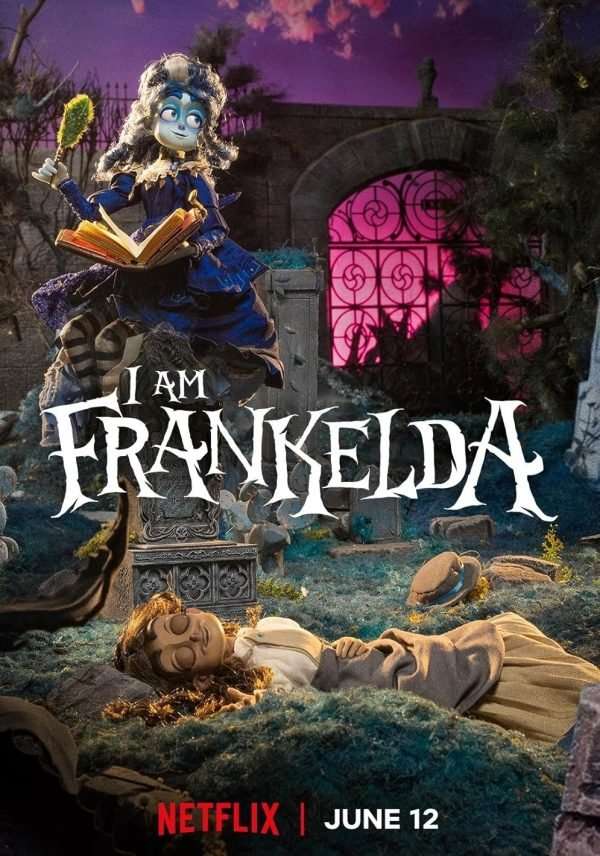
Frankelda, a determined 19th-century Mexican writer, journeys into her subconscious to face the monsters she’s written about. Guided by a tormented prince, she must restore the balance between fiction and reality before it’s too late.
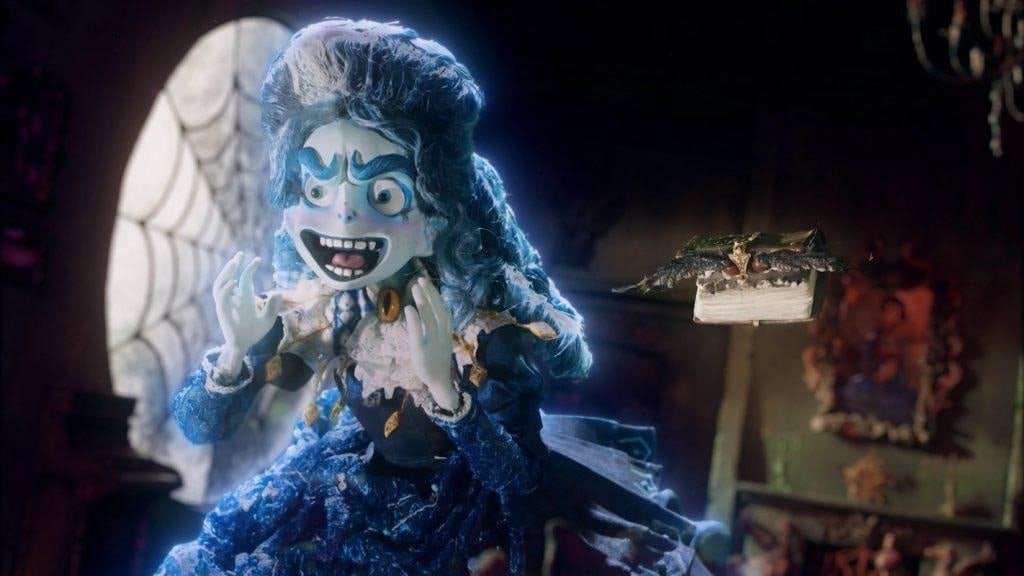
Taking place in 19th-century Mexico and another dimension dubbed the Realm of Terrors (or “Topus Terrenus”), with I Am Frankelda writers/directors Arturo and Roy Ambriz enchant with a Gothic stop-motion stunner so large in scope and meticulously detailed bursting with similarly fantastical art design that even if this animated feature had nothing else going for it (trust me, it does), it would be worth watching for that alone to sit there spellbinded and speechless with each passing frame at how any of this was pulled off.
That’s also accounting for the times where the plotting and world-building continuously get more intricate to the point where, even as a grown man it becomes slightly messy be keep track of the lore and rules here, which prompted some wonder if a young child (this is rated PG, although more resembles a 1990s PG) would fully comprehend any of this (especially ones who haven’t yet begun their foray into international language films, although one would presume an English voice cast with stacked recognizable names would be on the way given the quality of what’s here), one kind of just stops caring about that and slips further and further into the beauty of every single image (sometimes seamlessly transitioning from stop-motion into a style that resembles animated watercolor paintings).
As for that story, it concerns Francisca Imelda, beginning when she is a child (voiced by Habana Zoé) and lectured by her mother on the power of art, who tells her that her soul becomes part of anything she creates. Unfortunately, tragedy strikes, and she has been left, raised by her cruel grandmother, unsupportive of her novelistic ambitions, with the film jumping forward 10 years, to her 18 years of age (now voiced by Mireya Mendoza), still in the same miserable situation, trying her damnedest to be published, generally rejected because of sexism and generally not being taken seriously.
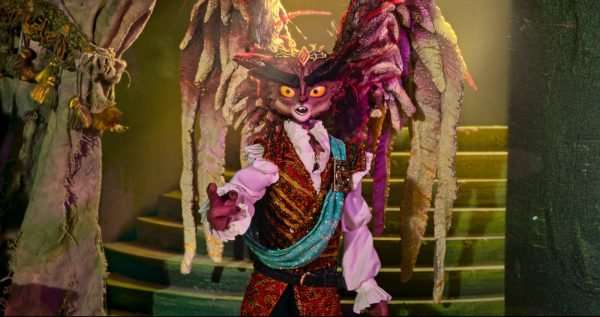
Elsewhere in the previously mentioned Topus Terrenus, that story also begins with Prince Herneval, as a child (voiced by Juan Pablo Monterrubio), taking the next step forward in understanding what his royal parents do, which is essentially spinning nightmares (on something beautifully conceptualized and built called a Spiderharp) for humans to dream about. Their power also lives and dies by how effectively those nightmares scare humans, which in turn affects their visual appearance, adding another layer of intensive labor to how richly detailed this entire production is. When the power of these nightmares fades, the creatures (who range from winged and almost angel-like to amorphous blobs) still appear striking and even creepy, but also weakened and deprived of energy.
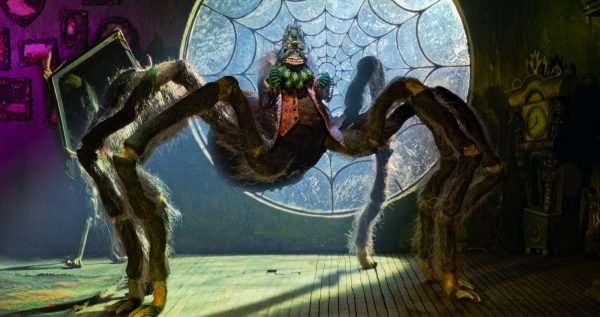
Nevertheless, the hierarchy is at a crossroads, with one of those blobs, Procustes (voiced by Luis Leonardo Suárez), seeking to take control of nightmare writing duties despite being unqualified. Meanwhile, this part of the prologue concludes with a show-stopping musical number about the importance of playing that harp, keeping the balance between the realms, and how instrumental it will be to Prince Hernaval’s future.
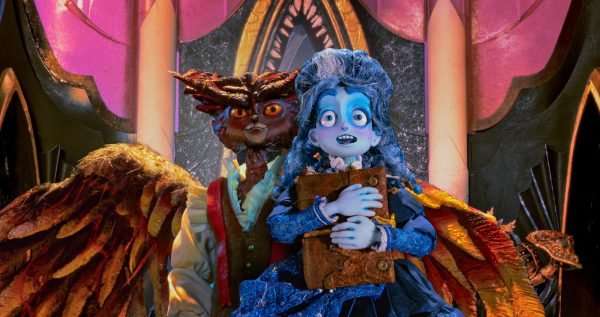
Ten years in the future, Topus Terrenus has also fallen into hard times, with Prince Herneval (now voiced by ArturoMercado Jr.) compelled to do something about it, even if it means going against the wishes of his parents and returning to the human realm to connect with Francisca, who once called him there through her writing when they were children. He discovers that she is an excellent writer and decides that if he brings her to the terror realm, she can fulfill her passion of becoming a writer while solving their dilemma of being restocked with pure nightmare fuel from the hands of humans.
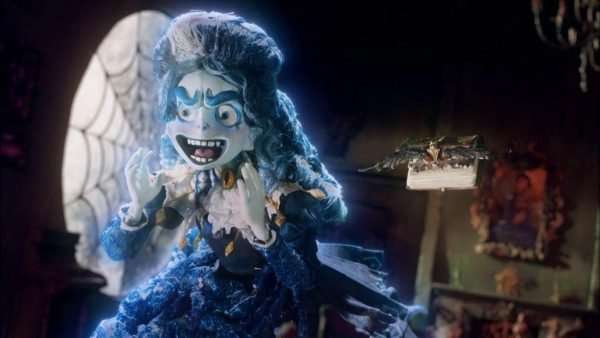
That distinction is key, since a plot element involves Procustes slamming Francisca’s writing to further diminish her self-esteem, then turning around and using the stories himself to take the credit. Certain lines boost the story with impassioned “fuck AI” energy, which is likely one of the many reasons Guillermo del Toro was drawn to the project as a producer. Like AI, Procustes isn’t creating; he is imitating and failing at it with no personal connection to the material, spitting out a soulless duplicate. The film doesn’t mince this metaphor one bit. This dynamic also plays into feelings of impostor syndrome for Francisca and that sometimes we are our toughest critics.
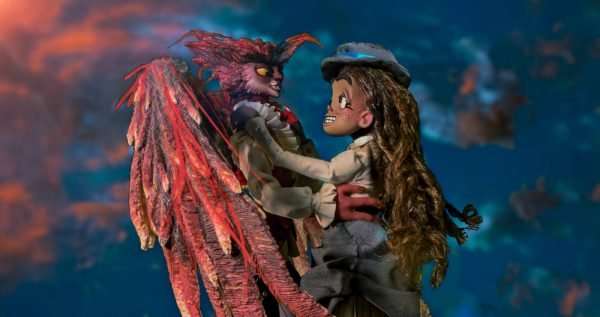
As for Francisca, in what comes across as an acknowledgment of the times, with women authors publishing under pseudonyms or anonymously, one of her ideas is that using the name Frankelda will bolster her chances. There is also a deeply romantic element in which she and Herneval begin falling for one another against the odds and the wishes of realms that believe coexistence runs counter to their means of maintaining existence. That’s not to say the Prince doesn’t have blinders on and make mistakes that could be perceived as selfish.
Again, I Am Frankelda is at times a bit too expansive for its own good, at one point bringing in seven clans to aid Prucustes in an all-out war in the terror realm to keep control. It is also apparently a prequel to an animated TV series, although that’s not exactly transparent given how well this narrative functions on its own. One comes away wanting to check that out, based on the extraordinary stop-motion animation here, aided by some fittingly dark musical numbers and an absorbing and emotionally voiced story that celebrates its characters as much as it does art itself.
Flickering Myth Rating – Film: ★ ★ ★ ★ / Movie: ★ ★ ★ ★
Robert Kojder