Leviticus, 2026.
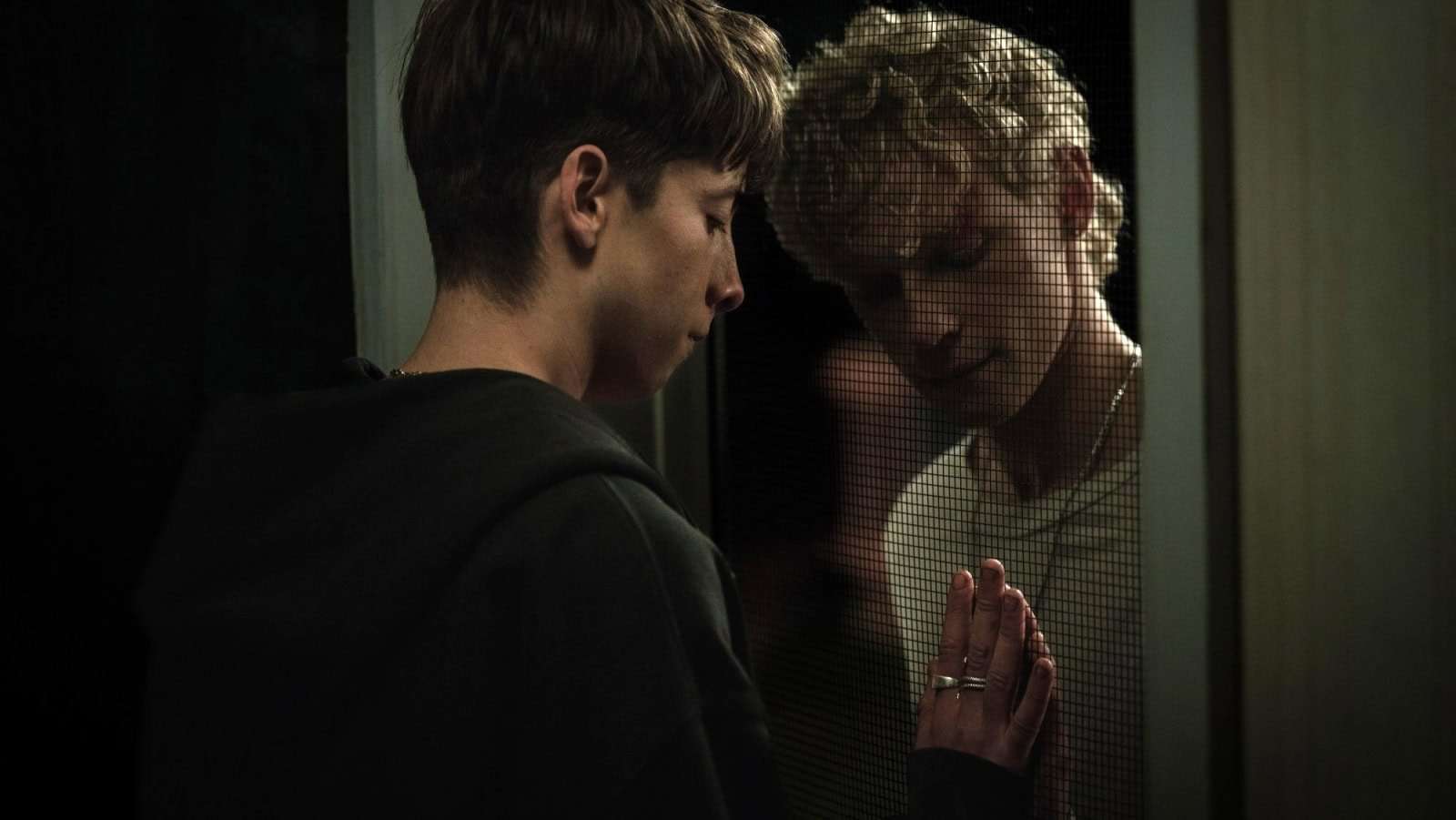
Written and Directed by Adrian Chiarella.
Starring Joe Bird, Stacy Clausen, Mia Wasikowska, Tyallah Bullock, Ewen Leslie, Jeremy Blewitt, Davida McKenzie, Julia Grace, Hyu Motoki, Edwina Wren, David Serafin, Nicholas Hope, Zachary Newman, and Shannon Berry.
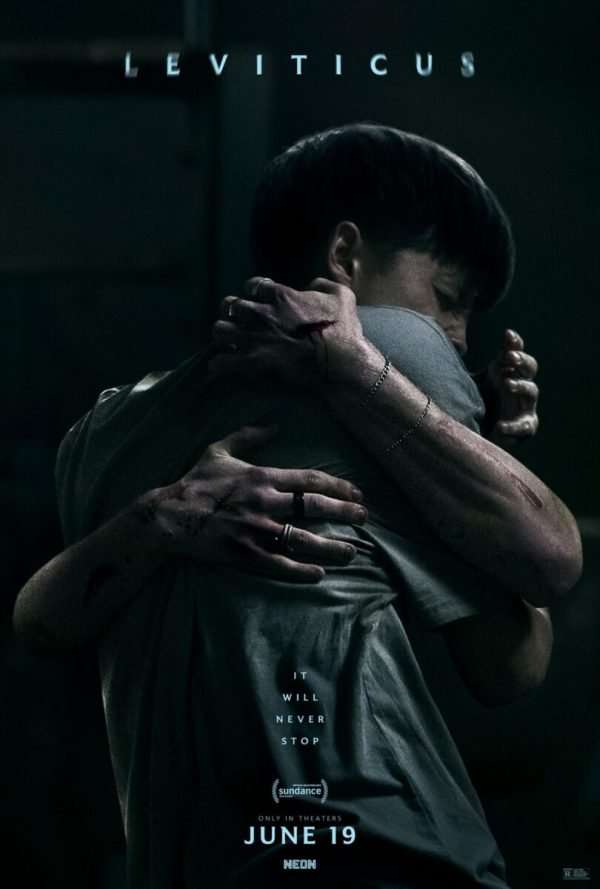
SYNOPSIS:
Two teenage boys must escape a violent entity that takes the form of the person they desire most — eachother.

In the land of metaphor horror, particularly ones that lean fully into such analogies, visual motifs, and symbolism to make a point, the central messages are typically hammered home, drowning out anything else there possibly be to enjoy or, in the case of the genre, fear. Australian writer/director Adrian Chiarella’s Leviticus flirts with falling into this trap, establishing that in this world, there is a deliverance healer (creepingly played by Nicholas Hope, maximizing minimum screentime) who can successfully perform a ritual that summons a demon that can only be seen by the targets of the quack’s chanting, taking the form of whoever they are most romantically into at the moment, lulling them in through normalcy before suddenly turning violent and indestructible. Here, it’s meant to function as a supernatural take on gay conversion therapy; the fact that this film makes something so cruel somehow harsher and heartless alone makes our concept worth the price of admission.
It is also worth mentioning that, upfront, we have shown that this is a curse that not only works on boys, as there is a prologue featuring the tragic demise of a gay girl, delivering a wicked taste of the horrors to come, without giving away too much of what’s to come visually. The opening sequence is a perfectly calibrated, chilling table setter that paves the way for a story about closeted teenage boy lovers Naim (Joe Bird) and Ryan (Stacy Clausen), with the latter discovered having sexual interest in the same sex.

There is also a third boy in the mix, Hunter (Jeremy Blewitt), creating a love triangle of sorts that involves jealousy, since what the demonic entity reveals is not a lie. It turns out that Ryan is not being pursued by a demonic Naim but by Hunter instead, stirring up a range of feelings that naturally lead to understandable, hurt-driven drama. An array of rules is also at play, such as the fact that the demon can’t attack if the individual is with at least one other person, regardless of who they are.
What makes Leviticus such an effective horror story, despite its overreliance on the central metaphor, is a crushing sense that these boys can’t even trust the ones they love. Similarly emotionally pummeling is that they are surrounded by a bigoted society, convincing them that they are better off alone, which doesn’t make any sense at all to tell someone considering the rules of this curse, yet that’s what plays into the shame the boys begin to feel.
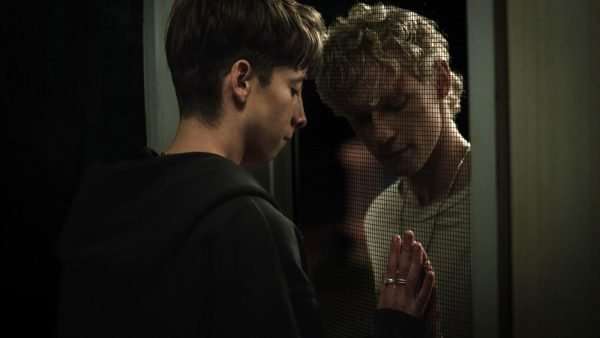
That’s not to say the film takes full advantage of its premise, since it doesn’t, and it ends abruptly. However, the scares are there, intertwined with straightforward yet tender and moving characterization. Leviticus is a rare breed: a horror film that is as terrifying as it is romantic, sometimes all within the same scene or flipping a switch instantly from one to the other.
Flickering Myth Rating– Film: ★ ★ ★ / Movie: ★ ★ ★ ★
Robert Kojder