“Only Lovers Left Alive” is a love letter to human creativity and a treatise on why art still matters most when hope feels hardest to hold.
No time to read? Click the button below to listen to this post.

MORBID MINI: Only Lovers Left Alive isn’t just a dreamy vampire romance. It’s a meditation on humanity’s paradox: we destroy, but we also create. In a world that feels increasingly unbearable, Jarmusch’s film makes the case for art’s essentiality. When the news is relentless, loving movies can feel frivolous. Only Lovers Left Alive pushes back: the art we make and share isn’t selfish. It’s survival, connection, and the only kind of immortality worth having.
There’s a specific kind of guilt that shows up when you love movies… especially when you love them loudly.
You open your phone, and the feed is a siren. Another headline. Another disaster. Another reminder that people are suffering in ways that make your own worries feel small and embarrassing. And then there you are, hovering over “post,” about a film you adore, or a screening that thrilled you, or a scene that made you feel alive again.
It can feel wrong. Selfish. Out of touch. Like you’re pointing to the dancing monkey while the world burns. I understand that feeling. I’ve lived in it.
And I’m here to argue the opposite: art isn’t a detour from the fire. In the worst moments, art is one of the only things that keeps us from becoming ash.
This isn’t a plea to ignore the flames. It’s a refusal to let them consume everything we are. Because if the world is chaotic, cruel, and frightening—and it often is—then the act of creating and sharing beauty isn’t trivial. It’s resistance. It’s survival. It’s how we keep our humanity from being taken hostage by despair.
And that’s why Jim Jarmusch’s Only Lovers Left Alive matters to me so deeply right now.
It’s a film that understands something essential about being human: we are destroyers, yes—reckless, wasteful, brutal. But we are also creators. And that creative spark is not an accessory. It’s entirely the point.
The Monster That Mirrors Us
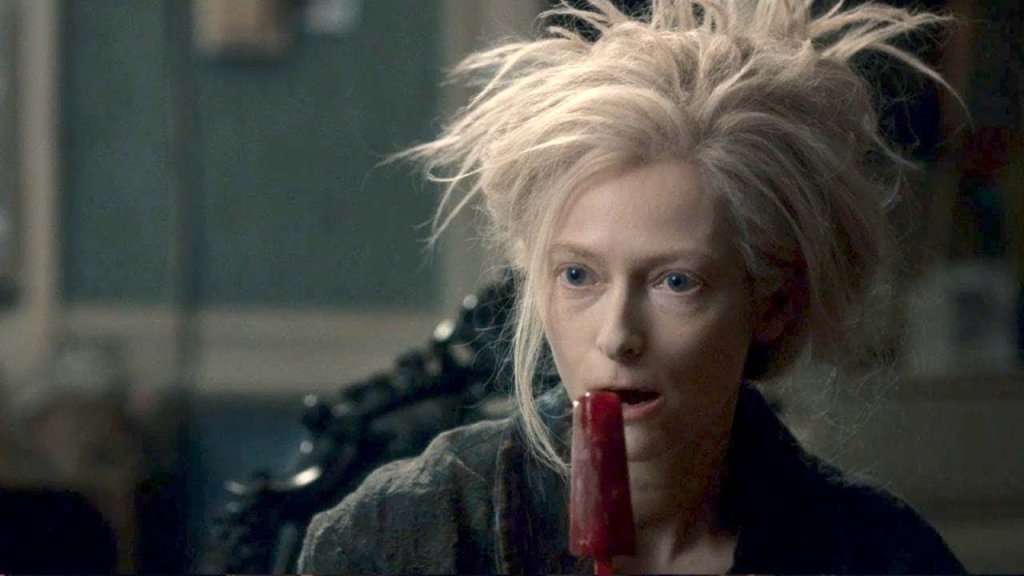
Vampires endure because they’re endlessly useful metaphors. They’ve represented disease and addiction, sexuality and repression, immortality and existential dread, aristocracy and marginalization. They’re the perfect cinematic inkblot: project your fears here, and watch them move.
But Only Lovers Left Alive does something rarer: it turns vampirism into an allegory not for one human condition, but for the whole paradox.
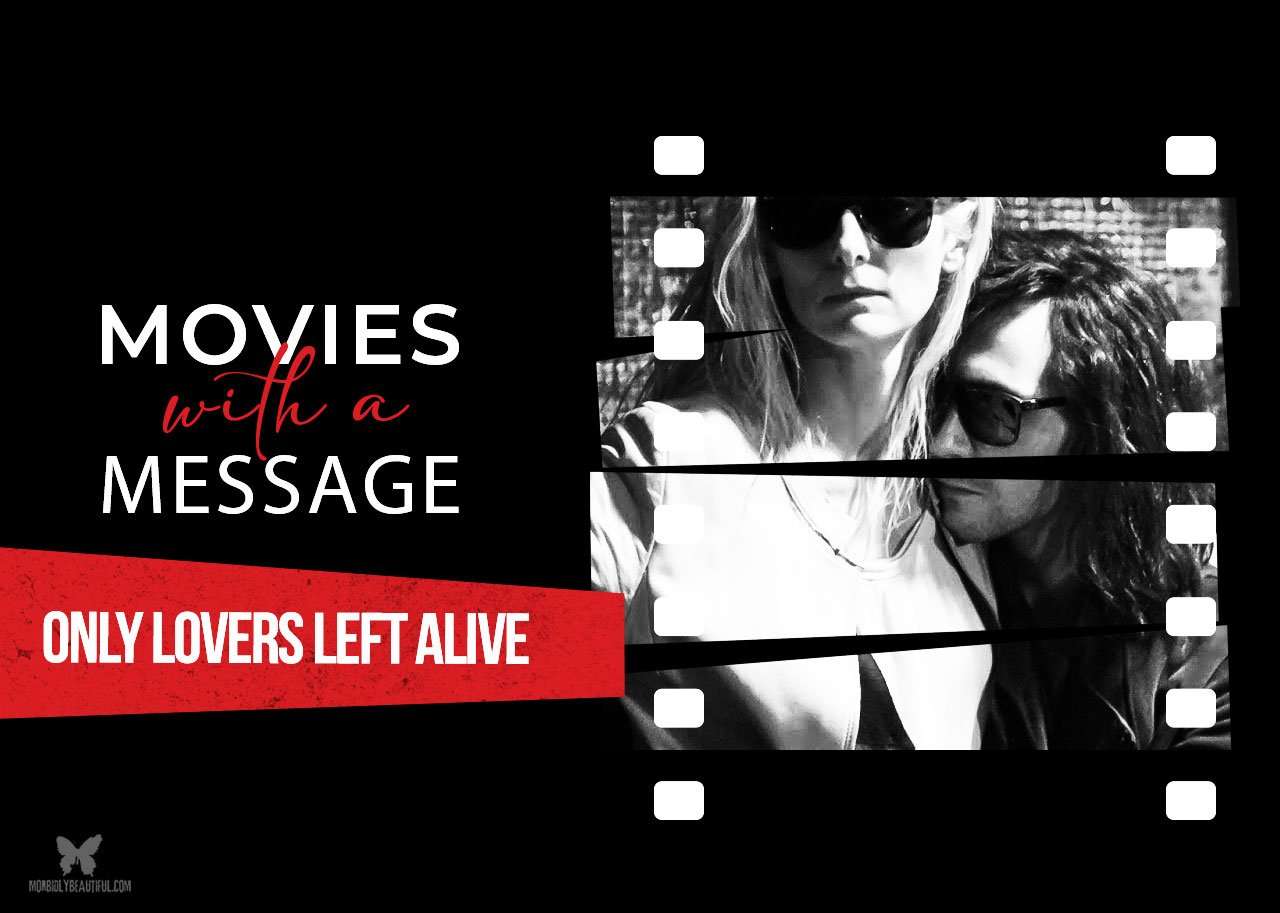
Adam (Tom Hiddleston) and Eve (Tilda Swinton) aren’t just undead. They’re ancient. Exhausted. Softly, exquisitely over it. They’ve seen civilizations rise and rot. They’ve watched people build cathedrals and then bomb them. They’ve loved and lost and outlived, over and over, until time itself starts to feel like a room with no doors.
And yet, they still make space for wonder.
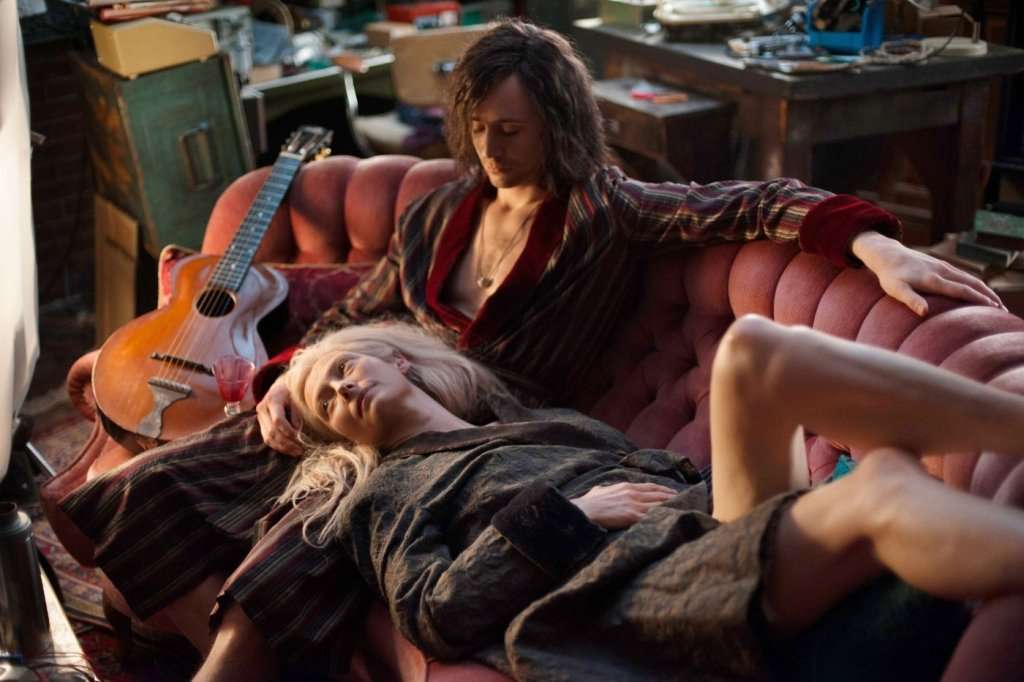
They drink their blood like it’s sacred, poured into delicate glasses with ritual care. They live among relics: instruments, books, handwritten artifacts, carefully collected proof that humanity has done more than harm. Their homes look like curated shrines to the best of us—an ark stuffed with art, sound, language, thought.
If Adam calls humans “zombies,” it’s not just snobbery. It’s grief. It’s the heartbreak of watching a species capable of genius behave like it’s sleepwalking into ruin.
And if that sounds familiar, it should.
A Film That Breathes Like a Long, Heavy Century
This is not a plot-driven movie. It’s a mood. A slow exhale. A nocturne.
Jarmusch makes the tempo feel like immortality: languid, patient, weighty. The film doesn’t hurry because Adam and Eve don’t hurry. They’ve survived long enough to understand that urgency is often a human delusion, a frantic sprint toward a finish line that keeps moving.
The camera lingers. The city lights smear into velvet. The night feels thick, like it holds history.
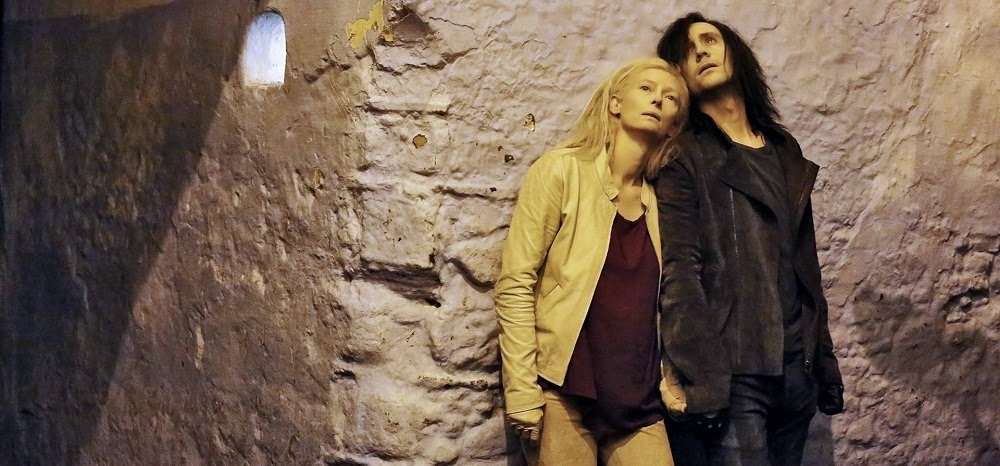
Detroit, in particular, becomes a kind of haunted cathedral. It’s beautiful in its decay and aching in its emptiness. Adam’s loneliness there isn’t just depression (though it is that). It’s the sensation of standing inside a monument to human potential squandered.
And then Eve arrives. She’s calm, luminous, and razor-smart, like the answer to the question: Is this all there is?
Not as a pep talk. Not as naive optimism. As something deeper:
Yes, maybe this is it. So don’t sleep through it.
Tilda, Tom, and the Ancient Love That Feels Real
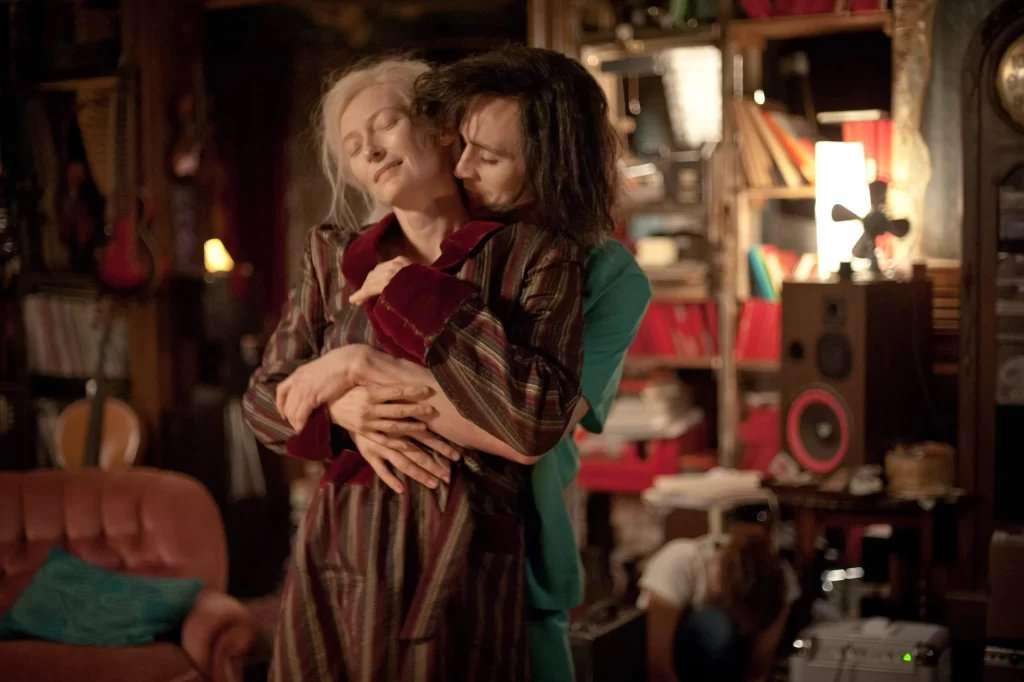
Tilda Swinton is, as always, otherworldly in the most precise way. She’s like a gorgeous alien who learned empathy by studying poets. Her Eve is serene but never passive, gentle but never fragile.
And Tom Hiddleston’s Adam is a romantic ruin: poetic, funny in a dry, wounded way, and so full of longing it borders on dangerous. He has that Jim Morrison-ish intensity: part rock god, part ghost story. His sadness is earned, accumulated. Centuries of watching humans repeat the same mistakes until your hope starts to feel embarrassing.
Together, they exude the kind of intimacy that only comes from knowing someone across lifetimes, growing apart, coming back, learning each other again. This is not young love. It’s not fireworks. It’s a slow-burning hearth you keep alive because the alternative is freezing.
Their relationship doesn’t just romanticize immortality; it reveals its quiet tragedy. Adam and Eve are anachronisms. They belong to a past that keeps vanishing, and they’re doomed to carry it alone.
The masterpiece of a soundtrack folds eras into each other, reinforcing the film’s central sensation: past and present aren’t separate for Adam and Eve. Time is a collage.
“True Immortality” Isn’t Blood. It’s What We Leave Behind.
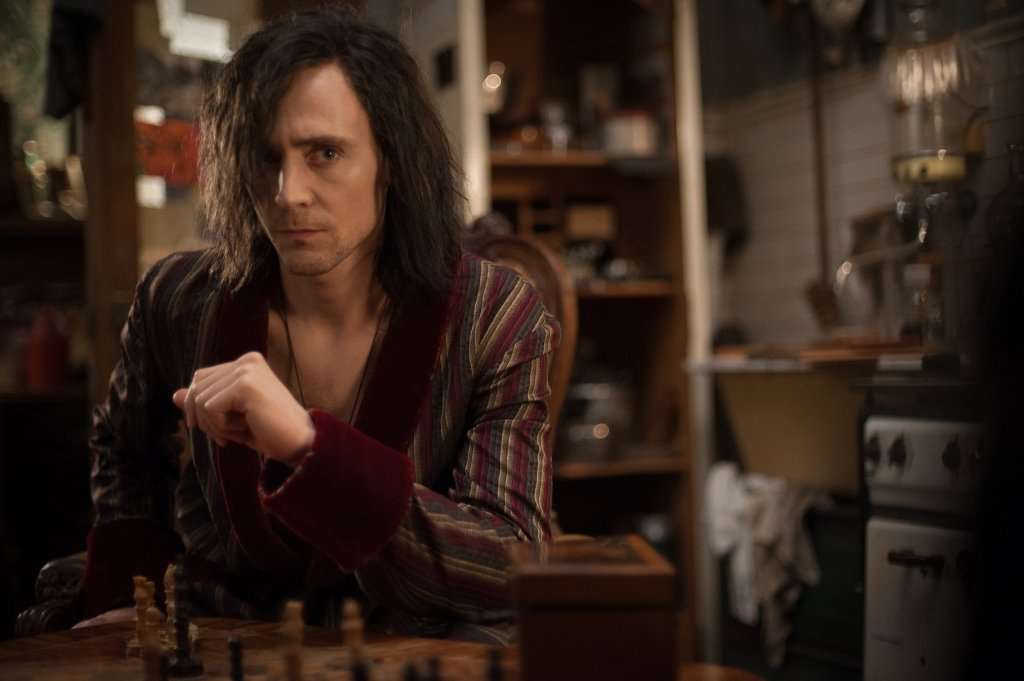
Here’s the line that guts me, every time: the film suggests that immortality doesn’t belong to the vampires. It belongs to the artists.
Adam and Eve name-drop the dead not like trivia, but like prayers. Byron, Tesla, Schubert, Marlowe. People who lived briefly, burned brightly, and left behind something that outlived them. Their bodies are gone, but their work still moves through the world like a bloodstream. Their voices echo across centuries.
And in that context, the vampires start to feel almost envious.Because what is eternal life worth if it’s empty? And what is a mortal life worth if it creates something that can outlast you?
That’s the real love story here. It’s not just between Adam and Eve, but between humanity and creation. The film doesn’t excuse the harm we cause. It doesn’t pretend we’re good. It looks directly at the waste, the violence, the decay.
And still it says, “But look at what you made.”
Why This Movie Matters When Everything Feels Pointless
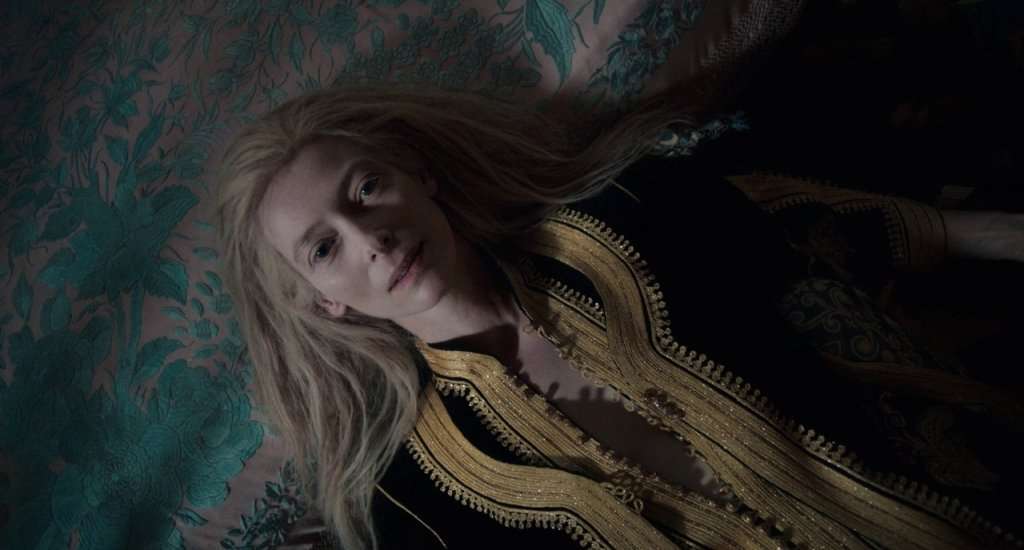
So let’s come back to that guilt. The sensation that posting about movies is frivolous. That making art is indulgent. That celebrating beauty while others suffer is tone-deaf.
Here’s what I believe:
It is not selfish to seek refuge. It is not shallow to share what keeps you sane.
Because despair is not activism, hopelessness is not solidarity. And if you let the weight of the world flatten you into silence, you’re not helping… you’re disappearing.
When people call the movie theater “church,” they’re not being cute. They mean it. For a couple of hours, you sit in the dark with strangers and feel something together: grief, terror, joy, awe, catharsis. You remember you’re human. You remember that other people are human. You remember the world contains more than headlines.
For horror fans, this is especially true. We watch cinematic horror to metabolize real horror. We put dread in a frame. We give it a beginning, middle, and end. We let our bodies experience fear in a space where it can’t kill us. That’s not escapism as avoidance. That’s escapism as processing. As practice. As survival.
And in Only Lovers Left Alive, Jarmusch makes the argument without turning it into a speech: art is what keeps Adam from stepping off the edge. Art is what keeps Eve steady. Art is what connects them to history. Art is what makes the world bearable, even when it’s ugly.
The Ending, and the Point
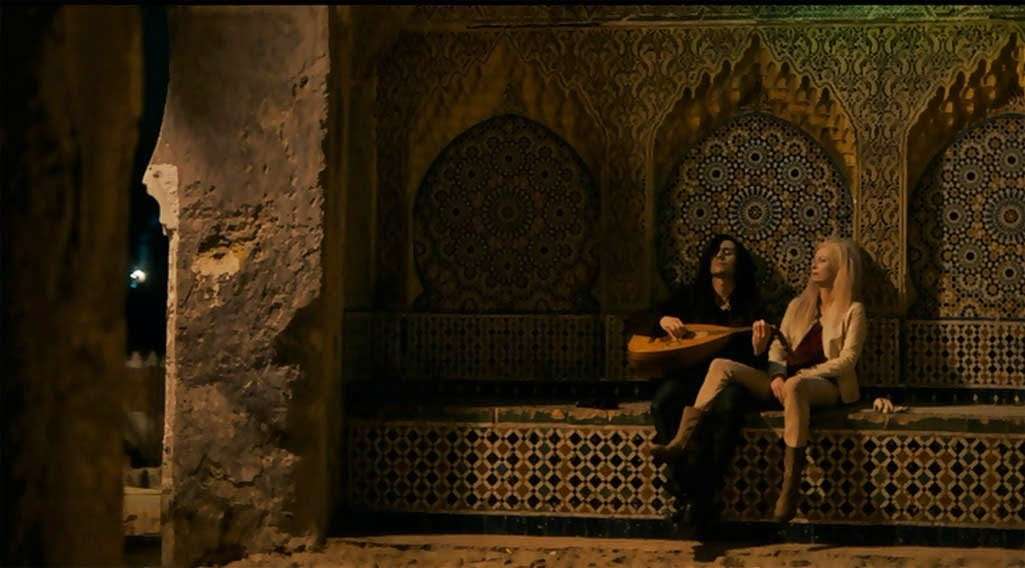
Without spoiling specifics, the film concludes on a note that feels both romantic and unsettling. It’s a reflection of life at its core. The choice to keep going is never pure. Survival is complicated. Love is complicated. Hunger is complicated.
But the film lands where I think we have to land, too: Not in denial, not in nihilism. In continuation. In the insistence that even if “this” is all there is, you still don’t sleepwalk through it.
You still make something. You still love something. You still reach for beauty—not because it fixes everything, but because it keeps you from becoming nothing.
And if you’re someone who has felt hollow trying to post about the thing you love while the world aches… Let this be permission. Share your work. Share your joy. Share the art that saved you. Not as a substitute for caring. As proof that you still do.
Because the dark forces don’t only win through violence, they win through exhaustion. Through silence. Through convincing us that meaning is pointless.
And I don’t buy it. Not when films like Only Lovers Left Alive exist. Not when we’re still here, still creating, still trying.
Not when beauty is the very thing that reminds us why the fight matters at all.