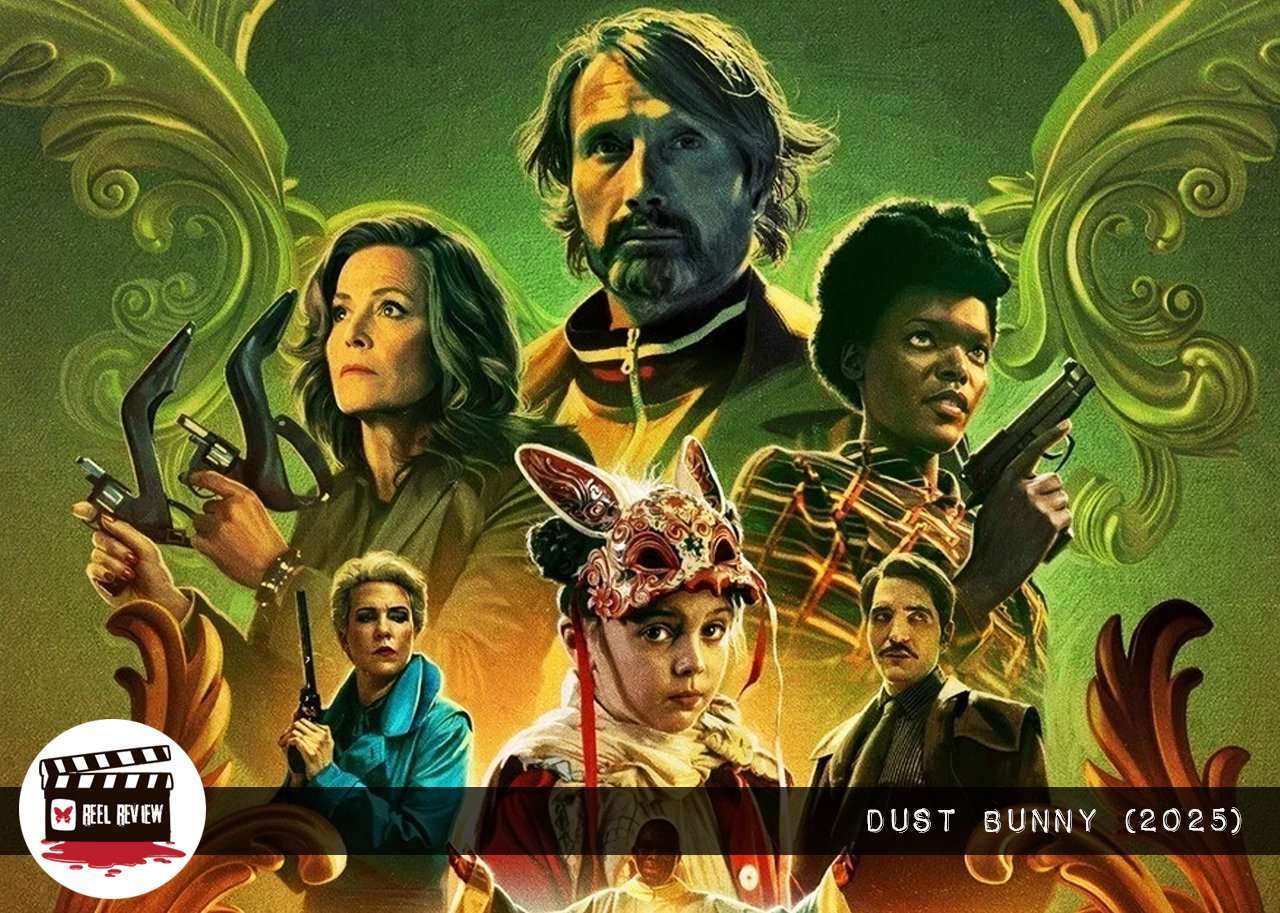
In “Dust Bunny”, Bryan Fuller blends horror, fairy tale, found family, and martial arts into one of the year’s most singular genre offerings.
No time to read? Click the button below to listen to this post.

MORBID MINI: Dust Bunny is a dark fairy tale with teeth. Whimsical, violent, heartfelt, and gloriously strange, it feels like the kind of original genre miracle the modern studio system rarely allows.
We never know what, precisely, we will love until we love it. This may sound obvious, reductive, but I believe it with my full being. In today’s Netflix-dominated entertainment landscape, content is data-driven. The idea is to give you more of what you already know you like. That may sound strategic, but it ends up limiting choice and the thrill of discovery.
If I had stopped at what I knew I liked, I’d still be living off of peanut butter and jelly and chocolate milk.
This may seem like an odd lead-in to a review about Bryan Fuller’s new little miracle,Dust Bunny, but here’s the thing.The movie would never have been greenlit based on data, because there are no other movies like it around. And what a terrible loss that would be.
Don’t get me wrong, one can see Fuller’s influences all over Dust Bunny. If he was, in no way, inspired by The Professional, I’ll eat my hat. However, that hat tastes mighty good, given that he manages to remove the problematic aspects of that admittedly brilliant but also troubling movie.
Gone are the disconcerting indicators of a girl too young, far too romantically involved with a much older man. Instead, we are given a truly fascinating and complicated father-daughter dynamic that will hit hard for all my she, he, and theys with lingering daddy issues (I see you, I feel you, I am you).
But I’m getting ahead of myself.
Dust Bunny tells the story of young Aurora, a bright (and frankly cute-as-a-button) little girl with a monster-under-her-bed problem.
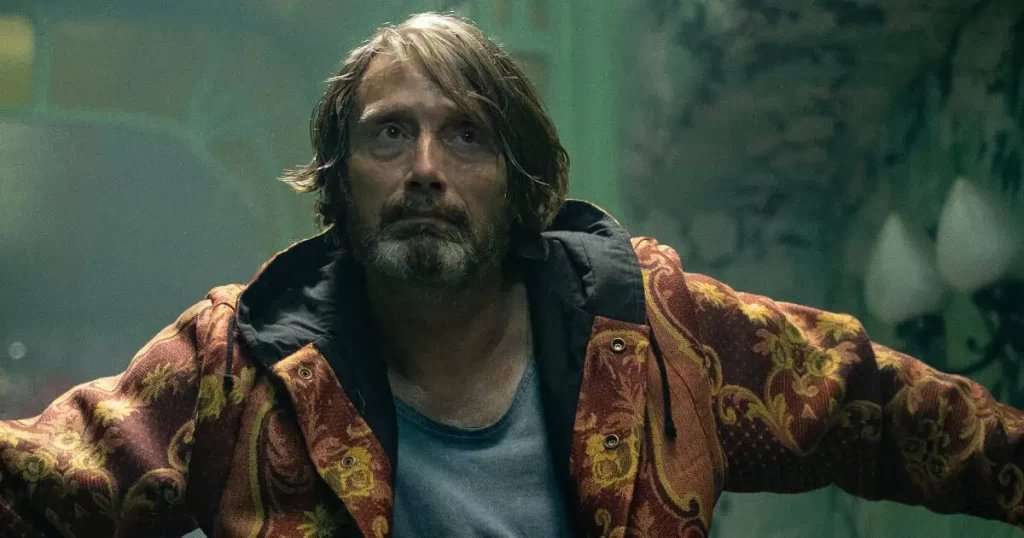
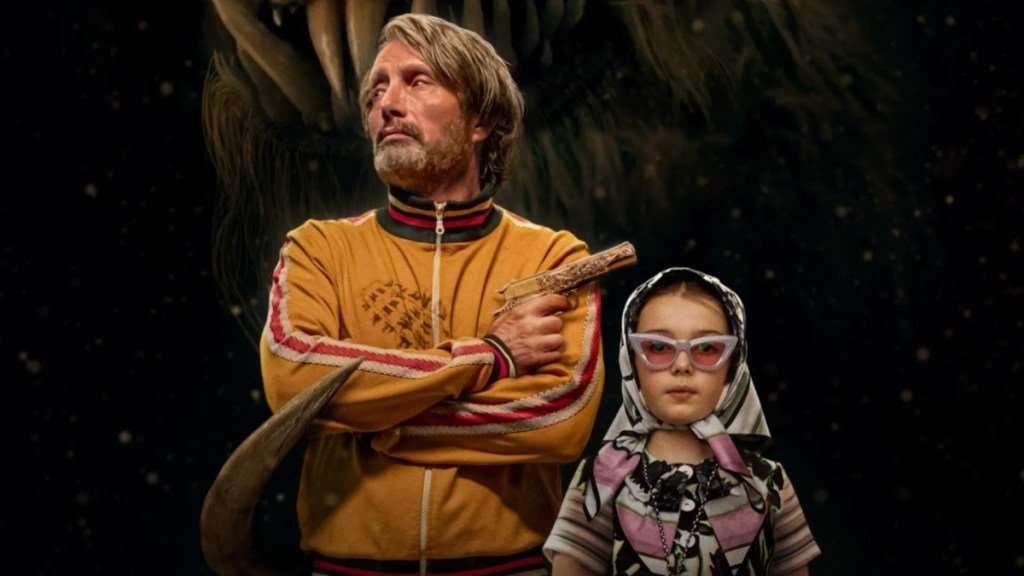
Mads Mikkelsen plays her intriguing neighbor (no, seriously. He’s credited as “intriguing neighbor”, and boy howdy does he live up to the name), a skilled assassin who, while uninterested in learning Aurora’s name, quickly becomes protective of her and takes on the role of surrogate father after her parents vanish.
There is a lot thematically tied up here that’s difficult to explore without spoiling a movie that is best enjoyed through discovery.
What I can and will say is that Fuller is an unspeakably skilled writer who knows exactly how much to reveal and how much to hold back. In many ways, both Aurora and Intriguing Neighbor (it only seems right to capitalize it) are intentionally ciphers. Aurora gets a little more backstory, but not a hell of a lot. Because their past is not the point of this narrative, except insofar as it informs the present.
Many will see Dust Bunny and, both understandably and correctly, recognize the influence of samurai and kung-fu movies. They are an undeniable reference point. However, I felt like it also shares a great deal of DNA with a certain breed of Western.
There’s a TRUE GRITquality to the young girl seeking the assistance of the grizzled, world-weary father figure who does not particularly want that responsibility but can’t find it in himself to shirk it.
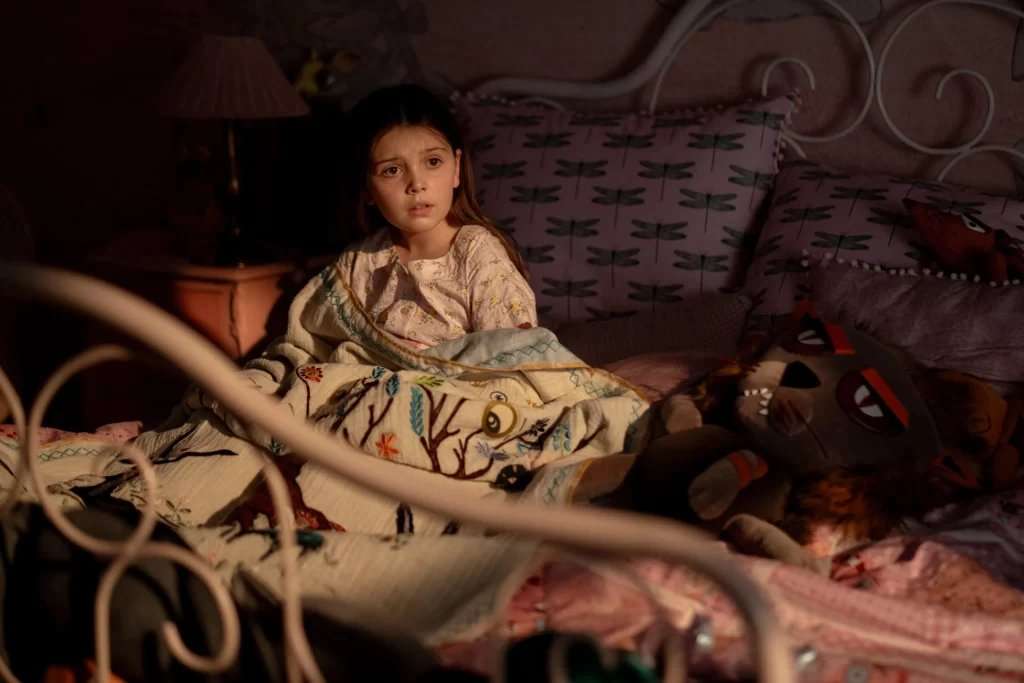
In these stories, it is the girl who leads the morally ambiguous-if not straight villainous-man to become a hero.
You could argue that such narratives center on men, but I would disagree. In Dust Bunny and True Grit, the young women are stronger than the men they lead out of the darkness.
They face their fears. They take action. They FORCE these men to become the people they wouldn’t be able to become on their own. And at the end of the day, Intriguing Neighbor can’t save Aurora half so well as she can save herself.
Any long-time fan of Fuller’s knows that he has a superior visual eye and a style entirely his own.
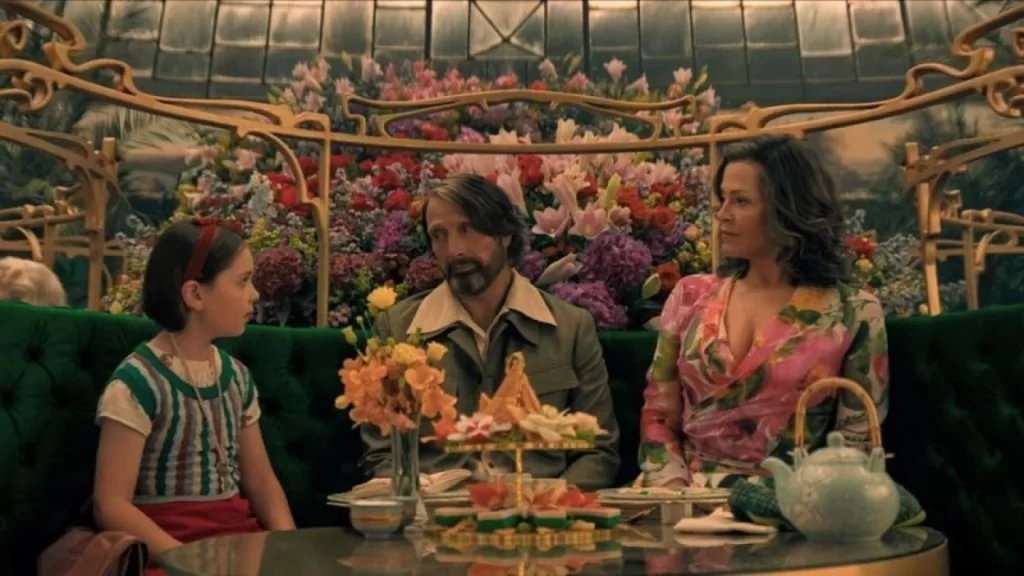
I immediately clocked a similar stylistic language to that employed byPushing Daisies,a prior Fuller creation and one of the most criminally under-appreciated shows of the past few years.
Fuller often relies on a sort of whimsical visual language to parlay dark emotions, violence, grief, and pain. It was present in earlier offerings like Wonderfalls and Dead Like Me, and it is back, in force, in Dust Bunny.
While Hannibal did not share the quirky visuals of other Fuller projects, it was, in its own right, a sort of dark fairy tale. And that, my friends, is the wonder of Bryan Fuller.
As a writer, as a director, as a visionary, he understands better than most how to tell a story using every tool in the box. He makes dark fairy tales not necessarily by making them “grown up” but by telling the story he wants to tell, exactly how he wants to tell it.
No one could know they want DUST BUNNY before seeing it, though they might know, as I did, that they would very much want to hear Bryan Fuller tell them a bedtime story.
There is so much going on visually that I suspect it will reward rewatch.
Intriguing Neighbor is often framed with a circle of light over his head, very much like a halo. Had it happened once, it might have been a visually pleasing coincidence, but it occurs multiple times throughout the movie, confirming my suspicion that every choice Fuller makes is deliberate.
And it’s funny. It’s really funny.
Humor is often treated as a lesser form of art, but it’s so incredibly difficult to get a joke to land under the best of circumstances, let alone in a martial arts/coming of age/found family/monster movie. But trust, it lands.
Fuller gets much of the praise and many of the flowers for the beauty that is Dust Bunny, but spare a few blooms from the bouquet for its leads.
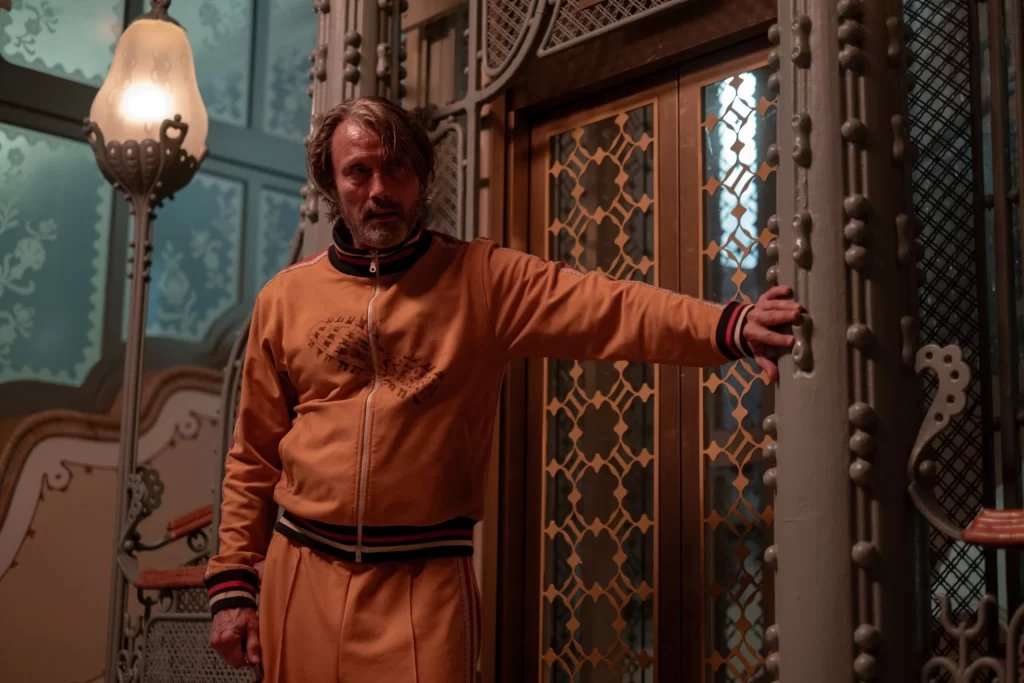
The movie is not technically a two-hander; to call it so would be to undermine the amazing contributions of the great Sigourney Weaver, David Dastmalchian, and Sheila Atim (who I was not aware of before but will certainly be watching from here on out). However, it is strongly balanced between two beautiful performances.
Mads Mikkelsen is no surprise. The man has shown us from day one that he’s here for our hearts and our blood and that he is a force to be reckoned with. This is, perhaps, the funniest I’ve ever seen him, but most importantly, he balances the hardened exterior of a seasoned killer with the marshmallow-y inside of a man who ultimately just really doesn’t want a kid to get hurt.
And speaking of the kid…
Tiny whirling dervish Sophie Sloan is an unbelievable talent. Adorable, but fierce-she reminds me a lot of the child who played Young Chuck on Pushing Daisies. It is a large and involved role for someone so young, but Sloan is more than up to that challenge. She’s sharp and funny and compelling as hell.
Truly, when Sloan and Mikkelsen are on screen together, they crackle with a sort of wry affection and mutual appreciation that’s hard to articulate.
There’s an entire other article to be written about costumes, and boy, I wish I had the space and word count for it-as a die-hardHannibalfan, it’s pretty funny to watch Mads Mikkelsen go from bespoke suits to long shorts and bowling shirts. However, Fuller’s sartorial choices have always been extremely intentional.
Everyone is dressed to kill, some more literally than others.
Dust Bunny has all the makings of a crowd-pleaser.
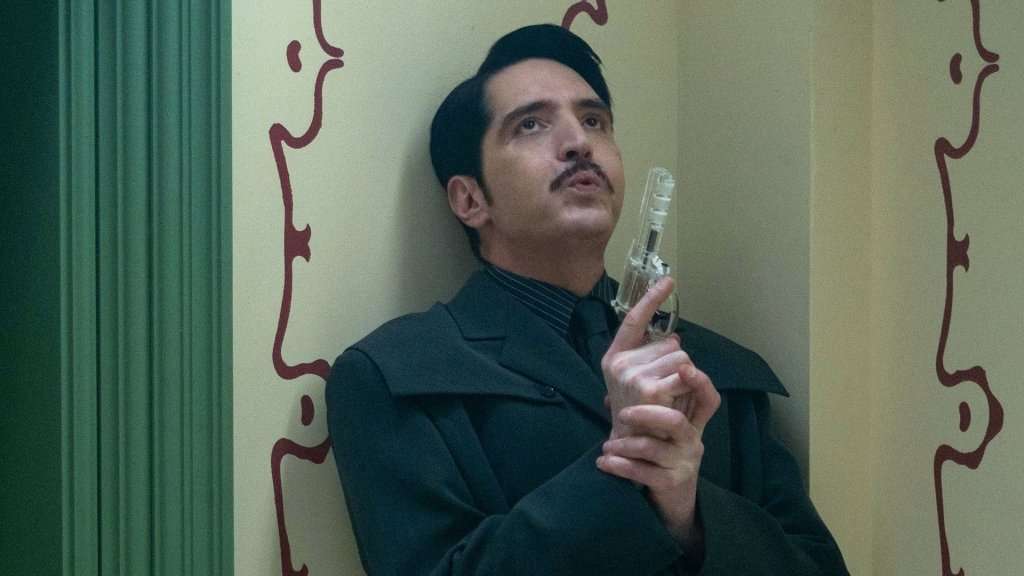
It’s smart and funny with plenty of truly delightful violence and characters you can root for, maybe all the more so BECAUSE we aren’t burdened with too much exposition.
It’s a visual delight. Without giving too much away, there is a pivotal scene involving a shadow dragon that I think is a contender for one of the best of the year. It perfectly creates a visual story that needs no articulation; this is Aurora’s truth, and if it doesn’t match Intriguing Neighbor’s, who are we to argue?
To be funny, sincere, unexpected, and still somehow feel rooted in the deepest traditions of storytelling—what an achievement. And what a tragedy if we were to lose that simply because the data didn’t support its creation.
My guess is you missed this one during its limited theatrical release. Most people did, as was quietly released during a time when major holiday blockbusters were competing for consumer dollars and attention. While the film underperformed commercially and had limited reach, it still generated significant positive buzz and praise for its whimsy, uniqueness, and jaw-dropping visual style.
Now you can watch it at home. And watch it you must.See it with no preconceived notions beyond the desire to see artists creating art, to watch them create something unlike anything you’ve ever really seen before.
Dust Bunny (like recent Oscar winners Sinners andWeapons—or any number of wild, bold, and singular creations) proves that we need to take chances not supported by data.
We can’t stop the studios from becoming monopolies. But we can sit our asses in seats for 2 or so hours and marvel at art made to be art, not a product. And that’s worth fighting for.
Overall Rating (Out of 5 Butterflies): 5