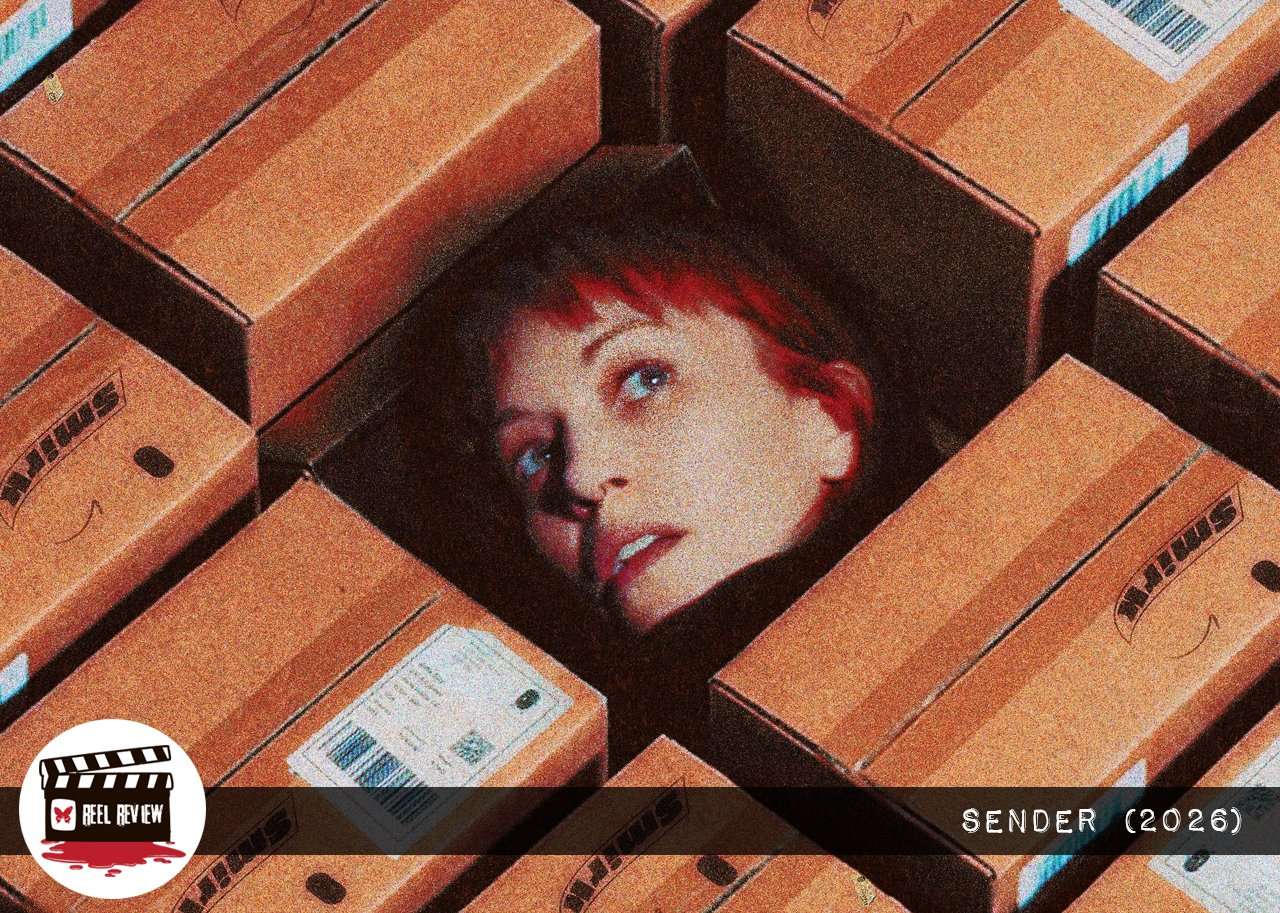
“Sender” turns mystery packages into an off-kilter paranoia thriller about addiction, consumer culture, and the cost of convenience.
No time to read? Click the button below to listen to this post.

MORBID MINI: Sender takes one of modern life’s most ordinary rituals, the package on the doorstep, and makes it feel deeply invasive. Anchored by a terrific performance from Britt Lower, this offbeat paranoia thriller unpacks the uneasy overlap among recovery, consumer culture, surveillance, and our endless hunger for the next thing that might make us feel just a little more ok.
There is a very specific kind of unease that comes from realizing you have been seen too clearly by something that does not actually know you. You’re not understood or cared for; you’re just tracked. It feels cold, invasive, manipulative, and more than a little uncomfortable.
That is the deeply modern nightmare at the center of Sender, the feature directorial debut from writer/director Russell Goldman. Expanded from Goldman’s acclaimed 2022 short Return to Sender, the film takes a premise that sounds almost darkly funny on paper.
A woman starts receiving mysterious packages she never ordered. From whom and for what purpose?
The film turns that quirky mystery into a jagged, deeply uncomfortable paranoia thriller about surveillance, addiction, consumer culture, and the horror of being trapped inside your own unraveling mind.
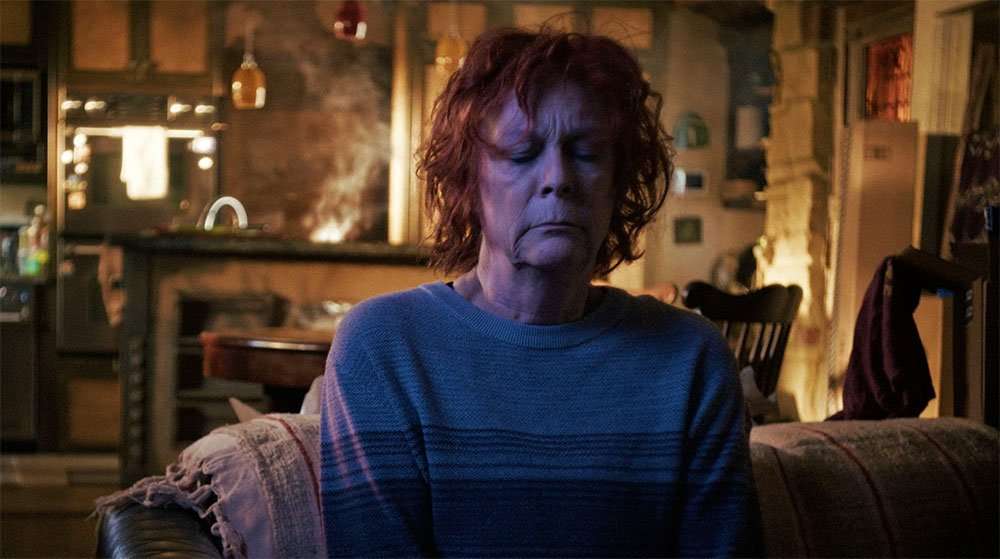
Backed by producer Jamie Lee Curtis, who also plays a small but memorable part in the film—and gives us a killer cold open—Senderpreviously landed on the 2023 Black List (honoring exceptional screenplays that deserve more visibility) and arrived at its SXSW world premiere with quite a bit of buzz, boastingthe kind of pedigree that makes you immediately take notice.
But what makes the film truly compelling is not just its clever hook or stacked cast.
It is the way Goldman uses something as ordinary as a delivery box to expose a much bigger fear: what if the systems we casually feed every day know exactly where we are weakest?
Britt Lower stars as Julia Day, a woman at a precarious crossroads.
She is three weeks sober, recently unemployed, and trying desperately to rebuild her life.
She’s attending uncomfortable AA meetings that make her feel smaller and living in an apartment that her controlling sister, Tatiana (Anna Baryshnikov, Love Lies Bleeding), co-signed for. It’s a chance to start over, maybe, but it comes with strings attached. Tatiana is convinced that her help gives her carte blanche to meddle in and micromanage Julia’s already sterile and lonely life.
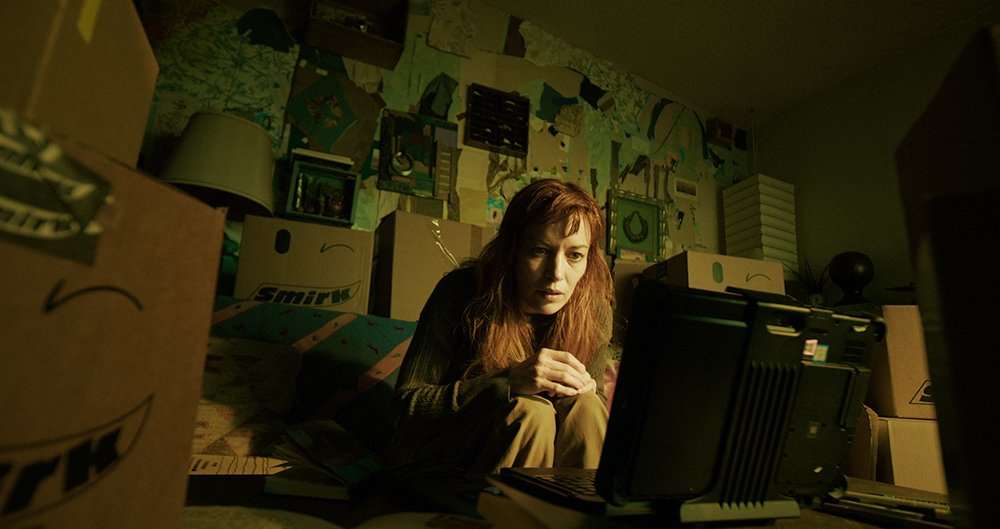
Amid this pressure cooker, strange packages start arriving.
At first, the items seem random enough to brush off. A blender. A corkscrew. Protein shakes. Odd, but not particularly alarming. It’s the kind of stuff that might make most of us shrug and think, “Cool, free stuff.” But then the deliveries become stranger, more specific, and far too intimate to feel accidental—like the unique shade of lipstick she wears, or a security system at the exact moment she realizes she definitely needs one.
These are not just wrong-address deliveries. They feel personal and hyper-targeted. As the boxes pile up, they begin to feel almost taunting.
The retailer, a very obvious Amazon stand-in, denies responsibility. There is no breach, no mistake, no explanation. And because Julia cannot get a clear answer from the company that seems to know everything about everyone, her mind does what frightened minds often do: it starts filling in the blanks.
Julia’s search for the anonymous sender quickly becomes less about the packages themselves and more about the terror of not knowing.
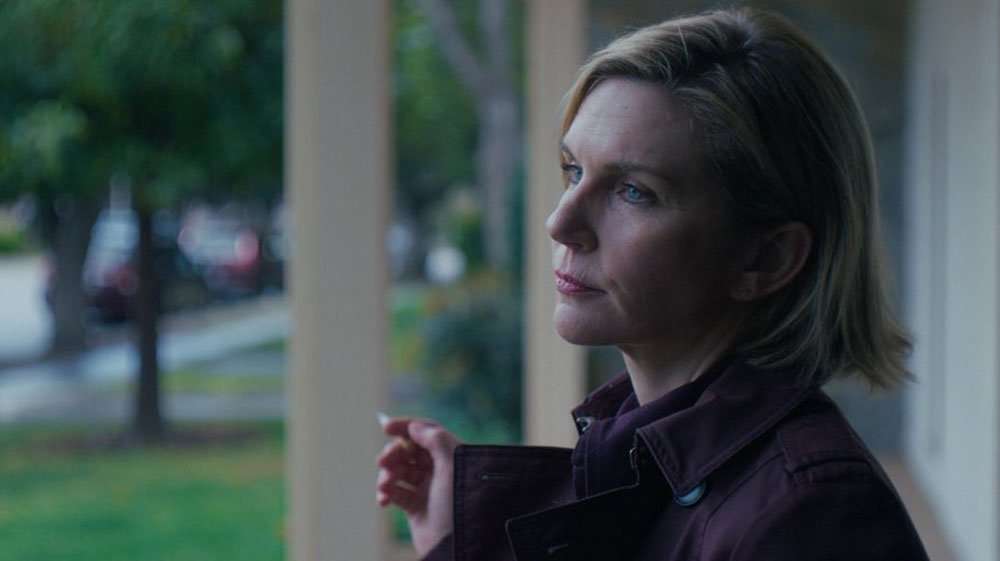
Is she being stalked, manipulated, gaslit, or simply falling apart?
Supported by Whitney, a fellow AA attendee played by the always-excellent Rhea Seehorn (Pluribus), and pulled into a strange orbit with Charlie, an eccentric delivery driver played by indie horror stalwart David Dastmalchian (Late Night With the Devil), Julia starts chasing answers through a maze of fragile relationships, corporate indifference, and digital noise.
The film’s strongest idea is also its most unsettling.
The packages feel like physical manifestations of a targeted data profile. This isn’t a supernatural mystery. We’re not dealing with haunted objects or some otherworldly curse. This is false algorithmic intimacy made tangible. Someone, or something, knows Julia’s habits, her desires, and her vulnerabilities. They know what she reaches for when she needs comfort, distraction, or a quick hit of serotonin.
That is where Sender becomes more than a techno-thriller. It becomes a story about addiction in a world designed to keep us wanting.
Julia has stripped away her primary addiction, but her brain immediately finds a new fixation. The mystery becomes the thing she cannot stop reaching for. Waiting for the next delivery, hunting for clues, replaying every interaction. It all begins to mimic the same compulsive cycle she is trying to survive.
The film understands that recovery is not a clean break from need. It is a daily negotiation with the part of yourself that wants relief at any cost.
That connection between consumerism and compulsion is where Sender really resonates.
Yes, stuff is fun. Stuff is easy. Stuff arrives fast. Stuff gives us that little jolt of anticipation. It offers that tiny promise that maybe this next thing will make us feel better, more complete, more in control. We hit “Buy Now” because it feels good in the moment. Then the box arrives, the feeling immediately fades, and we are left staring at another object we were sure we wanted and maybe never really needed.
Sender takes that familiar cycle and makes it sinister.
Goldman builds Julia’s world as a cacophony of digital noise that reflects the buzzing in her brain. Web pages, messages, app screens, and projected images bleed into the frame, making the online world feel less like something Julia accesses and more like something invading her physical space.
The effect can be disorienting, sometimes even frustrating, but that feels intentional. The film wants us trapped in Julia’s head, which is becoming increasingly crowded and disquieting.
The editing has the same frantic, pieced-together quality. It is messy, strange, and occasionally exhausting, mirroring Julia’s own spiraling perspective. The film’s sound design and aggressive synth score by Gavin Brivik do so much to ramp up the tension and keep the film buzzing with unease, even in the quieter moments.
It’s a film designed to make you feel off-balance, and it’s undoubtedly effective in that pursuit.
A great deal of that effectiveness comes from Britt Lower, who carries the film with a performance that is anxious, physical, funny, raw, and deeply human.
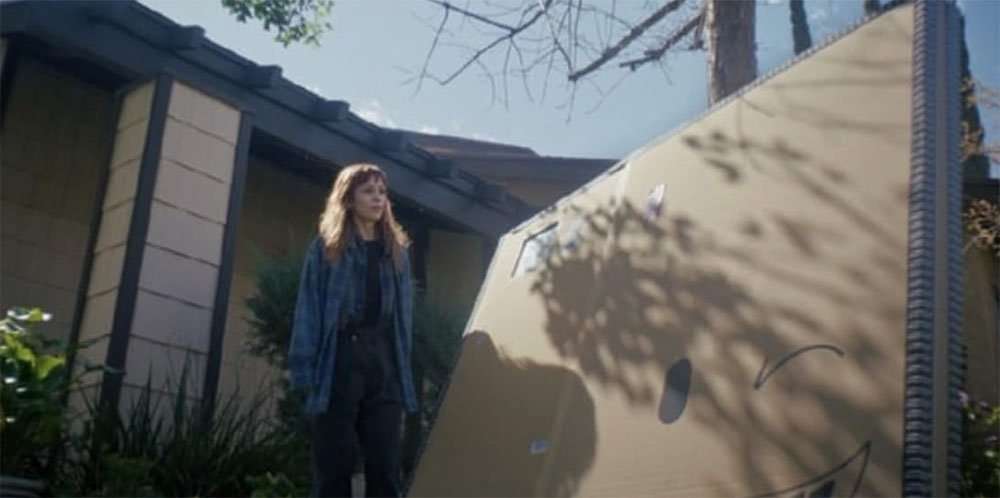
This is not technically a one-woman show, but it comes mighty close.
Lower makes Julia feel like someone trying very hard not to come apart in public. She does not play the spiral as an over-the-top, theatrical meltdown. Instead, she lets you feel the exhaustion of it. The pain of a person trying their best to avoid judgment, to appear functional while every alarm bell inside them is screaming.
Coming off Severance, Lower already knows how to navigate stories about corporate dread, fractured identity, and systems that treat people like data points. Sender delivers something more chaotic and emotionally exposed to her, and she accepts it with astonishing skill.
Julia is difficult, funny, magnetic, self-destructive, and gloriously vulnerable. Even as things get messy, Lower keeps you invested.
Her scenes with Rhea Seehorn are among the film’s best, which makes it frustrating that there are not more of them. The chemistry between these two dynamic talents is electric. I would have gladly watched another twenty minutes of these two simply talking, sparring, and trying to understand one another.
Dastmalchian is also a delight as Charlie, the oddball delivery driver who becomes an unlikely romantic presence in Julia’s life. On paper, that could have easily tipped into “quirky for the sake of being quirky” territory. Instead, it becomes one of the film’s more unexpectedly sweet threads.
In the middle of Julia’s unraveling, Sender allows space for the possibility that connection is still possible, even when someone feels unlovable. It’s thankfully not positioned here as a panacea or the answer to much deeper problems. Instead, it’s just an extended hand offered to someone who may or may not be ready to take it.
That emotional honesty is the packaging that keeps the film’s chaos contained.
For a film so wrapped in paranoia and digital alienation, Sender is at its best when it unpacks what makes us human.
It hits the hardest when it acknowledges how difficult it is to let people close, especially when you are still learning how to trust yourself again.
However, despite one hell of a hooky setup and a strong first stretch, the film isn’t flawless.As the mystery expands, the narrative begins to sag. Red herrings pile up. The clever premise loses its edge. By the time the film arrives at its ultimate payoff, some of its impact has been softened.
It’s bumpy and doesn’t always know when to tighten its grip or when to stop adding another layer. But it is also never boring. Even when it falters, it does so while swinging hard at something wildly interesting. When it’s all said and done, its ideas are so strong, its performances so engaging, and its style so distinct that any messiness feels entirely forgivable.
It may be too offbeat and structurally uneven to be a universal crowd-pleaser.
But for viewers who crave a film willing to take the weird route home, even when the ride gets bumpy, Sender is one delivery worth accepting.
Overall Rating (Out of 5 Butterflies): 3.5