A condensed version of this article first appeared in Radio Times magazine.
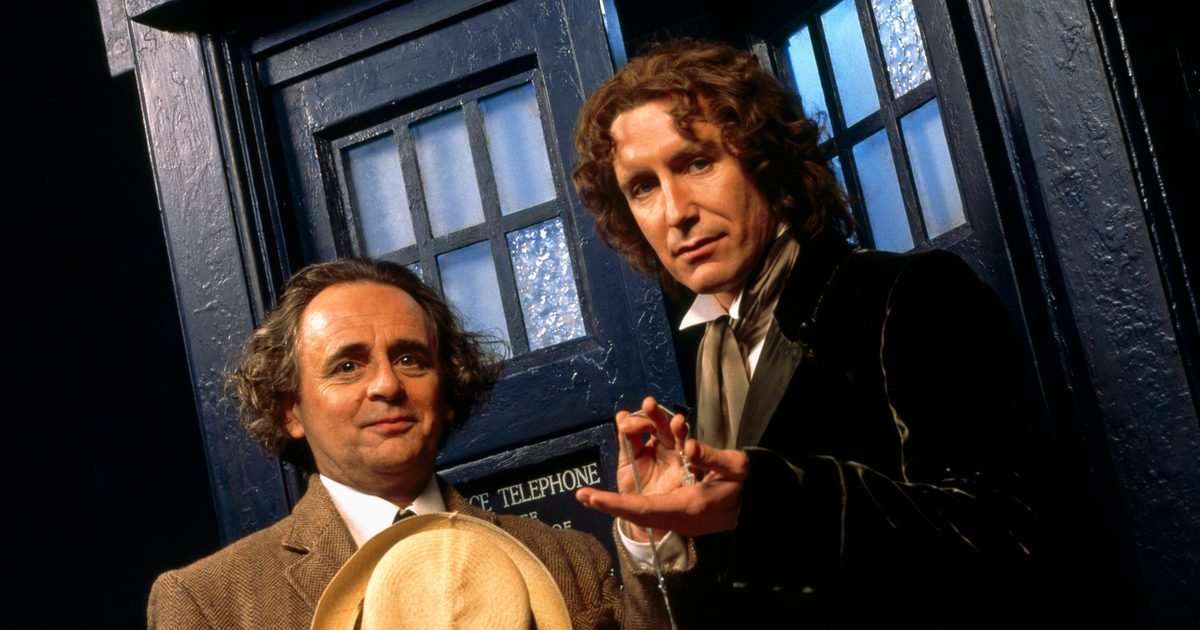
Let’s take a Tardis trip back to 27 May 1996. It’s a time when there has been no new Doctor Who for nearly seven years after the show’s cancellation. So fan excitement for a proposed revival is off the scale. Hopes are high among the cast and crew, too. As Sylvester McCoy remembers today: “We were very excited…”
McCoy had played the seventh embodiment of the Doctor for two years until 1989: “When it finished, people said that was the end of it, it’ll never come back, but I knew it would come back, partly because the fans would not let it go, they wouldn’t let it die.”
Indeed, McCoy was invited to reprise his role for the $5 million Doctor Who (The Movie), which saw his Time Lord land in San Francisco on New Year’s Eve 1999, only to be forced to regenerate into Paul McGann’s Eighth Doctor. It was an extra-special moment for McCoy. “What was great was that Paul was a friend,” he says, “so it was nice to hand over the key of the Tardis to a friend.”
Did he pass on any tips about playing the time traveller? “Paul was worried about doing conventions for a while, but I think I talked him into doing that, to embrace it, which he now loves and he’s brilliant at.”
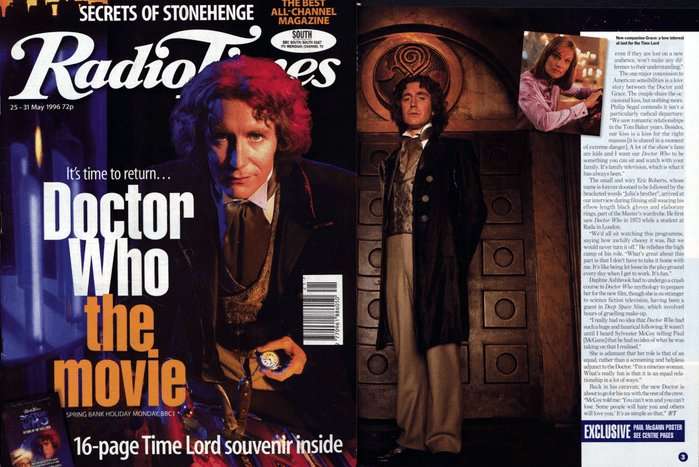
As for Paul’s performance, McCoy says, “It was terrific, I thought he was great. The interesting thing was that in the early scenes, he was more Christ-like – there was quite a religious thing going on there. But then science fiction is kind of religion, and as far as I’m concerned religion is medieval science fiction, so they kind of tie up together.
“Another thing I found interesting was that Doctor Who actually lands in America, he comes out of the Tardis and they shoot him! I thought there was a bit of satire in there somewhere.
“My favourite bit was when the motorbike rode into the Tardis. I didn’t know it was that big!”
So how did McCoy get the gig? “They got in touch with my agent and asked me if I would come along and do the regeneration scene with Paul. And I said yes. Because I didn’t ever do a regeneration scene with anyone…”
He is referring to his 80s spell in the Tardis, which ended with his Doctor and companion Ace (Sophie Aldred) walking off to the horizon, arm in arm, and began with a compromised changeover. For McCoy’s debut in the 1987 story Time and the Rani, his predecessor, Colin Baker as the Sixth Doctor, declined to participate, so McCoy had to give the impression of Baker while on the floor of the Tardis, before he transformed.
“I had to be the previous actor myself, and they dressed me up in his costume. But he was a big fellow, the previous costume had lost me for about three days and they gave me a Harpo Marx wig. I looked ridiculous. But I always thought that I would come back and do a regeneration, no matter what. So I was delighted that I was coming back as Doctor Who, that I could do my regeneration scene and hand over to my friend Paul McGann.”
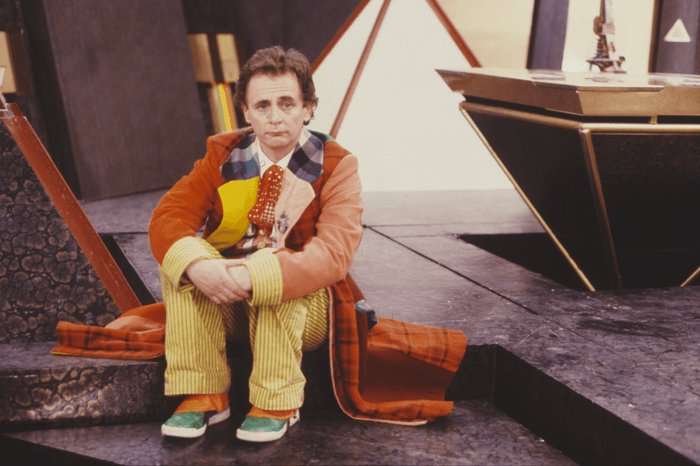
Filming took place in Vancouver, Canada (“I was there for about two weeks – it was incredibly cold”), but McCoy wasn’t keen on his publicity photo, “because they stuck Paul on a box to make him look taller than me, then the angle of the image was slanted so they made him look even taller! But, he concedes, “I am the smallest Doctor… maybe Jodie [Whittaker, the Thirteenth Doctor] is smaller.”
The Anglo-American co-production, intended to be the pilot for a new series, co-starred Eric Roberts as the Master and Daphne Ashbrook as cardiologist Dr Grace Holloway, with whom a half-human Doctor shares a kiss (more of that in a moment). And at the time, producer Philip Segal told Radio Times, “I’m doing this because I am a fan and I want it back as much as everybody else. I’m not interested in tearing the fabric of the show apart.”
In the end The Movie drew a sizeable 9.08 million to BBC One – but only 5.6 million in the States a fortnight before. This was deemed insufficient by the executives, so sadly the series had to be shelved. It was very much a case of what could have been, especially with McGann’s performance coming in for considerable praise.
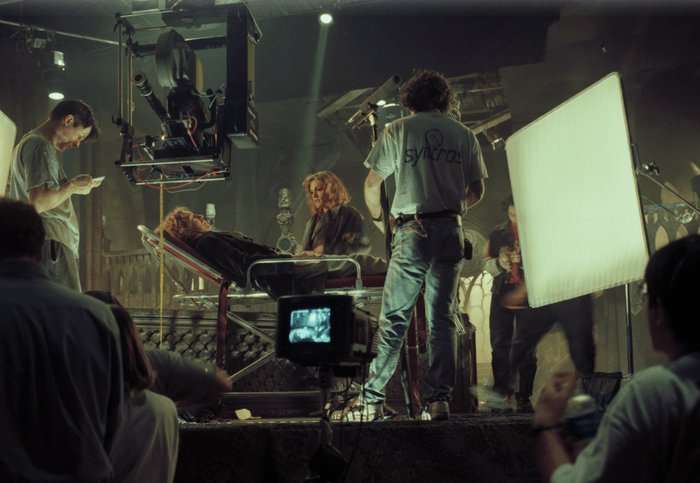
Does he have any ideas as to why it didn’t catch on? “Because I was in it.” Really? “No, this is my theory. I don’t mean it in a negative way. Although Doctor Who was known in America at that time, it was only known via public broadcasting [PBS]. So a minority, a large minority, watched it but the majority didn’t know it. So [in The Movie] I think it was confusing that there was this Doctor, then suddenly there was another Doctor. In hindsight it was too complicated a thing for them to grab onto.
“The other reason was that it was up against Roseanne and it was a special episode. So that didn’t help.” The hit US sitcom was watched that night by nearly 21 million.
“But it works very well. When they showed it in Britain, it was hugely successful because it’s part of our TV culture, we know the story, we know what’s meant. It’s a bit like pantomimes. They don’t export to other countries but we grew up with them.”
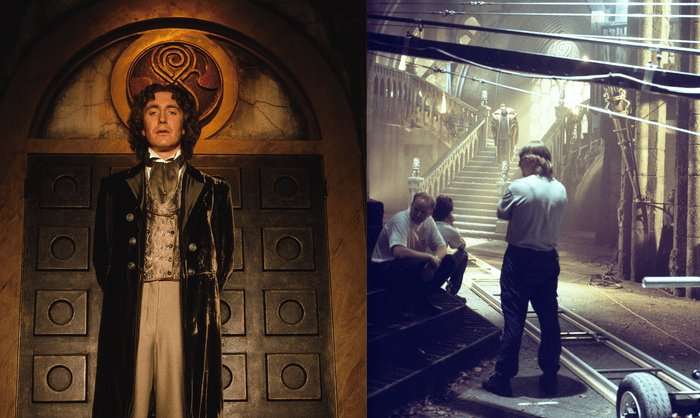
Compared with what had gone before under the name Doctor Who, however, The Movie did feel fast, modern and big-budget, with more emotion and romance. All the things it was when the show came back for good in 2005, and all the things it is today. McCoy agrees that it did prove to be a stepping stone, but as for the romance, “That was a bad bit, I disapprove of that.
“In classic Doctor Who, sex was kept out of it. Dear friends have told me that when they were young, they used to be able to watch television as a family and young kids would be watching it. As there was no romance in it, they were very comfortable with it. But bringing all that in kind of takes away the innocence of it, really. It was at its best when it was completely for the family… everyone got something out of it.”
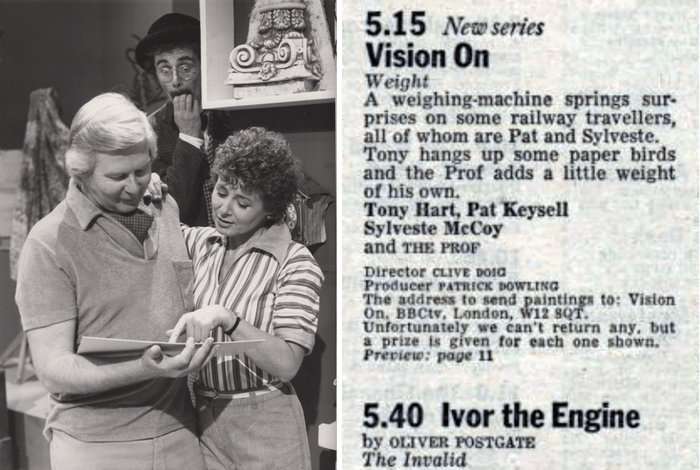
I remind the actor of his very first work for television, the freewheeling, fondly remembered children’s series Vision On, which McCoy joined in 1975. “Oh, that was a brilliant time. That was my first kind of concentrated television – three years in a TV series. And it was joyful because we were so free, we were allowed to improvise, invent, create.
“But it spoilt me in many ways for other things. When later on I was in Casualty or The Bill or something like that, I always felt constrained by that kind of acting because I’d had such freedom before.”
But back to the “McGanniversary”, as some are calling it. The Movie may have foundered in 1996, but it’s clear that this one-off production paved the way for the modern incarnation of the show.
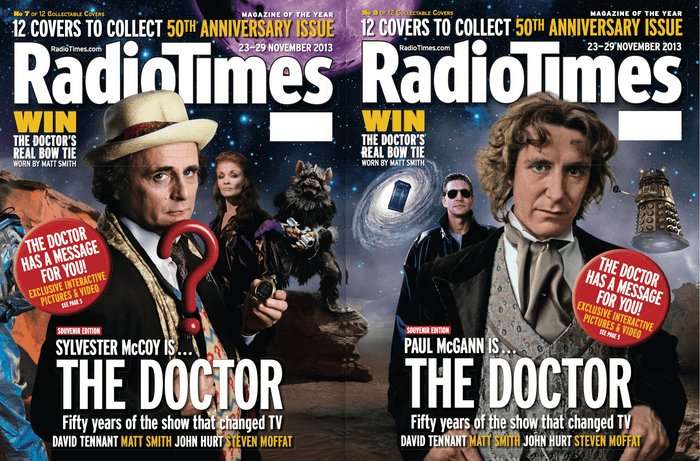
It also led to returns for both McCoy’s and McGann’s Doctors, in the TV series itself, audio dramas and of course at conventions. So not only was each of them the Doctor for a certain generation, but they remain so. How does that make McCoy feel?
“It makes me very proud and honoured. Who’d have thought? It’s the job that keeps on giving. And the love that you receive from people all over the world… I mean, I’ve travelled extensively, meeting Doctor Who fans from Latin America, India, you name it. The only continent I haven’t been to is the Antarctic.”
As for the convention circuit, he says, “I love it. In the early days when I went to America when there were hardly any conventions over here, and when there was no wi-fi and all that kind of stuff, it was a meeting place for young people who were the only Doctor Who fans in the village, type of thing. And they were lonely and laughed at, but when they went to conventions they met their selves, the same kind of people.
“Once, I was walking down a big, carpeted alleyway with all these teenagers, some in costumes, sitting in circles, animated and discussing it and enjoying it. And I thought, ‘I’m so proud to be part of that.’ It brings such joy to people.”
The latest issue of Radio Times is out now – subscribe here.
Sylvester’s film memoir Who Is the Real McCoy will debut at the end of the year. Doctor Who (The Movie) is on iPlayer.
Dive into our Doctor Who story guide: reviews of every episode since 1963, plus cast & crew listings, production trivia, and exclusive material from the Radio Times archive.
Add shows to your watchlist on the Radio Times: What to Watch app – download now for daily TV recommendations, features and more.