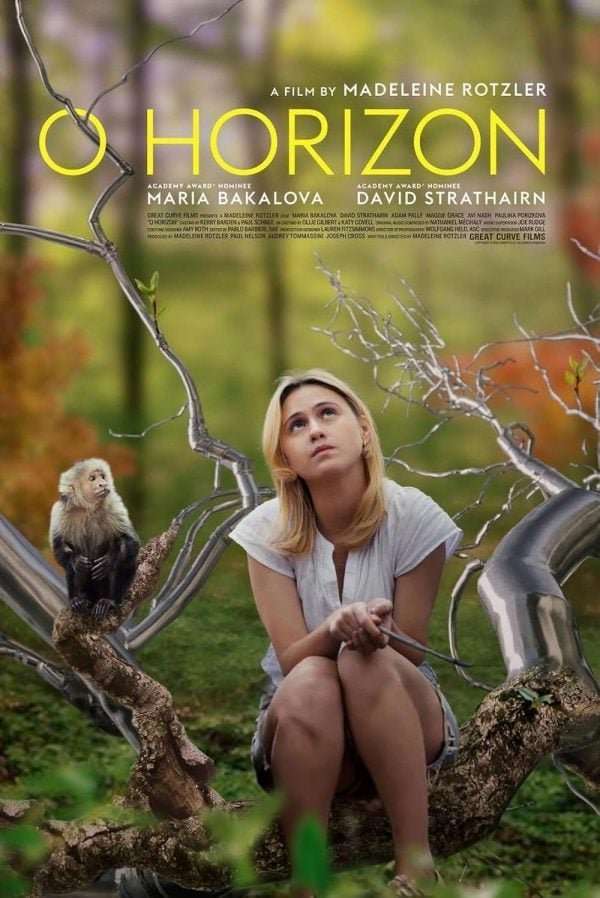
O Horizon, 2025.
Written and Directed by Madeleine Rotzler.
Starring Maria Bakalova, David Strathairn, Adam Pally, Avi Nash, Alysia Reiner, Sunita Deshpande, Winslow Bright, Helen Cespedes, Paulina Porizkova, Nicholas Podany, Daniel Kim, Dennis Jay Funny, and Dante Jeanfelix.
SYNOPSIS:
Abby, a brilliant young neuroscientist, encounters a new technology that reconnects her with her recently deceased father.
Evidently, writer/director Madeleine Rotzler has seen one of those uncomfortably manipulative Super Bowl commercials promising technology that will allow an individual to speak to a deceased loved one through some form of AI, or perhaps she is simply familiar with it herself. That is essentially the basis for the premise of O Horizon, which is a fascinating idea on paper and would probably have made for a better narrative in the hands of almost anyone willing to treat this as reality. Instead, this is a film so cowardly that it is as if it doesn’t exist in the real world, invents a fake company run by a computer programming guru to grant such wishes to the grieving, and never once refers to this as AI.
Regardless of how the film ends, one almost has to wonder if there are some AI propagandist motives involved behind the scenes. Otherwise, why take something that currently exists in the real world and present it as science fiction? As a storyteller, Madeleine Rotzler wants to give a grounded take on the emotional rollercoaster of what it would be like for someone unable to move on from the death of a loved one to suddenly be able to resurrect them in digital form, but stripped of every conversation possible surrounding the dangers and consequences of AI. It throws the narrative off-center, consistently feels off, and never recovers, which is a shame, considering there are legitimate reasons to tell a story with this premise. In short, everything here comes across as ethically misguided.
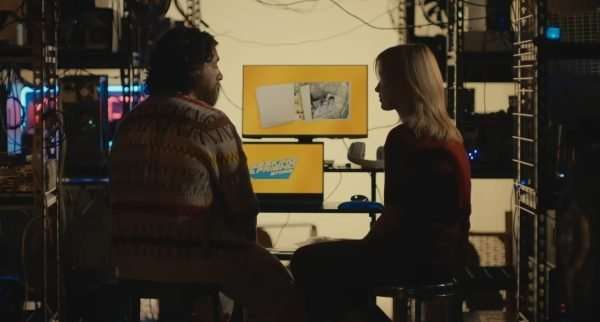
In the early stages, the potential is still there even if Maria Bakalova’s grieving neuroscientist Abby stumbles upon this tech store creating digital subconscious of the deceased called “Seeking A Friend”, run by action movie aficionado Sam (Adam Pally), who has decorated the place with bootleg posters of classics in the genre but retitled to fit the theme of friendship (Face/Off becomes Friend/Off, for example). It’s a nice touch that gives the character and story some personality, even if it too is misguided and raises ethical questions. It is also unsurprising that customers can be tasteless, with a story about someone asking for a digital recreation of Hitler that understandably made Sam even more uncomfortable, considering that he is Jewish.
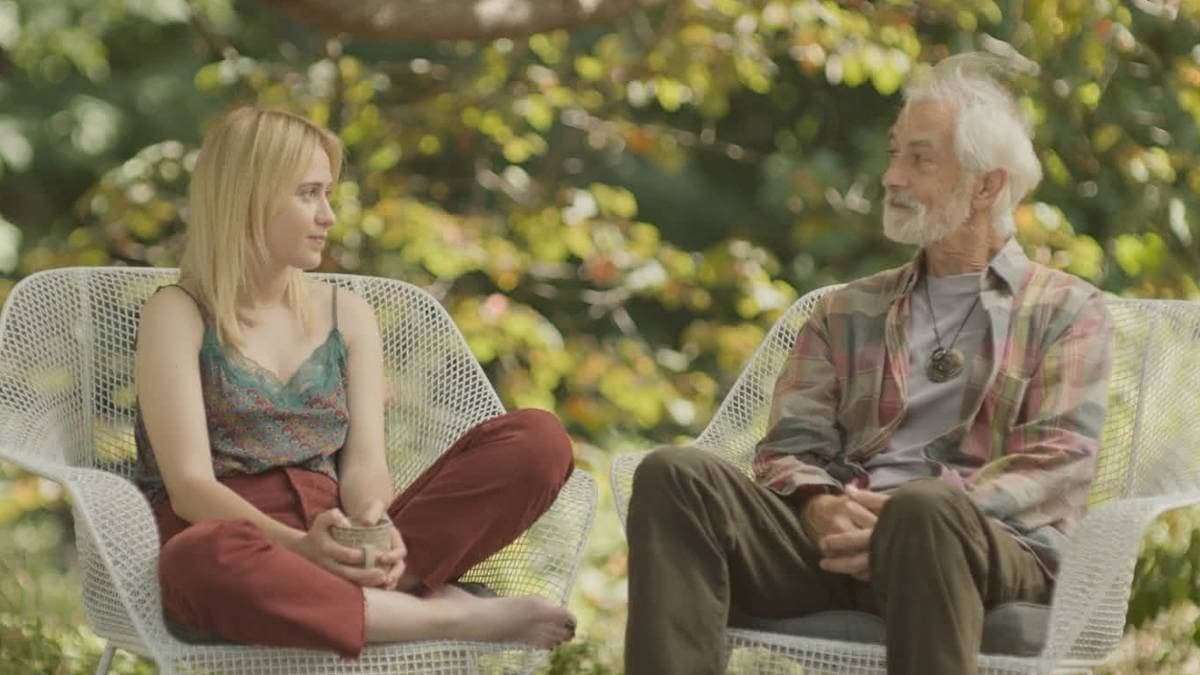
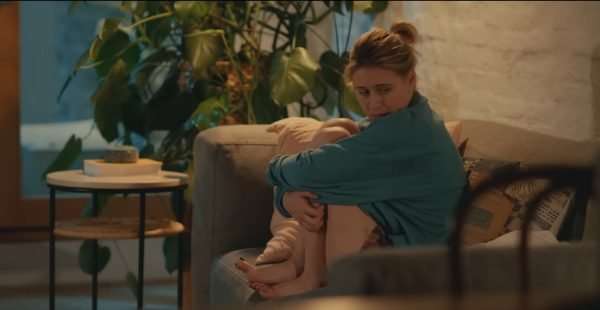
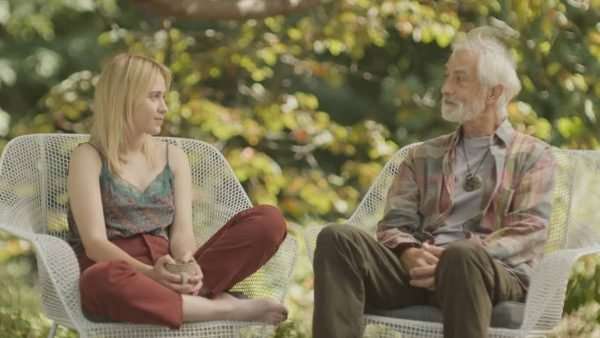
Nevertheless, Abby uploads various memories of her father Warren (David Strathairn, sometimes visualized on screen even though, for the most part, the digitization involves phone calls from what is an AI entity, even if the film never acknowledges it, that collects all that information including his voice) into Sam’s program which then digitizes dad into an app, and is on her way, able to hear his voice for a brief talk whenever she is feeling blue or could use some motivation or the grieving pain simply becomes too much. Despite the convincing emotional performance from Maria Bakalova, the filmmaking rarely feels cinematic, as we mostly listen to one character talk on the phone, typically remaining in the same spot with little camera movement.
Rather than confronting the eeriness, ethics, and discomfort of any of this, the story shifts to Abby feeling ready to take the next step in moving on with her father back in her life, so to speak. She meets a man on a dating app (played by Avi Nash), possibly entering a relationship while remaining committed to her neuroscience work, experimenting on a monkey to better understand emotional responses sent to the brain, which is displayed in the background of the lab as splashy and colorful, referred to as brain art. By the way, the ethics of such outdated scientific experimentation on animals also go largely uncontested. More importantly, it isn’t exactly endearing to Abby’s character.
After some time, the digitization of Warren becomes too invasive, meddling in Abby’s love life. This prompts a third-act vacation getaway into the forest, reconnecting with nature, with her and her boyfriend even stealing the monkey, who has become burned out from the lab work, and bringing it along. One would presume that this is where she has to make a major decision about what to do with the digitization app on her phone, and technically, that is true, except that it takes an entirely different, absurd turn before reaching that conclusion.
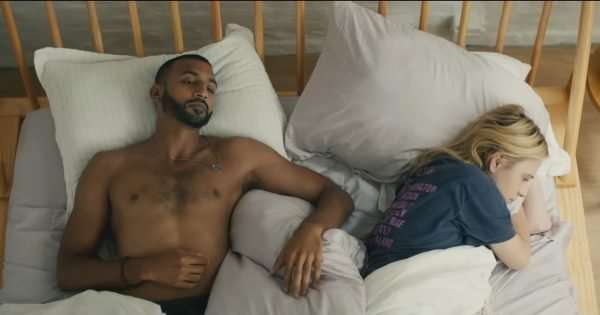
O Horizon is quite possibly the worst way to tell this story and doesn’t deserve the graceful performances from Maria Bakalova and David Strathairn. Certainly, someone else will come along and craft a thoughtful narrative on grief and AI.
Flickering Myth Rating– Film: ★ ★ / Movie: ★ ★
Robert Kojder