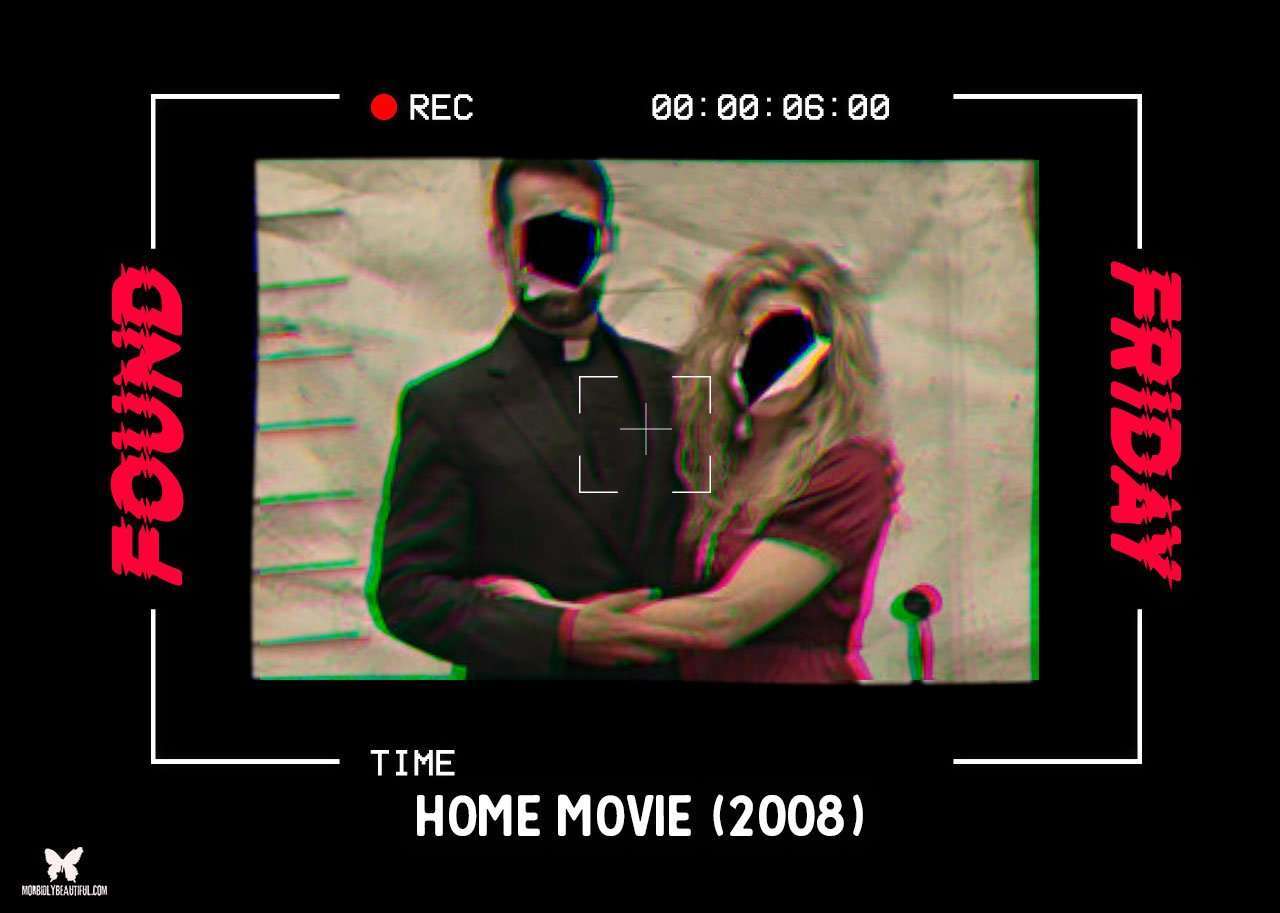
“Home Movie” is a chilling found footage essential from the late 2000s that turns ordinary family videos into something deeply unnerving.
No time to read? Click the button below to listen to this post.

MORBID MINI: It’s a nasty little domestic nightmare about two parents trying to understand what is wrong with their children before it is far too late. Quiet, chilling, and brutally effective, Home Movie is essential viewing for fans of creepy-kid horror and psychologically grim found footage.
Some horror movies scare you because they show you something impossible. They exploit our fear of the unknown and the unseen, of what hides in the dark and infects the darkest recesses of our imagination.
Other films, like Christopher Denham’s underrated 2008 found-footage gem Home Movie, terrify by turning the ordinary, the horrifyingly possible, into the stuff of nightmares.
These films drag our deepest fears into the light and refuse to explain them in a way that lets us sleep better at night. They remind us that evil isn’t some abstract concept bound to the supernatural realm. Sometimes it festers in the places we hold most sacred.
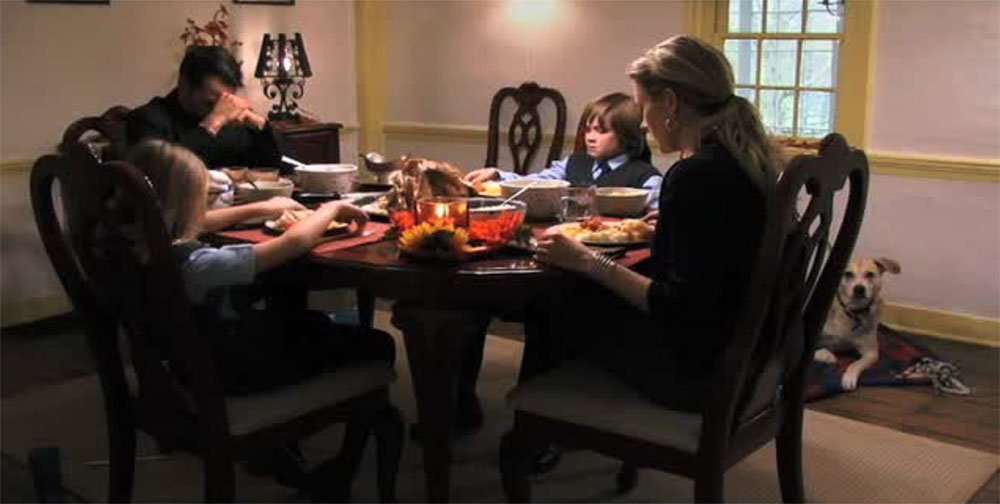
Sometimes it sits across from you at the breakfast table while you keep telling yourself this is just a phase.
That’s what makes Home Movie so effectively chilling and impossible to shake. There are no demons crawling across the ceiling. No cursed videotapes. No shaky-cam ghost lunging into frame with a violin shriek. Instead, we get something far more intimate and unnerving than that.
We get a story of two loving, educated, fully invested parents who realize something is terribly wrong with their children.
Then we watch them slowly discover that love, faith, science, discipline, documentation, and denial may not be enough to save them.
That is a brutal little premise, and Home Movie understands how to make it hurt.
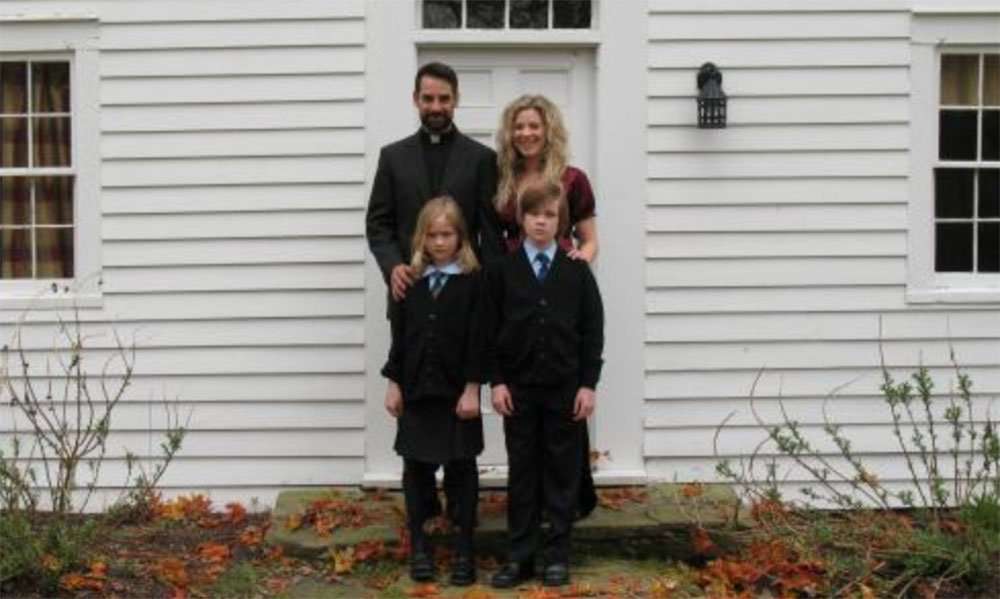
The film is presented as a series of home videos chronicling the Poe family: David, a Lutheran pastor; Clare, a psychiatrist; and their ten-year-old twins, Jack and Emily.
When the family moves into a secluded home in upstate New York, the footage initially has the awkward, familiar rhythm of any family archive. David mugs for the camera like a kid at Christmas. Clare tolerates it with loving irritation. The kids hover on the edges of the frame, quiet and watchful.
At first, it almost feels charming. But something isn’t quite right, and we instinctively understand that something insidious is ripping at the seams of this happy home.
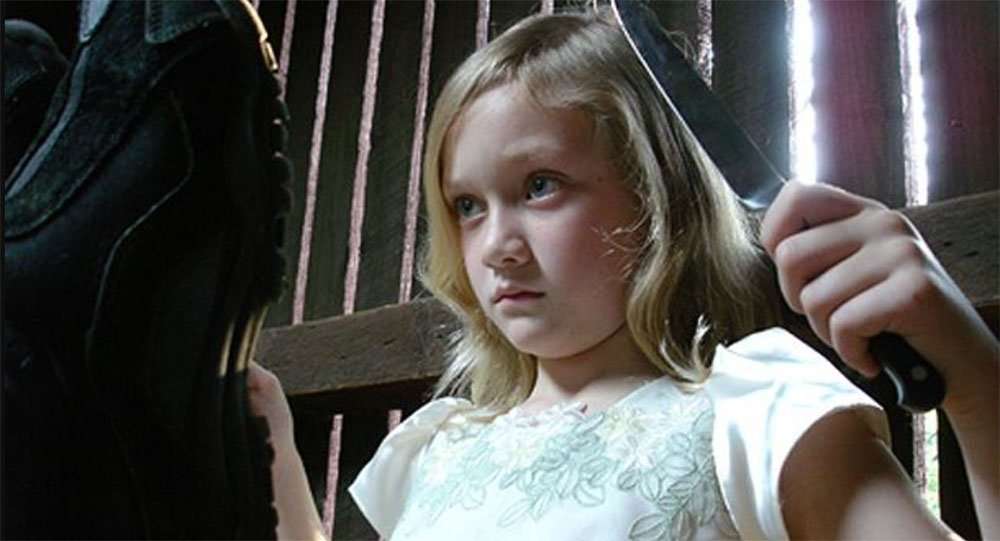
Jack and Emily are not just shy. They are not merely socially awkward. They are eerily withdrawn, largely non-verbal with their parents, and possessed of a cold, private cruelty that feels far more disturbing than the usual creepy-kid routine.
The early signs are ugly but small enough for a terrified parent to rationalize: harmed animals, bizarre rituals, vandalism, disturbing games. It’s the kind of behavior you could maybe explain as trauma, illness, or a misguided cry for attention.
It’s the kind of troubling behavior you could ignore for a while… if you were desperate enough to believe nothing is truly that wrong. And David and Clare are desperate enough.
That aching, entirely human desperation is the heart of the film and what keeps viewers on the hook.
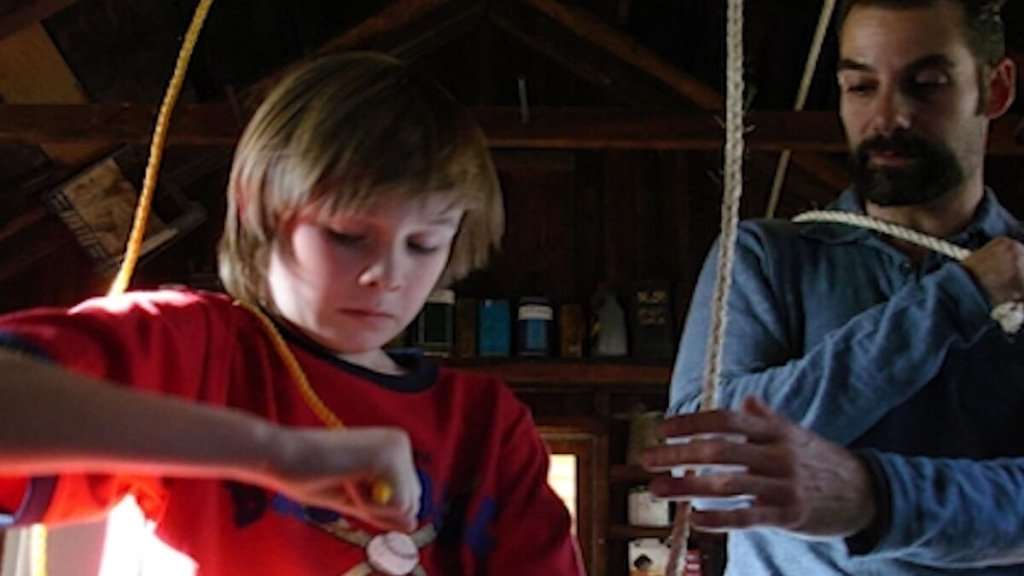
What makes Home Movie so smart in its execution of creeping terror is that David and Clare are not stupid horror-movie parents ignoring an obvious threat because the plot needs them to. They see the warning signs. They know something is wrong. But knowing something is wrong and accepting what it might mean are two very different things.
David tries to meet the crisis with faith, discipline, humor, and a frantic commitment to the idea that this is still a normal family that can be fixed if everyone just tries hard enough. Clare approaches it with pragmatic problem-solving, using her training as a psychiatrist to observe, analyze, and explain the increasingly odd behavior in clinical terms.
Neither approach works, and this results inone of the film’s sharpest and bleakest ideas.
Home Movie sets up a conflict between religion and science, then refuses to let either one claim authority. David’s faith cannot name what is happening in his house. Clare’s professional expertise cannot contain it. Both parents try their absolute best, reaching for the systems they trust most. And both systems fail them.
The result is not a simple “religion is useless” or “medicine can’t cure evil” argument. The film is more interesting and more merciless than that.
It suggests that some horrors exist in the gap between every framework we build to make ourselves feel safe.
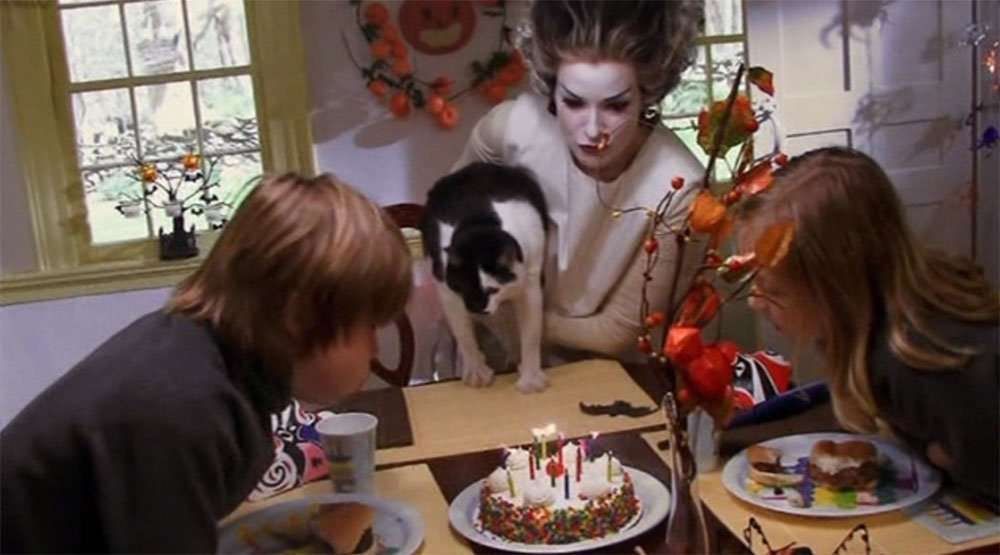
Call it pathology. Call it sin. Call it possession. Call it bad wiring.
The language doesn’t matter if it offers no hope, no salvation, no remedy. And this is where the film digs its claws in. It is also where the found footage format really pays off.
One of the easiest ways for found footage to fall apart is the eternal question: why is anyone still filming this? Home Movie has one of the better answers. The camera is not just there to capture the horror. It is part of the family’s coping mechanism.
Found footage works best when the camera stops feeling like a gimmick and starts feeling like a gateway—revealing something real and inescapable about what haunts and horrifies.
For David, filming is a way to perform normalcy. If he can keep making jokes, narrating little moments, and turning the family into a home-video project, maybe things are not as bad as they seem. For Clare, the footage becomes evidence. It’s a record, something to study and dissect. It might even offer proof that she is not imagining the severity of what is happening.
For both, the camera creates distance, like a shield against a truth too terrible to face. It’s a totem for the lie they long to believe: if we can record it, we can understand it. If we can understand it, we can fix it.
But they can’t fix it.
Denham structures the film around holidays and seasonal milestones, which gives the family’s collapse an especially sickening rhythm.
Birthdays, Easter, Halloween, and other markers of domestic life become less like celebrations and more like timestamps in a slow-motion crime scene. The rituals intended to create memory and meaning instead become evidence of decline.
That choice does a lot of quiet damage.
Home Movie does not rush to the finish line. It lets the dread build in ugly little increments. Meticulously and mercilessly. These aren’t your typical demon-possessed kids, running around ranting and hissing ominous warnings. They simply exist in the house like two little voids, quietly draining the warmth from every room and every treasured family memory.
The performances are a huge reason the film lands as hard as it does.
Adrian Pasdar, of Near Dark fame, is excellent as David, a man trying so hard to keep his family intact. He is likable, funny, and deeply human, which makes it harder to watch him slowly lose his grip on the version of his life he is fighting to preserve.
Cady McClain is equally strong as Clare. She could have easily been written or played as the cold, clinical parent, but McClain gives her much more texture than that. Clare is smart and controlled, but she is not detached. She is a loving mother trying to keep terror from swallowing her whole by turning it into something she can name, study, and treat.
We believe them to be two people who love their children and love each other deeply, but cannot survive the widening space between what they know, what they believe, and what they are willing to admit.
Then there’s the rot at the center of this happy family facade that gives the film its vicious power.
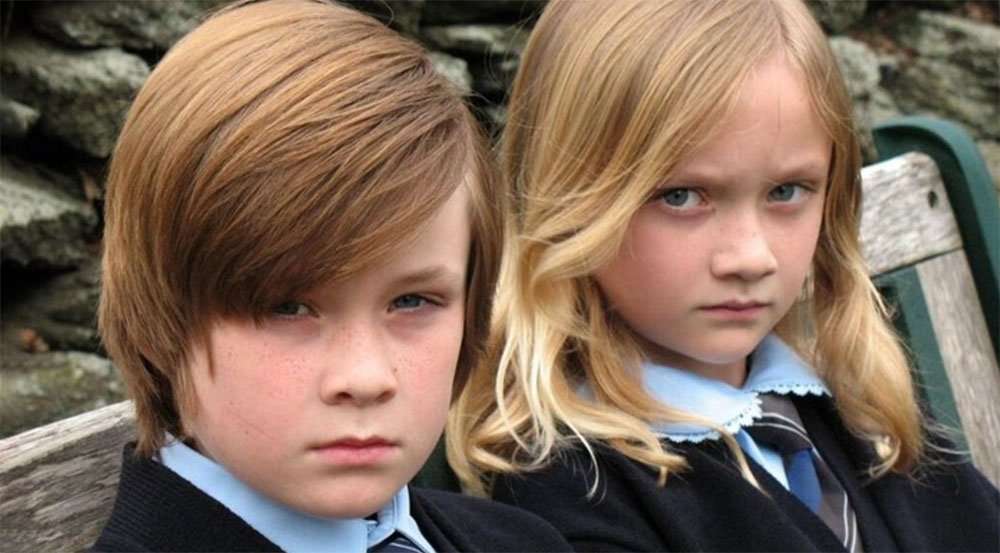
Amber Joy Williams and Austin Williams are genuinely chilling as Emily and Jack, and the film is smart enough not to overuse them in obvious ways.
Their performances are built on stillness, silence, and an almost unbearable lack of affect. They do not feel like movie monsters. They feel like children who have sealed themselves off from the human world and are quietly building something unspeakable in the dark.
Home Movie came out during the post-Blair Witch found footage boom, right as the genre was becoming commercially dominant again through films like Paranormal Activity and Cloverfield. But it feels very different from both.
Paranormal Activity turned the bedroom into a paranormal pressure cooker. Cloverfield used found footage to give giant-monster chaos a ground-level, panic-inducing feel. Home Movie strips things down even further.
There’s no spectacle. No otherworldly evil to escape. There’s just a family, a camera, and the unbearable possibility that the people you love most may be unreachable.
That makes it a perfect pick for found footage fans who want something more psychologically grim than the standard “what was that noise?” routine.
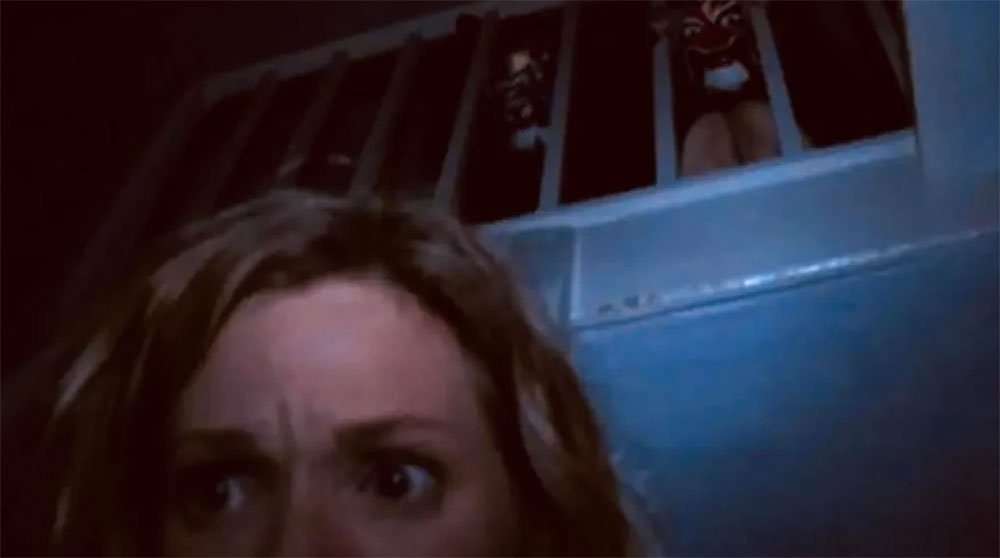
It is also an easy recommendation for anyone drawn to creepy-kid horror like The Omen, The Bad Seed, or even the emotionally devastating parental dread of We Need to Talk About Kevin.
It may be restrained, but it is not soft. The final stretch is genuinely harrowing, and the last few minutes will leave you reeling.
That’s not because the film suddenly becomes outrageous, spiraling off the rails in a bid for shock value; it’s because it commits fully to the nightmare it has been building all along.
By then, the home-video intimacy has turned against you. You are no longer watching family memories. You are watching evidence.
That is the lingering horror of Home Movie. It does not leave you with a tidy explanation or an easy moral. It leaves you with the sick feeling that every adult in the room did their best and loved their hardest, but it wasn’t enough.
That is a hard, ugly place for a horror film to leave you, which is exactly why Home Movie is so difficult to shake.
It’s a deep-cut, found-footage essential that understands the scariest thing in the house isn’t always hiding in the dark. Sometimes it is sitting right there at the table, staring back through the camera lens, not because it wants to be seen, but because it knows you are too scared to understand what you’re looking at.
Overall Rating (Out of 5 Butterflies): 4