This article first appeared in Radio Times magazine.

In what is perhaps the writerly version of Victor Kiam’s “I liked it so much, I bought the company”, playwright and screenwriter James Graham was so inspired by the tale of how, 20 years after his missed penalty sent England crashing out of the Euros in 1996, Gareth Southgate turned around the fortunes of the England football team, that he decided to write the story himself.
The resulting play, Dear England, was about more than just Southgate and his quiet, revolutionary management style. It was about more than just football, as important a matter as Bill Shankly’s famous quote declares it to be. It was also an examination of English national identity, modern masculinity, men’s mental health, hope, belonging and redemption. And all of this was wrapped up in a thoroughly theatrical production, full of music and movement, belly laughs and poignant moments.
Dear England was admired by critics and adored by audiences. After opening at the National Theatre in 2023, it transferred to the West End, returned to the National and moved up to Salford before embarking on a UK tour that was, wisely, confined entirely to England.
Taking its title from the open letter that Southgate wrote to England fans in 2021 asking for a more generous and inclusive view of what the country could be, Dear England won Graham the Olivier Award for best new play in 2024 and has been seen live by nearly 500,000 people.

Now, Graham has turned his play into a four-part drama for BBC One with Joseph Fiennes reprising his Gareth Southgate. A straightforward endeavour for a writer as accomplished as Graham, whose TV work includes Quiz, about the Who Wants to Be a Millionaire? cheat Charles Ingram, Brexit: The Uncivil War, that starred Benedict Cumberbatch as Dominic Cummings, and two series of state-of-the-nation drama Sherwood, with a third to come.
“You’d think because you’ve already got some of the dialogue, you’ve got the characters, you’ve already done the research, that you’d be able to hit the ground running,” Graham says. “But I found it hard. I’d describe it as walking backwards out of the woods that you walked into the first time, leaving everything behind and then finding another way in. I find it much harder to adapt than to write from scratch.”
Despite the challenge, which Graham more than meets, his love of the story remains undimmed. “There aren’t many examples in public life in this country, whether it’s politics or anything, where something was really bad and has started to get better. But the men’s football team’s turnaround was extraordinary – as was the fact that it was done by an introverted, decent guy.
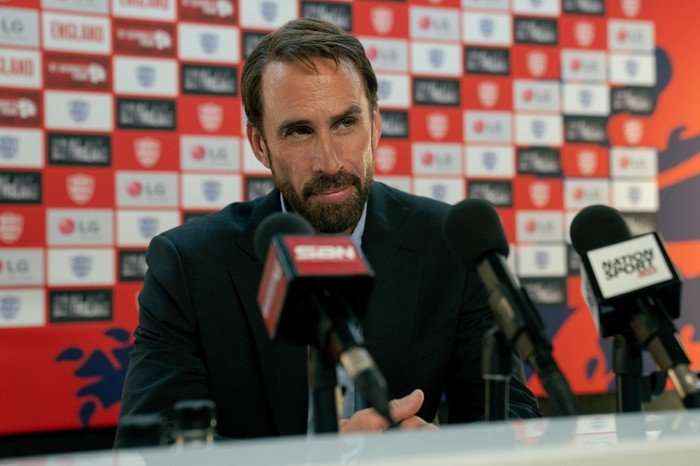
“He wasn’t a bully, a psychopath or a show-off. I think of other people on the world stage at the moment who are dominating, achieving change through meanness and cruelty, while Gareth achieved this incredible change through kindness and goodness and inclusivity. I found that incredibly inspiring.”
Graham sees Dear England as “a classic moral fable”, especially for young men in need of building resilience. “It’s a Shakespearean story, an operatic story. It’s the story of a guy who did a thing 20 years ago and was really targeted and blamed for it, and who comes back 20 years later with incredible courage.
“He hasn’t drowned in bitterness or become resentful. He comes back a better, stronger person, and decides to do an incredible amount of good in this team and in the country. For that reason, Gareth is, to me, a hero for the ages.”
The latest issue of Radio Times is out now – subscribe here.

Dear England begins at 9pm on Sunday 24 May on BBC One and iPlayer.
Add Dear England to your watchlist on the Radio Times: What to Watch app – download now for daily TV recommendations, features and more.
Check out more of our Drama coverage or visit our TV Guide and Streaming Guide to find out what’s on. For more TV recommendations and reviews, listen to The Radio Times Podcast.