Picture Credits: Netflix / Getty Images
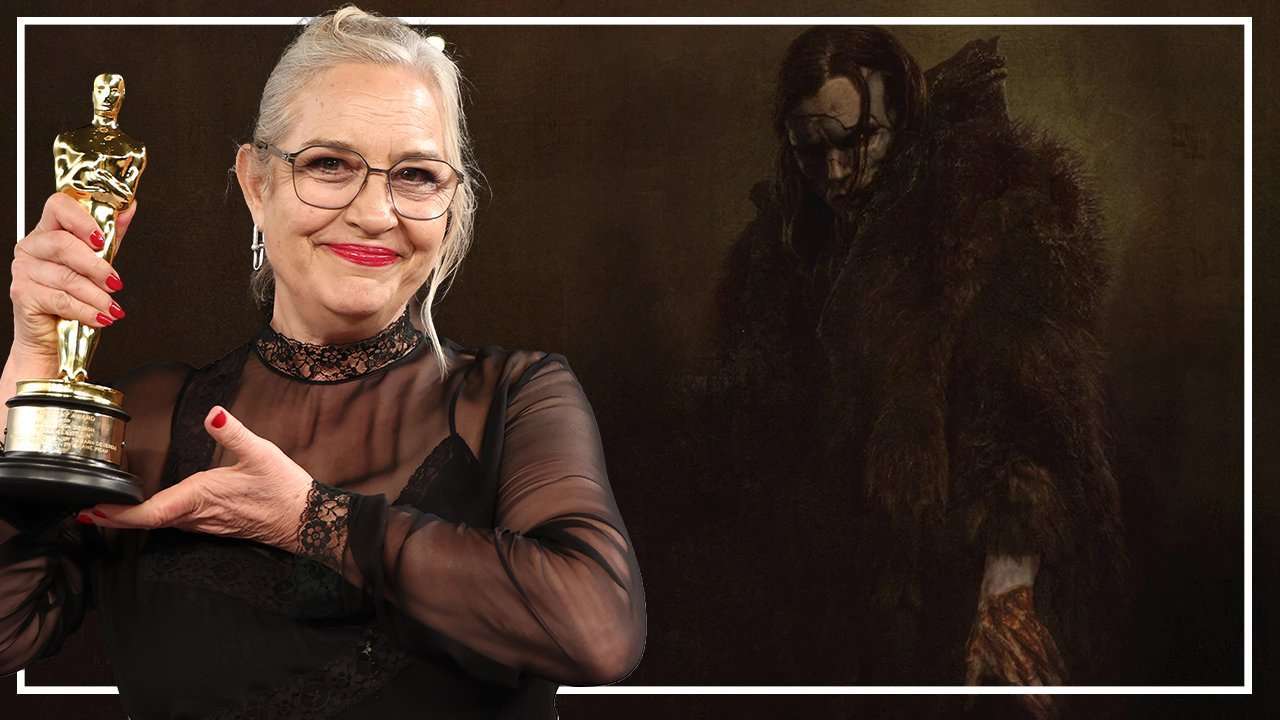
Tamara Deverell won her first Academy Award for her undeniable work on Frankenstein. The production designer, along with set decorator Shane Vieau, collected the gold statues together. It was Deverell’s second nomination to date, following her splendid work on Guillermo del Toro’s Nightmare Alley.
The filmmaker and production designer have been working together since the ‘90s. First, they began on the killer bug movie, Mimic. Since then, they’ve created beautiful worlds together, including Guillermo del Toro’s Cabinet of Curiosities and their Mary Shelley adaptation. Following her Oscar win, Deverell spoke with What’s On Netflix again about her experience on the Best Picture-nominated horror film.
You described the film well in your speech as “a fantastic operatic ship.” When you’re working with Guillermo, opera seems like a keyword. How much does that guide you?
A lot. We had talked about it being operatic, not at first. Guillermo didn’t come out and say, “Hey, I want this to be operatic.” It was more like it was theatrical and in that vein. It was very operatic. It was a very human drama. Especially once we had Alexandre Desplat’s score, which I don’t have when I’m designing the film.
I said to Alexandre, “I wish I had the music more to inspire me.” Because when I did Nightmare Alley, we had a series of songs and music that Guillermo had planned to use in the final cut. It was so wonderful to listen to when we were designing the show. But of course, Alexanre can’t give the music until we have the show together.
You’re very historically minded. Guillermo is very cinema-minded. How do you see those two sensibilities really coming together in Frankenstein where you feel expressionistic and historically accurate?
Guillermo is more into fantasy. And it’s funny because the movie was considered, when we were applying for awards and things for the Art Directors Guild and the British Film Designers Guild, those ones, they have different categories for the top film. So they have contemporary, science fiction, fantasy, and period. And to me, it was always a period movie.
Netflix is assisting with putting in for these awards, they were like, “Well, it’s sci-fi fantasy,” because of course it is, because people didn’t make monsters. To me, it was always a period. And the same with the decorator and same with [costume designer] Kate Hawley, although we went fantastical, but it was very grounded in what was real for the time, what we could make believable.
The science of the steam engines that we used in the lab and the battery towers were exaggerated, but yes, something like that could have existed. They were experimenting with that in that Industrial Revolution of the Victorian era, the start of the Industrial Revolution, which coincided with the late Victorian era.
Guillermo had pushed the film by a few decades to the mid-1800s as opposed to the early 1800s, which is when Mary Shelley put the story. So, we had the advantage of different historical aspects of the industrial age, the existence of electricity.
It’s Guillermo who pushes the buttons of the fantastic and encourages us all, as department heads, to lay the groundwork historically with some accuracy. Then we go into the fantastical.
It’s this seamless understanding of, okay, we’ve done the groundwork, we’ve done the research. I’m a big believer in research. With young people in film, I always say research isn’t just going on the internet.
Go to the library.
Go to the library. Travel if you can. Look at nature. Just everything that you do, eyes wide open. Look at people, look at old catalogs. It’s all research, and it’s all so essential, especially to an artist or a filmmaker’s process.
At any rate, so Guillermo, fantastical, pushing the outer realm, the outer limit, the operatic, the theatrical. I think all of us that work with him are sort of more grounded in like, well, what is real? What is real practical lighting, for example? It was a mix of candles, but there were some propane and gas lanterns and how we could develop that with Dan Laustsen, our cinematographer.
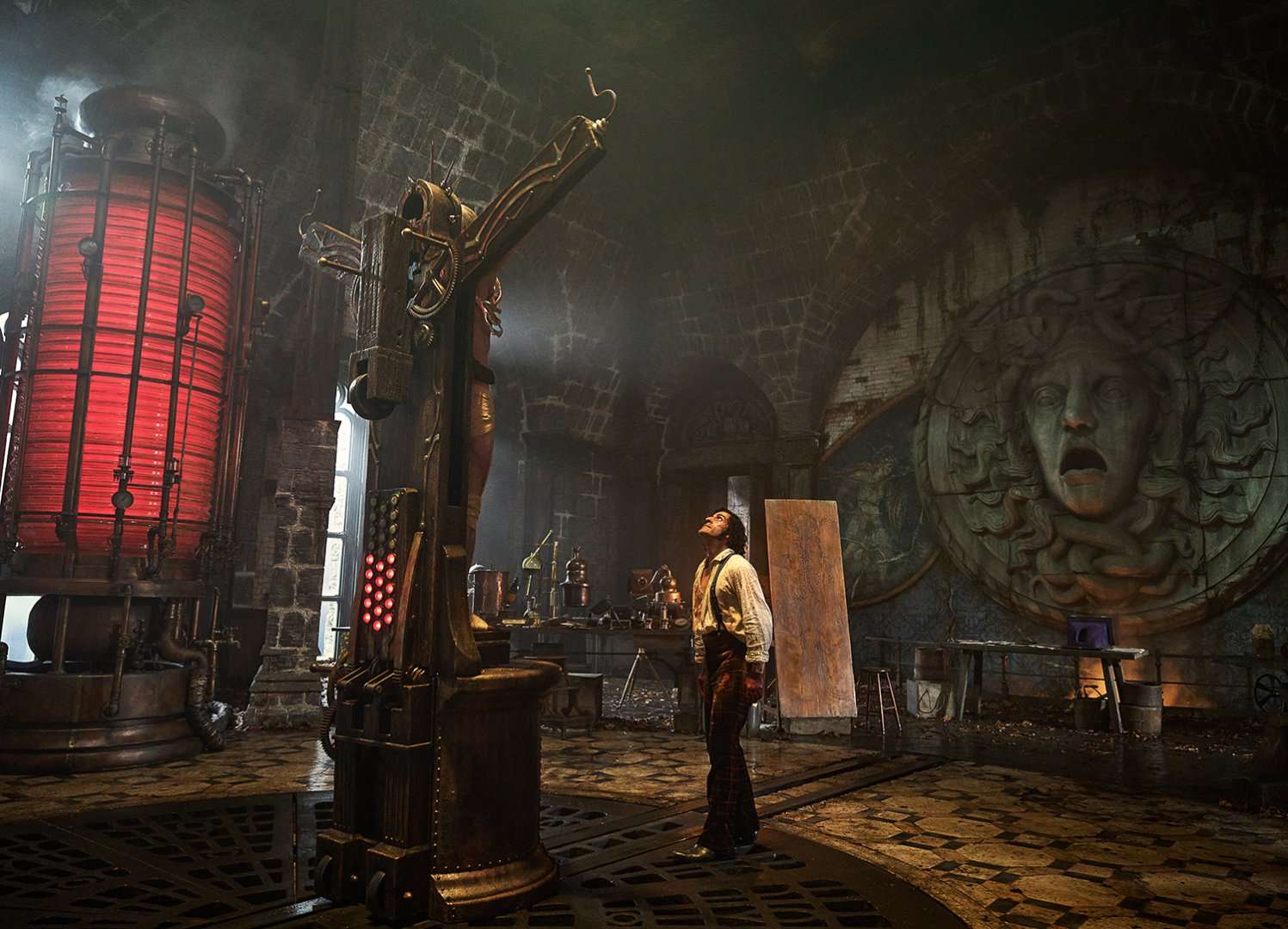
FRANKENSTEIN. (L to R) Jacob Elordi as the Creature and Oscar Isaac as Victor Frankenstein n Frankenstein. Cr. Ken Woroner/Netflix © 2025.
Dan and I talked a lot about Barry Lyndon when I interviewed him. Practically every cinematographer talks about that Kubrick film.
We did look at Barry Lyndon a lot because it’s known for lighting it by candle. They have so many candles. I don’t know how they did it because by today’s standards, you have to have the fire department there on a film set when you have that many candles. I don’t know if you know this, but we did shoot in one of the houses at Wilton House where Barry Lyndon was shot.
That’s amazing.
Guillermo was tickled pink to do that. Now, we used some of the same grounds, the exteriors, and we used the Palladian Bridge, which was in the background, which was big in Barry Lyndon. It’s this old, old bridge over a river that runs through it. We used the Double Cube dining room, which is in Victor’s family’s villa where they’re dining.
Later when the parents die, you see young Victor splayed against this giant, built-in sofa. You can’t really change that room. I mean, we changed it with the set dressing quite substantially, making it a dining room when it’s actually a sitting room, but you can’t change this couch that’s built in. You see it in Barry Lyndon and you see it in Frankenstein.
You mentioned something very important, being open to what you’re seeing going and far beyond web searches. What were some key sources of inspiration for you on Frankenstein?
One of the first things I did with Guillermo was our original scouting. We were there with Guy Davis, who’s Guillermo’s concept artist from way back and works with me and Guillermo. It was us and J. Miles Dale, our producers. We were going to look at some locations in London, like the ballroom and stuff, which then Guillermo looked at pictures and he’s like, “No, no, no, no. The traffic in London is terrible. I don’t want to shoot there.” But he did insist that we go to the Hunterian Museum, which is a museum in the Royal College of Physicians and Surgeons in London, the Hunterian.
We actually ended up going there before they were open. They had just finished a massive renovation. They were maybe two days before opening, and we begged them because we were in London for only two days. They were very generous, letting us in. For me, it was very exciting because it was a museum being set up, and the curators were running around with white gloves, putting the last of the precious objects in.
But it was there that the real Evelyn tables, like the one that we created, exist, and all the implements and medical instruments of that period. Well, of many periods, but I was mostly concerned with our period displayed there. I photographed every object in there that was earlier than us and then of our period.
How did the University of Glasgow influence the film as well?
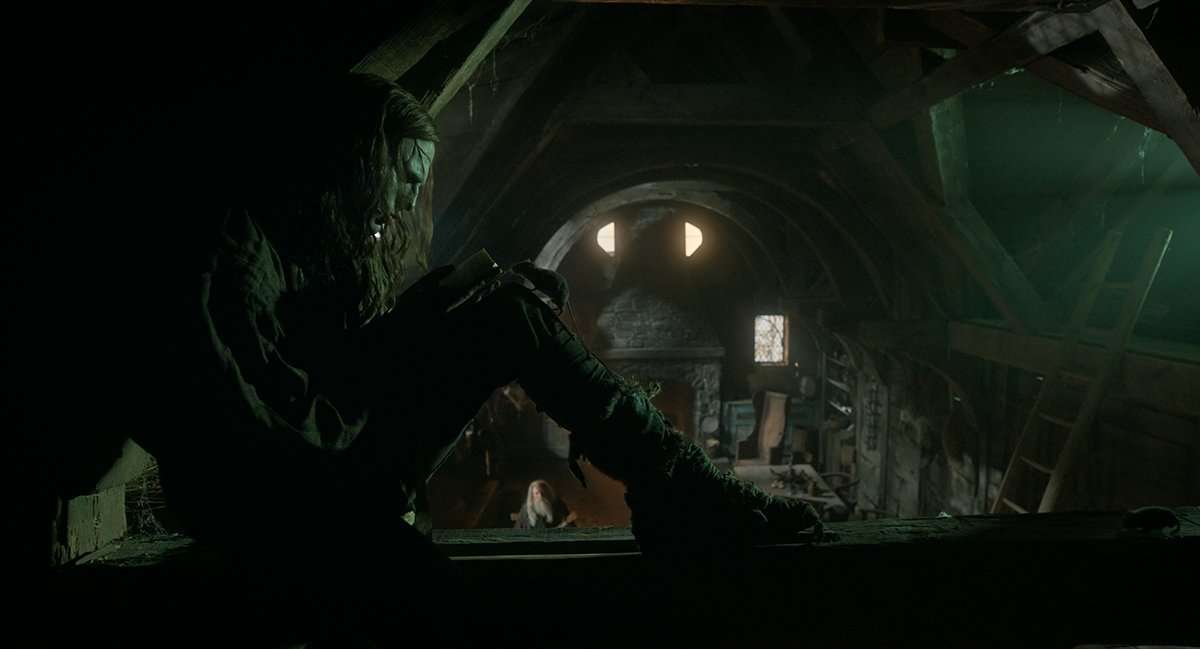
When we were scouting with Guillermo, we went to the University of Glasgow. It had sort of a vaulted ceiling pavilion that we wanted to shoot in. We honestly didn’t really have a scene [for it]. And then the producers were like, “No, we can’t go all the way here for one little scene that doesn’t even have dialogue.” So that went away, but that vaulted ceiling architectural element stayed with me and carried through to the creature’s cell.
The dungeon almost looks like a body, like the creature is trapped inside a man’s body.
When I started designing it, I was like, “Oh, this feels like vertebrae.” How can we make it subtle still, but play up that bone structure? The way we did the tiles was always a nod to the human body, to the whole world of Frankenstein. The translucency of the tile and the tone of the tile – we were quite distinctly not matching it, but using the creature’s own skin tones What Mike Hill was doing with the prosthetics was sort of part of his world.
We aged it so it’s not too in your face because you want the creature to stand out in this set. You want the creature to stand out. You want Elizabeth to stand out. You want the costumes to pop. There’s always that dial of being very careful with the design to make sure you’re not taking over, but that it’s ever present so that the audience is feeling the space every second you’re in there, whether it’s close up or whatever it is.
You and Guillermo build such beautiful worlds together. When does a world feel fully-realized to you both?
Especially with Guillermo, because we get this about each other, it’s not just about color palette, which it’s definitely about, but it’s also about tone and texture and layering. There are so many layers of paint that give this feeling or this ambiance of a painting, of like an 18th-century painting, which Dan’s lighting of course helps. But I think just that quality of layering texture and paint tones is really the thing that Guillermo and I are so artfully joined on in a very special way.
When I first worked with him way back on Mimic, we were doing a lot of old subway pipe tunnels and pipes, and we’re putting so much aging in. We had an amazing scenic at the time, John Bannister, who’s unfortunately no longer around, but amazing scenery. I just adored this man, Guillemro, who loves what I love in terms of tone and texture and detail.
Like everything for Guillermo, from the first moment I met him to today, he’ll look at everything. There’s not one thing that he’ll say, “Oh no, don’t bother me with that.” Not one thing. I’ll sit with him every morning while filming. I will go with my iPad and he will make time every morning after he sets up the shot while Dan’s lighting, while they’re doing their final touches. I’ll get my 15 minutes, half hour, however much I need to sit down with my iPad. Sometimes I’ll make big prints, but the iPad is usually better.
We’ll just go through the things that are coming up like, “Oh, Guillermo, I tried some moss,” because we talked about moss and he had a “moss squad” on Pan’s Labyrinth. We created this moss squad and I put some in the creature’s cell with some of our green guys. It was a real group effort. I took a picture and we both got excited. It’s like more, more, and more. It was always this give and take, but it was mostly just flowing together.
You two create worlds that tie together nicely as well.
He likes arches. I know he likes the circle theme. That’s very important. I do those without talking. You don’t need to talk about it, just go ahead and do it.
There’s a lot of great Canadian crew members, journalists and others that were happy for your Oscar win. What’s it mean to you, being an artist from Canada?
To me, I try not to be nationalistic, but one thing that struck me about the Oscars, a women in film event, and another women’s luncheon – they’re from all over the world. To me, I was like, “Oh, we’re part of this big, round, hellish world that we’re trying to mess up in every way we can.” I felt really good, not just being Canadian, but being part of a world that has so many people from so many different walks of life.
I’ve recently moved full-time to Nova Scotia. At the Oscars, you go to the press room, where I started talking about how the Nova Scotia provincial government made cuts to arts and culture, which is huge here. It went viral in Nova Scotia, all about Tamara Deverell and Oscar and Tim Houston, who’s our premier. Anyways, very timely for that.
Bringing it home to Canada, it’s pretty special. It feels good. My co-nominee is Canadian. Getting back to the international sphere of things, we have a lot of Canadians, obviously 80% of the crew is Canadian. Then we shot in the UK, and then our cinematographer, Danish, our costume designer is from New Zealand, Mike Hill, our prosthetics originally from the UK, Alexandre is from France. And, of course, our director is Mexican. I love that. I love working with Guillermo. He really is an honorary Torontonian for sure, if not Canadian. It’s nice to come home with an Oscar to Canada.
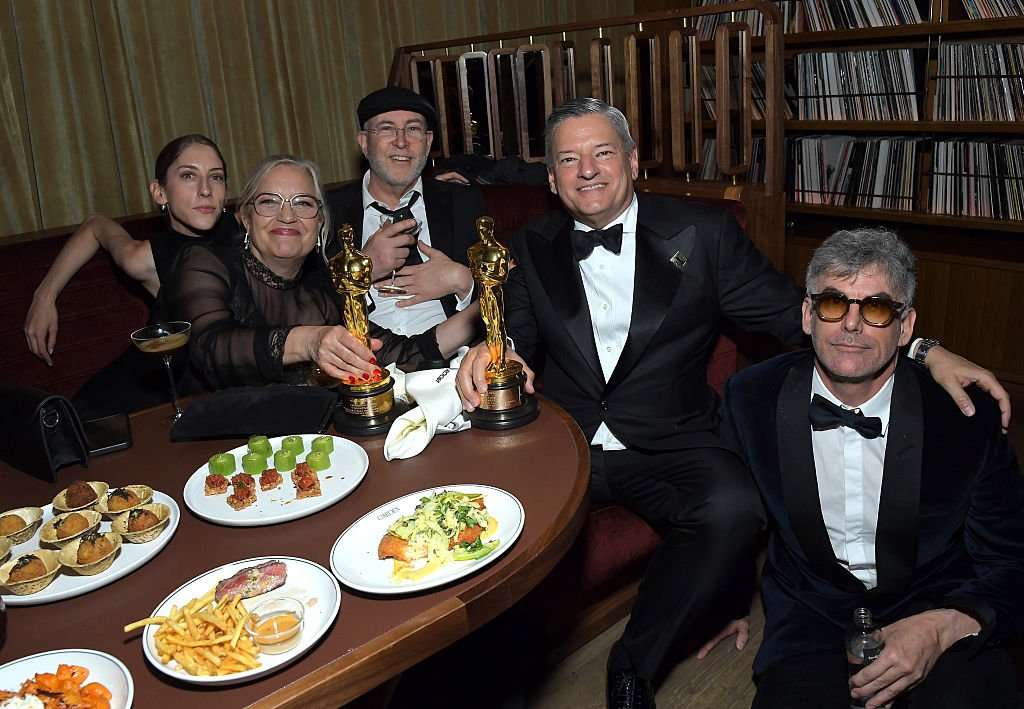
LOS ANGELES, CALIFORNIA – MARCH 15: (L-R) Tamara Deverell, Ted Sarandos, Netflix Co-CEO, Shane Vieau, and guests attend the 2026 Netflix Oscar after party at The Living Room on March 15, 2026 in Los Angeles, California. (Photo by Charley Gallay/Getty Images for Netflix)
I can’t congratulate you enough on your win, Tamara. Well done, well-deserved.
Our plane got turned around. We flew to Halifax. The weather was bad. Our plane got turned around. I remember Miles Dale, our producer, said, “Bring out the Oscar when you’re on the plane because it’s super fun.” And so, the plane was literally about to land in Halifax and got turned around and was flying back.
I thought, “Well, this is the time. Everybody’s pretty down. I’ll bring out the Oscar.” So I brought out the Oscar and I said, “Hey, everybody, I won an Oscar. Come take a photo.” It passed around and everybody took photos. It continued when we finally got on the flight the next day – nothing was landing in Halifax because of the winds – so it was the same people. We were passing it around more and went up to the pilot’s cockpit. It was lovely.