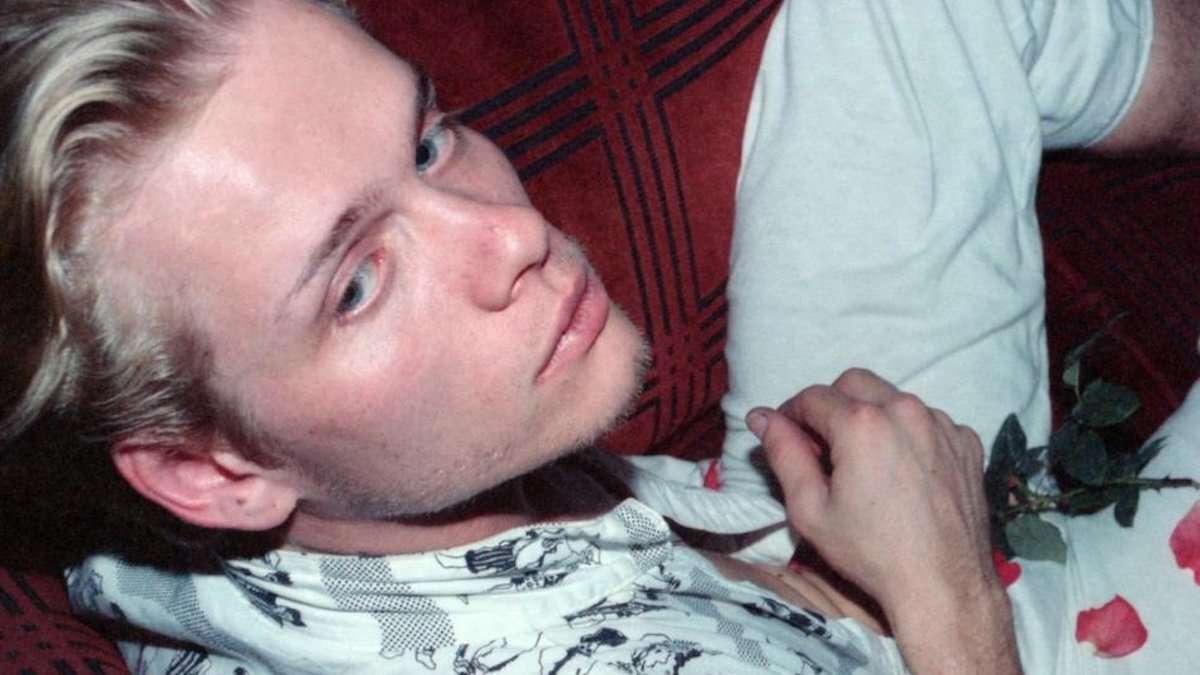
My Brother’s Killer solves a murder case gone cold. The documentary, directed by Rachel Mason, traces the 36 years since the brutal murder of 25-year-old William “Billy London” Arnold Newton in West Hollywood.
Mason is an Emmy-nominated director known for Circus of Books, a 2019 documentary featuring her parents’ experience owning a gay pornography bookstore in West Hollywood. She first learned about Billy from a 1990 article in The Advocate.
“I couldn’t let it go in my own mind,” Mason says. “While I was pursuing this documentary, I learned about a podcast called The Dinner Party Show with Christopher Rice and Eric Shaw Quinn.”
At the same time Mason was creating the documentary, Rice and Quinn released a podcast episode on Billy’s murder. The renewed public interest led to a tip that suggested Jeffrey Dahmer as a suspect, which caused the Los Angeles Police Department to reopen and explore the case.
While the Dahmer lead proved fruitless, Mason continued to spread the word on Billy’s case and received a number of leads from those in the adult film industry. The investigation continued.
“I didn’t expect to get involved in the investigation. I was just actually doing what I thought was a portrait of the victim in order to maybe create a documentary, and that would possibly lead to helping get leads…what happened while making it was this unexpected, unbelievable sort of confluence of things that led to us solving [the case] while we were making the film,” Mason says.
The killer’s identity was uncovered through an arduous effort in retracing the steps of history through archival material and interviews, including with Mason’s own mother. From this research, the documentary was created.
“It took years of scraping the internet, digging up VHS from wherever we could … it really took a long and concerted effort to build the fragments of what we could find.”
My Brother’s Killer, however, proves to be more than a true crime film. Mason showcases the unique struggle gay men experienced during the AIDS epidemic through Billy’s story, while also providing recognition and closure for those involved.
“It was a terribly violent time and I think that’s another undocumented part of gay history,” Mason says. “… the resilience of gay culture is the most amazing thing. In the sea of death, you also have this vibrancy, and I really wanted to showcase that. It doesn’t always have to be dark, the fight can be joyful in a strange way.”
Billy was an adult filmmaker, poet, and illustrative artist who was deeply loved by the people around him. He lived in a turbulent era defined by violence and alienation, but remained a source of light and creativity in the community.
“Billy, to me, felt like one unthinkable unfairness,” Mason says. “It was such an injustice that not only was he murdered, but he was murdered from within this community at this time.”
One of Mason’s priorities was to portray Billy as a fully realized and three-dimensional person in the film. To do this, Mason used his poetry.
“A Piece of Me,” a poem written by Billy, was used to bookend the film. Its recitation provides a haunting reflection on his thoughts during the period of time before his murder, and his perception of the world around him.
“I think that’s where we’re able to at least give the world some sense of this creative soul that we lost,” Mason says. She hopes this documentary will contribute to the historical records of the AIDS epidemic, as well as devote attention to an underrepresented community to ensure the stories of gay men are not lost to time.
My Brother’s Killer premiered March 13 at the SXSW Film & TV Festival.